
Where Can I Buy Magnesium Complex | Caring Sunshine
Wondering where can I buy Magnesium Complex? Learn about Nature's Sunshine Magnesium Complex with citrate and malate forms for heart, brain, and kidney support.
Where Can I Buy Magnesium Complex — And Why It Matters
If you've been searching for where can I buy Magnesium Complex, you've likely already discovered how important this mineral is for everyday health. Magnesium is the fourth most abundant cation in the human body and a critical cofactor in more than 300 enzyme systems that regulate energy metabolism, neuromuscular function, cardiovascular health, bone integrity, and more. Yet emerging evidence confirms that nearly two-thirds of the population in the western world is not achieving the recommended daily allowance — a gap that can contribute to a host of health concerns.
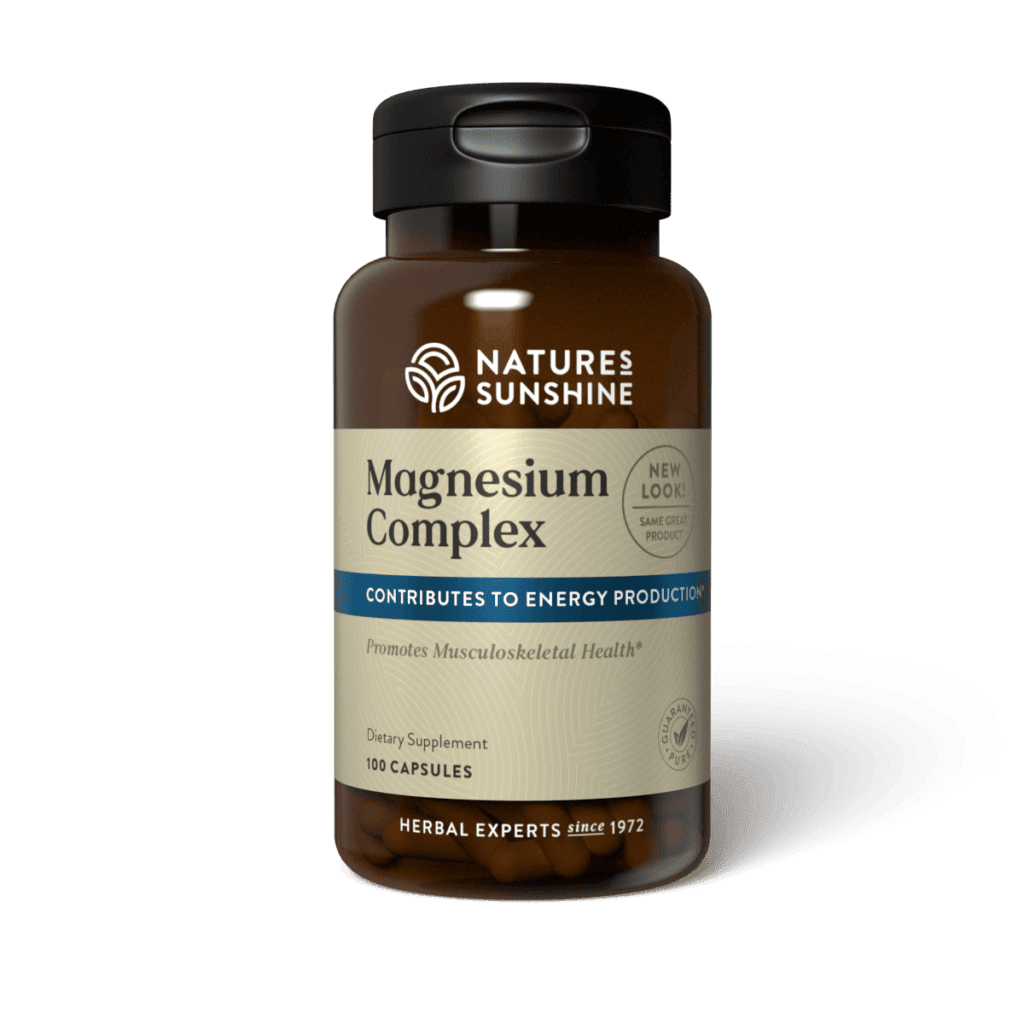
Nature's Sunshine Magnesium Complex was formulated to help bridge that gap. It delivers 184 mg of Magnesium per two-capsule serving, drawn from two highly soluble organic forms — Magnesium citrate and Magnesium malate — that the body can absorb efficiently. The product comes in a bottle of 100 capsules and is designed to support the cardiovascular system and help brain, kidney, and heart functions.
We carry this product right here at Caring Sunshine, and if you have questions about whether a Magnesium Complex fits your wellness routine, our naturopath is available for a free consultation to help you decide.
Two Highly Soluble Forms of Magnesium in One Capsule
Not all Magnesium supplements are created equal. Magnesium supplements are broadly categorized into organic and inorganic compounds. Organic forms — such as citrate, malate, glycinate, and lactate — are chelated to organic molecules and are generally more soluble with higher bioavailability. Inorganic forms like Magnesium oxide tend to have lower solubility and absorption rates.
Nature's Sunshine Magnesium Complex pairs Magnesium citrate and Magnesium malate, both organic salts. Research shows that Magnesium citrate has high solubility even in water (55%) and is substantially more soluble than Magnesium oxide across all states of acid secretion. By combining two bioavailable organic forms, this formula is designed for optimum effectiveness — meaning more of the Magnesium you take actually reaches the tissues that need it.
Key Ingredients
- ✓ Free shipping over $75
- ✓ 90-day easy returns
- ✓ Ships within hours
Who Should Consider a Magnesium Complex
Because Magnesium is involved in so many body systems, a wide range of people may benefit from supplementation. The diets of most people in the United States provide less than the recommended amounts of Magnesium, and men older than 70 and teenage girls are most likely to have low intakes. It is estimated that between 56 and 68% of Americans do not obtain enough Magnesium daily to meet the RDA.
Certain groups face an elevated risk of Magnesium inadequacy. These include older adults (due to decreased absorption), individuals with gastrointestinal disorders, those with type 2 diabetes, people with alcohol dependence, and anyone on long-term medications such as diuretics or proton pump inhibitors — both of which can deplete Magnesium stores.
If you're interested in cardiovascular, brain, or kidney support, Nature's Sunshine Magnesium Complex may be a good fit. Early signs of Magnesium deficiency include loss of appetite, nausea, fatigue, and weakness, and as deficiency worsens, numbness, muscle cramps, abnormal heart rhythms, and personality changes can occur. If any of this resonates, feel free to reach out for a free consultation with our naturopath to discuss whether supplementation makes sense for your situation.
Directions for Use
Take 2 capsules twice daily with a meal. Each two-capsule serving provides 184 mg of Magnesium from both citrate and malate forms. The bottle contains 100 capsules.
The Recommended Dietary Allowance (RDA) for Magnesium is 400–420 mg/day for adult men and 310–320 mg/day for adult women. Magnesium supplements can occasionally cause digestive effects such as softening of stool, nausea, or cramping, though side effects are more common with inorganic forms like Magnesium oxide and at higher doses. The organic citrate and malate forms in this formula are highly soluble, which generally supports comfortable digestion.
If you take bisphosphonates, tetracycline or quinolone antibiotics, or gabapentin, be sure to separate your Magnesium intake by at least 2 hours (4–6 hours for some antibiotics). Loop and thiazide diuretics and proton pump inhibitors can increase Magnesium loss, so talk to your healthcare provider about monitoring your levels if you use these medications long-term.
Written by Greg Howlett
Frequently asked questions
Where can I buy Magnesium Complex?
You can buy Nature's Sunshine Magnesium Complex right here at Caring Sunshine. We carry it in stock with no membership or autoship required. If you'd like personalized guidance before purchasing, our naturopath offers free consultations to help you determine whether this supplement is a good fit.
What forms of Magnesium are in Magnesium Complex?
Nature's Sunshine Magnesium Complex contains two organic forms — Magnesium citrate and Magnesium malate. Organic forms of Magnesium are generally more soluble and have higher bioavailability than inorganic forms such as Magnesium oxide. Magnesium citrate, for example, has high solubility even in water (55%) and is substantially more soluble than Magnesium oxide across all states of acid secretion.
How much Magnesium does each serving provide?
Two capsules — one serving — provide 184 mg of Magnesium. The suggested use is 2 capsules twice daily with a meal, so a full daily dose from this product supplies Magnesium from both the citrate and malate forms.
What body systems does Magnesium Complex support?
Magnesium Complex is formulated to support the cardiovascular system, brain, and kidneys. Research suggests that higher Magnesium levels are inversely associated with risks of coronary heart disease, stroke, and total cardiovascular disease. Magnesium also acts as a natural NMDA receptor antagonist in the nervous system and is a well-established inhibitor of calcium oxalate crystallization in urine, supporting kidney stone prevention.
Are there any drug interactions I should be aware of?
Yes. Magnesium can interact with several medications. It may decrease the absorption of bisphosphonates (like alendronate), tetracycline and quinolone antibiotics, and gabapentin — these should be taken at least 2 hours apart (4–6 hours for some antibiotics). Loop and thiazide diuretics and proton pump inhibitors can deplete Magnesium. Always consult your healthcare provider if you're on medication.
How common is Magnesium deficiency?
It is estimated that between 56 and 68% of Americans do not obtain enough Magnesium daily to meet the recommended dietary allowance. Men older than 70 and teenage girls are most likely to have low intakes. Older adults, individuals with type 2 diabetes, people with gastrointestinal disorders, and those on certain long-term medications are at elevated risk of deficiency.
Talk to Dr. Shannyn Fowl
Not sure if this is right for you? Book a free, no-pressure consultation for personalized guidance on your health goals.
Book your free consult →About Caring Sunshine
A family-run reseller of premium supplements — free shipping, a 90-day guarantee, and real people who know the products.
Learn more about us →