
When to Take Magnesium Complex | Timing Guide
Learn when to take Magnesium Complex for best results. Discover how Magnesium citrate and malate support your heart, brain, kidneys, and nervous system.
When to Take Magnesium Complex: Why Timing and Form Matter
Magnesium is the fourth most abundant cation in the human body and a critical cofactor in more than 300 enzyme systems that regulate everything from energy production and nerve signaling to blood pressure and heart rhythm. Yet emerging evidence confirms that nearly two-thirds of the population in the western world is not achieving the recommended daily allowance for Magnesium — a deficiency problem contributing to various health conditions.
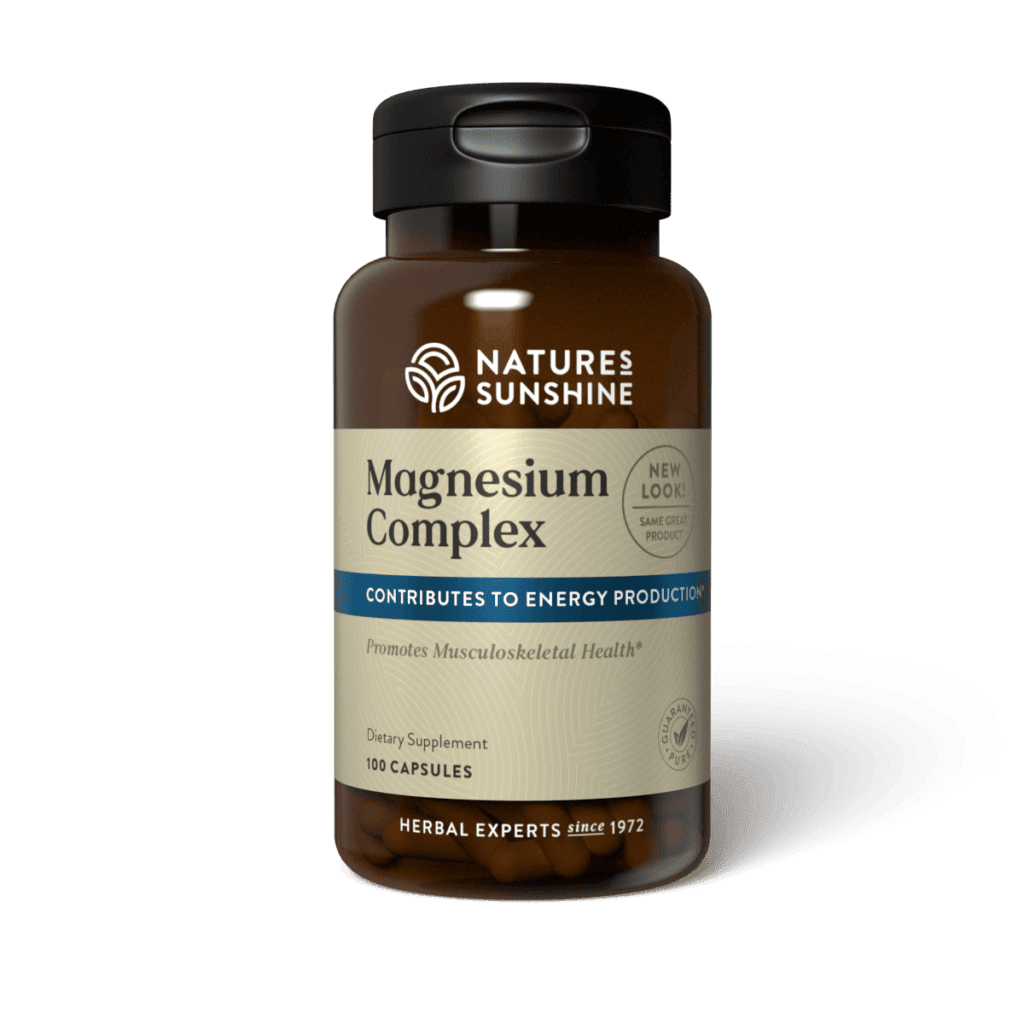
Understanding when to take Magnesium Complex can help you get the most from this essential mineral. Nature's Sunshine Magnesium Complex delivers two highly soluble organic forms — Magnesium citrate and Magnesium malate — in a formula designed to support the cardiovascular system, brain, kidneys, and nervous system. Because it comes in capsule form with clear mealtime directions, fitting it into your routine is straightforward once you know the basics.
If you have specific health questions about Magnesium and your personal needs, our naturopath is available for a free consultation to help guide you.
How and When to Take Magnesium Complex
The label directions for Magnesium Complex are simple: Take 2 capsules twice daily with a meal. Taking Magnesium with food is important for two reasons supported by the research literature. First, organic Magnesium forms like citrate and malate are already highly soluble, and pairing them with a meal further supports efficient absorption. Second, taking Magnesium alongside food helps minimize the stomach-related side effects — such as nausea, cramping, or softened stool — that can sometimes occur with Magnesium supplements, especially on an empty stomach.
Because the directions call for two servings per day, many people find it convenient to take 2 capsules with breakfast and 2 capsules with dinner. Spreading your intake across two meals keeps Magnesium levels more consistent throughout the day rather than delivering it all at once.
A Note on Medication Timing
If you take certain medications, be aware that Magnesium can interact with their absorption. Research shows that Magnesium can form insoluble complexes with tetracycline and quinolone antibiotics — so the antibiotic should be taken at least 2 hours before or 4–6 hours after Magnesium. Similarly, if you use oral bisphosphonates for bone health, separate them from Magnesium by at least 2 hours. Magnesium may also reduce the absorption of gabapentin by approximately 20%. If you take any of these medications, consider adjusting when you take your Magnesium Complex and speak with a healthcare professional.
Key Ingredients
- ✓ Free shipping over $75
- ✓ 90-day easy returns
- ✓ Ships within hours
Who Should Consider Magnesium Complex
Magnesium Complex is formulated to support heart health, nervous system health, and kidney health — making it relevant for a wide range of adults. But certain groups face a higher risk of Magnesium inadequacy and may especially benefit from supplementation.
- Older adults: As we age, Magnesium absorption and retention can decrease. Older people are more susceptible to deficiency due to decreased absorption from food, increased medication use (diuretics can deplete Magnesium), and potential dietary restrictions. Men older than 70 are among those most likely to have low Magnesium intakes.
- People taking certain medications: Loop and thiazide diuretics deplete Magnesium through increased urinary excretion. Prescription proton pump inhibitors (PPIs), when taken for prolonged periods (typically more than a year), can also cause hypomagnesemia.
- Individuals with type 2 diabetes: Research has demonstrated that diabetes is often accompanied by lower Magnesium status, and Magnesium deficiency may contribute to insulin resistance.
- Those with gastrointestinal disorders or alcohol dependence: Both conditions are recognized risk factors for Magnesium inadequacy.
- Anyone whose diet falls short: It is estimated that between 56 and 68% of Americans do not obtain enough Magnesium daily to meet the recommended dietary allowance.
Early signs of Magnesium deficiency include loss of appetite, nausea, fatigue, and weakness. As deficiency worsens, numbness, tingling, muscle cramps, abnormal heart rhythms, and personality changes can occur. If any of these sound familiar, a conversation with your healthcare provider — or a free consultation with our naturopath — may help you determine whether a Magnesium Complex is right for you.
Why Magnesium Complex Uses Both Citrate and Malate
Not all Magnesium supplements are created equal. The form of Magnesium you take significantly affects how well your body absorbs and uses it. Organic forms — those where Magnesium is chelated to organic molecules like organic acids — are generally more soluble and have higher bioavailability than inorganic forms.
Magnesium Complex combines Magnesium citrate and Magnesium malate, both organic forms. Magnesium citrate has been specifically studied for its solubility and was found to be approximately 55% soluble in water — substantially more soluble than Magnesium oxide, which was virtually insoluble in water and only 43% soluble even under peak acid conditions. This high solubility is one reason the product is described as "highly soluble."
By combining two well-absorbed organic forms, Magnesium Complex aims to deliver the full 184 mg of elemental Magnesium per 2-capsule serving in a way that supports efficient uptake. Two servings daily provide a total of 368 mg of Magnesium — well within the range used in clinical research and close to the RDA of 400–420 mg/day for adult men and 310–320 mg/day for adult women.
Important Safety Considerations
Magnesium supplements are generally well tolerated, and the most common side effects are stomach-related issues such as softened stool, nausea, or cramping. These effects usually occur at higher doses and are more common with inorganic forms of Magnesium like Magnesium oxide. Organic forms like citrate and malate tend to be gentler on the digestive system.
Hypermagnesemia — excess Magnesium from supplemental intake — is rare in individuals with normal kidney function because the kidneys efficiently excrete excess amounts. However, risk is substantially elevated in individuals with impaired renal function.
Drug Interactions to Be Aware Of
- Bisphosphonates: Magnesium can decrease the absorption of oral bisphosphonates such as alendronate. Separate by at least 2 hours.
- Tetracycline and quinolone antibiotics: Magnesium can form insoluble complexes with these antibiotics. Take the antibiotic at least 2 hours before or 4–6 hours after Magnesium.
- Diuretics: Loop and thiazide diuretics deplete Magnesium through increased urinary excretion, while potassium-sparing diuretics such as amiloride and spironolactone reduce Magnesium loss.
- Proton pump inhibitors (PPIs): Prolonged PPI use (typically more than a year) can cause hypomagnesemia. The FDA advises healthcare professionals to consider measuring serum Magnesium levels before and during long-term PPI treatment.
- Gabapentin: Magnesium may reduce the absorption of gabapentin by approximately 20%.
If you take any medications, consult with your healthcare provider about the best timing for your Magnesium supplement to avoid interactions.
Written by Greg Howlett
Frequently asked questions
When is the best time of day to take Magnesium Complex?
The directions for Magnesium Complex state: Take 2 capsules twice daily with a meal. Many people find it convenient to take one serving with breakfast and one with dinner. Taking Magnesium with food supports absorption and helps minimize potential digestive side effects like nausea or stomach discomfort.
Can I take Magnesium Complex on an empty stomach?
It is best to take Magnesium Complex with a meal, as the product directions specify. Taking Magnesium supplements without food may increase the likelihood of stomach-related side effects such as nausea, cramping, or softened stool. While the organic forms in this product (citrate and malate) are generally gentler than inorganic forms, pairing them with food is still recommended.
How much Magnesium does Magnesium Complex provide per day?
Two capsules of Magnesium Complex contain 184 mg of Magnesium. Since the directions call for 2 capsules twice daily, a full day's intake provides 368 mg of elemental Magnesium. The RDA for adult men is 400–420 mg/day and for adult women is 310–320 mg/day; the remainder can come from dietary sources such as green leafy vegetables, nuts, seeds, and whole grains.
Why does Magnesium Complex use both citrate and malate forms?
Both Magnesium citrate and Magnesium malate are organic forms of Magnesium known for higher solubility and bioavailability compared to inorganic forms like Magnesium oxide. Magnesium citrate, for instance, has been shown to be approximately 55% soluble in water — substantially more than Magnesium oxide. Combining two well-absorbed organic forms is designed to support efficient uptake by the body.
Should I separate Magnesium Complex from my other medications?
Yes, in certain cases. Magnesium can interact with the absorption of several medications. It should be separated from oral bisphosphonates by at least 2 hours, and from tetracycline or quinolone antibiotics by at least 2 hours before or 4–6 hours after. Magnesium may also reduce gabapentin absorption by approximately 20%. If you take any of these medications, talk with your healthcare provider or reach out to our naturopath for a free consultation about timing.
Who is most at risk for Magnesium deficiency?
Certain groups are more likely to have inadequate Magnesium levels: older adults (due to decreased absorption and increased medication use), individuals with type 2 diabetes, people with gastrointestinal disorders, those with alcohol dependence, and anyone taking long-term diuretics or proton pump inhibitors. It is estimated that between 56 and 68% of Americans do not meet the recommended daily allowance for Magnesium through diet alone.
Talk to Dr. Shannyn Fowl
Not sure if this is right for you? Book a free, no-pressure consultation for personalized guidance on your health goals.
Book your free consult →About Caring Sunshine
A family-run reseller of premium supplements — free shipping, a 90-day guarantee, and real people who know the products.
Learn more about us →