
What Is Liquid Chlorophyll? Benefits, Uses & More
Discover what Liquid Chlorophyll is, how sodium copper chlorophyllin supports blood health and cleansing, its traditional uses, and how to take it daily.
What Is Liquid Chlorophyll?
If you've ever wondered what Liquid Chlorophyll actually is, you're not alone — it's one of the most common questions we hear from customers. Chlorophyll is the green pigment that allows plants to convert sunlight into energy through photosynthesis. But Chlorophyll doesn't just nourish plant life. For generations, people have turned to Chlorophyll-derived supplements to support natural blood-cleansing processes, encourage healthy immune response, and promote whole-body wellness.
Most Liquid Chlorophyll products — including this Nature's Sunshine formula — contain sodium copper chlorophyllin, a semisynthetic, water-soluble derivative of natural Chlorophyll. Natural Chlorophyll is fat-soluble and doesn't dissolve cleanly in water, so chlorophyllin was developed to make it easy to mix into a simple glass of water. In chlorophyllin, the central magnesium atom of natural Chlorophyll is replaced with copper, and the phytol tail is removed, resulting in a stable, water-soluble compound.
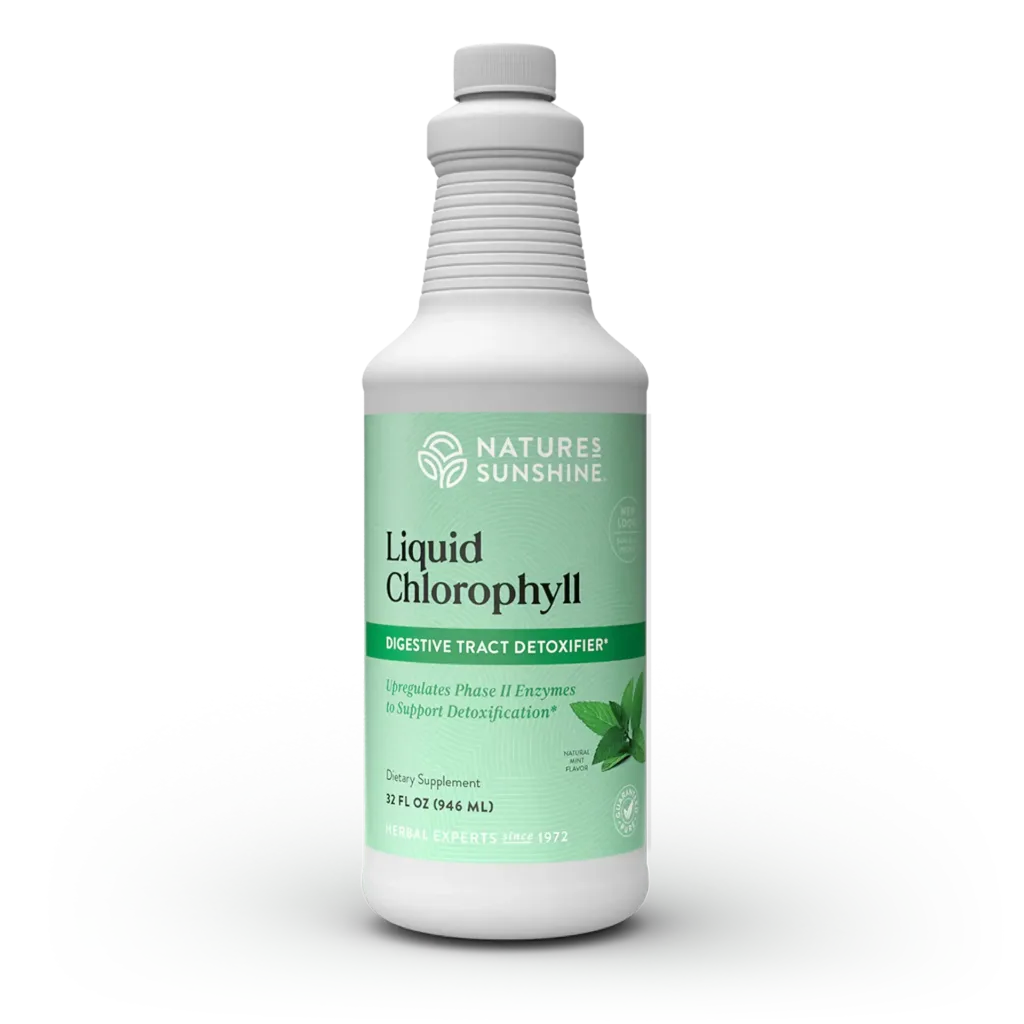
This 32-oz liquid formula also includes a small amount of spearmint aerial parts oil for flavor. The result is a refreshing daily addition to your routine that supports blood health, immune function, and the body's natural cleansing processes — and doubles as a natural deodorizer.
How Sodium Copper Chlorophyllin Supports the Body
To understand what Liquid Chlorophyll does, it helps to look at the science behind its key compound. Sodium copper chlorophyllin (SCC) contains two copper-containing porphyrin ring structures — trisodium copper chlorin e6 and disodium copper chlorin e4 — that give it its distinctive deep green color and its biological activity.
Blood Health
Chlorophyll's structural similarity to hemoglobin — both share a tetrapyrrole ring structure, with magnesium at Chlorophyll's center and iron at heme's — has traditionally supported the belief that Chlorophyll-rich preparations may support red blood cell health. Research on a related compound, sodium iron chlorophyllin, has shown more direct clinical evidence: a Phase IV multicenter randomized controlled trial across 31 hospitals found significant hemoglobin increases in participants treated with sodium iron chlorophyllin-containing tablets, and a 2022 meta-analysis of 39 trials further supported efficacy for iron-deficiency anemia. Standard plant-based Chlorophyll (containing magnesium or copper rather than iron) has traditionally been associated with blood support, though robust human clinical evidence for directly raising hemoglobin with these forms is still limited.
Natural Cleansing and Detoxification
Chlorophyll and chlorophyllin are able to form tight molecular complexes with certain chemicals known or suspected to cause harm — including polyaromatic hydrocarbons found in tobacco smoke and aflatoxin B1. Research suggests this binding may interfere with gastrointestinal absorption, reducing the amount that reaches sensitive tissues. A landmark randomized, double-blind, placebo-controlled trial in 180 adults found that 100 mg chlorophyllin three times daily for four months produced a 55% reduction in urinary aflatoxin-DNA adduct biomarkers versus placebo. A subsequent crossover pharmacokinetic study confirmed that both SCC and Chlorophyll may reduce aflatoxin bioavailability. Beyond specific toxin binding, Chlorophyll has been used as a traditional internal cleanser and detoxifier for decades, rooted in naturopathic practice.
Immune Support
Chlorophyllin has traditionally been attributed immune-supporting properties. Preclinical studies suggest immunostimulatory effects, potential enhancement of white blood cell production, and anti-inflammatory modulation. Traditional and naturopathic frameworks have long positioned Chlorophyll as an immune tonic, though direct human clinical evidence for specific immune outcomes such as infection resistance remains an area for future research.
Natural Deodorizer
Chlorophyll has been marketed as an "internal deodorant" since the 1950s. A 1980 study found that chlorophyllin administration was "helpful in controlling body and fecal odors" in 62 geriatric nursing home patients. Another study in patients with trimethylaminuria found that oral SCC significantly decreased urinary trimethylamine over three weeks. SCC has been used orally as an internal deodorant for more than 50 years without serious side effects, though evidence in healthy individuals remains limited.
Antioxidant Activity
The chemical nature of the porphyrin ring allows chlorophylls to function as hydrogen donors, stopping chain oxidation processes. Research indicates that chlorophylls present significant antioxidant activity through chelation of reactive ions and scavenging of free radicals, which may help prevent oxidative DNA damage and lipid peroxidation.
Key Ingredients
- ✓ Free shipping over $75
- ✓ 90-day easy returns
- ✓ Ships within hours
Who Is Liquid Chlorophyll For?
Understanding what Liquid Chlorophyll is can help you decide whether it fits your wellness goals. This formula may be a good match for people looking to:
- Support their body's natural cleansing processes — chlorophyllin has traditionally been used as an internal cleanser and has documented ability to bind certain environmental toxins in the digestive tract
- Promote blood health — those interested in the traditional connection between Chlorophyll's structure and hemoglobin support
- Encourage healthy immune response — chlorophyllin has been traditionally positioned as an immune tonic in naturopathic practice
- Address body odor concerns naturally — SCC has been used as an internal deodorant for over 50 years
- Add more "green" to their daily routine — Liquid Chlorophyll offers a simple way to incorporate Chlorophyll-derived compounds without eating pounds of leafy vegetables
If you're unsure whether Liquid Chlorophyll is right for your individual needs, our naturopath is available for a free consultation — no purchase or membership required.
A note on safety: Natural chlorophylls are not known to be toxic, and no toxic effects have been attributed to chlorophyllin despite more than 50 years of clinical use. Oral supplementation may cause green discoloration of urine or feces, or yellow or black discoloration of the tongue. Since safety has not been tested in pregnant or lactating women, these groups should avoid supplementation. Individuals with copper metabolism disorders such as Wilson's disease should limit exposure to copper-containing supplements, including SCC.
How to Take Liquid Chlorophyll
Take 2 tablespoons (30 mL) in an 8 fl oz glass of cold water daily. Refrigerate after opening.
Many of our customers enjoy their daily glass of Liquid Chlorophyll first thing in the morning as a refreshing way to start the day. The spearmint oil gives it a clean, pleasant taste that makes it easy to look forward to.
Written by Greg Howlett
Frequently asked questions
What is Liquid Chlorophyll made from?
Most Liquid Chlorophyll products, including this Nature's Sunshine formula, contain sodium copper chlorophyllin — a semisynthetic, water-soluble derivative of natural Chlorophyll. In this compound, the central magnesium atom found in plant Chlorophyll is replaced with copper, and the fat-soluble phytol tail is removed so it dissolves easily in water. Chlorophylls are principally extracted commercially from sources like alfalfa, grass, nettles, and spinach.
Is Liquid Chlorophyll the same as the Chlorophyll in plants?
Not exactly. Natural Chlorophyll in plants is fat-soluble and doesn't dissolve in water. Liquid Chlorophyll supplements use chlorophyllin, a modified form that is water-soluble. Both share the same porphyrin ring structure, but chlorophyllin has copper at its center instead of magnesium and lacks the phytol tail found in natural Chlorophyll.
Does Liquid Chlorophyll actually help with body odor?
Chlorophyllin has been used as an internal deodorant since the 1950s. A 1980 study found it "helpful in controlling body and fecal odors" in 62 nursing home patients, and another study showed it significantly reduced urinary trimethylamine in patients with trimethylaminuria. However, evidence in healthy individuals is largely drawn from older, small studies, so results may vary.
Are there any side effects of Liquid Chlorophyll?
Chlorophyllin has been used orally for more than 50 years without serious side effects reported. Common effects include green discoloration of urine or feces, or yellow or black discoloration of the tongue. Occasional reports of diarrhea have occurred. It may cause false positive results on guaiac card tests for occult blood. Those with Wilson's disease or other copper metabolism disorders should avoid copper-containing chlorophyllin. Safety has not been established for pregnant or lactating women.
Can Liquid Chlorophyll support blood health?
Chlorophyll shares a structural similarity with hemoglobin — both have tetrapyrrole ring structures. This has traditionally supported the belief that Chlorophyll-rich preparations may support blood health. Clinical research on a related compound, sodium iron chlorophyllin, has shown evidence for supporting hemoglobin levels in iron-deficiency anemia. Standard Chlorophyll supplements containing magnesium or copper have traditionally been associated with blood support, though robust human evidence for directly raising hemoglobin with these forms is still developing.
How much Liquid Chlorophyll should I take daily?
The directions for this Nature's Sunshine formula recommend taking 2 tablespoons (30 mL) in an 8 fl oz glass of cold water daily. Refrigerate after opening. If you have questions about whether Liquid Chlorophyll is appropriate for your individual situation, our naturopath offers free consultations.
Talk to Dr. Shannyn Fowl
Not sure if this is right for you? Book a free, no-pressure consultation for personalized guidance on your health goals.
Book your free consult →About Caring Sunshine
A family-run reseller of premium supplements — free shipping, a 90-day guarantee, and real people who know the products.
Learn more about us →