
Triple Magnesium Complex Benefits | Caring Sunshine
Explore triple Magnesium Complex benefits for heart, brain, bone, and nervous system health. Learn how citrate and malate forms support optimal absorption.
Triple Magnesium Complex Benefits: What It Is and Why It Matters
Magnesium is the fourth most abundant cation in the human body and a critical cofactor in more than 300 enzyme systems that regulate energy metabolism, neuromuscular function, cardiovascular health, bone integrity, and psychological well-being. Despite its importance, an estimated 56–68% of Americans do not obtain enough Magnesium in their daily diet to meet the Recommended Dietary Allowance.
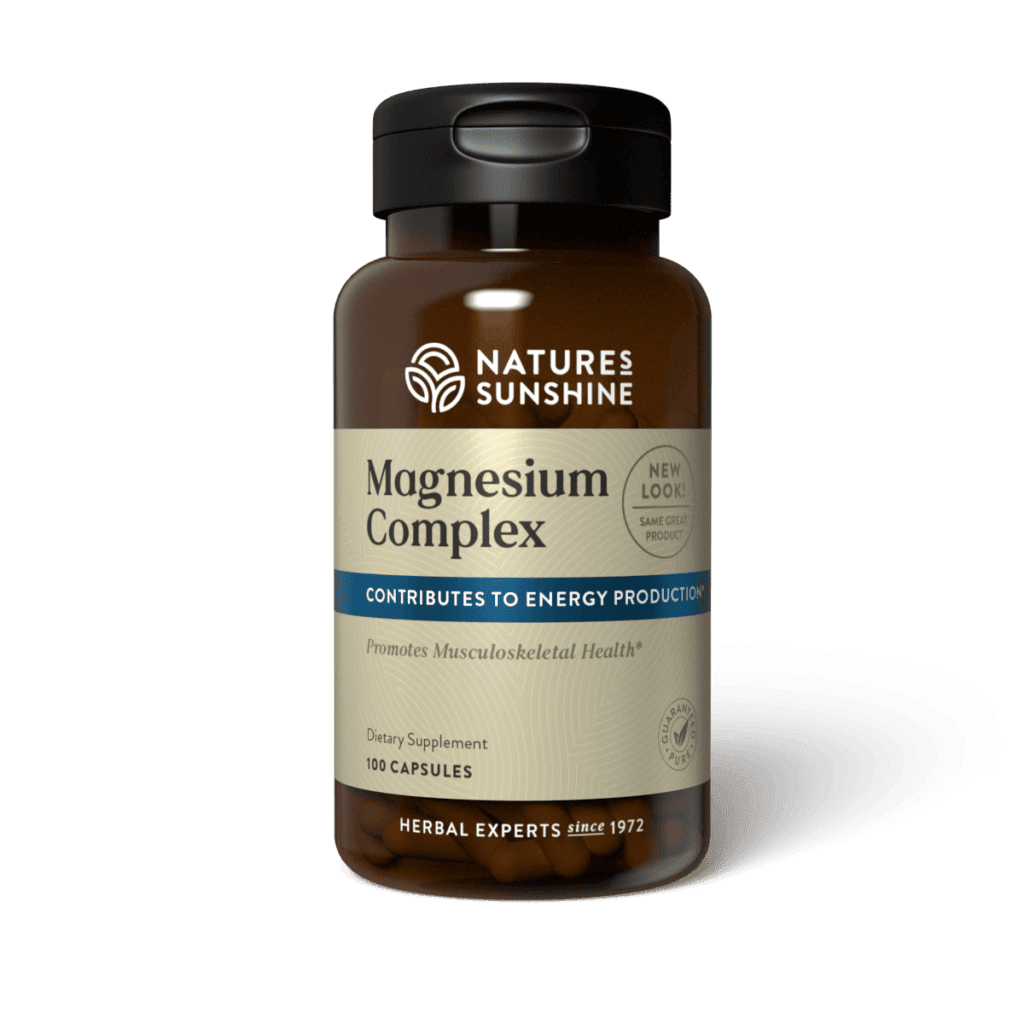
Nature's Sunshine Magnesium Complex addresses this widespread gap by combining two highly soluble organic forms — Magnesium citrate and Magnesium malate — in a single capsule. Because organic Magnesium salts are generally more soluble and have higher bioavailability than inorganic forms such as Magnesium oxide, this dual-form approach is designed for optimum effectiveness. Two capsules deliver 184 mg of Magnesium to support the brain, heart, kidneys, and bones.
Understanding the full range of triple Magnesium Complex benefits starts with appreciating how deeply this mineral is woven into everyday physiology — from ATP energy production in every cell, to the electrical stability of your heartbeat, to the structural integrity of your skeleton.
Why Two Forms of Magnesium Matter
Not all Magnesium supplements are created equal. The form in which Magnesium is delivered directly affects how well your body can absorb and use it. The Magnesium Complex pairs two organic chelates chosen for their solubility and complementary roles.
Magnesium Citrate
Magnesium citrate is one of the most bioavailable forms available. Research shows it has high solubility even in water (55%) and is substantially more soluble than Magnesium oxide across all states of acid secretion. That high solubility translates into efficient absorption in the digestive tract, helping your body actually put the Magnesium to work.
Magnesium Malate
Magnesium malate is another organic salt in which Magnesium is chelated to malic acid. Like citrate, organic forms such as malate are generally more soluble and have higher bioavailability than inorganic alternatives. Malate shares the same broad biological roles as other Magnesium forms — serving as a cofactor in enzymatic reactions, supporting ATP synthesis, and contributing to neuromuscular and cardiovascular function.
By combining citrate and malate, this formula provides two well-absorbed delivery vehicles for the Mg²⁺ ion, the active player behind the triple Magnesium Complex benefits discussed throughout this guide.
Key Ingredients
- ✓ Free shipping over $75
- ✓ 90-day easy returns
- ✓ Ships within hours
Who Should Consider a Magnesium Complex
Given the widespread nature of Magnesium shortfalls — the diets of most people in the United States provide less than the recommended amounts — many adults may benefit from supplementation. However, some groups are especially worth noting.
- Older adults: As we age, Magnesium absorption and retention can decrease, leading to deficiency and health consequences. Older people are more susceptible due to decreased absorption from food, increased medication use (diuretics can deplete Magnesium), and potential dietary restrictions. Men older than 70 and teenage girls are most likely to have low intakes.
- Those focused on heart health: Research suggests higher Magnesium levels are inversely associated with risks of coronary heart disease, stroke, and total cardiovascular disease. The cardiovascular system is one of the primary areas where triple Magnesium Complex benefits are most extensively studied.
- People concerned about bone density: Magnesium is involved in bone formation, influences osteoblast and osteoclast activities, and affects concentrations of vitamin D and parathyroid hormone — both major regulators of bone homeostasis.
- Anyone supporting nervous system health: Magnesium modulates neuronal excitability, neuromuscular transmission, and nerve signaling, making it relevant for those seeking to promote normal nerve function.
- Individuals taking certain medications: Loop and thiazide diuretics deplete Magnesium through increased urinary excretion, and proton pump inhibitors taken for prolonged periods can cause hypomagnesemia.
If you're unsure whether a Magnesium supplement is right for you, our naturopath is available for a free consultation to help you think through your individual needs.
How to Take Magnesium Complex
Take 2 capsules twice daily with a meal.
Each serving of 2 capsules provides 184 mg of Magnesium from both citrate and malate forms. The product comes in a 100-capsule bottle.
For reference, the Recommended Dietary Allowance for Magnesium is 400–420 mg/day for adult men and 310–320 mg/day for adult women. Magnesium supplements can occasionally cause stomach-related side effects such as softening of stool, nausea, or cramping, though these are generally more common with inorganic forms and at higher doses. The organic citrate and malate forms used in this product are chosen in part for their higher solubility and gentler digestive profile.
Important interactions to be aware of: Magnesium may decrease absorption of bisphosphonates (separate by at least 2 hours), tetracycline and quinolone antibiotics (take the antibiotic at least 2 hours before or 4–6 hours after Magnesium), and gabapentin (may reduce absorption by 20%). If you take any of these medications or have questions about your specific situation, we encourage you to reach out to our naturopath for a free consultation.
Written by Greg Howlett
Frequently asked questions
What are the main triple Magnesium Complex benefits?
The two organic forms of Magnesium in this complex — Magnesium citrate and Magnesium malate — support the cardiovascular system, nervous system, and bone health. Research suggests Magnesium is a cofactor in more than 300 enzyme systems and plays roles in heart rhythm, blood pressure regulation, bone mineral metabolism, neuronal excitability, and neuromuscular function. The Magnesium Complex is specifically formulated to support the brain, heart, and kidneys.
Why does this formula use citrate and malate instead of Magnesium oxide?
Magnesium citrate and Magnesium malate are organic forms of Magnesium that are generally more soluble and have higher bioavailability than inorganic forms. Magnesium citrate, for example, has 55% solubility in water, while Magnesium oxide was found to be virtually insoluble in water and only 43% soluble even in simulated peak acid secretion. Higher solubility means more efficient absorption, so your body can actually use the Magnesium you take.
How much Magnesium does this product provide per day?
The suggested use is 2 capsules twice daily with a meal, providing 184 mg of Magnesium per serving of 2 capsules. For context, the Recommended Dietary Allowance for Magnesium is 400–420 mg/day for adult men and 310–320 mg/day for adult women. This supplement is designed to help bridge the gap between dietary intake and recommended levels.
Are there any medications I should be careful about when taking Magnesium?
Yes. Magnesium may decrease the absorption of bisphosphonates (such as alendronate), tetracycline and quinolone antibiotics, and gabapentin. Separate bisphosphonates by at least 2 hours, and take antibiotics at least 2 hours before or 4–6 hours after Magnesium. Loop and thiazide diuretics can deplete Magnesium, and proton pump inhibitors taken for more than a year can cause low Magnesium levels. If you take any medications, consult your healthcare professional or contact our naturopath for a free consultation.
Who is most at risk for Magnesium deficiency?
Certain groups are more likely to have inadequate Magnesium levels, including older adults (due to decreased absorption), individuals with gastrointestinal disorders, those with type 2 diabetes, people with alcohol dependence, and individuals on long-term diuretics or proton pump inhibitors. It is estimated that 56–68% of Americans do not meet the recommended daily allowance for Magnesium through diet alone.
Can Magnesium supplements cause side effects?
Magnesium supplements can occasionally cause softening of stool, nausea, or cramping, especially at higher doses. These side effects are more common with inorganic forms like Magnesium oxide. The organic citrate and malate forms in this product are chosen for their higher solubility and tend to be gentler on the digestive system. Excess supplemental Magnesium is typically excreted by the kidneys in individuals with normal kidney function.
Talk to Dr. Shannyn Fowl
Not sure if this is right for you? Book a free, no-pressure consultation for personalized guidance on your health goals.
Book your free consult →About Caring Sunshine
A family-run reseller of premium supplements — free shipping, a 90-day guarantee, and real people who know the products.
Learn more about us →