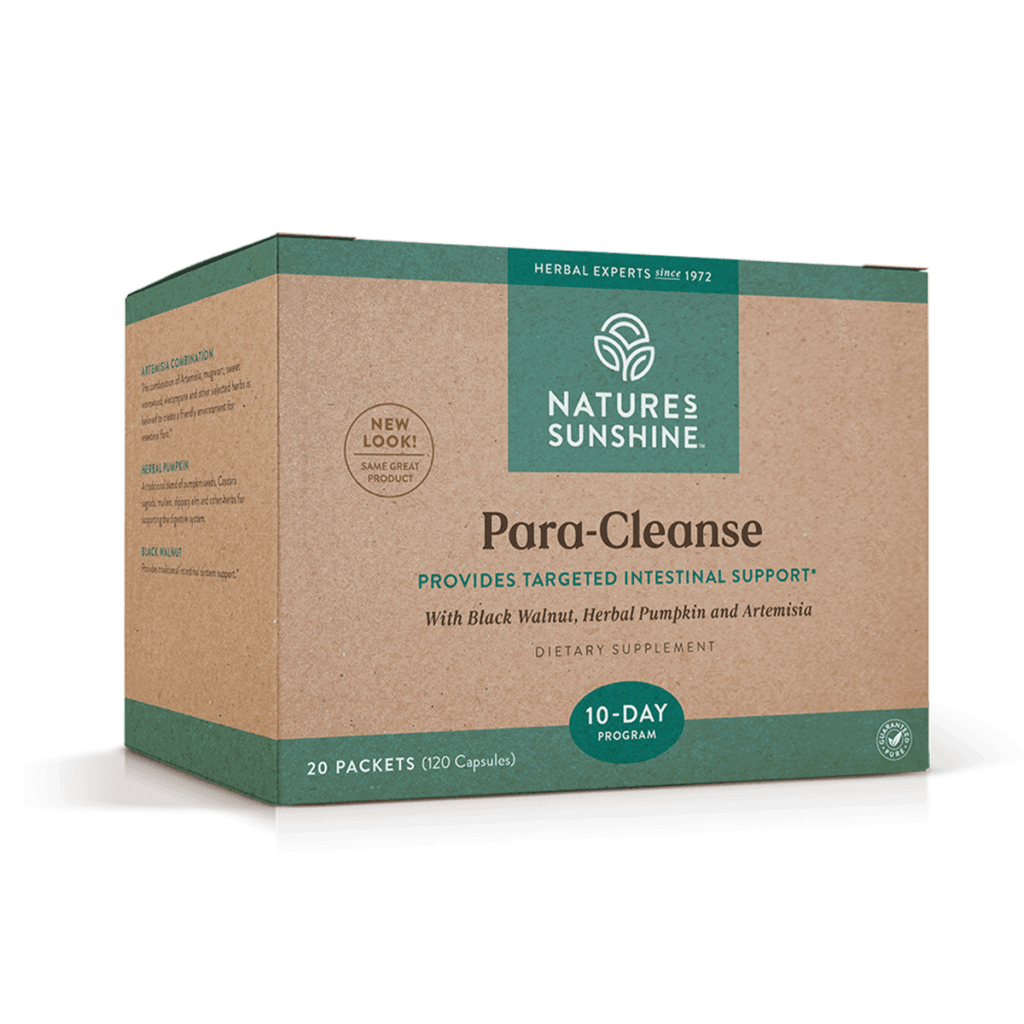
Black walnut unripe hulls extract — 480 mg
Black walnut (Juglans nigra) unripe hull extract contains juglone, a naphthoquinone that has been used for centuries in North American and European folk medicine to help expel intestinal worms. Preclinical studies show juglone exhibits antiparasitic activity in vitro and in animal models against nematodes, Giardia, and Entamoeba, though robust human clinical trials are lacking. Beyond its traditional antiparasitic role, research suggests walnut consumption positively modifies gut microbial communities — multiple human RCTs and animal studies demonstrate increases in butyrate-producing bacteria such as Faecalibacterium and Roseburia, along with reductions in pro-inflammatory secondary bile acids. An in vitro digestion study of walnut green husk also showed selective modulation of gut microbiota with inhibition of pro-inflammatory bacteria.
acetogenins (from Paw paw twig extract) — 8.5 mg
Paw paw (Asimina triloba) twig extract provides acetogenins — potent inhibitors of mitochondrial complex I that block cellular ATP production. This mechanism may account for the broad biological activities attributed to Paw paw extracts, including antiparasitic and pesticidal properties observed in laboratory settings. Native Americans commonly used pawpaw preparations to address parasitic concerns and promote overall wellbeing. The extract in capsule form has been used as a natural anthelmintic. Research on the related compound annonacin shows documented activity in preclinical models. It is important that Paw paw products come from standardized Asimina triloba sources to ensure a guaranteed amount of acetogenins.
Pumpkin seed — 980 mg
Pumpkin seeds (Cucurbita pepo) are one of the oldest and most cross-culturally consistent traditional anthelmintics. Native Americans used them to treat intestinal worms, a remedy later adopted by American doctors in the early nineteenth century. The compound cucurbitin, found particularly in Pumpkin seeds, is considered the primary active constituent for this use — research suggests it may paralyze intestinal helminths by disrupting their neuromuscular function. In vitro and animal studies confirm activity against tapeworms, roundworms, and Trichinella spiralis. The Aztecs combined Pumpkin seeds with other herbs for roundworms and tapeworms. Pumpkin seeds also provide high-quality proteins, unsaturated fatty acids, and minerals such as zinc and magnesium that support overall digestive well-being.
Black walnut hulls — 980 mg
This additional serving of Black walnut (Juglans nigra) hulls complements the concentrated extract above, providing the full spectrum of hull constituents including juglone, hydrojuglone, tannins, ellagitannins, and phenolic compounds. Traditionally, the hulls have been used to help support a healthy intestinal environment. The tannins in Black walnut contribute an astringent quality that may help create an unfavorable environment for unwanted organisms in the gut. Research also suggests walnut consumption may support gut microbiome health — studies demonstrate that walnut intake positively modifies microbial communities, increasing beneficial bacteria and reducing pro-inflammatory secondary bile acids.
Cascara sagrada bark — 980 mg
Cascara sagrada (Frangula purshiana) bark, whose name means "sacred bark" in Spanish, was used for centuries by Native Americans of the Pacific Northwest as a laxative and cathartic. Its active cascarosides — anthraquinone derivatives — stimulate peristalsis and inhibit colon water reabsorption, typically producing a bowel movement within 6–8 hours. This mechanism supports the colon cleanse aspect of the para cleanse program by promoting thorough evacuation. Traditionally, anthraquinone-containing herbs like Cascara sagrada have also been used as purgatives with the premise that forceful bowel evacuation may help mechanically remove unwanted organisms from the gut. In vitro studies show emodin, a cascara constituent, has antimicrobial properties, though no clinical trials validate cascara for antiparasitic use in humans.
Chamomile flowers — 980 mg
Chamomile (Matricaria chamomilla) is one of the oldest and most widely documented medicinal plants in the world. Its key constituents — including the flavonoid apigenin, chamazulene, and alpha-bisabolol — have demonstrated anti-inflammatory and antispasmodic properties. Chamomile preparations have been traditionally used for gastrointestinal disorders, muscle spasms, and digestive discomfort. Relaxant effects have been detected on human intestinal preparations, providing scientific support for the traditional use of Chamomile in spasmodic gastrointestinal conditions. Within this para cleanse formula, Chamomile may help soothe the digestive tract during the cleansing process.
Mullein leaves — 980 mg
Mullein (Verbascum thapsus) has been used in herbal medicine for over 2,000 years, with Dioscorides first documenting its application for pulmonary conditions. The leaves contain saponins, mucilage, flavonoids including quercetin, and iridoid glycosides such as aucubin, which have demonstrated anti-inflammatory effects. A preliminary study evaluated the anthelmintic activity of V. thapsus extracts against roundworms and tapeworms in vitro, though this evidence remains preclinical. Traditionally, Mullein has been used for respiratory support and as a soothing herb for the digestive and respiratory tracts.
Marshmallow root extract (althaea officinalis) — 980 mg
Marshmallow root (Althaea officinalis) has been used therapeutically for over 2,000 years. Its extraordinarily high mucilage content — up to 35% of dry root weight — forms a soothing, protective gel on contact with water. This gel coats and soothes the intestinal lining, acting as a gastrointestinal demulcent. The European Medicines Agency (EMA) recognizes Marshmallow root for soothing mucous membranes of the gastrointestinal tract. Within the para cleanse program, Marshmallow root may help protect and comfort the intestinal lining during the cleansing process, easing potential irritation from other more stimulating herbs in the formula.
slippery elm inner bark — 980 mg
Slippery elm (Ulmus rubra) inner bark produces a thick mucilage composed of polysaccharides that coats and soothes the intestinal and colonic lining. It has been used in North American herbal medicine for centuries as a demulcent and gentle bowel normalizer. Cherokee, Iroquois, and other indigenous communities utilized the bark for its soothing and healing properties. Research also suggests Slippery elm bark polysaccharides may have prebiotic potential — a 2018 review specifically evaluated slippery elm among herbs with prebiotic potential for digestive health, and a 2020 clinical study documented improved microbial profiles in participants taking a slippery elm-containing formula. These properties support both the colon cleanse and gut microbiome health aspects of the para cleanse program.
Elecampane root — 778 mg
Elecampane (Inula helenium) root is exceptionally rich in inulin — up to 44% of dry weight — a prebiotic fructooligosaccharide with robust clinical evidence for selectively promoting beneficial gut bacteria including Bifidobacterium and Lactobacillus species. While clinical trials of inulin supplementation support microbiome modulation, trials using Elecampane root directly are absent. The root also contains alantolactone, a sesquiterpene lactone with documented anthelmintic activity. A published study evaluated traditional herbs including Elecampane against Ascaris lumbricoides, and the British Herbal Pharmacopoeia confirms historical use against intestinal worms. In vitro and limited animal data support these traditional applications.
Mugwort aerial parts — 778 mg
Mugwort (Artemisia vulgaris) is documented as an antiparasitic and anthelmintic herb across European, Asian, and Ayurvedic traditions. The plant's use against intestinal worms is one of its oldest recorded applications. It contains sesquiterpene lactones, flavonoids, and essential oils that contribute to its traditional therapeutic profile. Preclinical evidence supports antiparasitic activity of Artemisia species generally, though no human clinical trials specifically on A. vulgaris for parasites exist. Within the para cleanse formula, Mugwort contributes to the program's broad-spectrum botanical approach to intestinal cleansing.
Clove flower — 778 mg
Clove (Syzygium aromaticum) contains eugenol, its principal bioactive compound, which has been demonstrated in published research to be an effective anthelmintic against Trichinella spiralis in vitro, with additional evidence of activity against Giardia, Fasciola, and Haemonchus. Clove has been traditionally paired with wormwood and Black walnut to target intestinal parasites at various life stages. Eugenol also possesses well-documented antioxidant, anti-inflammatory, and antimicrobial properties. The FDA classifies Clove essential oil as generally recognized as safe (GRAS).
Garlic bulb — 778 mg
Garlic (Allium sativum) bulb is the primary source of allicin and organosulfur compounds documented to inhibit Giardia, Entamoeba, and gastrointestinal helminths in vitro and in animal models. A 2024 in vivo swine study confirmed reduced parasite intensity with garlic powder. Beyond its traditional parasite-cleansing applications, garlic's fructan content acts as a prebiotic, supporting the growth of beneficial gut bacteria including Lactobacillus and Clostridial species. Clinical evidence shows aged garlic extract supplementation for 3 months improved microbial richness and diversity in hypertensive subjects. Garlic has been used medicinally for thousands of years across Egyptian, Ayurvedic, and Chinese traditions.
Ginger rhizome — 778 mg
Ginger (Zingiber officinale) is a well-documented prokinetic herb. Multiple RCTs have demonstrated its efficacy in accelerating gastric emptying and intestinal transit, which supports the colon cleanse aspect of this formula by promoting healthy motility. Ginger has traditional use in Ayurvedic, Chinese, and African medicine for intestinal parasite conditions, and a published in vitro study evaluated Ginger extracts against Trichinella spiralis and Trichinella britovi larvae. Its anti-inflammatory properties — including inhibition of COX-1, COX-2, and 5-lipoxygenase — may also help comfort the digestive tract during the cleansing process.
Spearmint leaf and flower — 778 mg
Spearmint (Mentha spicata) has been used in traditional Iranian medicine since ancient times for the management of digestive complaints including diarrhea, indigestion, intestinal weakness, abdominal pain, and flatulence. Its essential oil contains carvone and limonene, while its phenolic fraction is rich in rosmarinic acid. Both spearmint and peppermint oils have been shown in vitro to significantly inhibit inflammatory cytokines IL-1β and TNF-α from stimulated macrophages. Within this para cleanse formula, spearmint may help soothe digestive discomfort during the cleansing process.
Turmeric root extract — 778 mg
Turmeric (Curcuma longa) root extract provides curcumin, a polyphenol that research suggests modulates gut microbiota composition — promoting beneficial bacteria while suppressing pathogenic strains — and enhances intestinal barrier function. A 2026 clinical trial in IBD patients using 16S rRNA sequencing found transient microbiota shifts with curcumin. Its active compound curcumin has also been shown in vitro to disrupt microtubule assembly in Giardia lamblia trophozoites, damaging the parasite's ventral disk and flagella, and additional in vitro studies document activity against Plasmodium, Leishmania, and Toxoplasma. Turmeric appears in traditional Ayurvedic antiparasitic protocols.
Olive leaf extract — 778 mg
Olive leaf extract (Olea europaea) provides oleuropein and hydroxytyrosol — bioactive polyphenols with documented antioxidant, anti-inflammatory, and antimicrobial properties. Oleuropein has been shown to be a potent antioxidant, and in vitro studies demonstrate its capacity to inhibit the oxidation of LDL cholesterol. Olive leaf extract may contribute overall antioxidant support to the intestinal environment during the para cleanse program. It has been used in traditional Mediterranean medicine for centuries to treat fevers, infections, and wounds.
Sweet wormwood aerial parts — 778 mg
Sweet wormwood (Artemisia annua) is the source of artemisinin, the Nobel Prize-winning antimalarial compound discovered by Tu Youyou. Clinical trial evidence supports activity against schistosomiasis — a meta-analysis showed 65–97% protection rates — and in vitro studies demonstrate activity against Giardia. Traditional Chinese medicine use of Sweet wormwood is documented since 341 AD. The plant contains over 250 distinct compounds including sesquiterpene lactones, flavonoids, and coumarins. Within the para cleanse formula, Sweet wormwood contributes Artemisia-class botanicals with one of the strongest research profiles of any herb used traditionally for parasitic concerns.
extra virgin Olive oil base
Extra virgin Olive oil serves as the carrier base for this formula, providing a matrix rich in oleic acid and bioactive polyphenols including hydroxytyrosol. Research suggests Olive oil phenolic compounds selectively promote beneficial gut bacteria, increase microbial alpha diversity, and enhance short-chain fatty acid production. A 2026 prospective cohort of 656 older adults linked virgin Olive oil consumption to beneficial gut microbiota composition. EVOO also supports intestinal barrier integrity and provides a natural lipid medium that may enhance the absorption of fat-soluble botanical compounds in the formula.
sunflower Lecithin
Sunflower Lecithin provides phospholipids — including phosphatidylcholine, phosphatidylethanolamine, and phosphatidylinositol — that serve as natural emulsifiers. These amphiphilic compounds help blend the oil-soluble and water-soluble botanical extracts in the formula, potentially supporting their absorption and bioavailability. Sunflower-derived Lecithin is extracted through a gentle cold-pressing process and does not carry the soy allergen concerns associated with soy Lecithin, making it suitable for individuals with soy sensitivities.