Free shipping on orders over $75 | First Order? Save 20%.
(888) 510-7196

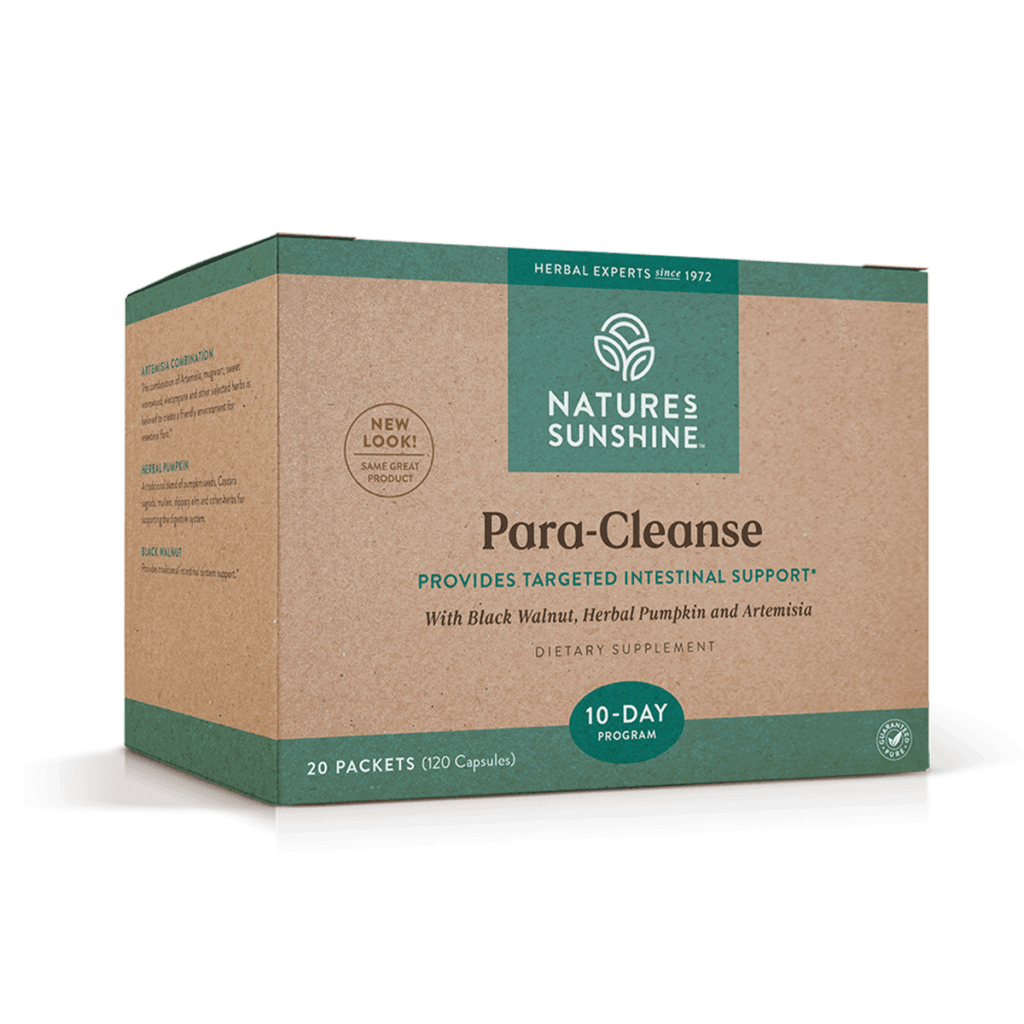
Nature’s Sunshine Para Cleanse | 10-Day Program

Discover Nature's Sunshine Para-Cleanse, a 10-day herbal intestinal cleansing program with Black walnut, Paw paw, Pumpkin seed & more. Learn ingredients & usage.

Product Overview

What Is Nature's Sunshine Para Cleanse?

Nature's Sunshine Para-Cleanse is a structured 10-day herbal program designed to support the natural cleansing processes of the intestinal system. Each convenient cello packet contains a carefully assembled combination of botanicals: 1 Paw paw Cell-Regβ„’ capsule, 2 Herbal Pumpkin Combination capsules, 1 Black walnut ATC Concentrate capsule, and 2 Artemisia Combination capsules.

The Nature's Sunshine Para Cleanse program brings together herbs with deep roots in traditional North American, European, and Asian folk medicine β€” including Black walnut hulls, Pumpkin seeds, Cascara sagrada bark, Sweet wormwood, and more. Together, these ingredients are formulated to encourage a healthy digestive environment and support your body's natural intestinal cleansing processes.

If you have questions about whether this program is right for you, our naturopath is available for a free consultation to help you understand how these botanicals work together.

How It Works

A Multi-Herb Approach to Intestinal Cleansing

What makes the Nature's Sunshine Para Cleanse program distinctive is how it layers multiple herbal strategies into a single daily protocol. Rather than relying on a single botanical, each packet combines herbs that have historically been used for different β€” but complementary β€” purposes within the digestive tract.

Traditional antiparasitic herbs like Black walnut hulls, Sweet wormwood, Pumpkin seeds, and Clove have been used for centuries across multiple cultures to support a healthy intestinal environment. Black walnut hull has been used in North American and European folk medicine to expel intestinal worms, with its active compound juglone showing antiparasitic activity in preclinical studies. Pumpkin seeds contain cucurbitin, which has been studied for its ability to disrupt the neuromuscular function of intestinal helminths. Sweet wormwood (Artemisia annua) is the source of the Nobel Prize-winning compound artemisinin, with clinical trial evidence against schistosomiasis and traditional Chinese medicine use documented since 341 AD.

Digestive support herbs including Cascara sagrada bark, Marshmallow root, Slippery elm bark, and Ginger work to support healthy bowel function. Cascara sagrada's active cascarosides promote peristalsis and inhibit colon water reabsorption. Marshmallow root and Slippery elm bark provide soothing mucilage that traditionally coats and protects the intestinal lining during cleansing. Ginger is a well-documented prokinetic herb that promotes gastrointestinal motility.

Gut microbiome supporters such as Elecampane root (containing up to 44% prebiotic inulin), garlic, and Turmeric may help support beneficial gut bacteria. Research suggests that walnut consumption positively modifies gut microbial communities, increasing butyrate-producing bacteria.

What's inside

Key ingredients

Black walnut unripe hulls extract β€” 480 mg
Black walnut (Juglans nigra) hull has been used for centuries in North American and European folk medicine to expel intestinal worms. Its key bioactive compound juglone shows antiparasitic activity in vitro and in animal models against nematodes, Giardia, and Entamoeba, though robust human clinical trials are lacking. The hulls also contain hydrolyzable tannins, including ellagitannins that contribute to an astringent environment in the gut. Research suggests that walnut consumption positively modifies gut microbial communities, increasing butyrate-producing bacteria (Faecalibacterium, Roseburia) and reducing pro-inflammatory secondary bile acids. An in vitro digestion study of walnut green husk showed selective modulation of gut microbiota with inhibition of pro-inflammatory bacteria. Historically, Black walnut leaves and bark have been classified as having laxative properties, and the hulls have been recorded as supporting regular bowel movements.
acetogenins (from Paw paw twig extract) β€” 8.5 mg
Paw paw (Asimina triloba) twig extract provides acetogenins β€” potent inhibitors of mitochondrial complex I that block cellular ATP production. Native Americans commonly used pawpaw for digestive complaints and intestinal parasites. The extract in capsule form has been used as a natural anthelmintic. Research suggests that carica papaya seeds and latex demonstrate anthelmintic and antiparasitic activity supported by experimental and some clinical evidence; a 2026 systematic review of 47 studies found consistent reductions in faecal egg counts of 60–85% attributable to papaya seed bioactives. Traditionally, pawpaw has been used across tropical regions for intestinal parasite infections and colon cleansing.
Pumpkin seed β€” 980 mg
Pumpkin seeds (Cucurbita pepo) have one of the oldest and most cross-culturally consistent traditional anthelmintic applications. Pumpkin seeds contain cucurbitin (3-amino-3-carboxypyrrolidine), which has been studied for its ability to paralyze intestinal helminths by disrupting their neuromuscular function. In vitro and animal studies confirm efficacy against tapeworms, roundworms, and Trichinella spiralis. The Aztecs combined Pumpkin seeds with wormseed for roundworms and tapeworms. Pumpkin flesh also provides dietary fiber (~3 g per cup) that adds bulk to stool and promotes regular bowel movements, with both soluble fiber (pectin) and insoluble fiber fractions contributing to gastrointestinal motility.
Black walnut hulls β€” 980 mg
This whole-hull form complements the concentrated extract above, providing a broader spectrum of Black walnut's bioactive compounds. The hulls contain juglone, hydrojuglone, and tannins. Juglone disrupts microbial respiratory chains and shows antiparasitic activity in Trypanosoma screening models; a 2015 study confirmed hydrojuglone glucoside as the dominant antitrypanosomal compound in J. nigra. A 2022 study showed juglone achieved a 63% reduction in Schistosoma worm burden in animal models. In North American and European folk medicine, the hulls have been used for centuries as a remedy for intestinal parasites and digestive disturbances attributed to the large intestine.
Cascara sagrada bark β€” 980 mg
Cascara sagrada (Rhamnus purshiana bark) is a traditional North American laxative used by Native Americans for centuries and adopted into Western medicine in the 19th century. Its active cascarosides (anthraquinone derivatives) stimulate peristalsis and inhibit colon water reabsorption, typically producing a bowel movement within 6–8 hours. It was formerly an FDA-approved OTC laxative and remains widely used in colon-cleanse products. The WHO (2002) monograph confirms its traditional use for constipation. Anthraquinone-containing herbs including Cascara sagrada have a traditional history of use as purgatives to expel intestinal parasites, with the premise that forceful bowel evacuation mechanically removes parasites from the gut.
Chamomile flowers β€” 980 mg
Chamomile (Matricaria chamomilla) has centuries of traditional use in European herbalism as a gastrointestinal antispasmodic, carminative, and anti-inflammatory agent for the intestines, including the colon. The German Commission E has a positive monograph for Chamomile for GI spasms and inflammatory diseases of the GI tract. Chamomile contains apigenin, bisabolol, and chamazulene β€” compounds that support soothing comfort during digestive cleansing. Relaxant effects have been detected on human jejunum preparations, providing scientific reassurance for the traditional use of Chamomile in spasmodic gastrointestinal disorders.
Mullein leaves β€” 980 mg
Mullein (Verbascum thapsus) contains saponins, mucilage, iridoid glycosides including aucubin, and flavonoids such as quercetin. It has been traditionally used to reduce gut inflammation and support liver function. Preliminary phytochemical tests and anthelmintic activity studies of V. thapsus evaluated activity against fresh adult roundworms and tapeworms, though evidence remains preclinical. Mullein's mucilaginous constituents provide a soothing layer on irritated mucous membranes, supporting comfort during intestinal cleansing.
Marshmallow root extract (althaea officinalis) β€” 980 mg
Marshmallow root (Althaea officinalis) contains mucilage that can make up as much as 35% of the dry weight of the root. This mucilage coats and soothes the intestinal lining, used traditionally as a gastrointestinal demulcent in colon-cleanse formulas. The European Medicines Agency (EMA) recognizes Marshmallow root for soothing mucous membranes of the gastrointestinal tract. The German Commission E and ESCOP also list Marshmallow root for mild inflammation of the gastric mucosa. It has historically been used to provide mild bulk-forming laxative effects and gentle bowel support.
slippery elm inner bark β€” 980 mg
Slippery elm bark (Ulmus rubra) produces a thick mucilage that coats and soothes the intestinal and colonic lining, traditionally used in North American herbal medicine as a demulcent and gentle bowel normalizer. Slippery elm bark polysaccharides and arabinogalactan-type fibers have documented prebiotic potential, supporting the growth of Lactobacillus and Bifidobacterium species. A 2018 review in the Journal of Alternative and Complementary Medicine evaluated slippery elm among herbs with prebiotic potential for digestive health. Native Americans used the inner bark widely for stomach and bowel complaints, and it was included in the US Pharmacopeia from 1820 to 1960.
Elecampane root β€” 778 mg
Elecampane (Inula helenium) root contains up to 44% inulin, a prebiotic fructooligosaccharide with robust clinical evidence for selectively promoting beneficial gut bacteria including Bifidobacterium and Lactobacillus species. Clinical trials of inulin supplementation support microbiome modulation, though trials using Elecampane root directly are absent. Alantolactone from Elecampane root has documented anthelmintic activity, and the British Herbal Pharmacopoeia and multiple ethnobotanical records confirm historical use against intestinal worms. Elecampane promotes the secretions and movement of the gut and is traditionally valued in cases of weak digestion, poor appetite, bloating, or wind.
Mugwort aerial parts β€” 778 mg
Mugwort (Artemisia vulgaris) is documented as an antiparasitic and anthelmintic herb across European, Asian, and Ayurvedic traditions. The plant's use against intestinal worms is one of its oldest recorded applications. Preclinical evidence supports antiparasitic activity of Artemisia species generally. In TCM, Mugwort has been used to regulate the functioning of the gastrointestinal system. Its bitter constituents, including sesquiterpene lactones, support a plausible mechanism for stimulating digestive secretions.
Clove flower β€” 778 mg
Clove (Syzygium aromaticum) contains eugenol, which has been demonstrated in a PMC-published study to be an effective anthelmintic against Trichinella spiralis in vitro, with additional evidence against Giardia, Fasciola, and Haemonchus. Clove is traditionally paired with wormwood and Black walnut to target parasite eggs. The FDA classifies Clove essential oil as generally recognized as safe (GRAS). In traditional Chinese medicine, Clove is used as a carminative to relieve nausea, vomiting, and excessive flatulence.
Garlic bulb β€” 778 mg
Garlic (Allium sativum) is the primary source of allicin and organosulfur compounds documented to inhibit Giardia, Entamoeba, and gastrointestinal helminths in vitro and in animal models. A 2024 in vivo swine study confirmed reduced parasite intensity with garlic powder. Garlic's fructan content acts as a prebiotic, supporting growth of beneficial gut bacteria including Lactobacillus and Clostridial species. Clinical evidence shows aged garlic extract supplementation for 3 months improved microbial richness and diversity in hypertensive subjects.
Ginger rhizome β€” 778 mg
Ginger (Zingiber officinale) is a well-documented prokinetic herb that promotes gastrointestinal motility and increases colonic peristalsis. Multiple RCTs have demonstrated its efficacy in accelerating gastric emptying and intestinal transit. Gingerols and shogaols act as 5-HT4 receptor agonists and motilin agonists, stimulating gastric emptying and intestinal peristalsis. A meta-analysis of 5 RCTs confirmed Ginger accelerates gastric emptying in humans. Ginger has traditional use in Ayurvedic, Chinese, and African medicine for intestinal parasite conditions, and a published in vitro study evaluated Ginger extracts against Trichinella spiralis larvae.
Spearmint leaf and flower β€” 778 mg
Spearmint (Mentha spicata) has been used in traditional Iranian medicine since ancient times for the management of diarrhea, indigestion, intestinal weakness, abdominal pain, and flatulence. Its essential oil constituents β€” primarily carvone and limonene β€” contribute antispasmodic properties. In vitro work showed that spearmint oil significantly inhibited IL-1Ξ² and TNF-Ξ± secretion from LPS-stimulated macrophages, supporting its traditional use for digestive comfort during cleansing.
Turmeric root extract β€” 778 mg
Turmeric (Curcuma longa) and its active compound curcumin disrupt microtubule assembly in Giardia lamblia trophozoites, damaging the parasite's ventral disk and flagella in vitro studies. In vitro studies also document activity against Plasmodium, Leishmania, and Toxoplasma. Curcumin modulates gut microbiota composition, promoting beneficial bacteria while suppressing pathogenic strains, and enhances intestinal barrier function. A 2026 clinical trial in IBD patients using 16S rRNA sequencing found transient microbiota shifts with curcumin. Curcumin accumulates at high concentrations in the colon due to poor systemic absorption, enabling potent local anti-inflammatory and barrier-protecting effects.
Olive leaf extract β€” 778 mg
Olive leaf extract from Olea europaea contains oleuropein and hydroxytyrosol β€” phenolic compounds with documented antioxidant and anti-inflammatory properties. Olive oil phenolic compounds selectively promote beneficial gut bacteria, increase alpha diversity, and enhance short-chain fatty acid production. A 2026 prospective cohort of 656 older adults linked virgin Olive oil consumption to beneficial gut microbiota composition. The extract provides complementary antioxidant support during the intestinal cleansing process.
Sweet wormwood aerial parts β€” 778 mg
Sweet wormwood (Artemisia annua) is the source of Nobel Prize-winning artemisinin for malaria, with clinical trial evidence against schistosomiasis and in vitro activity against Giardia. Traditional Chinese medicine use is documented since 341 AD when Ge Hong recommended it for intermittent fevers. In rodent colitis models, artemisinin and its derivatives have demonstrated reduction of colonic inflammation, cytokine levels, edema, and ulceration, positioning the colon as a primary site of pharmacological action for these compounds. A. annua contains over 250 different compounds that may work synergistically.
extra virgin Olive oil base
Extra virgin Olive oil serves as the base for certain capsules in this program. EVOO contains oleic acid (55–83%), polyphenols including hydroxytyrosol, and over 200 minor bioactive components. Research suggests Olive oil phenolic compounds selectively promote beneficial gut bacteria and strengthen intestinal barrier integrity. EVOO also aids absorption of fat-soluble herbal compounds. The European Food Safety Authority (EFSA) authorized a health claim that Olive oil polyphenols help protect LDL particles from oxidative damage.
sunflower Lecithin
Sunflower Lecithin provides phospholipids β€” primarily phosphatidylcholine, phosphatidylethanolamine, and phosphatidylinositol β€” that serve as natural emulsifiers in the formula. These phospholipids support the absorption and bioavailability of herbal compounds within the capsules. Unlike soy-derived Lecithin, sunflower Lecithin is extracted by cold pressing rather than with chemical solvents, and it does not carry the same soy allergen risk. Phosphatidylcholine is also a major component of cell membranes and supports normal hepatic fat metabolism.
Para-Cleanse
Para-Cleanse
β˜…β˜…β˜…β˜…β˜… 4.6 (63 reviews)
  • βœ“ Free shipping over $75
  • βœ“ 90-day easy returns
  • βœ“ Ships within hours
Para-Cleanse
Para-Cleanse
$43.50
Who Benefits

Who Is Nature's Sunshine Para Cleanse For?

The Nature's Sunshine Para Cleanse program is designed for adults who want to support their body's natural digestive cleansing processes and encourage a healthy intestinal environment. It may be particularly appealing to those interested in periodic intestinal cleansing as part of a broader wellness routine.

This 10-day program is not intended for prolonged use. It should not be used if diarrhea, loose stools, or abdominal pain are present or develop. Use of this product may worsen these conditions and be harmful to your health. Chronic diarrhea can result in serious illness.

See your health care provider prior to use if you are pregnant or nursing, if any medical condition exists, or when taking any medication. If you're uncertain whether Para-Cleanse is appropriate for your situation, we encourage you to take advantage of our free naturopathic consultation β€” our naturopath can walk you through the program and help you determine if it aligns with your health goals.

Usage Guide

How to Take Nature's Sunshine Para Cleanse

Take the contents of one cello packet twice a day 15 minutes before your morning and evening meals with at least 8 oz. pure water. Continue the program for 10 days, eating lots of fresh fruits and vegetables and whole grains.

Important: See your health care provider prior to use if: pregnant or nursing, any medical condition exists, or when taking any medication. Read and follow recommendation carefully. Not intended for prolonged use. Do not use if diarrhea, loose stools or abdominal pain are present or develop. Use of this product may worsen these conditions and be harmful to your health. Chronic diarrhea can result in serious illness.

About the author

Written by Greg Howlett

GH

Greg Howlett

Founder

Greg has spent over a decade helping customers choose the right natural-health products. He personally vets every formula we carry and writes these guides to cut through the marketing noise with practical, experience-based advice.

FAQ

Frequently asked questions

How long does the Nature's Sunshine Para Cleanse program last?

Para-Cleanse is a 10-day program. You take the contents of one cello packet twice daily β€” 15 minutes before your morning and evening meals β€” with at least 8 oz. of pure water. The program is not intended for prolonged use beyond the 10-day period.

What is included in each Para-Cleanse packet?

Each cello packet contains 1 Paw paw Cell-Regβ„’ capsule, 2 Herbal Pumpkin Combination capsules, 1 Black walnut ATC Concentrate capsule, and 2 Artemisia Combination capsules β€” for a total of 6 capsules per packet, taken twice daily.

Can I take Para-Cleanse if I'm pregnant, nursing, or on medication?

You should see your health care provider prior to use if you are pregnant or nursing, if any medical condition exists, or when taking any medication. This is especially important given that several herbs in this formula β€” including Cascara sagrada and Black walnut β€” have specific precautions for these populations.

What diet should I follow during the Para-Cleanse program?

Nature's Sunshine recommends eating lots of fresh fruits and vegetables and whole grains during the 10-day program. This fiber-rich diet supports the natural cleansing processes the herbal formula is designed to encourage.

What are the key herbs in Para-Cleanse and what do they do?

Para-Cleanse combines Black walnut hulls (traditionally used to support a healthy intestinal environment), Pumpkin seeds (which contain cucurbitin, studied for its effects on intestinal helminths), Sweet wormwood (the source of artemisinin, with a 2,000+ year history in traditional Chinese medicine), Cascara sagrada (which promotes peristalsis), and soothing demulcents like Marshmallow root and Slippery elm bark that coat and protect the intestinal lining during cleansing.

When should I not use Para-Cleanse?

Do not use Para-Cleanse if diarrhea, loose stools, or abdominal pain are present or develop. Use of this product may worsen these conditions and be harmful to your health. Chronic diarrhea can result in serious illness. The program is not intended for prolonged use. If you're unsure, our naturopath offers free consultations to help you decide.

Talk to an expert

Talk to Dr. Shannyn Fowl

Not sure if this is right for you? Book a free, no-pressure consultation for personalized guidance on your health goals.

Book your free consult β†’
Who we are

About Caring Sunshine

A family-run reseller of premium supplements β€” free shipping, a 90-day guarantee, and real people who know the products.

Learn more about us β†’