
Magnesium Glycinate vs Magnesium Complex
Compare Magnesium glycinate vs Magnesium Complex. Learn the differences between citrate, malate, and glycinate forms, bioavailability, and which may be right for you.
Magnesium Glycinate vs Magnesium Complex: What You Need to Know
If you've been researching Magnesium supplements, you've almost certainly stumbled into the Magnesium glycinate vs Magnesium Complex debate. Both options deliver the same essential mineral — Magnesium — but they do it in different ways, with different forms, and with different strengths worth understanding before you choose.
Magnesium is the fourth most abundant cation in the human body and a cofactor in more than 300 enzyme systems. It supports everything from energy production and nerve function to blood pressure regulation and bone integrity. Yet an estimated 56–68% of Americans do not obtain enough Magnesium from their diets to meet the Recommended Dietary Allowance (RDA). That gap is exactly why the form of Magnesium you supplement with matters.
Magnesium glycinate (also called Magnesium bisglycinate) is Magnesium chelated to the amino acid glycine. It is an organic form often recommended for individuals with sensitive digestive systems, as it tends to cause fewer gastrointestinal side effects. The absorption of Magnesium chelated with amino acids, such as Magnesium glycinate, via the dipeptide transporter pathway has been observed in research, giving it a distinct absorption route.
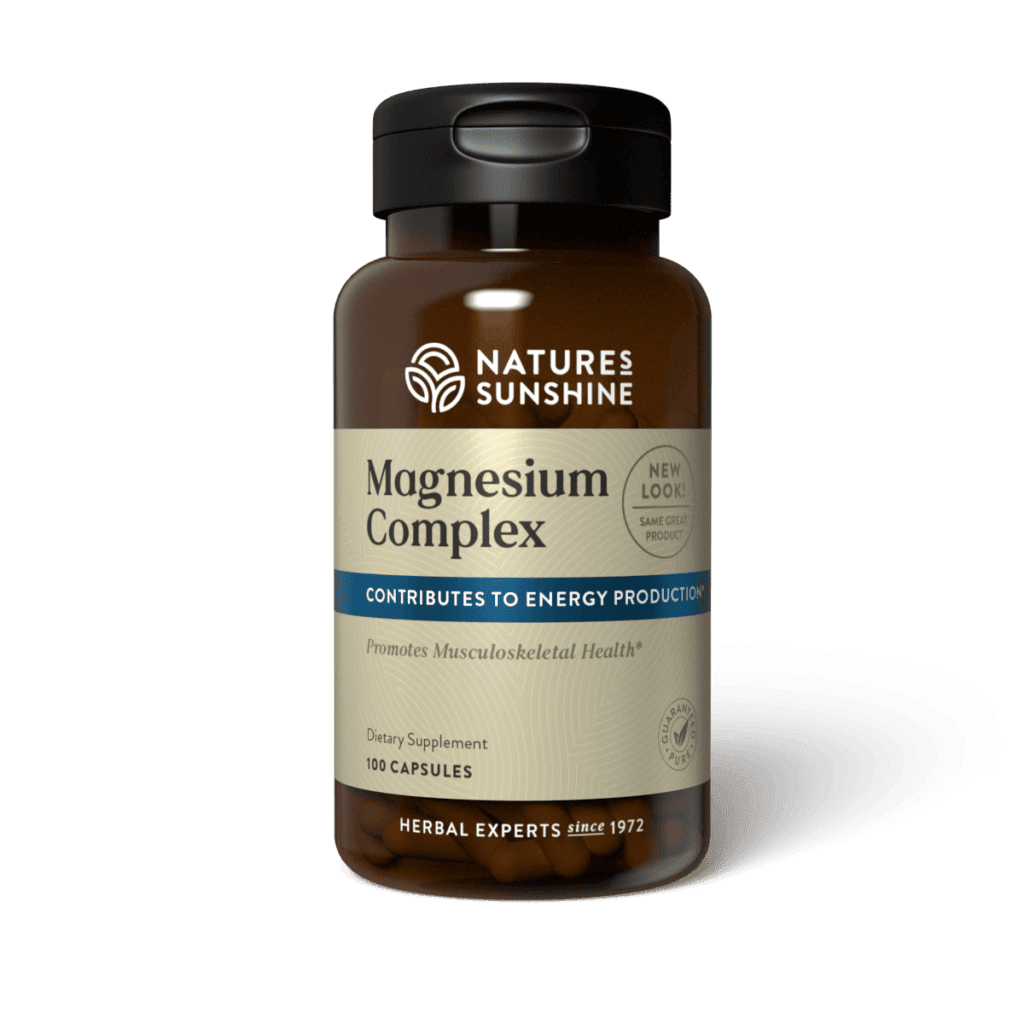
A Magnesium Complex, on the other hand, combines two or more organic forms of Magnesium into a single supplement. Nature's Sunshine Magnesium Complex, for example, pairs Magnesium citrate and Magnesium malate — two highly soluble organic salts — to support the brain, heart, and kidneys. By combining complementary forms, a complex approach may offer a broader profile of benefits.
How Different Magnesium Forms Compare
Not all Magnesium is created equal. Supplements are broadly categorized into organic and inorganic compounds. Organic forms — including Magnesium citrate, glycinate, lactate, and malate — involve Magnesium chelated to organic molecules like amino acids or organic acids. These forms are generally more soluble and have higher bioavailability. Inorganic forms such as Magnesium oxide, sulfate, and chloride tend to have lower solubility and absorption rates.
Magnesium Citrate
Magnesium citrate is one of the most bioavailable forms, with high solubility in water leading to efficient absorption. Research shows Magnesium citrate had high solubility even in water (55%) and was substantially more soluble than Magnesium oxide in all states of acid secretion. This makes it a well-studied, well-absorbed choice for cardiovascular, bone, and general health support.
Magnesium Malate
Magnesium malate is Magnesium bound to malic acid, another organic salt classified among the more soluble and bioavailable forms. Like citrate, it falls into the organic category that research consistently identifies as having superior absorption compared to inorganic salts.
Magnesium Glycinate
Magnesium glycinate is often recommended for individuals with sensitive digestive systems because it tends to cause fewer gastrointestinal side effects. Its absorption via the dipeptide transporter pathway has been observed in research, offering an alternative absorption route beyond the typical mineral channels. A 2025 RCT using 250 mg elemental Magnesium as Magnesium bisglycinate found modest but statistically significant improvements in insomnia severity scores, though the study also included 1,523 mg glycine, which may have contributed to the results.
Why a Complex?
When evaluating Magnesium glycinate vs Magnesium Complex, one key distinction is breadth. A single-form supplement relies on one absorption pathway, while a complex like Magnesium Complex from Nature's Sunshine combines citrate and malate — two organic forms that are both highly soluble. This pairing is described by the manufacturer as being formulated for optimum effectiveness. If you're unsure which form is best for your individual needs, our naturopath is available for a free consultation to help you decide.
What Magnesium Supports: Heart, Brain, Bones, and More
Cardiovascular Health
Research suggests that higher dietary and circulating Magnesium levels are inversely associated with risks of coronary heart disease, stroke, and total cardiovascular disease. Multiple RCTs and meta-analyses indicate that Magnesium supplementation may produce modest but significant reductions in blood pressure, particularly in Magnesium-deficient or hypertensive individuals. In 2022, the FDA approved a qualified health claim stating that consuming diets with adequate Magnesium may reduce the risk of hypertension, though the agency characterized the evidence as inconsistent and inconclusive. Magnesium also plays a role in cardiac electrophysiology — hypomagnesemia is strongly linked to arrhythmias, and a meta-analysis of 22 studies found Magnesium significantly reduced ventricular arrhythmias compared to placebo.
A 24-week RCT using 350 mg/day Magnesium citrate significantly reduced arterial stiffness as measured by pulse wave velocity, suggesting benefits for arterial health and endothelial function.
Nervous System Health
Magnesium is fundamental to nervous system function, acting as a physiological NMDA receptor antagonist and regulator of neuronal excitability, neuromuscular transmission, and nerve signaling. Deficiency is clinically associated with neuromuscular hyperexcitability, tremors, and seizures, and is linked to neurological concerns ranging from migraine to mood changes. Research also suggests Magnesium plays a critical role in nerve excitability by blocking NMDA receptors and regulating calcium and potassium channels, with clinical evidence supporting its role in nerve excitability modulation.
Magnesium is also an essential cofactor in dopamine synthesis and a physiological blocker of NMDA glutamate receptor channels. A 2017 RCT showed 248 mg/day Magnesium significantly reduced both depression and anxiety scores, supporting its role in inhibitory-excitatory neurotransmitter balance.
Bone Density and Skeletal Health
Magnesium is involved in bone formation and influences the activities of osteoblasts and osteoclasts. It also affects concentrations of both parathyroid hormone and the active form of vitamin D — major regulators of bone homeostasis. Observational data from large cohort studies found higher Magnesium intake associated with 2–3% greater bone density in women. One short-term study found that 290 mg/day elemental Magnesium as Magnesium citrate for 30 days suppressed bone turnover in postmenopausal women with osteoporosis compared with placebo. A systematic review and meta-analysis found that higher Magnesium intake is associated with increased hip and femoral neck bone mineral density in older adults.
Inflammation
A 2022 meta-analysis of 17 RCTs with 889 participants found that Magnesium supplementation significantly decreased serum C-reactive protein (CRP) and increased nitric oxide (NO) levels, both markers relevant to systemic inflammation and vascular health.
Key ingredients
- ✓ Free shipping over $75
- ✓ 90-day easy returns
- ✓ Ships within hours
Who Should Consider a Magnesium Complex?
When weighing Magnesium glycinate vs Magnesium Complex, it helps to think about your specific health priorities. Nature's Sunshine Magnesium Complex is formulated to support the brain, heart, and kidneys — making it a particularly good fit for individuals focused on cardiovascular support, nervous system health, and bone density.
Older adults may benefit especially, as Magnesium absorption and retention can decrease with age, and older people are more susceptible to deficiency due to decreased absorption from food, increased medication use, and potential dietary restrictions. Men older than 70 and teenage girls are identified as groups most likely to have low Magnesium intakes.
Individuals with type 2 diabetes may also want to discuss Magnesium with a healthcare provider, as diabetes is often accompanied by lower Magnesium status, and deficiency has been implicated in insulin resistance and impaired glucose metabolism.
People taking diuretics, proton pump inhibitors, or certain other long-term medications should be aware that these drugs can deplete Magnesium. If you're on any of these medications and considering a Magnesium supplement, we always recommend talking with your healthcare provider. Our naturopath is also happy to discuss how different Magnesium forms might fit into your wellness routine — consultations are completely free.
How to Take Magnesium Complex
Take 2 capsules twice daily with a meal. Each serving of 2 capsules provides 184 mg of Magnesium from both citrate and malate forms. The product comes in a 100-capsule bottle.
The RDA for Magnesium is 400–420 mg/day for adult men and 310–320 mg/day for adult women. Keep in mind that the Tolerable Upper Intake Level (UL) of 350 mg applies only to supplemental Magnesium and does not include Magnesium from food and beverages.
Be aware that Magnesium may interact with certain medications. Magnesium can decrease the absorption of bisphosphonates (separate by at least 2 hours), form insoluble complexes with tetracycline and quinolone antibiotics (take the antibiotic at least 2 hours before or 4–6 hours after Magnesium), and may reduce the absorption of gabapentin by about 20%. If you take any prescription medications, consult your healthcare provider before adding a Magnesium supplement.
Written by Greg Howlett
Frequently asked questions
What is the main difference between Magnesium glycinate and a Magnesium Complex?
Magnesium glycinate is a single-form supplement — Magnesium chelated to the amino acid glycine — often recommended for individuals with sensitive digestive systems because it tends to cause fewer gastrointestinal side effects. A Magnesium Complex combines two or more organic forms. Nature's Sunshine Magnesium Complex pairs Magnesium citrate and Magnesium malate, both highly soluble organic forms, for broad-spectrum support of the heart, brain, kidneys, and bones.
Is Magnesium citrate more bioavailable than Magnesium glycinate?
Magnesium citrate is one of the most bioavailable forms, with high water solubility (55%) and substantially greater solubility than Magnesium oxide in all states of acid secretion. Magnesium glycinate is also well absorbed via the dipeptide transporter pathway. Both are organic forms with generally higher bioavailability than inorganic forms like Magnesium oxide. The choice between them often comes down to individual digestive tolerance and health goals rather than a simple bioavailability ranking.
How much Magnesium does Magnesium Complex provide?
Two capsules of Magnesium Complex contain 184 mg of Magnesium from both citrate and malate forms. The recommended usage is 2 capsules twice daily with a meal, for a total of 4 capsules per day. The RDA for adult men is 400–420 mg/day and for adult women is 310–320 mg/day.
Can Magnesium supplements interact with medications?
Yes. Magnesium can decrease the absorption of bisphosphonates (separate by at least 2 hours) and form insoluble complexes with tetracycline and quinolone antibiotics (take the antibiotic at least 2 hours before or 4–6 hours after Magnesium). Loop and thiazide diuretics can deplete Magnesium, while proton pump inhibitors taken for more than a year may cause low Magnesium levels. Magnesium may also reduce gabapentin absorption by about 20%. Always consult your healthcare provider if you take prescription medications.
Who is most at risk for Magnesium deficiency?
Certain groups are more likely to have inadequate Magnesium levels, including older adults (due to decreased absorption), individuals with gastrointestinal disorders, those with type 2 diabetes, people with alcohol dependence, and those on long-term medications such as diuretics or proton pump inhibitors. It is estimated that 56–68% of Americans do not meet the recommended daily allowance for Magnesium from diet alone.
Does Magnesium Complex support bone health?
Research suggests Magnesium is involved in bone formation, influences osteoblast and osteoclast activity, and affects concentrations of vitamin D and parathyroid hormone — major regulators of bone homeostasis. Observational data from large cohort studies found higher Magnesium intake associated with 2–3% greater bone density in women, and one short-term study using Magnesium citrate suppressed bone turnover in postmenopausal women. However, more long-term clinical studies are needed before Magnesium supplementation can be recommended as a standalone intervention for osteoporosis.
Talk to Dr. Shannyn Fowl
Not sure if this is right for you? Book a free, no-pressure consultation for personalized guidance on your health goals.
Book your free consult →About Caring Sunshine
A family-run reseller of premium supplements — free shipping, a 90-day guarantee, and real people who know the products.
Learn more about us →