
Magnesium Complex Vitamin | Heart, Nerve & Muscle
Explore our Magnesium Complex vitamin with citrate and malate forms. Learn how this highly soluble formula supports heart health, nervous system function, and muscles.
What Is a Magnesium Complex Vitamin?
A Magnesium Complex vitamin combines two or more forms of supplemental Magnesium into a single formula, giving your body multiple pathways to absorb this essential mineral. Magnesium is the fourth most abundant cation in the human body and serves as a cofactor in more than 300 enzyme systems that regulate everything from energy production and muscle contraction to nerve signaling and blood pressure.
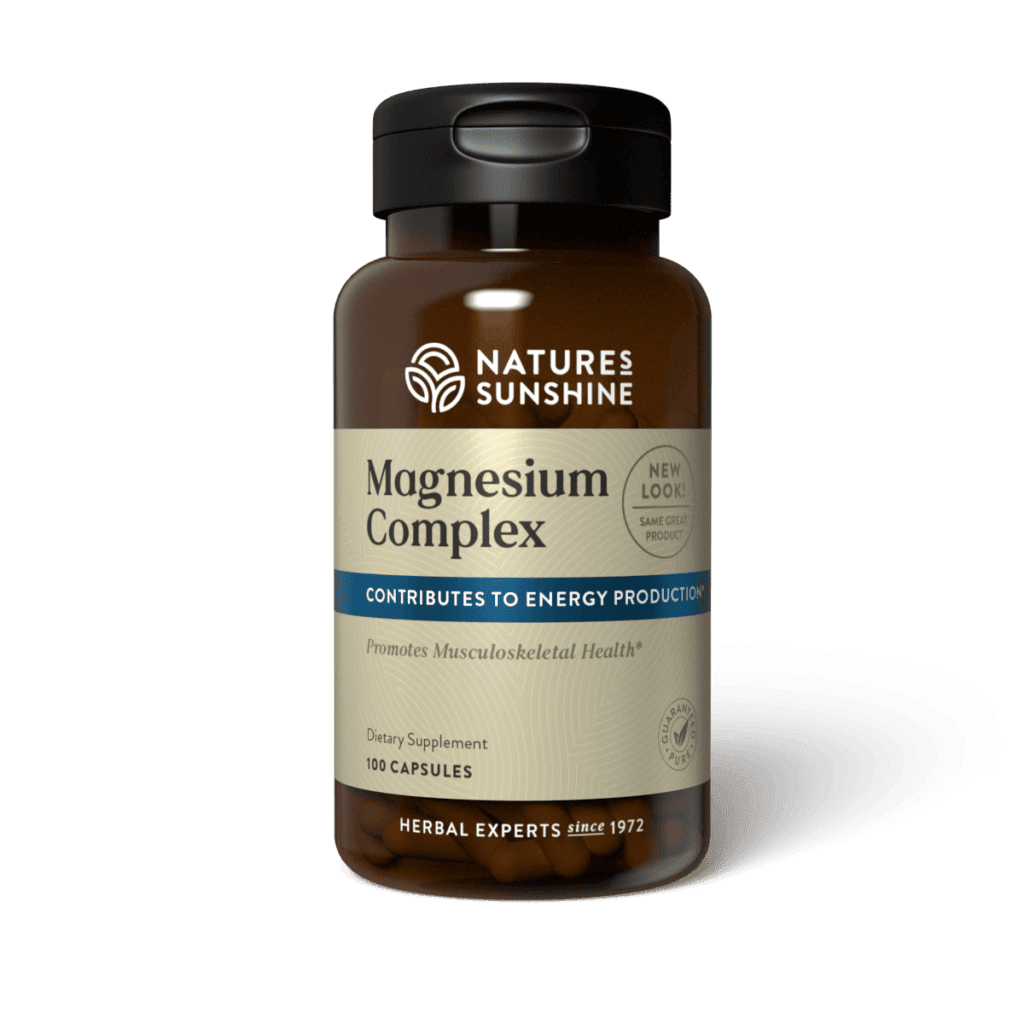
Nature's Sunshine Magnesium Complex pairs Magnesium citrate with Magnesium malate — both organic forms known for their high solubility and bioavailability. Two capsules provide 184 mg of Magnesium to support the cardiovascular system, brain, kidneys, and heart.
Why does form matter? Organic Magnesium salts such as citrate and malate are chelated to organic acids, making them generally more soluble and better absorbed than inorganic forms like Magnesium oxide. Research has shown that Magnesium citrate had high solubility even in water (55%) and was substantially more soluble than Magnesium oxide in all states of acid secretion.
The Widespread Magnesium Gap
Emerging evidence confirms that nearly two-thirds of the population in the western world is not achieving the recommended daily allowance for Magnesium. It is estimated that between 56 and 68% of Americans do not obtain enough Magnesium in their diet on a daily basis to meet the RDA — a shortfall that may contribute to a range of health concerns.
Early signs of Magnesium deficiency include loss of appetite, nausea, fatigue, and weakness. As deficiency worsens, numbness, tingling, muscle contractions and cramps, abnormal heart rhythms, and personality changes can occur. Severe deficiency can disrupt mineral homeostasis, potentially causing low serum calcium or potassium levels.
Certain groups face higher risk: older adults (whose absorption and retention naturally decrease), individuals with gastrointestinal disorders, those with type 2 diabetes, people with alcohol dependence, and anyone on long-term medications such as diuretics or proton pump inhibitors that can deplete Magnesium. If you're unsure whether supplementation is right for you, our naturopath is available for a free consultation to help you evaluate your individual needs.
Cardiovascular, Nervous System, and Muscle Support
Heart and Cardiovascular Health
Research suggests that higher dietary and circulating Magnesium levels are inversely associated with risks of coronary heart disease, stroke, and total cardiovascular disease. Multiple large meta-analyses and randomized controlled trials have found that Magnesium supplementation produces modest but significant reductions in blood pressure, particularly in Magnesium-deficient or hypertensive individuals. In 2022, the U.S. FDA approved a qualified health claim stating that consuming diets with adequate Magnesium may reduce the risk of high blood pressure, though the agency noted the evidence is inconsistent and inconclusive.
Magnesium also plays a role in cardiac electrophysiology, modulating ion channel exchanges and action potentials. Hypomagnesemia is strongly linked to ventricular and supraventricular arrhythmias. A meta-analysis of 22 studies found Magnesium sulfate significantly reduced ventricular arrhythmias compared to placebo. Additionally, a 24-week RCT demonstrated that Magnesium citrate supplementation significantly reduced arterial stiffness as measured by pulse wave velocity, supporting endothelial function and vascular health.
Nervous System Function
Magnesium is fundamental to nervous system health, acting as a natural NMDA receptor antagonist that regulates neuronal excitability, synaptic transmission, and neuromuscular signaling. It plays a critical role in nerve excitability by blocking NMDA receptors and regulating calcium and potassium channels. Deficiency is associated with neuromuscular hyperexcitability, tremors, heightened neuropathic pain, and neurological disorders ranging from migraine to depression.
As an essential cofactor in dopamine synthesis (via tyrosine hydroxylase) and a physiological blocker of NMDA glutamate receptor channels, Magnesium supports inhibitory-excitatory neurotransmitter balance. A 2017 RCT showed that 248 mg/day of Magnesium significantly reduced both depression and anxiety scores in participants.
Muscle Health and Cramps
Magnesium is an essential cofactor for ATP synthesis and utilization, muscle protein synthesis, muscle contraction, and electrolyte homeostasis. Deficiency impairs muscle relaxation — muscles contract normally but struggle to fully release when Magnesium levels are low. A 2024 systematic review of four RCTs found that Magnesium supplementation reduced muscle soreness, improved performance and recovery, and exerted a protective effect on muscle damage in physically active individuals.
Magnesium also suppresses pro-inflammatory cytokines (IL-6, TNF-α) relevant to exercise recovery. Deficiency is associated with impaired muscle repair, increased cramps, and elevated post-exercise oxidative stress markers. Exercise itself may increase Magnesium requirements by 10–20%.
Key Ingredients
- ✓ Free shipping over $75
- ✓ 90-day easy returns
- ✓ Ships within hours
Who Should Consider a Magnesium Complex Vitamin?
This Magnesium Complex vitamin may be a good fit for a wide range of adults. Given that an estimated 56–68% of Americans fall short of the recommended daily allowance for Magnesium, many people could benefit from supplementation. The RDA for adult men is 400–420 mg/day and for adult women is 310–320 mg/day.
Individuals who may especially benefit include:
- Adults concerned about cardiovascular health — research suggests Magnesium supports heart function, healthy blood pressure already within the normal range, and arterial flexibility.
- Those experiencing occasional muscle cramps or soreness — Magnesium deficiency impairs muscle relaxation, and supplementation may support muscle recovery and comfort.
- Older adults — Magnesium absorption and retention decrease with age, and men over 70 are among the most likely to have low intakes.
- People on medications that deplete Magnesium — including loop and thiazide diuretics, and proton pump inhibitors used for more than a year.
- Active individuals — exercise may increase Magnesium requirements by 10–20%, and deficiency is associated with impaired muscle repair and elevated post-exercise oxidative stress markers.
- Those with type 2 diabetes — diabetes is often accompanied by lower Magnesium status, and deficiency may contribute to insulin resistance.
If you're not sure whether this formula fits your wellness goals, feel free to reach out to our naturopath for a free consultation.
How to Take Magnesium Complex
Take 2 capsules twice daily with a meal. Each bottle contains 100 capsules.
Taking Magnesium with food supports absorption and may help reduce the chance of stomach-related side effects. The most common side effects of Magnesium supplements are gastrointestinal issues such as softened stool, which tend to occur at higher doses and are more common with inorganic forms. The organic citrate and malate forms in this formula are highly soluble, which contributes to better tolerability.
Important safety note: Magnesium can interact with certain medications. It can form insoluble complexes with tetracycline and quinolone antibiotics — these should be taken at least 2 hours before or 4–6 hours after Magnesium. Magnesium-rich supplements should also be separated by at least 2 hours from oral bisphosphonates. Magnesium may reduce the absorption of gabapentin by 20%. If you take any prescription medications, consult your healthcare provider before starting a Magnesium supplement.
Written by Greg Howlett
Frequently asked questions
What forms of Magnesium are in this Magnesium Complex vitamin?
Magnesium Complex contains two organic forms — Magnesium citrate and Magnesium malate. Organic forms of Magnesium are chelated to organic acids, making them generally more soluble and better absorbed than inorganic forms such as Magnesium oxide. Magnesium citrate in particular has high solubility even in water (55%) and was substantially more soluble than Magnesium oxide in studies measuring absorption across different states of acid secretion.
How much Magnesium does each serving provide?
Two capsules of Magnesium Complex contain 184 mg of Magnesium. The recommended use is 2 capsules twice daily with a meal. The RDA for Magnesium is 400–420 mg/day for adult men and 310–320 mg/day for adult women. The Magnesium from this supplement is meant to complement the Magnesium you receive from foods like green leafy vegetables, nuts, seeds, whole grains, and legumes.
Can Magnesium interact with medications I'm taking?
Yes, Magnesium can interact with several medication types. It can decrease absorption of oral bisphosphonates (separate by at least 2 hours), form insoluble complexes with tetracycline and quinolone antibiotics (take the antibiotic at least 2 hours before or 4–6 hours after Magnesium), and may reduce gabapentin absorption by 20%. Loop and thiazide diuretics can deplete Magnesium, while proton pump inhibitors taken for prolonged periods can cause low Magnesium levels. Always consult your healthcare provider if you take prescription medications.
Are there side effects from taking a Magnesium supplement?
The most common side effects are stomach-related, including softened stool, nausea, and cramping. These typically occur at higher doses and are more common with inorganic forms like Magnesium oxide. Magnesium Complex uses the citrate and malate forms, which are organic and highly soluble, and generally better tolerated. Hypermagnesemia from supplemental intake is rare in individuals with normal kidney function because the kidneys efficiently excrete excess Magnesium.
Who is most at risk for Magnesium deficiency?
Groups at elevated risk include older adults (due to decreased absorption from food and increased medication use), individuals with gastrointestinal disorders, those with type 2 diabetes, people with alcohol dependence, and those on long-term medications like diuretics or proton pump inhibitors. It is estimated that 56–68% of Americans do not obtain enough Magnesium from their diet to meet the recommended daily allowance.
Does research support Magnesium for heart health and muscle cramps?
For heart health, research suggests that higher Magnesium levels are inversely associated with risks of coronary heart disease, stroke, and total cardiovascular disease across multiple large meta-analyses. The FDA approved a qualified health claim in 2022 stating adequate Magnesium intake may reduce hypertension risk, though the evidence is characterized as inconclusive. For muscle cramps, Magnesium is the most studied mineral supplement. Deficiency impairs muscle relaxation, and a 2024 systematic review found Magnesium supplementation reduced muscle soreness and exerted a protective effect on muscle damage. However, Cochrane reviews found Magnesium unlikely to provide meaningful cramp relief for older adults with idiopathic cramps.
Talk to Dr. Shannyn Fowl
Not sure if this is right for you? Book a free, no-pressure consultation for personalized guidance on your health goals.
Book your free consult →About Caring Sunshine
A family-run reseller of premium supplements — free shipping, a 90-day guarantee, and real people who know the products.
Learn more about us →