
Magnesium Complex Side Effects | What to Know
Understand Magnesium Complex side effects, drug interactions, and safety considerations. Learn how Magnesium citrate and malate forms support heart, brain, and kidney health.
Magnesium Complex Side Effects: What You Should Know
Magnesium is the fourth most abundant cation in the human body and a critical cofactor in more than 300 enzyme systems. It supports everything from energy production and nerve signaling to cardiovascular function and bone integrity. Yet an estimated 56–68% of Americans do not obtain enough Magnesium from their diet to meet the Recommended Dietary Allowance.
Because so many people turn to supplementation to close that gap, questions about Magnesium Complex side effects are among the most commonly searched topics in the supplement space. Understanding what to expect — and what factors influence tolerability — can help you feel confident about incorporating Magnesium into your daily routine.
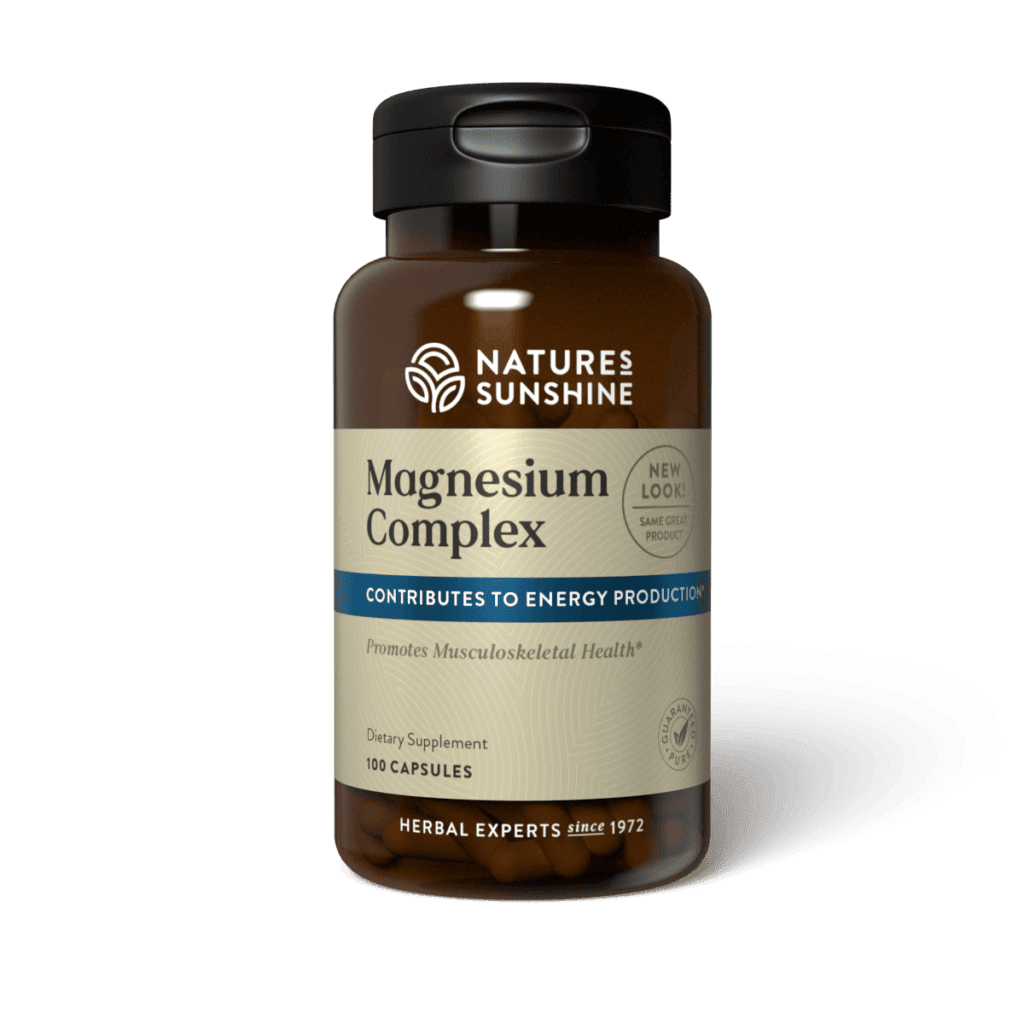
Nature's Sunshine Magnesium Complex combines two organic, highly soluble forms of this essential mineral — Magnesium citrate and Magnesium malate — to support the heart, brain, and kidneys. Below we walk through the known side effects, drug interactions, and safety considerations drawn from published research so you can make an informed decision. If you have specific health concerns, our naturopath is available for a free consultation to help you determine whether this product is right for you.
The Most Common Magnesium Complex Side Effects
The most frequently reported Magnesium Complex side effects are gastrointestinal in nature. According to the research, Magnesium supplements can cause nausea, stomach cramps, and diarrhea. In fact, Magnesium supplements often cause softening of stool — a property that has historically been used intentionally for that very purpose dating back to ancient Greece and Rome.
These stomach-related issues tend to be dose-dependent, meaning they are more likely to appear at higher doses. One meta-analysis found only minor differences in gastrointestinal disturbances between groups given placebo versus 520 mg Mg/day, and withdrawal rates were not significantly different between groups. Another meta-analysis found that 3 of 13 studies (at doses of 120–973 mg/day) reported diarrhea severe enough to lead to study withdrawal.
An important nuance: side effects are also more common with inorganic forms of Magnesium, such as Magnesium oxide. Organic forms like Magnesium citrate and Magnesium malate — the two forms used in Magnesium Complex — are generally more soluble and have higher bioavailability. Magnesium citrate, for example, had high solubility even in water (55%) and was substantially more soluble than Magnesium oxide in all states of acid secretion. This higher solubility may translate to gentler digestive tolerability for many people.
Severe Toxicity Is Rare
Hypermagnesemia (excess Magnesium in the blood) from supplemental intake is rare in individuals with normal kidney function because the kidneys efficiently excrete excess Magnesium. Extra Magnesium from food is considered safe for the same reason. Signs of a Magnesium overdose can include nausea, diarrhea, low blood pressure, muscle weakness, and fatigue. At very high doses, Magnesium can be fatal, but this risk is substantially elevated only in individuals with impaired renal function.
Medications That May Interact with Magnesium
Magnesium and pharmaceutical drugs share many of the same transport and metabolism pathways for intestinal absorption, metabolism, and elimination. This means that when one or more medications are taken alongside a Magnesium supplement, there is always a potential risk of interaction. Understanding these interactions is a key part of managing Magnesium Complex side effects responsibly.
Bisphosphonates
Magnesium-rich supplements can decrease the absorption of oral bisphosphonates such as alendronate (Fosamax®), used for osteoporosis. Use of Magnesium supplements and oral bisphosphonates should be separated by at least 2 hours.
Tetracycline and Quinolone Antibiotics
Magnesium can form insoluble complexes with tetracyclines (such as demeclocycline and doxycycline) and quinolone antibiotics (such as ciprofloxacin and levofloxacin), potentially reducing their effectiveness. The antibiotic should be taken at least 2 hours before or 4–6 hours after Magnesium.
Diuretics
Depending on the type, diuretics can increase or decrease Magnesium in the body. Loop and thiazide diuretics deplete Magnesium through increased urinary excretion, while potassium-sparing diuretics such as amiloride and spironolactone reduce Magnesium loss.
Proton Pump Inhibitors (PPIs)
Prescription PPIs, when taken for prolonged periods (typically more than a year), can cause hypomagnesemia. The FDA advises healthcare professionals to consider measuring serum Magnesium levels prior to initiating long-term PPI treatment and to check levels periodically. In 25% of cases the FDA reviewed, Magnesium supplements did not raise levels and the patients had to discontinue the PPI.
Gabapentin
Magnesium may reduce the absorption of gabapentin by approximately 20%, potentially making it less effective.
If you take any of these medications, we strongly recommend speaking with your healthcare provider — or scheduling a free consultation with our naturopath — before starting a Magnesium supplement.
Who Is Most at Risk for Side Effects — and Who Benefits Most
Certain groups face an elevated risk of Magnesium-related side effects or interactions. Individuals with impaired kidney function have the highest concern, because the kidneys are the primary site of Magnesium excretion and the major regulator of whole-body Magnesium homeostasis. When renal function is compromised, the body cannot efficiently clear excess Magnesium, raising the risk of hypermagnesemia.
On the other hand, several populations are more likely to benefit from Magnesium supplementation precisely because they are at elevated risk of deficiency:
- Older adults — Magnesium absorption and retention decrease with age, and medication use (especially diuretics) can further deplete stores.
- Individuals with type 2 diabetes — diabetes is often accompanied by lower Magnesium status, and deficiency may contribute to insulin resistance.
- People with gastrointestinal disorders — conditions affecting the GI tract can impair Magnesium absorption.
- Individuals with alcohol dependence — chronic alcohol use is associated with Magnesium depletion.
- People on long-term PPIs or diuretics — as described above, these medications can cause Magnesium loss.
Magnesium Complex is designed to support heart, brain, and kidney health. Research suggests that higher dietary and circulating Magnesium levels are inversely associated with risks of coronary heart disease, stroke, and total cardiovascular disease. The kidneys tightly regulate Magnesium homeostasis, and higher urinary Magnesium from adequate intake is associated with reduced risk of kidney stone formation. A landmark double-blind RCT showed new kidney stones formed in only 12.9% of subjects receiving potassium-Magnesium citrate versus 63.6% on placebo.
For the nervous system, Magnesium acts as a natural NMDA receptor antagonist, modulating synaptic transmission and neuronal excitability. Deficiency is clinically associated with neuromuscular hyperexcitability, tremors, and seizures, and is linked to neurological concerns ranging from migraine to mood imbalances.
How to Take Magnesium Complex to Minimize Side Effects
The directions for Nature's Sunshine Magnesium Complex are straightforward: Take 2 capsules twice daily with a meal. Two capsules provide 184 mg of Magnesium from both Magnesium citrate and Magnesium malate.
Taking Magnesium with food is one of the simplest ways to minimize gastrointestinal Magnesium Complex side effects. A meal helps buffer the digestive system and may improve absorption. The Tolerable Upper Intake Level (UL) set by the Food and Nutrition Board is 350 mg per day from supplements only — this does not include Magnesium from food and beverages. The RDA for adult men is 400–420 mg/day and for adult women is 310–320 mg/day from all sources combined.
It's worth noting that some researchers have called for re-evaluation of the UL, citing data indicating that doses above the current limit can be consumed without adverse events. However, high-dose supplements can lead to diarrhea, nausea, and cramping in some people, so starting at the recommended serving and adjusting with professional guidance is a sensible approach.
Because Magnesium Complex uses organic forms (citrate and malate), which are generally more soluble and bioavailable than inorganic alternatives like Magnesium oxide, many people find them gentler on the stomach. If you have questions about the right serving for your individual needs, our naturopath offers free consultations and can help guide you.
Key ingredients
- ✓ Free shipping on all orders
- ✓ 90-day easy returns
- ✓ Ships within hours
Written by Greg Howlett
Frequently asked questions
What are the most common Magnesium Complex side effects?
The most common side effects are gastrointestinal in nature — nausea, stomach cramps, diarrhea, and softening of stool. These are typically dose-dependent, meaning they tend to appear at higher doses. Side effects are also more common with inorganic forms of Magnesium (such as Magnesium oxide) than with organic forms like the Magnesium citrate and Magnesium malate used in Magnesium Complex.
Can Magnesium supplements interact with medications?
Yes. Magnesium can interact with several types of medications. It may decrease absorption of bisphosphonates (separate by at least 2 hours) and form insoluble complexes with tetracycline and quinolone antibiotics (take the antibiotic at least 2 hours before or 4–6 hours after Magnesium). Loop and thiazide diuretics can deplete Magnesium, while long-term use of proton pump inhibitors (PPIs) can cause hypomagnesemia. Magnesium may also reduce gabapentin absorption by approximately 20%. Always consult your healthcare provider if you take any medications.
Is it possible to take too much Magnesium?
Hypermagnesemia from supplemental intake is rare in individuals with normal kidney function because the kidneys efficiently excrete excess Magnesium. The Tolerable Upper Intake Level (UL) for supplemental Magnesium is 350 mg per day (this does not include Magnesium from food). Signs of excessive intake can include nausea, diarrhea, low blood pressure, muscle weakness, and fatigue. The risk is substantially elevated in individuals with impaired renal function.
Why does Magnesium Complex use citrate and malate forms?
Magnesium Complex uses Magnesium citrate and Magnesium malate because organic forms of Magnesium are generally more soluble and have higher bioavailability than inorganic forms. Magnesium citrate, for example, had high solubility even in water (55%) and was substantially more soluble than Magnesium oxide. These highly soluble forms support more efficient absorption and are often associated with fewer digestive side effects.
Who should avoid or be cautious with Magnesium supplements?
People with impaired kidney function should exercise particular caution because the kidneys are the primary regulators of Magnesium excretion. Anyone taking bisphosphonates, tetracycline or quinolone antibiotics, diuretics, proton pump inhibitors, or gabapentin should discuss timing and dosing with a healthcare provider. If you are unsure whether Magnesium is appropriate for you, our naturopath is available for a free consultation.
How should I take Magnesium Complex to reduce side effects?
Take 2 capsules twice daily with a meal. Taking Magnesium with food helps buffer the digestive system and may improve absorption, which can reduce the likelihood of stomach-related side effects. The organic citrate and malate forms in this product are already designed to be highly soluble and well-tolerated compared to inorganic alternatives.
Talk to Dr. Shannyn Fowl
Not sure if this is right for you? Book a free, no-pressure consultation for personalized guidance on your health goals.
Book your free consult →About Caring Sunshine
A family-run reseller of premium supplements — free shipping, a 90-day guarantee, and real people who know the products.
Learn more about us →