
Magnesium Complex 12 in 1 – Heart, Brain & Bone
Explore our Magnesium Complex 12 in 1 guide. Learn how Magnesium citrate and malate support heart health, nervous system function, and bone density.
Magnesium Complex 12 in 1: What It Is and Why It Matters
Magnesium is the fourth most abundant cation in the human body and a critical cofactor in more than 300 enzyme systems that regulate energy metabolism, neuromuscular function, cardiovascular health, bone integrity, and psychological well-being. Despite its importance, an estimated 56–68% of Americans do not obtain enough Magnesium in their daily diet to meet the Recommended Dietary Allowance. That widespread shortfall is why a well-formulated Magnesium Complex 12 in 1 supplement deserves a closer look.
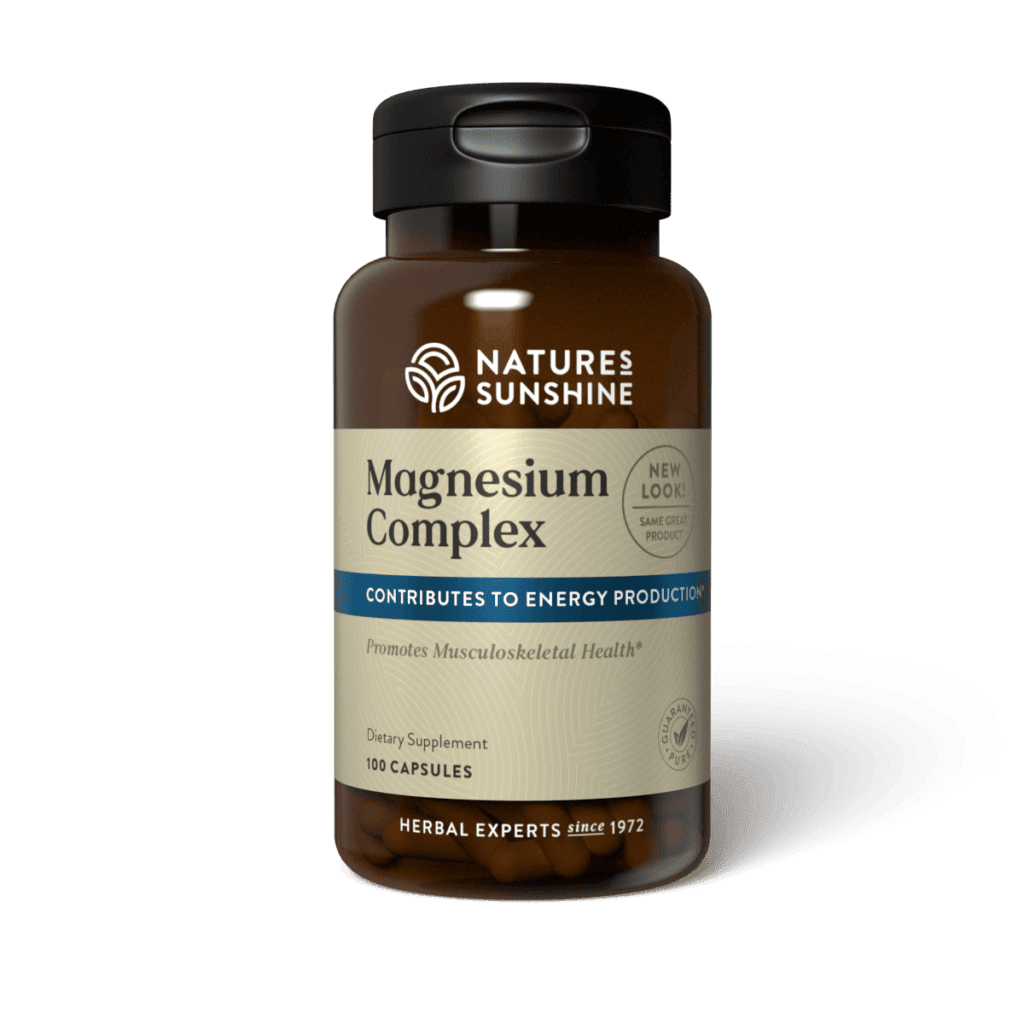
Nature's Sunshine Magnesium Complex delivers 184 mg of Magnesium per two-capsule serving in two highly soluble organic forms — Magnesium citrate and Magnesium malate. Organic Magnesium salts like citrate and malate are generally more soluble and have higher bioavailability than inorganic forms such as Magnesium oxide, which means your body can absorb and use the mineral more efficiently.
This formula is designed to support three foundational areas of health: the cardiovascular system, the nervous system, and bone density. It also supports brain and kidney function. If you have questions about whether a Magnesium Complex 12 in 1 formula is right for your individual needs, our naturopath is available for a free consultation.
Why Two Forms of Magnesium Work Better Together
Not all Magnesium supplements are created equal. The form in which Magnesium is delivered directly affects how well your body absorbs it. This Magnesium Complex pairs Magnesium citrate and Magnesium malate — both organic salts — for optimum effectiveness.
Magnesium citrate is one of the most bioavailable forms available. Research shows it has high solubility even in water (55%) and is substantially more soluble than Magnesium oxide across all states of acid secretion. That high solubility translates to efficient absorption in the digestive tract.
Magnesium malate is another organic form that shares Magnesium citrate's advantage of superior solubility and bioavailability compared to inorganic alternatives. Because both forms are organic salts chelated to organic acids, they are generally better tolerated and less likely to cause the gastrointestinal side effects sometimes associated with inorganic Magnesium.
By combining two complementary organic forms, this Magnesium Complex 12 in 1 approach helps ensure the mineral reaches the tissues that need it — the heart, brain, kidneys, bones, and nervous system.
Key ingredients
- ✓ Free shipping on all orders
- ✓ 90-day easy returns
- ✓ Ships within hours
Supporting Heart, Brain, Bones, and More
Heart and cardiovascular support. Research suggests that higher Magnesium levels are inversely associated with risks of coronary heart disease, stroke, and total cardiovascular disease. Multiple RCTs and meta-analyses show modest but significant reductions in blood pressure, particularly in individuals who are Magnesium-deficient or have hypertension. Magnesium also supports healthy cardiac rhythm by modulating ion channel exchanges and action potentials. In 2022, the U.S. FDA approved a qualified health claim stating that consuming diets with adequate Magnesium may reduce the risk of high blood pressure, while noting the evidence is not yet conclusive.
Nervous system and brain function. Magnesium is fundamental to nervous system function, acting as a natural NMDA receptor antagonist that modulates neuronal excitability and synaptic transmission. Studies suggest it plays a role in nerve excitability modulation and may support neuropathic pain reduction. It is also an essential cofactor in dopamine synthesis and supports inhibitory-excitatory neurotransmitter balance.
Bone density. Magnesium is the second most abundant mineral in bone and is essential for vitamin D activation and calcium metabolism. Observational data from large cohort studies found that higher Magnesium intake was associated with 2–3% greater bone density in women. A short-term clinical trial found that 290 mg/day Magnesium citrate for 30 days suppressed bone turnover in postmenopausal women with osteoporosis compared with placebo, though further long-term research is needed.
Kidney function. Nature's Sunshine formulated this Magnesium Complex to help support brain, kidney, and heart functions, making it a versatile daily mineral supplement.
Who Should Consider a Magnesium Complex 12 in 1 Supplement?
Because Magnesium deficiency is so common — diets of most people in the United States provide less than the recommended amounts — a broad range of adults may benefit from supplementation. The RDA for adult men is 400–420 mg/day and for adult women is 310–320 mg/day, yet most Americans fall short.
Older adults are especially susceptible to Magnesium deficiency due to decreased absorption from food, increased medication use (certain diuretics can deplete Magnesium), and potential dietary restrictions. Men older than 70 and teenage girls are among those most likely to have low intakes.
Individuals with cardiovascular concerns may find Magnesium particularly relevant, as chronic Magnesium deficiency has been associated with an increased risk of cardiovascular disease, hypertension, and cardiac arrhythmias.
Those focused on bone health — especially postmenopausal women — may benefit because Magnesium influences osteoblast and osteoclast activity and is required for vitamin D activation and calcium metabolism.
People taking certain medications should be aware that loop and thiazide diuretics, proton pump inhibitors (PPIs) taken long-term, and some antibiotics can affect Magnesium status. If you take any of these, our naturopath can help you determine whether this Magnesium Complex 12 in 1 formula makes sense for you during a free consultation.
How to Take Magnesium Complex
Take 2 capsules twice daily with a meal. Each bottle contains 100 capsules. Two capsules provide 184 mg of Magnesium from Magnesium citrate and Magnesium malate.
Taking Magnesium with food supports absorption and may reduce the chance of mild stomach-related side effects. The most common side effects of Magnesium supplements are gastrointestinal in nature (softened stool, occasional nausea, or cramping), and these are less common with organic forms like citrate and malate compared to inorganic forms such as Magnesium oxide.
Important timing note for certain medications: If you take bisphosphonates, separate your Magnesium dose by at least 2 hours. If you take tetracycline or quinolone antibiotics, take the antibiotic at least 2 hours before or 4–6 hours after Magnesium. Magnesium may also reduce the absorption of gabapentin by approximately 20%. Always consult your healthcare provider if you are on medications.
Written by Greg Howlett
Frequently asked questions
What forms of Magnesium are in this Magnesium Complex?
This Magnesium Complex contains two organic forms: Magnesium citrate and Magnesium malate. Organic forms are generally more soluble and have higher bioavailability than inorganic forms such as Magnesium oxide. Magnesium citrate, for example, has high solubility even in water (55%) and is substantially more soluble than Magnesium oxide across all states of acid secretion.
How much Magnesium does a serving provide and how does that compare to the RDA?
Two capsules provide 184 mg of Magnesium. The Recommended Dietary Allowance for adult men is 400–420 mg/day and for adult women is 310–320 mg/day. Because the label directs taking 2 capsules twice daily, the full daily serving provides Magnesium from the supplement alongside what you obtain from food sources.
Can Magnesium interact with medications I'm taking?
Yes. Magnesium can interact with bisphosphonates (separate by at least 2 hours), tetracycline and quinolone antibiotics (take the antibiotic at least 2 hours before or 4–6 hours after Magnesium), and gabapentin (Magnesium may reduce absorption by about 20%). Loop and thiazide diuretics can deplete Magnesium, while long-term proton pump inhibitor (PPI) use can cause low Magnesium levels. Always discuss supplementation with your healthcare provider if you take medications.
What does research say about Magnesium and heart health?
Research suggests that higher dietary and circulating Magnesium levels are inversely associated with risks of coronary heart disease, stroke, and total cardiovascular disease. Multiple RCTs and meta-analyses show modest but significant reductions in blood pressure, particularly in Magnesium-deficient or hypertensive individuals. In 2022, the U.S. FDA approved a qualified health claim that consuming diets with adequate Magnesium may reduce the risk of high blood pressure, though the FDA notes the evidence is inconsistent and inconclusive.
Is Magnesium safe to take daily?
For most healthy adults, Magnesium supplements are considered safe when taken at appropriate doses. The most common side effects are gastrointestinal — softened stool, nausea, or cramping — and these tend to be less frequent with organic forms like citrate and malate. The Tolerable Upper Intake Level for supplemental Magnesium is 350 mg. Excess Magnesium from food is typically safe because the kidneys excrete surplus amounts. However, individuals with impaired kidney function should consult a healthcare provider before supplementing.
Who is most at risk for Magnesium deficiency?
Certain groups are more likely to have inadequate Magnesium levels, including older adults (due to decreased absorption), individuals with gastrointestinal disorders, those with type 2 diabetes, people with alcohol dependence, and anyone taking long-term diuretics or proton pump inhibitors. Men older than 70 and teenage girls are among those most likely to have low intakes. An estimated 56–68% of Americans do not meet the recommended daily allowance for Magnesium.
Talk to Dr. Shannyn Fowl
Not sure if this is right for you? Book a free, no-pressure consultation for personalized guidance on your health goals.
Book your free consult →About Caring Sunshine
A family-run reseller of premium supplements — free shipping, a 90-day guarantee, and real people who know the products.
Learn more about us →