
Liquid Chlorophyll Health Benefits | Nature’s Guide
Explore Liquid Chlorophyll health benefits including blood cleansing, immune support, and whole body detox. Learn about this plant-powered supplement and how it works.
Understanding Liquid Chlorophyll Health Benefits
Chlorophyll is the green pigment found in plants that makes photosynthesis possible — it's how plants convert sunlight into energy. The basic structure is a large planar arrangement of four pyrrole rings with a central magnesium atom and a phytol tail, and it's responsible for the green color we see in leaves, spinach, kale, and alfalfa. Chlorophyll a and Chlorophyll b represent about 99% of the Chlorophyll species found in edible plants.
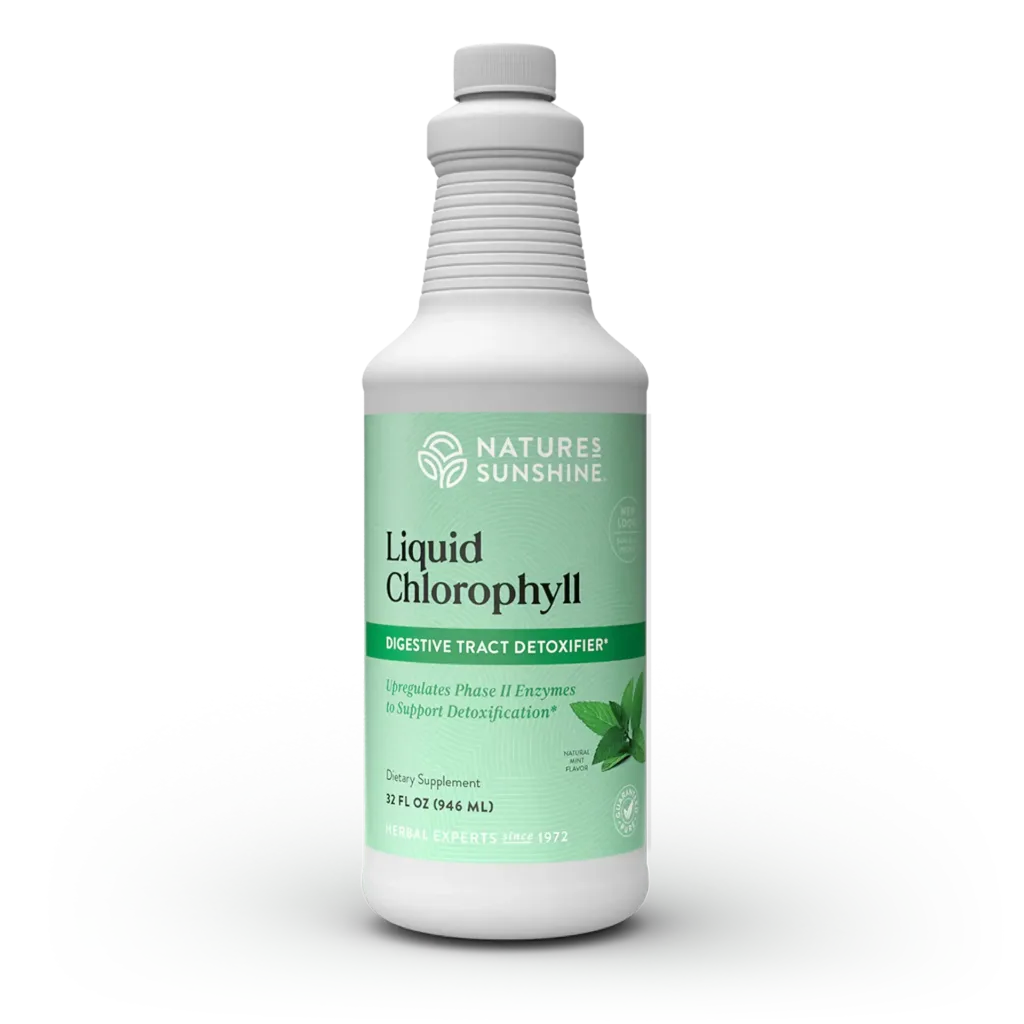
When we talk about Liquid Chlorophyll health benefits, it's important to understand what's actually in the bottle. Most Liquid Chlorophyll supplements — including this Nature's Sunshine formula — contain sodium copper chlorophyllin, a semisynthetic derivative of Chlorophyll. In chlorophyllin, the central magnesium atom is replaced by copper, and the phytol tail is removed, making it water-soluble. Natural Chlorophyll is fat-soluble and doesn't dissolve into water cleanly, which is why chlorophyllin was developed for liquid supplement use.
This formula also includes spearmint aerial parts oil, which contributes a pleasant flavor. The result is a convenient daily liquid that supports natural blood-cleansing processes, encourages proper immune response, strengthens the body on a cellular and molecular level, and acts as a natural deodorizer.
The Science Behind Chlorophyllin
Chlorophyllin's bioactivity stems from its porphyrin ring structure, which allows it to function as a hydrogen donor and stop chain oxidation processes. Research suggests chlorophyllin presents significant antioxidant activity through chelation of reactive ions and scavenging of free radicals, helping to prevent oxidative DNA damage and lipid peroxidation.
One of the most well-studied mechanisms involves carcinogen binding. Studies suggest that Chlorophyll and sodium copper chlorophyllin are able to form tight molecular complexes with certain chemicals known or suspected to cause cancer — including polyaromatic hydrocarbons found in tobacco smoke, some heterocyclic amines found in cooked meat, and aflatoxin B1. This binding may interfere with gastrointestinal absorption, reducing the amount that reaches susceptible tissues.
Chlorophyllin has also been documented to modulate xenobiotic-metabolizing enzymes, including inhibition of cytochrome P450 enzymes and induction of phase 2 cytoprotective genes — a complementary detoxification pathway. These mechanisms help explain why Chlorophyll has traditionally been valued as an internal cleanser and blood-supporting supplement.
Regarding bioavailability, studies estimate that dietary Chlorophyll absorption is approximately 3–5%, with significant transformation occurring during the digestive process. Based on estimated daily Chlorophyll intake and bioavailability, absorption could reach 1.3–4.3 mg per day from dietary sources alone.
Key Ingredients
- ✓ Free shipping over $75
- ✓ 90-day easy returns
- ✓ Ships within hours
Who May Benefit from Liquid Chlorophyll
This Liquid Chlorophyll formula may be a good fit for anyone looking to support their body's natural cleansing and detoxification processes. Chlorophyll has been traditionally used as an internal cleanser, and scientific research supports its ability to bind certain unwanted compounds in the GI tract, reducing their absorption.
Those interested in supporting healthy blood function may also appreciate Chlorophyll's long traditional association with blood health, rooted in its structural similarity to hemoglobin — both share a tetrapyrrole ring structure.
People seeking natural deodorizing support may find this formula helpful. Chlorophyllin has been used orally as an internal deodorant for more than 50 years, with one study finding it was helpful in controlling body and fecal odors in nursing home patients.
If you're curious whether Liquid Chlorophyll is right for your individual health goals, our naturopath is available for a free consultation to help you decide. Note that the safety of Chlorophyll supplements has not been tested in pregnant or lactating women, and individuals with disorders of copper metabolism such as Wilson's disease should limit exposure to copper-containing supplements, including sodium copper chlorophyllin.
Directions for Use
Take 2 tablespoons (30mL) in an 8 fl oz glass of cold water daily. Refrigerate after opening.
The 32 oz bottle provides a generous supply for daily use. Liquid Chlorophyll may cause green discoloration of urine or feces, or yellow or black discoloration of the tongue — these are harmless cosmetic effects. There have also been occasional reports of diarrhea related to oral chlorophyllin use. Oral chlorophyllin may result in false positive results on guaiac card tests for occult blood.
If you have questions about how this product fits into your wellness routine or whether it's appropriate alongside medications you take, feel free to reach out to our naturopath for a free consultation.
Written by Greg Howlett
Frequently asked questions
Is Liquid Chlorophyll the same as natural Chlorophyll from plants?
Not exactly. Most Liquid Chlorophyll supplements, including this one, contain sodium copper chlorophyllin — a semisynthetic, water-soluble derivative of Chlorophyll. In chlorophyllin, the central magnesium atom found in natural Chlorophyll is replaced by copper, and the fat-soluble phytol tail is removed. This modification makes it dissolve easily in water, which is why it works well in liquid form. Natural Chlorophyll is fat-soluble and does not dissolve into water cleanly.
What does the research say about Liquid Chlorophyll and detoxification?
The best-studied area is chlorophyllin's ability to bind certain environmental toxins in the GI tract. A landmark randomized, double-blind, placebo-controlled trial found that chlorophyllin supplementation produced a 55% reduction in urinary aflatoxin-DNA adduct biomarkers versus placebo. Chlorophyllin has also been documented to modulate detoxification enzyme systems, including inhibiting cytochrome P450 enzymes and inducing phase 2 cytoprotective genes. While this aflatoxin research provides a scientific basis for specific toxin binding, the broader concept of a 'whole body cleanse' via Chlorophyll is rooted more in traditional use and naturopathic practice.
Can Liquid Chlorophyll help with body odor?
Chlorophyllin has been used as an internal deodorant since the 1950s. One study published in 1980 found that chlorophyllin was helpful in controlling body and fecal odors in 62 geriatric nursing home patients. Another small study found that oral chlorophyllin significantly decreased urinary trimethylamine in patients with trimethylaminuria (a metabolic condition causing strong body odor). However, there is little modern evidence for this benefit in otherwise healthy people — the deodorizing evidence is strongest in specific populations.
Does Liquid Chlorophyll support blood health?
Chlorophyll's structural similarity to hemoglobin — both are tetrapyrrole ring structures — has traditionally supported the belief that Chlorophyll-rich preparations may assist blood health. Research on sodium iron chlorophyllin (a different form containing iron instead of copper) has shown hemoglobin increases in clinical trials. However, standard plant Chlorophyll and sodium copper chlorophyllin (as found in this product) lack robust human clinical evidence for directly raising hemoglobin levels. Nature's Sunshine formulated this product to support natural blood-cleansing processes.
Are there any side effects or safety concerns with Liquid Chlorophyll?
Natural chlorophylls are not known to be toxic, and no toxic effects have been attributed to chlorophyllin despite more than 50 years of clinical use in humans. Common harmless effects include green discoloration of urine or feces, or yellow or black discoloration of the tongue, and occasional diarrhea. The safety of Chlorophyll supplements has not been tested in pregnant or lactating women, so they should be avoided during pregnancy and lactation. Individuals with Wilson's disease or other copper metabolism disorders should limit exposure to copper-containing supplements. If you take medications, consult a healthcare professional, as a case report noted a potential interaction with methotrexate.
How does chlorophyllin support the immune system?
Chlorophyllin has traditionally been attributed immune-supporting properties. Preclinical evidence suggests immunostimulatory effects, potential enhancement of white blood cell production, and anti-inflammatory modulation. The spearmint oil in this formula also contributes — preclinical studies suggest spearmint's rosmarinic acid and flavonoids modulate immune function through antioxidant and anti-inflammatory mechanisms. However, direct human clinical evidence for immune-specific outcomes such as infection resistance or immune cell counts is currently absent for both ingredients.
Talk to Dr. Shannyn Fowl
Not sure if this is right for you? Book a free, no-pressure consultation for personalized guidance on your health goals.
Book your free consult →About Caring Sunshine
A family-run reseller of premium supplements — free shipping, a 90-day guarantee, and real people who know the products.
Learn more about us →