
Foods High in Collagen: A Complete Guide
Discover foods high in Collagen, why this protein matters for skin, hair, nails & joints, and how Collagen peptide supplements can support your daily intake.
What Are Foods High in Collagen and Why Do They Matter?
Collagen is the single most abundant protein in the human body, comprising approximately one-third of total proteins. This fibrous structural protein forms the foundation of skin, tendons, bones, cartilage, and all other connective tissues — essentially the scaffolding that holds everything together. Its name even derives from the Greek word kolla, meaning "glue," reflecting the gelatinous, binding quality that cooks have observed in cooled bone broth for centuries.
Collagen is mainly formed by the amino acids glycine (33%), proline, and hydroxyproline (22%), arranged in a characteristic triple-helix structure that provides rigidity and resistance to stretching. Because glycine is the smallest amino acid, it allows Collagen chains to form a tight configuration capable of withstanding stress. Two additional amino acids — hydroxyproline and hydroxylysine — are present in very few other proteins, making Collagen's amino acid profile truly distinctive.
There are 28 known subtypes of Collagen, but types I, II, and III make up 80–90% of the Collagen in the human body. Type I is the most abundant in skin (approximately 80%), Type II predominates in cartilage (90–95% of the extracellular matrix), and Type III is found in reticular connective tissue and blood vessels. Understanding foods high in Collagen — and how supplementation fits in — starts with appreciating just how central this protein is to nearly every system in the body.
The Rich History of Foods High in Collagen
The tradition of consuming foods high in Collagen predates modern science by millennia. Cooking with bone, simmering soup stocks, and preparing gelatinous dishes from connective tissue have been documented across essentially every region of the world. Bones, skins, and cartilage — materials otherwise tough or perishable — were converted through time and patience into liquid nourishment, portable blocks, or concentrated extracts.
In Traditional Chinese Medicine, Collagen-rich foods such as slow-cooked broths made with chicken feet or pork trotters were prized for supporting skin elasticity, healthy aging, and joint strength. Almost ten centuries ago, the Benedictine abbess Hildegard von Bingen studied extracts from animal tissue and recognized their use for joint complaints. In traditional Asian culture, Collagen was valued in cosmetics for its perceived role in keeping skin youthful.
Around the globe, diverse cuisines independently developed Collagen-rich preparations: French cuisine turned to pot-au-feu and aspics made from Collagen-rich stock. In Vietnam, pho gets its depth from beef bones simmered for hours. Mexico's caldo de res makes full use of marrow bones and cartilage. Native American tribes consumed boiled animal hides and bone marrow for strength and vitality, while traditional African medicine used gelatin-rich animal parts to promote digestive wellness.
Modern Collagen supplementation sits within this continuous tradition. The convenience of a powder that dissolves in a beverage — rather than a broth requiring hours of simmering — is simply the contemporary contribution to a practice humans have relied upon for centuries.
Where Collagen Comes From: Dietary and Supplemental Sources
Foods high in Collagen are concentrated in animal connective tissues. Bone broth — whether made from beef, chicken, pork, or fish bones — remains the most traditional dietary source. The gelatin that forms when cooled broth solidifies is Collagen that has been partially hydrolyzed, the same substance used in modern food preparations. Chicken sternal cartilage, fish skin and scales, and bovine and porcine hides are all rich in this structural protein.
For supplementation, the primary commercial sources include bovine (cattle) hide and bone, porcine hide and bone, chicken cartilage, and fish skin and scales. Bovine and porcine tissues are the most widely used because of their availability and biocompatibility with human tissues. Marine sources — fish, jellyfish, and other invertebrates — have also gained attention as alternative extraction sources.
However, native Collagen is a large, complex polymer with low solubility and bioavailability. To be absorbed effectively, this large molecule must be broken down into smaller segments called peptides through a process called hydrolysis. That's why virtually all Collagen supplements are more correctly called Collagen peptides or hydrolyzed Collagen — smaller amino acid chains (3–6 kDa) that research suggests are absorbed as di- and tripeptides rich in hydroxyproline. These smaller peptides are believed to enter circulation and reach target tissues like skin or cartilage, where they may help support Collagen-producing cells called fibroblasts.
It's worth noting that Collagen is an incomplete protein — it lacks the essential amino acid tryptophan — so it should not serve as a sole protein source. Its amino acid profile is distinct from complete dietary proteins, and for muscle protein synthesis specifically, other protein sources may be more beneficial.
How Collagen Supports Your Body: Evidence by Area
Skin Health and Anti-Aging: Skin aging is accompanied by declining Collagen content, resulting in loss of elasticity and hydration. Research provides moderate to moderately strong evidence that Collagen supplementation may help. A systematic review and meta-analysis of 10 randomized controlled trials (646 participants) found that Collagen supplements were statistically effective in increasing skin hydration and elasticity. Multiple RCTs and meta-analyses (up to 26 RCTs, 1,721 participants) demonstrate significant improvements within 8–12 weeks. Fibroblasts appear to recognize bioactive peptides and upregulate Collagen and hyaluronic acid synthesis. However, many trials have been industry-funded, study durations are often short, and robust evidence from large independent trials remains limited.
Joint Health: A systematic review and meta-analysis (2023) provides compelling evidence of significant pain reduction in knee osteoarthritis patients who received Collagen peptides compared to placebo. For exercise-related joint pain, a systematic review of 15 RCTs found that Collagen supplementation increased pain-free time to exertion, with beneficial effects appearing to take hold after three months or longer. Overall evidence is moderate, though heterogeneity across studies limits certainty.
Bone Density: Preliminary evidence, primarily from small RCTs in postmenopausal women with osteopenia, suggests Collagen supplementation may support bone strength, density, and mass. These findings are promising but require larger, independent replications.
Hair and Nails: Research suggests Collagen peptides provide amino acid substrates — notably proline, glycine, and hydroxyproline — that support keratin synthesis and the dermal matrix around hair follicles. A 2017 trial found that specific bioactive Collagen peptides for 24 weeks increased nail growth rate by 12% and reduced the frequency of broken nails by 42% in women with brittle nail syndrome. While promising, the overall clinical evidence for hair and nails remains at an early stage.
Other Areas: Emerging research has also investigated Collagen for gut health, wound healing, tendinopathy, and even cognitive function. Evidence for most of these areas remains preliminary or investigational. The requirement for vitamin C as a cofactor in Collagen synthesis is an established biochemical mechanism, and emerging data suggest benefits may be enhanced when Collagen is co-supplemented with vitamin C.
Who Should Consider a Collagen Supplement?
Anyone interested in supporting their skin, hair, nails, bones, or joints from within may find Collagen supplementation a natural fit — especially since skin Collagen content naturally declines with age. Those who don't regularly consume bone broth, slow-simmered stews, or other foods high in Collagen may particularly benefit from a convenient daily supplement.
Active individuals and athletes may also find Collagen supportive. Research suggests that Collagen peptide supplementation combined with exercise may aid in reducing functional joint pain and improving recovery, particularly when used consistently for three months or longer.
Postmenopausal women concerned about bone density represent another group studied in the clinical literature, with preliminary evidence suggesting Collagen may support bone strength. And anyone seeking to support nail strength or hair vitality may appreciate the amino acid substrates Collagen provides for keratin synthesis.
If you're unsure whether a Collagen supplement aligns with your personal wellness goals, our naturopath is available for a free consultation — no purchase necessary, no membership required. It's just one of the ways we try to help our customers make informed decisions.
How to Take Collagen Peptides
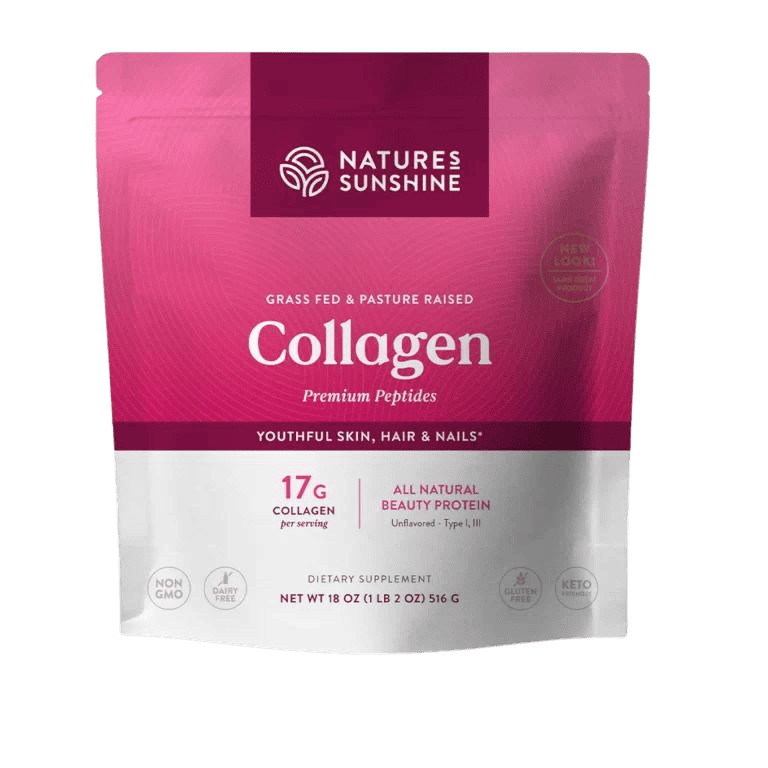
Nature's Sunshine Collagen is odorless, tasteless, and mixes easily into any hot or cold beverage, smoothie, or food. It is easily integrated into any daily wellness program. Stir 1 scoop into any beverage (coffee, tea, water, fruit juice, etc.), or add it to your favorite recipes. Use daily for best results.
This 18 oz container of premium Collagen peptides is NON-GMO, KETO-friendly, DAIRY-free, GLUTEN-free, and PALEO-friendly — fitting cleanly into a wide range of dietary lifestyles without requiring any special adjustments.
Key Ingredients
- ✓ Free shipping over $75
- ✓ 90-day easy returns
- ✓ Ships within hours
Written by Greg Howlett
Frequently asked questions
What are the best foods high in Collagen?
Traditionally, the richest dietary sources of Collagen include bone broth (from beef, chicken, pork, or fish bones), chicken feet, pork trotters, fish skin and scales, and dishes made from cartilage and marrow bones. Globally, cultures have independently developed Collagen-rich preparations — from French pot-au-feu and Vietnamese pho to Mexican caldo de res. The gelatin that forms when cooled broth solidifies is partially hydrolyzed Collagen. For those who don't regularly consume these traditional foods, hydrolyzed Collagen peptide supplements offer a convenient alternative that mixes easily into beverages or recipes.
How does supplemental Collagen differ from Collagen in food?
Native Collagen — the kind found in whole foods like bone broth — is a large, complex polymer with low solubility and bioavailability. Hydrolyzed Collagen (Collagen peptides) has been enzymatically broken down into much smaller amino acid chains (3–6 kDa) that research suggests are more readily absorbed. Studies show that when Collagen hydrolysate is taken orally, it is absorbed as di- and tripeptides typically rich in hydroxyproline, which are believed to enter circulation and reach target tissues like skin or cartilage. Modern Collagen supplementation is essentially a convenience format — delivering the same structural protein that bone broth has supplied for centuries, but without hours of simmering.
What does the research say about Collagen for skin, hair, and nails?
Multiple meta-analyses of randomized controlled trials — including analyses of up to 26 RCTs with 1,721 participants — suggest that oral hydrolyzed Collagen may significantly improve skin elasticity and hydration within 8–12 weeks. For nails, a 2017 trial found that bioactive Collagen peptides taken for 24 weeks increased nail growth rate by 12% and reduced the frequency of broken nails by 42%. For hair, Collagen peptides provide amino acid substrates that support keratin synthesis and the dermal matrix around follicles. However, the overall clinical evidence for hair and nails is still at an early stage compared to the skin research.
Is Collagen safe to take every day?
Prolonged use of Collagen is generally considered safe. Multiple systematic reviews report no adverse effects from Collagen supplementation, even at higher doses of up to 60 g/day or in different supplement forms. The FDA classifies hydrolyzed Collagen as 'Generally Recognized as Safe' (GRAS). However, individuals with allergies to specific animal sources (such as seafood for marine Collagen) should exercise caution, as allergic reactions are possible. It's also important to choose quality-tested products, as some Collagen supplements have been found to contain trace heavy metals.
Why does this Collagen supplement contain Potassium?
The Potassium chloride in this formula contributes to its electrolyte and trace mineral profile. Potassium is an essential mineral that supports proper muscle contraction, nerve signaling, heart function, and blood pressure regulation through its role in the Na⁺/K⁺-ATPase pump. Including Potassium alongside Collagen peptides supports the product's goal of comprehensive daily wellness beyond just beauty benefits.
Can Collagen replace other protein sources in my diet?
No. Collagen is an incomplete protein because it lacks the essential amino acid tryptophan. Its amino acid profile is dominated by glycine, proline, and hydroxyproline — which are valuable for connective tissue support — but it should not be used as a sole protein source. For muscle protein synthesis specifically, research suggests other complete protein sources may be more beneficial. Collagen is best viewed as a complementary addition to a balanced diet.
Talk to Dr. Shannyn Fowl
Not sure if this is right for you? Book a free, no-pressure consultation for personalized guidance on your health goals.
Book your free consult →About Caring Sunshine
A family-run reseller of premium supplements — free shipping, a 90-day guarantee, and real people who know the products.
Learn more about us →