
Collagen Side Effects: What You Need to Know
Explore Collagen side effects, safety profile, and what research says. Learn about allergenicity, contaminant risks, and who should use caution with Collagen.
Collagen Side Effects: What the Research Actually Says
Collagen is the single most abundant protein in the human body, comprising approximately one-third of total proteins. It forms the structural foundation of skin, bones, cartilage, tendons, and other connective tissues. With the growing popularity of Collagen supplementation for skin elasticity, joint support, and overall connective tissue health, questions about Collagen side effects are among the most common we hear from our customers.
The good news? According to multiple systematic reviews, prolonged use of Collagen is deemed to be safe, with none of the studies within one systematic review reporting any adverse effects of Collagen supplementation — even at higher doses of 60 g/day or in different supplement forms. Collagen supplementation is generally safe with no reported adverse events across the RCTs surveyed in multiple systematic reviews.
That said, understanding the full picture — including potential allergenicity, contaminant concerns, and completeness as a protein source — helps you make an informed decision. If you have specific health concerns, our naturopath is available for a free consultation to help you navigate what's right for your situation.
Known Collagen Side Effects and Safety Considerations
Allergenicity
Some Collagen supplements are sourced from animals — particularly marine and bovine sources. Individuals with allergies to seafood or specific animals could be at risk of allergic reactions or sensitivities when consuming Collagen derived from these sources. One of the main concerns about consuming marine Collagen is the risk of allergies. People who are allergic to fish may develop allergic reactions when consuming this type of Collagen. Symptoms may include itching, rashes, swelling, or even difficulty breathing.
Heavy Metal and Contaminant Risk
A notable, source-documented safety concern relates to potential contamination. A prominent study evaluating popular Collagen supplement brands in the US found that 64% tested positive for measurable levels of arsenic, 37% for lead, 34% for trace levels of mercury, and 17% for measurable levels of cadmium. In some cases, detected levels of heavy metals exceeded regulatory thresholds, with certain elements measuring two to three times the permissible limits.
However, a peer-reviewed 2025 PubMed study analyzing marine Collagen supplements found significant variability between brands. Mercury was detectable in only 12% of samples. Marine Collagen samples derived from jellyfish and Scomber scombrus skin extract showed no detectable toxic metals. None of the samples exceeded EU regulatory limits, and average daily doses were consistently below tolerable daily intakes, indicating safety for consumption at recommended doses. These findings highlight the importance of choosing a quality-tested Collagen product.
Bovine Spongiform Encephalopathy (BSE) and Zoonotic Risks
Hydrolyzed Collagen extraction from traditional sources such as porcine and bovine involves certain limitations due to health concerns such as swine flu and bovine spongiform encephalopathy. Religious considerations may also apply. These concerns have driven the development of alternative marine Collagen formulations.
Collagen Is an Incomplete Protein
Collagen is notably deficient in the essential amino acid tryptophan and is therefore considered an incomplete protein. It should not be used as a sole protein source. Its amino acid profile is distinct from complete dietary proteins, and for muscle protein synthesis specifically, other higher quality protein sources such as whey protein may be more beneficial.
Regulatory Status
The FDA classifies hydrolyzed Collagen as "Generally Recognized as Safe" (GRAS), meaning it has a long history of safe use in food products. Collagen is regulated as a dietary supplement in the United States and as a food ingredient in many other jurisdictions. It is not approved as a drug for any indication.
Who Should Consider Collagen Side Effects Before Supplementing
While the overall safety profile of Collagen is reassuring, certain individuals should exercise particular caution:
- People with seafood or animal allergies: If your Collagen is sourced from fish, bovine, or porcine sources, and you have a known allergy to those animals, Collagen side effects could include allergic reactions ranging from itching and rashes to swelling or difficulty breathing.
- Those concerned about contaminants: Because studies have found variability in heavy metal content across brands, choosing a reputable, quality-tested product matters greatly.
- Anyone relying on Collagen as a primary protein source: Since Collagen lacks the essential amino acid tryptophan, it is an incomplete protein and should complement — not replace — a balanced diet.
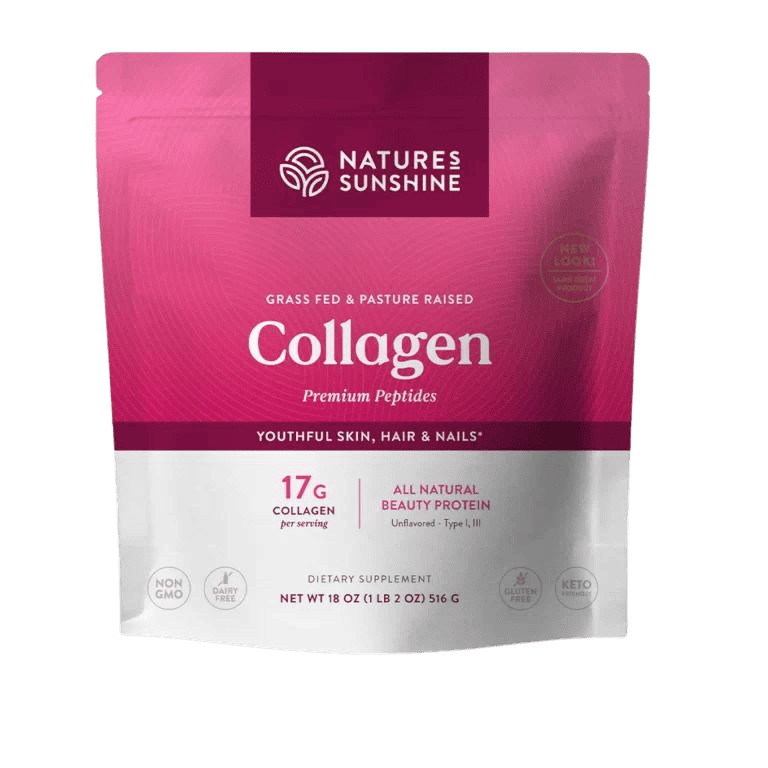
Nature's Sunshine's premium Collagen peptides are certified non-GMO, gluten-free, dairy-free, Keto-friendly, and Paleo-friendly, making them accessible for many dietary preferences. If you're unsure whether Collagen is right for you, our naturopath offers free consultations to help you determine the best approach for your wellness goals.
What Collagen Supports — and What the Evidence Shows
Understanding potential Collagen side effects is important, but so is understanding what Collagen may do for you. Research suggests a number of promising benefits:
Skin Elasticity, Hydration, and Anti-Aging
A systematic review and meta-analysis utilizing data from 10 RCTs with 646 participants found that Collagen supplements were statistically effective in increasing skin hydration and elasticity. Literature data have shown that hydrolyzed Collagen supplementation promotes decreased wrinkle formation, increased skin elasticity, increased hydration, and increased Collagen content and density — factors closely associated with aging-related skin changes.
Joint Health
A systematic review and meta-analysis (2023) provides compelling evidence of significant pain reduction in knee osteoarthritis patients who received Collagen peptides compared to placebo. For athletes, a systematic review of 15 RCTs found that Collagen supplementation increased pain-free time to exertion and Collagen synthesis.
Hair and Nails
A 2017 open-label trial found that 2.5 g/day of specific bioactive Collagen peptides for 24 weeks increased nail growth rate by 12% and reduced the frequency of broken nails by 42% in women with brittle nail syndrome. Collagen peptides also provide amino acid substrates — notably proline, glycine, and hydroxyproline — that support keratin synthesis and dermal matrix integrity around hair follicles.
Bone Density
Preliminary evidence from studies in postmenopausal women with osteopenia indicates that Collagen supplementation may support bone strength, density, and mass, though larger independent replications are needed.
Connective Tissue and Exercise Recovery
Collagen peptide supplementation, in conjunction with exercise, may be beneficial for the management of degenerative bone and joint disorders. This is likely due to stimulatory effects on the extracellular matrix of connective tissues, improving structure and load-bearing capabilities. The beneficial effects appear to take effect after three months or longer of consistent use.
How to Take Collagen
Nature's Sunshine's Collagen is odorless, tasteless and mixes easily into any hot or cold beverage, smoothie or food. It is easily integrated into any daily wellness program. Stir 1 scoop into any beverage (coffee, tea, water, fruit juice, etc.), or add it to your favorite recipes. Use daily for best results.
Research suggests that the beneficial effects of Collagen supplementation may take three months or longer to become apparent, so consistency is key. When Collagen hydrolysate is taken orally, it is absorbed as di- and tripeptides typically rich in hydroxyproline. These smaller peptides are believed to enter circulation and reach target tissues like skin or cartilage where they may help support Collagen-producing cells (fibroblasts).
Key ingredients
- ✓ Free shipping over $75
- ✓ 90-day easy returns
- ✓ Ships within hours
Written by Greg Howlett
Frequently asked questions
Are there serious Collagen side effects I should worry about?
According to multiple systematic reviews, prolonged use of Collagen is deemed to be safe, with no adverse effects reported even at higher doses of 60 g/day or in different supplement forms. The FDA classifies hydrolyzed Collagen as "Generally Recognized as Safe" (GRAS). The primary concerns are allergenicity for people with seafood or animal allergies, and potential heavy metal contamination that varies by brand and source quality.
Can Collagen cause allergic reactions?
Yes, Collagen side effects may include allergic reactions in susceptible individuals. People with known allergies to the source animal — particularly those allergic to fish if using marine Collagen — could experience symptoms including itching, rashes, swelling, or difficulty breathing. If you have animal-based food allergies, consult with a healthcare professional before supplementing. Our naturopath is available for a free consultation to discuss your individual situation.
Is Collagen safe to take every day long-term?
Research supports the long-term safety of daily Collagen use. None of the studies within one comprehensive systematic review reported any adverse effects, even at doses up to 60 g/day. Clinical studies on skin health have used daily supplementation for 4 to 24 weeks, while joint health studies suggest benefits appear after three months or longer of consistent use. The Collagen in this formula is designed to be used daily for best results.
Should I worry about heavy metals in Collagen supplements?
One study found variability in heavy metal content across popular US Collagen brands, with some exceeding regulatory thresholds. However, a 2025 peer-reviewed study on marine Collagen found that none of the tested samples exceeded EU regulatory limits, and average daily doses were consistently below tolerable daily intakes. This underscores the importance of choosing a reputable, quality-tested product from a trusted source.
Can Collagen replace my daily protein intake?
No. Collagen is an incomplete protein because it lacks the essential amino acid tryptophan. While it provides a clean source of amino acids — particularly glycine, proline, and hydroxyproline — that support skin, hair, nails, and connective tissue, it should not be used as a sole protein source. For muscle protein synthesis specifically, other complete protein sources may be more beneficial.
How long does it take to see results from Collagen supplementation?
Research timelines vary by the area of benefit. Clinical studies on skin health have shown improvements in elasticity and hydration within 4 to 12 weeks. For joint health and exercise-related benefits, the research suggests Collagen peptide supplementation may need at least three months or longer of consistent use before beneficial effects become apparent. One nail study demonstrated results over 24 weeks of daily use.
Talk to Dr. Shannyn Fowl
Not sure if this is right for you? Book a free, no-pressure consultation for personalized guidance on your health goals.
Book your free consult →About Caring Sunshine
A family-run reseller of premium supplements — free shipping, a 90-day guarantee, and real people who know the products.
Learn more about us →