
Collagen Peptides Side Effects | Safety Guide
What are Collagen peptides side effects? Explore the research-backed safety profile, allergen risks, contaminant concerns, and what to know before supplementing.
Understanding Collagen Peptides Side Effects
Collagen is the single most abundant protein in the human body, comprising roughly one-third of total protein. It forms the structural foundation of skin, hair, nails, bones, cartilage, tendons, and ligaments. As we age, Collagen production naturally declines, which is why many people turn to hydrolyzed Collagen peptides — Collagen broken down into smaller, absorbable amino acid chains — to support their body's structural needs.
Before adding any supplement to your routine, it's smart to ask about Collagen peptides side effects. The good news is that the overall safety profile, according to multiple systematic reviews of randomized controlled trials, is reassuring. But there are nuances worth understanding — from allergen considerations to contaminant risks — and we believe you deserve a thorough, honest look at the evidence.
If you have specific health questions, our naturopath is available for a free consultation to help you evaluate whether Collagen supplementation fits your individual needs.
What the Research Says About Collagen Peptides Side Effects
The most consistent finding across the clinical literature is that Collagen peptides side effects are rare. Prolonged use of Collagen is deemed to be safe, with none of the studies within one systematic review reporting any adverse effects of Collagen supplementation, even at higher doses of 60 g/day or in different supplement forms.
A systematic review published in the Journal of Drugs in Dermatology (2019), encompassing randomized controlled trials only, concluded that Collagen supplementation is generally safe with no reported adverse events. The FDA classifies hydrolyzed Collagen as "Generally Recognized as Safe" (GRAS), meaning it has a long history of safe use in food products.
That said, "generally safe" doesn't mean "universally free of concerns." Research has identified several specific areas that deserve attention, which we'll walk through below.
Allergenicity, Contaminants, and Other Considerations
Allergic Reactions
Collagen supplements are sourced from animal tissues — commonly bovine hide and bone, porcine sources, chicken cartilage, or fish skin and scales. Individuals with allergies to seafood or specific animal proteins could be at risk of allergic reactions or sensitivities when consuming Collagen derived from these sources. People allergic to fish, for example, may develop allergic reactions when consuming marine-derived Collagen. Symptoms may include itching, rashes, swelling, or even difficulty breathing.
Heavy Metal and Contaminant Risk
A notable safety concern relates to potential contamination. A prominent study evaluating popular Collagen supplement brands in the US found that 64% tested positive for measurable levels of arsenic, 37% for lead, 34% for trace levels of mercury, and 17% for measurable levels of cadmium. In some cases, detected levels exceeded regulatory thresholds by two to three times the permissible limits.
However, a peer-reviewed 2025 study analyzing marine Collagen supplements found significant variability between brands. Mercury was detectable in only 12% of samples, marine Collagen derived from jellyfish and Scomber scombrus skin extract showed no detectable toxic metals, and none of the samples exceeded EU regulatory limits. Average daily doses were consistently below tolerable daily intakes, indicating safety for consumption at recommended doses. Researchers nonetheless recommended that food safety regulations be updated to account for potential cumulative risks from simultaneous intake of contaminated supplements.
This variability underscores why sourcing and brand quality matter. We take product quality seriously and are always happy to discuss what we know about the products we carry.
BSE and Zoonotic Concerns
Extraction of hydrolyzed Collagen from traditional bovine and porcine sources involves certain limitations due to health concerns such as bovine spongiform encephalopathy (BSE) and swine flu, as well as religious considerations. These concerns have driven the development of alternative marine Collagen sources.
Incomplete Protein
Collagen is an incomplete protein — it lacks the essential amino acid tryptophan. It should not be used as a sole protein source. For muscle protein synthesis specifically, research suggests that other higher-quality protein sources, such as whey protein, may be more beneficial.
Who Should Think Carefully About Collagen Peptides Side Effects
While most healthy adults can use Collagen peptides without concern, certain groups should exercise caution:
- People with fish, shellfish, or animal protein allergies: Since Collagen is derived from animal tissues, anyone with known allergies to the source animal should avoid that specific type of Collagen or consult a healthcare provider first.
- Those concerned about contaminants: Given the variability in heavy metal levels across brands, choosing a reputable source matters. Our naturopath is available for a free consultation if you'd like guidance on selecting a Collagen product.
- Individuals relying on Collagen as their primary protein: Because Collagen lacks tryptophan, it is nutritionally incomplete and should complement — not replace — a balanced protein intake.
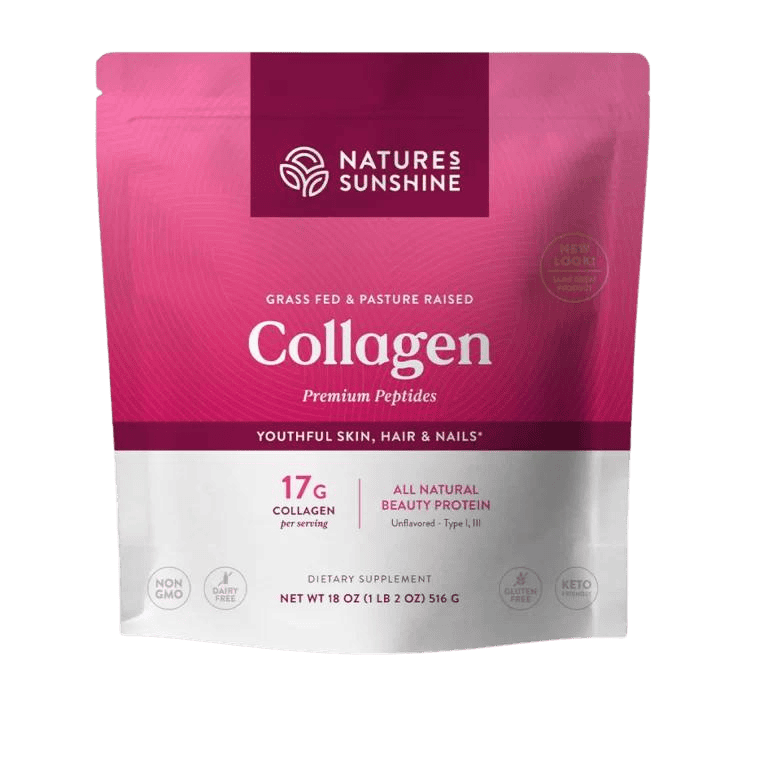
Nature's Sunshine's Collagen peptides are certified non-GMO, gluten-free, dairy-free, Keto-friendly, and Paleo-friendly, making them a clean option for people navigating common dietary restrictions.
Key ingredients
- ✓ Free shipping over $75
- ✓ 90-day easy returns
- ✓ Ships within hours
How to Take Collagen Peptides
Collagen is odorless, tasteless and mixes easily into any hot or cold beverage, smoothie or food. It is easily integrated into any daily wellness program. Stir 1 scoop into any beverage (coffee, tea, water, fruit juice, etc.), or add it to your favorite recipes. Use daily for best results.
Research suggests that the beneficial effects of Collagen peptides may take effect after three months or longer of consistent use, particularly for joint-related benefits. Studies on skin have observed improvements within 8–12 weeks.
Written by Greg Howlett
Frequently asked questions
Are there serious Collagen peptides side effects I should worry about?
The clinical evidence is reassuring. Multiple systematic reviews of randomized controlled trials have found no reported adverse events from Collagen supplementation, even at doses up to 60 g/day. The FDA classifies hydrolyzed Collagen as 'Generally Recognized as Safe' (GRAS). The primary concerns are allergic reactions in individuals sensitive to the source animal (such as fish or bovine) and potential heavy metal contamination, which varies significantly by brand and sourcing.
Can Collagen peptides cause allergic reactions?
Yes, this is possible. Collagen supplements are derived from animal sources including bovine, porcine, chicken, and fish. People with allergies to fish or specific animal proteins may develop allergic reactions including itching, rashes, swelling, or difficulty breathing. If you have known food allergies, check the source of any Collagen product before using it, and consult a healthcare provider if you have concerns.
Should I worry about heavy metals in Collagen supplements?
Research has found variability across brands. One study of popular US Collagen brands found that 64% tested positive for measurable arsenic levels and 37% for lead. However, a 2025 peer-reviewed study of marine Collagen supplements found that none exceeded EU regulatory limits and average daily doses were below tolerable daily intakes. The key takeaway is that sourcing and quality control matter — choosing a reputable brand helps minimize this concern.
Is Collagen a complete protein?
No. Collagen is an incomplete protein because it lacks the essential amino acid tryptophan. While it is rich in glycine, proline, and hydroxyproline — amino acids that support structural tissues — it should not be relied upon as your sole protein source. For muscle protein synthesis specifically, research suggests other protein sources such as whey may be more beneficial.
How long does it take for Collagen peptides to work?
Based on clinical studies, improvements in skin hydration and elasticity have been observed within 8–12 weeks of consistent daily use. For joint-related benefits, the evidence suggests that beneficial effects may take three months or longer to appear. Consistency matters — research across multiple studies used daily supplementation throughout the study period.
Can I take Collagen peptides if I follow a keto, paleo, or dairy-free diet?
Yes. Nature's Sunshine's Collagen peptides are certified non-GMO, gluten-free, dairy-free, Keto-friendly, and Paleo-friendly. The product mixes easily into hot or cold beverages, smoothies, or food, making it simple to incorporate into a variety of dietary patterns.
Talk to Dr. Shannyn Fowl
Not sure if this is right for you? Book a free, no-pressure consultation for personalized guidance on your health goals.
Book your free consult →About Caring Sunshine
A family-run reseller of premium supplements — free shipping, a 90-day guarantee, and real people who know the products.
Learn more about us →