
Chlorophyll Liquid Drops | Blood & Immune Support
Explore how Chlorophyll liquid drops support blood cleansing, immune response, and whole-body wellness. Learn about ingredients, usage, and more.
What Are Chlorophyll Liquid Drops?
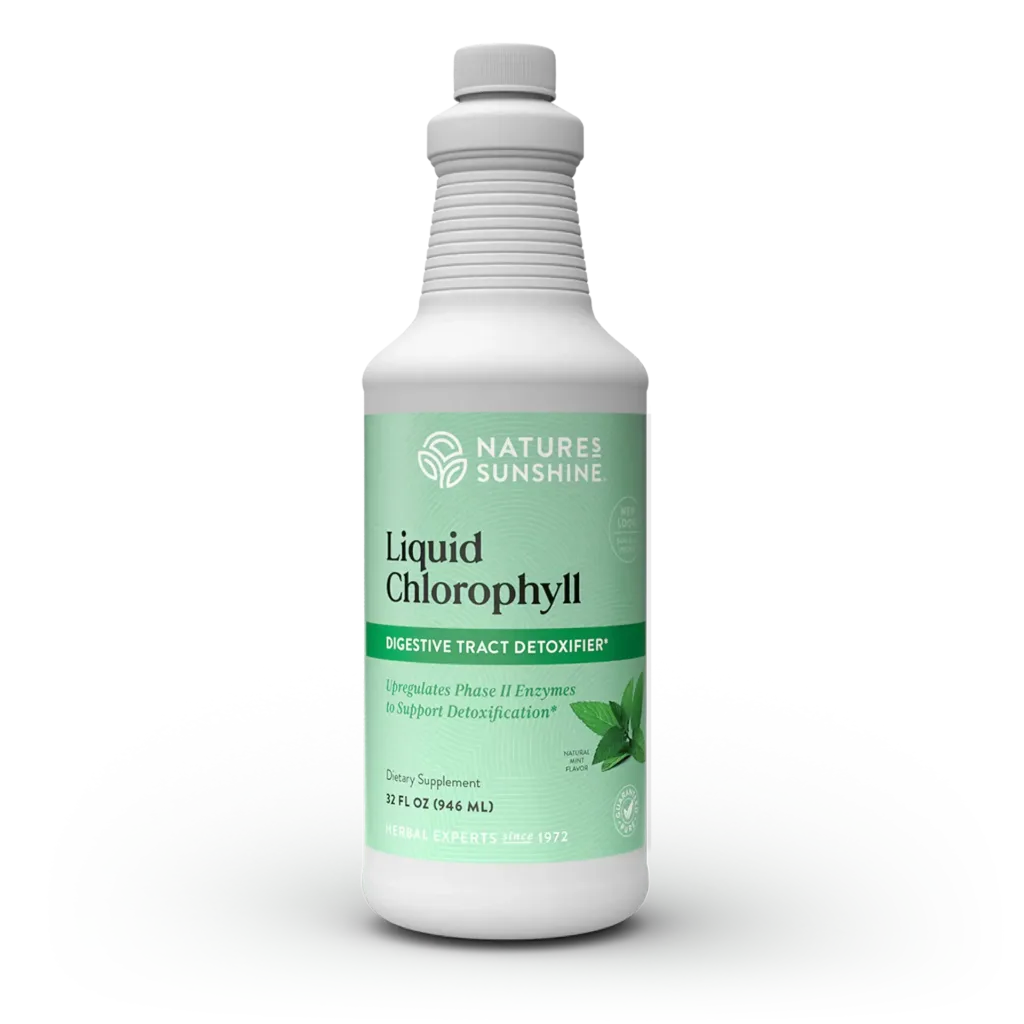
Chlorophyll is the green pigment found in plants that plays a critical role in photosynthesis — converting the sun's rays into energy. But this remarkable molecule does more than nourish plant life. Nature's Sunshine Liquid Chlorophyll harnesses a water-soluble form of Chlorophyll called sodium copper chlorophyllin to support natural blood-cleansing processes, encourage a healthy immune system response, strengthen the body at a cellular and molecular level, and act as a natural deodorizer.
Natural Chlorophyll itself is fat-soluble and doesn't dissolve cleanly into water. Commercial Chlorophyll liquid drops like this one use chlorophyllin — a semisynthetic sodium copper salt derivative — specifically developed to be water-soluble. In chlorophyllin, the central magnesium atom found in natural Chlorophyll is replaced by copper, and the phytol tail is removed, resulting in a stable, water-friendly compound you can stir right into a glass of cold water.
Chlorophylls are the most common green pigments found in plants and have been included in the human diet throughout history as an integral part of vegetable foodstuffs. Chlorophylls are principally extracted commercially from grass, alfalfa, nettles, and spinach, with alfalfa (Medicago sativa) being a common source used specifically for medicinal preparations.
How Chlorophyll Liquid Drops Support Your Body
The chemical nature of Chlorophyll's porphyrin ring allows it to function as a hydrogen donor, stopping chain oxidation processes. Chlorophylls present significant antioxidant activity through chelation of reactive ions and scavenging of free radicals, which may help prevent oxidative DNA damage and lipid peroxidation.
Blood-Cleansing Support
Chlorophyll and sodium copper chlorophyllin are able to form tight molecular complexes with certain chemicals known or suspected to cause harm — including polyaromatic hydrocarbons found in tobacco smoke, some heterocyclic amines found in cooked meat, and aflatoxin B1. This binding may interfere with gastrointestinal absorption, reducing the amount that reaches susceptible tissues. Research supports chlorophyllin's role in modulating xenobiotic-metabolizing enzymes, including cytochrome P450 inhibition and phase 2 enzyme induction, which are complementary detoxification pathways.
Immune System Encouragement
Chlorophyllin has traditionally been attributed immune-supporting properties. Preclinical evidence points to immunostimulatory effects, potential enhancement of white blood cell production, and anti-inflammatory modulation. Traditional and naturopathic frameworks have long positioned Chlorophyll as an immune tonic.
Natural Deodorization
Chlorophyll has been marketed as an "internal deodorant" since the 1950s. One study published in 1980 found that the administration of chlorophyllin was "helpful in controlling body and fecal odors" in 62 geriatric nursing home patients. Another study in a small number of Japanese patients with trimethylaminuria found that oral sodium copper chlorophyllin taken for three weeks significantly decreased urinary trimethylamine. Sodium copper chlorophyllin has been used orally as an internal deodorant for more than 50 years without any serious side effects.
Key Ingredients
- ✓ Free shipping over $75
- ✓ 90-day easy returns
- ✓ Ships within hours
Who May Benefit from Chlorophyll Liquid Drops?
Chlorophyll liquid drops may appeal to a wide range of adults looking for a simple daily addition to their wellness routine. Based on its traditional uses and the available research, this product may be a good fit for:
- Those seeking whole-body cleansing support: Chlorophyll has been used as a traditional internal cleanser for decades. Its documented ability to bind certain compounds in the GI tract and support liver detoxification enzyme systems provides a scientific basis for this long-standing traditional use.
- Anyone interested in supporting blood health: Chlorophyll's structural similarity to hemoglobin has traditionally been associated with supporting healthy blood. Research on chlorophyllin-containing preparations suggests potential benefits for blood parameters.
- People looking for immune system encouragement: Preclinical evidence points to chlorophyllin's immunostimulatory effects and anti-inflammatory modulation, and naturopathic tradition has long positioned Chlorophyll as an immune tonic.
- Those concerned with body freshness: Chlorophyllin has been used as an internal deodorizer for more than 50 years, with some clinical evidence supporting its role in controlling body and fecal odors in specific populations.
Not sure if Chlorophyll liquid drops are right for you? Our naturopath is available for a free consultation — no purchase necessary — to help you decide.
Important note: Since the safety of Chlorophyll or chlorophyllin supplements has not been tested in pregnant or lactating women, they should be avoided during pregnancy and lactation. Individuals with rare disorders of copper metabolism, such as Wilson's disease, should limit exposure to copper additives, including supplemental sodium copper chlorophyllin.
How to Take Chlorophyll Liquid Drops
Take 2 tablespoons (30mL) in an 8 fl oz glass of cold water daily. Refrigerate after opening.
This 32 oz bottle provides a generous supply for consistent daily use. The liquid format makes it easy to mix into water — many people enjoy the mild, minty taste thanks to the spearmint aerial parts oil in the formula.
When taken orally, supplemental chlorophyllin may cause green discoloration of urine or feces, or yellow or black discoloration of the tongue. These are cosmetic effects and are not harmful. There have also been occasional reports of mild diarrhea. Oral chlorophyllin may result in false positive results on guaiac card tests for occult blood — something to mention to your healthcare provider if you have upcoming tests.
Written by Greg Howlett
Frequently asked questions
What is the difference between Chlorophyll and chlorophyllin in liquid drops?
Natural Chlorophyll is fat-soluble and does not dissolve into water cleanly. Most Chlorophyll liquid drops — including this Nature's Sunshine formula — use sodium copper chlorophyllin, a semisynthetic derivative that is water-soluble. In chlorophyllin, the central magnesium atom found in natural Chlorophyll is replaced by copper, and the phytol tail is removed. This makes it easy to mix into a glass of cold water while retaining the key properties associated with Chlorophyll.
Can Chlorophyll liquid drops help with body odor?
Chlorophyllin has been used as an internal deodorizer for more than 50 years. A 1980 study found it was 'helpful in controlling body and fecal odors' in 62 geriatric nursing home patients, and another small study in patients with trimethylaminuria found that oral chlorophyllin significantly decreased urinary trimethylamine. However, there is little modern evidence for this benefit in otherwise healthy people — much of the supporting research comes from specific populations or older studies.
Is it normal for Chlorophyll liquid drops to turn urine green?
Yes. When taken orally, supplemental chlorophyllin may cause green discoloration of urine or feces, or yellow or black discoloration of the tongue. These are cosmetic effects, not signs of a problem. It's also worth knowing that oral chlorophyllin may result in false positive results on guaiac card tests for occult blood, so let your healthcare provider know if you're taking Chlorophyll before such a test.
How does Chlorophyll support blood health?
Chlorophyll's structural similarity to hemoglobin — both share a tetrapyrrole ring structure — has traditionally been associated with supporting blood health. Research on sodium iron chlorophyllin-containing tablets has shown significant hemoglobin increases in clinical settings. However, standard plant Chlorophyll (which contains magnesium rather than iron) lacks robust human clinical evidence for directly raising hemoglobin or red blood cell counts. Chlorophyllin also supports natural blood-cleansing processes by forming molecular complexes with certain compounds in the GI tract, potentially reducing their absorption.
Are Chlorophyll liquid drops safe to take every day?
Natural chlorophylls are not known to be toxic, and no toxic effects have been attributed to chlorophyllin despite more than 50 years of clinical use in humans. That said, pregnant or lactating women should avoid chlorophyllin supplements since safety has not been tested in those populations. Individuals with Wilson's disease or other rare copper metabolism disorders should also avoid supplemental sodium copper chlorophyllin due to its copper content. If you take medications — particularly methotrexate or other chemotherapy agents — consult your healthcare provider, as a case report has noted a potential interaction. Our naturopath is happy to discuss your individual situation in a free consultation.
How much Chlorophyll do you absorb from supplements?
Bioavailability of Chlorophyll derivatives is relatively low. Animal model studies show only about 1–3% absorption, while a study in human adults supplemented with spinach-derived Chlorophyll (18 mg/day for 10 days) found an average apparent absorption of about 3.4%. Based on estimates for daily Chlorophyll intake and bioavailability of roughly 5%, it's possible that Chlorophyll absorption could reach 1.3–4.3 mg per day. The water-soluble chlorophyllin form used in liquid drops was developed in part to improve usability, though the precise pharmacokinetics of many Chlorophyll derivatives remain poorly characterized.
Talk to Dr. Shannyn Fowl
Not sure if this is right for you? Book a free, no-pressure consultation for personalized guidance on your health goals.
Book your free consult →About Caring Sunshine
A family-run reseller of premium supplements — free shipping, a 90-day guarantee, and real people who know the products.
Learn more about us →