
What Does Turmeric Curcumin Do for the Body?
Discover what Turmeric Curcumin does for the body — from joint support and inflammation response to antioxidant defense. Learn about key ingredients and evidence.
What Does Turmeric Curcumin Do for the Body?
Turmeric has been used for nearly 6,000 years in Ayurvedic medicine and traditional Asian healing systems, valued for its role in supporting the body's inflammatory response, digestive comfort, and overall wellness. Today, modern research has begun to explore — and in many cases support — those centuries-old traditions.
At the heart of Turmeric's benefits are curcuminoids, the polyphenolic pigments responsible for the spice's vibrant yellow-orange color. Curcumin, the dominant curcuminoid, has been extensively studied for its capacity to modulate multiple signaling pathways involved in inflammation, oxidative stress, and cellular health. Research suggests Curcumin may support a healthy inflammatory response, joint comfort, antioxidant defense, and immune system function.
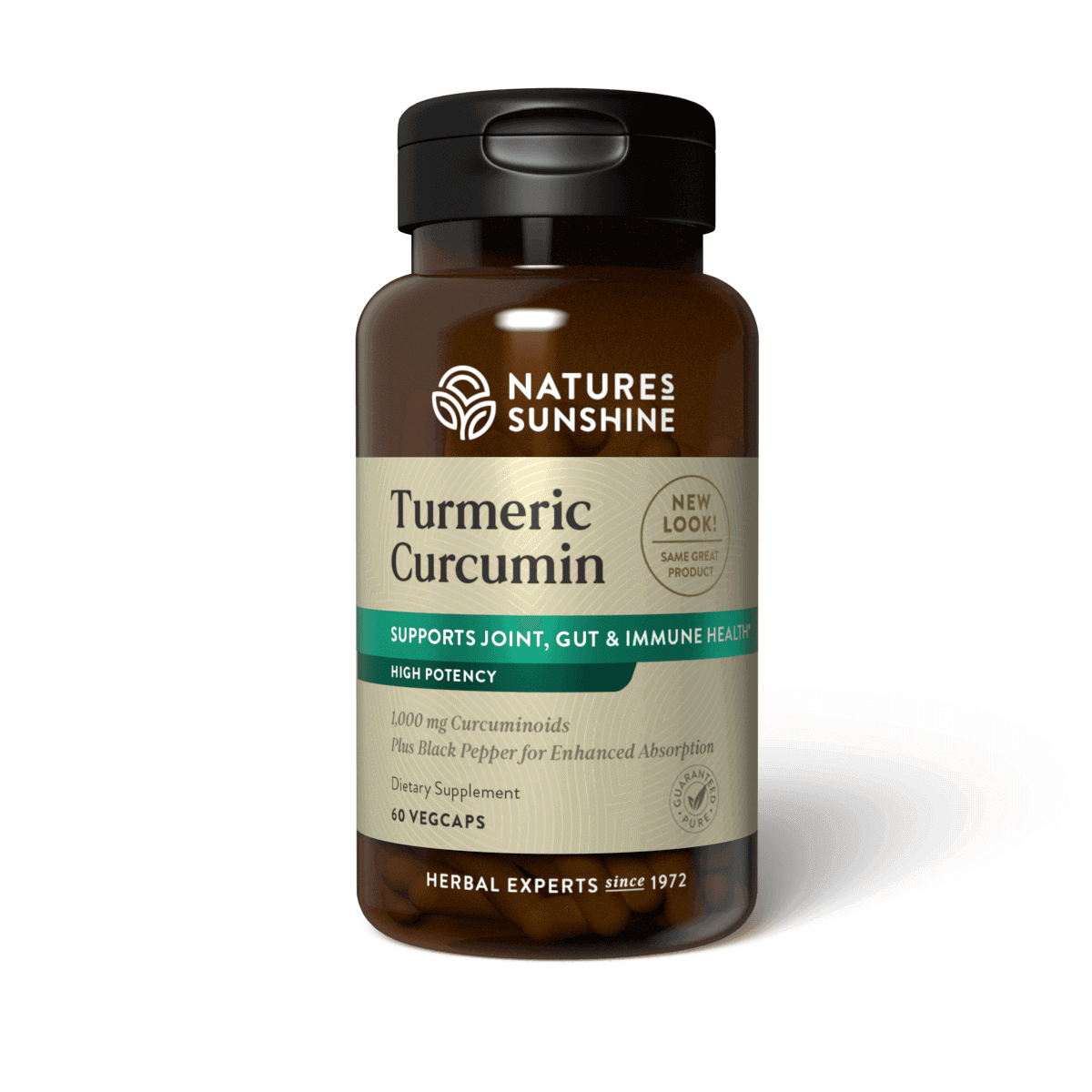
Nature's Sunshine Turmeric Curcumin delivers 1,000 mg of curcuminoids per serving — the equivalent of 32,000 mg of whole root Turmeric. The formula includes both Turmeric root and higher levels of antioxidant-rich Turmeric extract, enhanced with Black pepper extract to support superior absorption and bioavailability. It is clinically studied and proven to deliver superior absorption and effectiveness.
If you're curious about whether Turmeric Curcumin is right for your wellness goals, our naturopath is available for a free consultation to help you decide.
How Turmeric Curcumin Supports the Body
Promoting a Healthy Inflammatory Response
Curcumin exerts its core anti-inflammatory effects mainly by inhibiting the activation of the NF-κB signaling pathway, regulating the MAPK/ERK phosphorylation cascade, and modulating the JAK/STAT pathway. It also suppresses COX-2 and LOX enzymes responsible for producing inflammatory mediators like prostaglandins and leukotrienes. By curtailing the production of pro-inflammatory cytokines such as TNF-α and IL-1β, Curcumin may help support the body's balanced inflammatory response.
Antioxidant Defense
Studies suggest Curcumin activates the Keap1-Nrf2/ARE transcriptional pathway, which upregulates the body's own cytoprotective enzymes. Multiple human randomized controlled trials (RCTs) and meta-analyses have shown that Curcumin supplementation may measurably raise total antioxidant capacity (TAC), superoxide dismutase (SOD), catalase, and glutathione, while lowering malondialdehyde (MDA), a marker of lipid peroxidation.
Joint Comfort and Mobility
Osteoarthritis — particularly knee OA — is the most extensively researched indication for Turmeric Curcumin in human clinical trials. Multiple meta-analyses support statistically significant benefits for pain and function. A 2025 network meta-analysis found that the bioavailability-enhanced preparation demonstrated a 30% reduction in WOMAC pain compared to placebo. A separate meta-analysis verified that Curcumin/Turmeric extract had treatment efficacy similar to NSAIDs based on findings from 16 RCTs and 1,810 adults.
Gut, Brain, Skin, and Immune Support
Research suggests Curcumin may support gut health: a 2025 meta-analysis of 13 RCTs found significant efficacy for achieving clinical remission in ulcerative colitis patients. Preliminary human clinical data suggest possible benefits in cognitive aging and mood, with Curcumin shown to restore brain-derived neurotrophic factor (BDNF) levels in some models. Traditionally, Turmeric has been applied topically for wound healing and skin infections, and it has historically been used to support immune system function.
It's important to note that Curcumin's clinical application has been limited by its inherently poor oral bioavailability — which is why this formula includes Black pepper extract to help overcome that challenge.
Key Ingredients
- ✓ Free shipping over $75
- ✓ 90-day easy returns
- ✓ Ships within hours
Who May Benefit from Turmeric Curcumin
Understanding what Turmeric Curcumin does for the body can help you determine whether it aligns with your wellness needs. Based on the research, this supplement may be particularly suited for:
- Adults seeking joint comfort — Research suggests Curcumin may support healthy joint function, reduce occasional stiffness, and promote flexibility. Multiple systematic reviews confirm its benefits for individuals experiencing knee and joint discomfort.
- Those looking to support a healthy inflammatory response — Curcumin's ability to modulate NF-κB, COX-2, and other inflammatory pathways makes it a well-studied option for people interested in maintaining balanced inflammation levels.
- Individuals interested in antioxidant support — Clinical trials suggest Curcumin may help the body maintain healthy antioxidant enzyme levels and protect against oxidative stress.
- People wanting to support gut, brain, or immune health — Preliminary research suggests Curcumin may support gut comfort, cognitive function in aging, and immune system activity.
This formula is non-GMO and delivered in VegCaps. If you're unsure whether Turmeric Curcumin is the right fit for your situation — especially if you take medications — our naturopath offers free consultations to help you make an informed choice.
How to Take Turmeric Curcumin
Take 2 VegCaps daily. Each serving delivers 1,100 mg of tumeric extract with 1,000 mg of curcuminoids, enhanced with Black pepper extract for improved bioavailability and absorption.
One serving of Turmeric Curcumin is equivalent to 32,000 mg of whole root Turmeric — delivering both Turmeric root and higher levels of antioxidant-rich Turmeric extract in a convenient two-capsule daily serving.
A note on safety: Several human trials have reported no significant toxicity with Curcumin use. The most commonly reported side effects in clinical trials are mild gastrointestinal disturbances such as nausea, diarrhea, or stomach upset, particularly at higher doses. These have been uncommon and generally resolved with dose reduction or discontinuation. Because piperine (from Black pepper extract) may affect how the body metabolizes certain medications — particularly blood thinners and drugs metabolized by CYP3A4 enzymes — it's important to talk with a healthcare professional if you take prescription medications. Our naturopath is always available for a free consultation if you have questions.
Written by Greg Howlett
Frequently asked questions
What does Turmeric Curcumin do for the body?
Research suggests Turmeric Curcumin supports the body in several ways. It may promote a healthy inflammatory response by inhibiting key pro-inflammatory pathways including NF-κB and COX-2. It may support joint comfort and mobility — multiple meta-analyses of RCTs show benefits for knee OA pain and function. It also provides antioxidant defense by activating the Nrf2 pathway, which upregulates the body's own protective enzymes. Additionally, preliminary research suggests it may support gut health, cognitive function, and immune system activity.
Why is Black pepper extract included in this Turmeric Curcumin formula?
Curcumin has inherently poor oral bioavailability due to low water solubility, poor intestinal permeability, and rapid metabolism. Black pepper extract contains piperine, an alkaloid that has been shown in human studies to increase Curcumin bioavailability by approximately 2,000%. Piperine works by inhibiting certain enzymes (UGT, CYP3A4) and transporters (P-glycoprotein) that normally break down and eliminate Curcumin before the body can use it.
How much Curcumin is in each serving of this supplement?
Each two-capsule serving provides 1,100 mg of tumeric extract containing 1,000 mg of curcuminoids. Nature's Sunshine states that one serving is equivalent to 32,000 mg of whole root Turmeric, delivering both Turmeric root and higher levels of the antioxidant-rich Turmeric extract.
Is Turmeric Curcumin safe to take daily?
Several human clinical trials have not shown toxic effects from Curcumin, and it is reported to be safe at doses up to 6 g/day for 4-7 weeks in clinical trial settings. The FDA considers Curcumin generally recognized as safe (GRAS). The most commonly reported side effects are mild gastrointestinal disturbances. However, because piperine can affect how the body metabolizes certain medications, anyone taking prescription drugs should consult a healthcare professional before starting supplementation.
Can Turmeric Curcumin help with joint discomfort?
Joint support is the most extensively researched area for Turmeric Curcumin. Multiple systematic reviews and meta-analyses of RCTs support statistically significant benefits for pain and physical function in knee osteoarthritis. A 2022 meta-analysis of 29 RCTs involving 2,396 participants across five types of arthritis confirmed Curcumin's benefits. Some trials have found effects comparable to NSAIDs. However, the overall evidence quality is rated low to very low due to small sample sizes and methodological variations across studies.
Are there any drug interactions to be aware of with Turmeric Curcumin?
Yes. The Black pepper extract (piperine) in this formula inhibits CYP3A4 and P-glycoprotein, which can increase plasma concentrations of co-administered drugs. Clinical studies have documented interactions with drugs such as carbamazepine and warfarin. Curcumin itself may also affect certain CYP450 enzymes. Anyone taking blood thinners, anti-seizure medications, or other prescription drugs should consult a healthcare professional before use. Our naturopath is available for a free consultation to discuss potential interactions.
Talk to Dr. Shannyn Fowl
Not sure if this is right for you? Book a free, no-pressure consultation for personalized guidance on your health goals.
Book your free consult →About Caring Sunshine
A family-run reseller of premium supplements — free shipping, a 90-day guarantee, and real people who know the products.
Learn more about us →