
Vitamin D3 and K2 – Benefits, Ingredients & Guide
Learn how Vitamin D3 and K2 work together to support bone density, immune health, and circulation. Explore key ingredients, dosing, and FAQs in our guide.
What Is Vitamin D3 and K2 — and Why Does It Matter?
If you've been exploring ways to support your bones, immune system, and circulation, you've likely come across the pairing of Vitamin D3 and K2. These two fat-soluble vitamins work through complementary pathways — Vitamin D3 promotes Calcium absorption from the intestines, while Calcium itself is the primary mineral building block of bone. Getting them in the right balance is one of the most important things you can do for your structural and overall health.
Vitamin D is produced when the sun's UVB rays hit the skin, converting cutaneous 7-dehydrocholesterol into previtamin D3, which then becomes Vitamin D3 (cholecalciferol). However, season, time of day, cloud cover, smog, skin melanin content, and sunscreen all affect how much vitamin D your body can actually produce. During cloudy months or winter, supplementation may be necessary to maintain adequate levels.
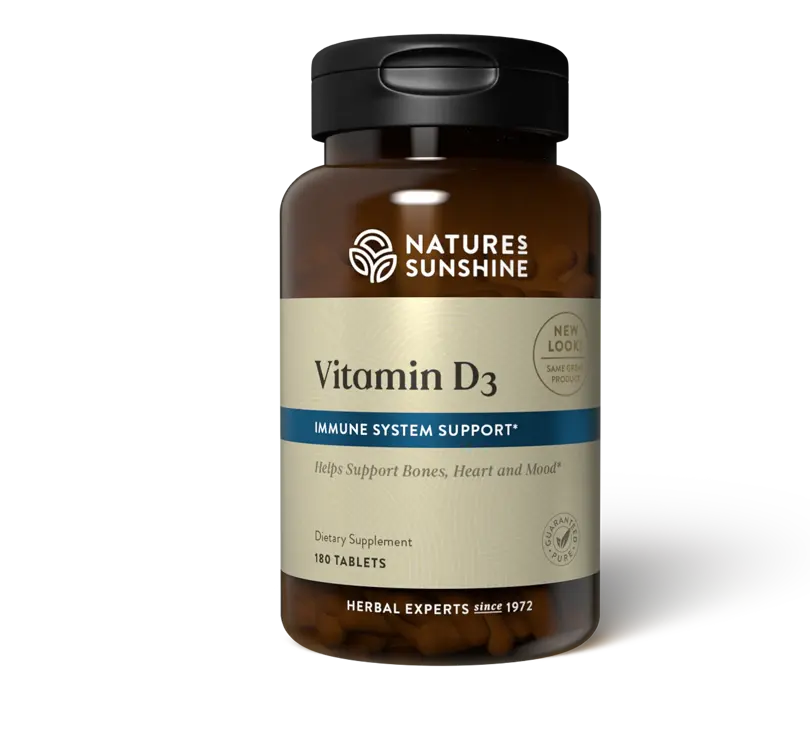
Nature's Sunshine Vitamin D3 delivers the more bioactive of the two forms of vitamin D — cholecalciferol — alongside dicalcium phosphate, a well-recognized form of supplemental Calcium. Together, these ingredients address the core nutritional foundation behind the Vitamin D3 and K2 conversation: ensuring your body has the tools it needs for Calcium metabolism, bone mineralization, and immune resilience.
How Vitamin D3 Supports Bone Density, Immunity, and Circulation
Vitamin D3 as ingested is biologically inert. It must undergo two sequential hydroxylation steps to become active. The first occurs in the liver, where the enzyme 25-hydroxylase converts it to 25-hydroxyvitamin D — the major circulating form measured in blood tests. The second hydroxylation takes place in the kidneys, producing calcitriol (1,25-dihydroxyvitamin D), the physiologically active metabolite.
Calcitriol exerts its effects through vitamin D receptor (VDR)-mediated genomic and non-genomic pathways found in virtually every organ system. In the gut, it stimulates intestinal Calcium and phosphate transport. In bone, it assists with mineralization and remodeling. In the immune system, it induces antimicrobial peptides like cathelicidin and β-defensins and helps modulate T-cell and macrophage function.
Research suggests that Vitamin D3 may be more than three times as effective as vitamin D2 in raising and maintaining serum 25(OH)D concentrations, and its metabolites have superior affinity for vitamin D-binding proteins in plasma. This is why Vitamin D3 (cholecalciferol) is widely regarded as the preferred supplemental form.
The concurrent presence of fat in the gut enhances vitamin D absorption, which is why this product's directions recommend taking it with a meal.
Key Ingredients
- ✓ Free shipping over $75
- ✓ 90-day easy returns
- ✓ Ships within hours
Who Should Consider Vitamin D3 and K2 Supplementation?
Several groups may particularly benefit from Vitamin D3 supplementation. People with limited sun exposure — whether due to geographic location, indoor lifestyles, or protective clothing — are at higher risk for low vitamin D status. Cloud cover, smog, and higher melanin content in the skin all reduce cutaneous Vitamin D3 synthesis.
Older adults are another key group. Vitamin D receptors in skeletal muscle implicate Vitamin D3 in muscle strength and coordination, especially as we age. Research suggests that Vitamin D3 combined with Calcium may help reduce fall risk and support mobility in aging populations.
Those focused on bone health — including postmenopausal women and anyone concerned about maintaining bone mineral density — may find this combination especially relevant. Studies suggest Vitamin D3 helps regulate normal blood levels of Calcium and phosphorus, assists in strengthening bones, and encourages bone mineralization.
People looking to support immune resilience may also benefit. Research suggests that individuals with adequate Vitamin D3 levels may have a lower incidence of respiratory infections, and Vitamin D3 plays a role in both innate and adaptive immune responses.
If you're unsure whether Vitamin D3 and K2 supplementation is right for your individual needs, our naturopath is available for a free consultation to help you think through your wellness goals.
How to Take Nature's Sunshine Vitamin D3
Take 2 tablets daily with a meal. Each serving provides 100 mcg of Vitamin D3 (cholecalciferol). Taking Vitamin D3 with a meal that contains some fat may enhance absorption, as vitamin D is a fat-soluble nutrient.
This product is non-GMO and comes in a 180-tablet bottle, providing a 90-day supply at the recommended serving size of 2 tablets per day.
As with any supplement, it's wise to discuss your Vitamin D3 and K2 regimen with a healthcare professional, especially if you take medications. Certain drugs — including corticosteroids, orlistat, cholestyramine, phenobarbital, phenytoin, and digitalis — may interact with vitamin D. Our naturopath is happy to walk you through any questions during a free consultation.
Written by Greg Howlett
Frequently asked questions
Why is Vitamin D3 preferred over vitamin D2?
Research suggests that Vitamin D3 (cholecalciferol) may be more than three times as effective as vitamin D2 (ergocalciferol) in raising serum 25(OH)D concentrations and maintaining those levels for a longer time. Vitamin D3 metabolites also have superior affinity for vitamin D-binding proteins in plasma. While the two forms have traditionally been considered equivalent for curing rickets, Vitamin D3 is widely regarded as the preferred supplemental form.
How do I know if I'm low in vitamin D?
Serum concentration of 25(OH)D is the main indicator of vitamin D status. Values below 20 ng/mL generally indicate deficiency, and levels between 20 and 30 ng/mL suggest insufficiency. According to the National Health and Nutrition Examination Survey, most people in the United States consume less than the recommended amounts of vitamin D. High-risk populations — including individuals with limited sun exposure, older adults, and people with malabsorption disorders — may benefit from routine screening.
Why are Vitamin D3 and Calcium often taken together?
Vitamin D3 plays a crucial role in promoting Calcium absorption from the intestines. Without adequate vitamin D, Calcium absorption from both dietary sources and supplements is significantly diminished. This is why Calcium and vitamin D are frequently studied and recommended together — Vitamin D3 helps ensure the Calcium you consume can actually be used for bone mineralization and other essential functions.
Can I get enough vitamin D from sunlight alone?
It depends on many factors. Season, time of day, cloud cover, smog, skin melanin content, geographic latitude, and sunscreen use all affect how much vitamin D your skin can produce. While you cannot get too much vitamin D from sunshine (your skin limits the amount it makes), many people — particularly those in northern latitudes or with limited outdoor time — may not produce enough through sun exposure alone, making supplementation a practical option.
Does Vitamin D3 support immune health?
Research suggests it does. Vitamin D3 induces antimicrobial peptides including cathelicidin and β-defensins, modulates macrophage and T-cell function, and suppresses inflammatory cytokines. A 2017 meta-analysis of 25 randomized controlled trials found a protective effect of vitamin D supplementation against acute respiratory infections, with the greatest benefit seen in individuals who were deficient at baseline.
Is there a risk of taking too much Vitamin D3?
Vitamin D toxicity is exceedingly rare but possible with excessive supplemental intake. Very high blood levels (greater than 150 ng/mL) can cause nausea, vomiting, muscle weakness, kidney stones, and other complications. The Institute of Medicine recommends an upper intake limit of 4,000 IU/day (100 mcg/day) for adults aged 9 and older. You cannot get too much vitamin D from sunshine, as your skin naturally limits production. If you have questions about appropriate dosing for your situation, our naturopath offers free consultations.
Talk to Dr. Shannyn Fowl
Not sure if this is right for you? Book a free, no-pressure consultation for personalized guidance on your health goals.
Book your free consult →About Caring Sunshine
A family-run reseller of premium supplements — free shipping, a 90-day guarantee, and real people who know the products.
Learn more about us →