
Vitamin D2 vs D3: What the Research Actually Shows
Explore vitamin D2 vs D3 differences in bioavailability, immune support, and bone health. Learn why D3 may be the more effective form for raising vitamin D levels.
Vitamin D2 vs D3: What Sets Them Apart
If you've ever stood in front of a supplement shelf wondering about vitamin D2 vs D3, you're not alone. Both forms belong to the calciferol family of fat-soluble seco-steroids, and both function as prohormones — meaning your body must convert them into an active hormone before they can do their work. But the differences between them matter more than you might expect.
Vitamin D2 (ergocalciferol) is derived from plants and is commonly used in food fortification. Vitamin D3 (cholecalciferol) is the form your skin naturally synthesizes when UVB radiation (approximately 290–320 nanometers) converts cutaneous 7-dehydrocholesterol to previtamin D3, which then rearranges into Vitamin D3. Vitamin D3 is also obtained from animal-derived dietary sources such as fatty fish, egg yolks, and beef liver.
Chemically, the two forms differ only in their side-chain structure. That seemingly small distinction, however, can translate into meaningful differences in how effectively each form raises and maintains your serum 25-hydroxyvitamin D — the marker your healthcare provider measures to assess vitamin D status.
Why D3 May Be the More Effective Form
The central question in the vitamin D2 vs D3 conversation is potency. Research suggests that Vitamin D3 could be more than three times as effective as vitamin D2 in raising serum 25(OH)D concentrations and maintaining those levels for a longer time. Additionally, Vitamin D3 metabolites have been shown to have superior affinity for vitamin D-binding proteins in plasma, which helps keep the nutrient circulating and available where your body needs it.
The two forms have traditionally been regarded as equivalent based on their ability to cure rickets, and most steps involved in their metabolism and actions are identical. However, some researchers note that firm conclusions about different effects cannot yet be drawn, because study designs and populations vary. What does appear consistent across multiple analyses is that D3 is the more bioactive of the two forms of vitamin D.
Both forms are well absorbed in the small intestine, through simple passive diffusion and intestinal membrane carrier proteins. The concurrent presence of fat in the gut enhances absorption, though some vitamin D is absorbed even without dietary fat. Notably, neither aging nor obesity alters vitamin D absorption from the gut.
From Inactive Prohormone to Active Metabolite
Whether you take D2 or D3, the vitamin you ingest is biologically inert. It must undergo two sequential hydroxylation steps to become active. The first hydroxylation occurs in the liver, where the enzyme 25-hydroxylase converts vitamin D into 25-hydroxyvitamin D — the major circulating form measured in blood tests. The second hydroxylation takes place in the kidneys, where 1-alpha-hydroxylase converts it into calcitriol (1,25-dihydroxyvitamin D), the physiologically active metabolite.
Calcitriol exerts its effects through the vitamin D receptor (VDR), which is expressed in virtually every organ system. Through VDR-mediated genomic and non-genomic pathways, calcitriol stimulates intestinal Calcium and phosphate transport, modulates bone remodeling, and influences immune cell behavior. This broad receptor distribution is why vitamin D status is linked to so many areas of health.
Understanding this activation pathway also explains why serum 25(OH)D concentration is the primary indicator of vitamin D status — it reflects both dietary intake and sunlight exposure, giving your healthcare provider the clearest picture of your vitamin D reserves.
Who Should Consider Vitamin D3 Supplementation
Many people struggle to maintain adequate vitamin D levels through sun exposure and diet alone. Season, time of day, cloud cover, smog, skin melanin content, and sunscreen use all affect how much vitamin D your skin can produce. According to data from the National Health and Nutrition Examination Survey, most people in the United States consume less than the recommended amounts of vitamin D.
High-risk populations that may especially benefit from supplementation include individuals with limited sun exposure, older adults (whose skin produces vitamin D less efficiently), and people with malabsorption disorders. People with darker skin tones also synthesize vitamin D from sunlight at lower rates — clouds, smog, old age, and having dark-colored skin all reduce the amount of vitamin D the skin makes.
Few foods naturally contain meaningful amounts of vitamin D. Fatty fish like trout, salmon, tuna, and mackerel are among the best sources, while beef liver, egg yolks, and cheese provide smaller amounts. For most individuals, these dietary sources are typically insufficient to maintain optimal serum 25(OH)D concentrations, making supplementation a practical consideration — especially during cloudy months or winter.
If you're unsure about your vitamin D status or which form is right for you, our naturopath is available for a free consultation to help you think through your individual needs.
Key ingredients
- ✓ Free shipping over $75
- ✓ 90-day easy returns
- ✓ Ships within hours
How to Take Vitamin D3
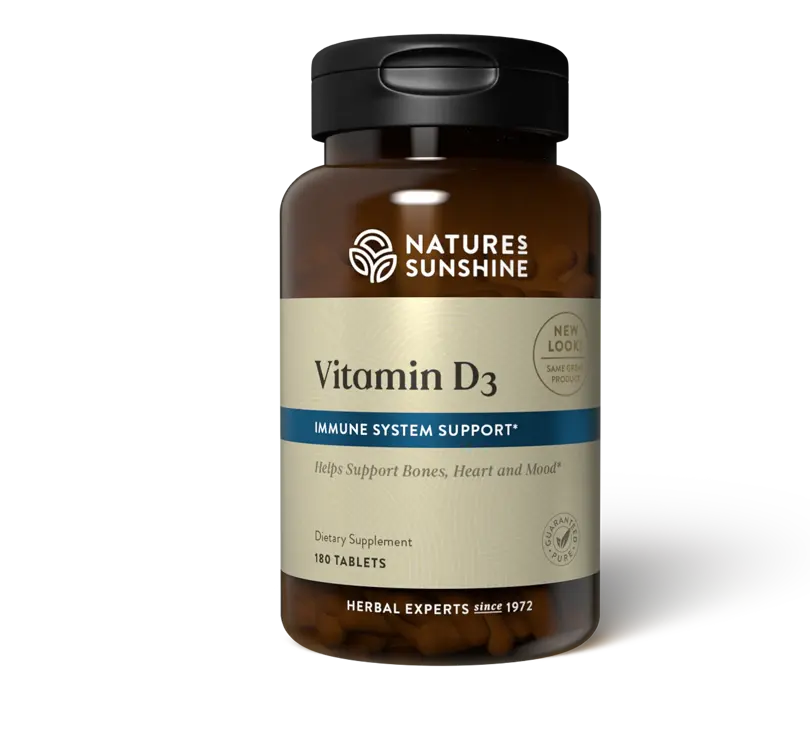
Take 2 tablets daily with a meal. Because vitamin D is fat-soluble, taking it alongside a meal that contains some dietary fat may support absorption.
Written by Greg Howlett
Frequently asked questions
Is Vitamin D3 really better than D2?
Research suggests that Vitamin D3 could be more than three times as effective as vitamin D2 in raising serum 25(OH)D concentrations and maintaining those levels for a longer time. Its metabolites also show superior affinity for vitamin D-binding proteins in plasma. While the two forms have traditionally been regarded as equivalent based on their ability to cure rickets, many researchers consider D3 the more bioactive form.
What is the difference between vitamin D2 and D3 chemically?
Both are fat-soluble seco-steroids that differ only in their side-chain structure. Vitamin D2 (ergocalciferol) is derived from plants, while Vitamin D3 (cholecalciferol) is synthesized in human skin from 7-dehydrocholesterol and is also found in animal-derived food sources like fatty fish and egg yolks. Both forms undergo the same metabolic activation steps — hydroxylation in the liver and then the kidneys — to become biologically active.
Can I get enough vitamin D from food and sunlight alone?
For most individuals, dietary sources of vitamin D — including fatty fish, egg yolks, and fortified foods — are typically insufficient to maintain optimal serum 25(OH)D concentrations. Sunlight-driven synthesis varies widely based on season, time of day, cloud cover, skin melanin content, and sunscreen use. According to NHANES data, most people in the United States consume less than the recommended amounts of vitamin D, which is why supplementation may be a practical consideration.
How do I know if I'm deficient in vitamin D?
The best way to determine vitamin D status is through a serum 25-hydroxyvitamin D blood test. Values below 20 ng/mL indicate deficiency, and levels between 20 and 30 ng/mL suggest insufficiency. The Institute of Medicine considers 20 ng/mL (50 nmol/L) as physiologically adequate for at least 97.5% of the population. High-risk populations — including those with limited sun exposure, older adults, and people with malabsorption disorders — may benefit from routine screening.
What does Vitamin D3 support beyond bone health?
Beyond supporting Calcium absorption and bone mineralization, research suggests Vitamin D3 plays roles in immune function — inducing antimicrobial peptides and supporting regulatory T cell differentiation. A meta-analysis of 25 RCTs found it may help protect against acute respiratory infections. It has also been studied for its associations with cardiovascular health, neuromuscular function, and autoimmune disease modulation, though evidence strength varies across these areas.
Are there safety concerns with Vitamin D3 supplementation?
Vitamin D is among the least toxic fat-soluble vitamins, and toxicity is exceedingly rare. The Institute of Medicine recommends an upper intake limit of 4,000 IU/day (100 mcg/day) for adults aged 9 and older. Very high blood levels above 150 ng/mL can cause nausea, vomiting, muscle weakness, and kidney problems. Importantly, you cannot get too much vitamin D from sunshine because the skin limits how much it produces. It's also worth noting that certain medications — including corticosteroids, orlistat, cholestyramine, and some anti-seizure drugs — can affect vitamin D metabolism or absorption.
Talk to Dr. Shannyn Fowl
Not sure if this is right for you? Book a free, no-pressure consultation for personalized guidance on your health goals.
Book your free consult →About Caring Sunshine
A family-run reseller of premium supplements — free shipping, a 90-day guarantee, and real people who know the products.
Learn more about us →