
Turmeric vs Curcumin: Key Differences Explained
Understand the real difference between Turmeric vs Curcumin, how they work together for inflammation and joint support, and what to look for in a supplement.
Turmeric vs Curcumin: What's the Difference and Why It Matters
If you've ever stood in the supplement aisle wondering about Turmeric vs Curcumin, you're not alone — it's one of the most common questions our naturopath fields during free consultations. The short answer: Turmeric is the whole plant rhizome (Curcuma longa), a golden-yellow spice that has been used for nearly 6,000 years in Ayurvedic, Chinese, and Southeast Asian traditional medicine. Curcumin is the primary bioactive polyphenol inside Turmeric — the compound that gives Turmeric its vibrant color and much of its studied biological activity.
Here's why the distinction matters: raw Turmeric powder contains only about 2–5% curcuminoids by weight. Curcumin generally represents 75–80% of the total curcuminoids found in a crude Turmeric extract. So when you use Turmeric as a kitchen spice, you're getting a meaningful but modest amount of the active compound. A standardized Turmeric extract, on the other hand, concentrates that curcuminoid content — often to 95–98% — delivering far more of the bioactive ingredient per serving.
Nature's Sunshine Turmeric Curcumin takes a dual approach: it delivers both Turmeric root and higher levels of Turmeric extract rich in curcuminoids. One serving is equivalent to 32,000 mg of whole root Turmeric, providing 1,000 mg of curcuminoids along with 1,100 mg of tumeric extract. This is designed to give you the full spectrum of Turmeric's constituents — including its volatile oils, sugars, and proteins — alongside a clinically meaningful concentration of Curcumin.
How Turmeric and Curcumin Support a Healthy Inflammatory Response
The Turmeric vs Curcumin conversation becomes especially relevant when we look at inflammation. Research suggests that Curcumin exerts its core anti-inflammatory effects mainly by inhibiting the NF-κB signaling pathway, regulating the MAPK/ERK phosphorylation cascade, and modulating the JAK/STAT pathway. It also suppresses COX-2 and LOX enzymes responsible for producing inflammatory mediators such as prostaglandins and leukotrienes.
Multiple meta-analyses of randomized controlled trials have demonstrated significant reductions in key inflammatory biomarkers — including C-reactive protein (CRP), interleukin-6 (IL-6), and tumor necrosis factor-α (TNF-α) — following Curcumin supplementation. A 2024 review of 54 meta-analyses found that CRP levels were reduced in seven of ten meta-analyses and IL-6 levels were significantly lowered in five of eight meta-analyses examined.
On the antioxidant front, clinical RCTs show that Curcumin measurably raises total antioxidant capacity (TAC), superoxide dismutase (SOD), catalase, and glutathione while lowering the lipid-peroxidation marker malondialdehyde (MDA). The primary molecular mechanism involves activation of the Keap1-Nrf2/ARE transcriptional pathway, which upregulates the body's own cytoprotective enzymes.
It's important to note that Curcumin's biggest pharmacological challenge is its poor oral bioavailability — low water solubility, poor intestinal permeability, instability at alkaline pH, and fast metabolism all limit how much reaches systemic circulation. This is precisely why the formula includes Black pepper extract: studies have shown that co-administration with piperine may increase Curcumin bioavailability by up to 2,000% in humans.
Who Benefits from a Turmeric Curcumin Supplement
If you're navigating the Turmeric vs Curcumin question for a specific health goal, here's what the research supports most strongly:
Joint Health and Osteoarthritis
Knee osteoarthritis is the most extensively researched indication for Turmeric and Curcumin in human trials. A 2025 systematic review and network meta-analysis of 17 studies found that all Turmeric preparations significantly reduced WOMAC pain scores compared to placebo. A 2022 meta-analysis of 29 RCTs involving 2,396 participants across five types of arthritis — including osteoarthritis, rheumatoid arthritis, and gout — confirmed significant pain and inflammation reductions. Separate meta-analyses have verified that Curcumin/Turmeric extract demonstrated treatment efficacy similar to NSAIDs. However, evidence quality is consistently rated low to very low due to small sample sizes, methodological heterogeneity, and frequent industry involvement.
Metabolic Health
A 2025 systematic review found that Curcumin supplementation significantly reduced fasting blood sugar and HbA1c in type 2 diabetes, decreased triglycerides and LDL cholesterol, elevated HDL cholesterol, and attenuated systemic inflammatory markers. A systematic review of 13 RCTs in metabolic syndrome patients showed positive effects on waist circumference, fasting blood sugar, diastolic blood pressure, HDL-C, and inflammatory markers including TNF-α and CRP.
Digestive Wellness
Research suggests Curcumin may be an effective adjunctive therapy in ulcerative colitis, primarily for maintaining or achieving remission. A 2025 meta-analysis of 13 placebo-controlled RCTs showed Curcumin's significant efficacy in achieving clinical remission and response in UC patients.
Cognitive and Mood Support
Preliminary human clinical trial data suggest possible benefits for cognitive aging and mood. In one study, 1,500 mg/day of a Turmeric oil-based Curcumin formulation for 12 months stabilized cognitive function in older adults compared to placebo. Research also suggests Curcumin supplementation may restore brain-derived neurotrophic factor (BDNF) levels while regulating monoaminergic neurotransmission. However, clinical evidence in this area remains early-stage.
This formula is particularly well-suited for adults seeking support for chronic inflammation, joint comfort, and antioxidant defense. If you're unsure whether it's right for your situation — especially if you take medications — our naturopath is available for a free consultation.
Key Ingredients
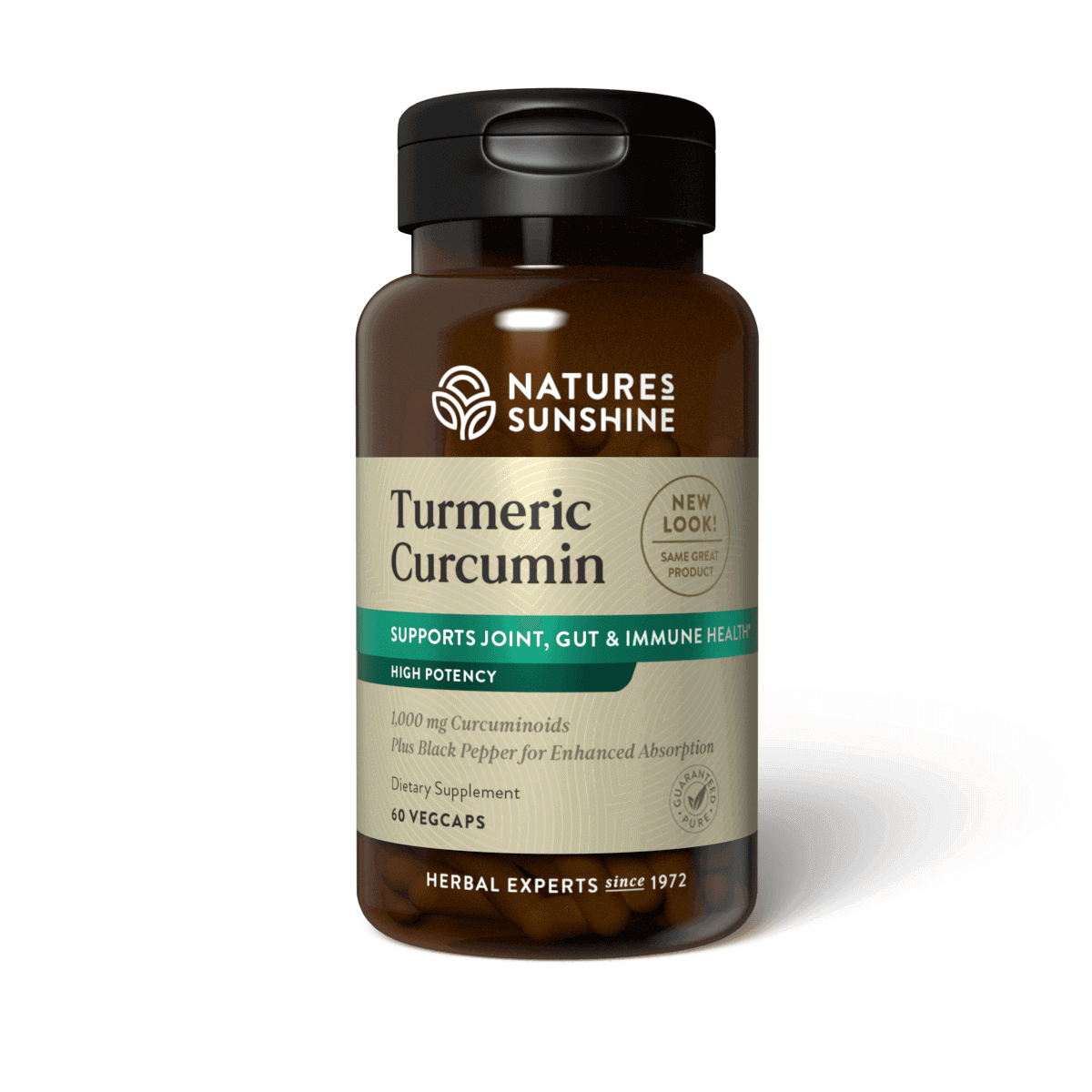
- ✓ Free shipping over $75
- ✓ 90-day easy returns
- ✓ Ships within hours
How to Take Turmeric Curcumin
Take 2 VegCaps daily.
Each bottle contains 60 caps (a 30-day supply at the recommended serving size of 2 capsules). This product is non-GMO.
Because Curcumin's oral bioavailability is inherently limited, this formula already includes Black pepper extract to help maximize absorption. If you're currently taking medications — particularly blood thinners, CYP3A4 substrates, or drugs metabolized by P-glycoprotein — it's wise to speak with a healthcare provider before starting, as piperine may affect how your body processes certain medications. Our naturopath is always available for a free consultation if you have questions about fit or timing.
Important Safety Considerations
Curcumin has demonstrated high tolerability in multiple RCTs. It is reported to be safe orally at doses up to 6 grams per day for 4–7 weeks based on clinical trial data. The FDA has approved Curcumin as generally recognized as safe (GRAS) for use in food. The most commonly reported side effects in clinical trials are mild gastrointestinal disturbances — nausea, diarrhea, and stomach upset — particularly at higher doses, and these typically resolve with dose reduction or discontinuation.
However, there are important caveats to be aware of. Available evidence shows a rare risk of liver injury from Turmeric or Curcumin in medicinal dosage forms. This risk may be higher for products with enhanced absorption or bioavailability and/or higher doses. People with existing or previous liver problems may be more likely to develop this rare adverse event.
Because piperine (Black pepper extract) inhibits CYP3A4, CYP2C9, and P-glycoprotein, it may increase plasma concentrations of co-administered drugs including carbamazepine, warfarin, and fexofenadine. Curcumin itself may affect some CYP450 enzymes. If you take prescription medications, consult your healthcare provider before use.
Written by Greg Howlett
Frequently asked questions
What is the actual difference between Turmeric and Curcumin?
Turmeric is the whole dried rhizome of the Curcuma longa plant, used as a spice and in traditional medicine for nearly 6,000 years. It contains hundreds of phytochemicals, including curcuminoids, volatile oils, sugars, proteins, and resins. Curcumin (diferuloylmethane) is the dominant curcuminoid — the primary bioactive polyphenol responsible for Turmeric's yellow color and most of its studied biological activity. Raw Turmeric powder contains only about 2–5% curcuminoids, while standardized extracts can concentrate them to 95–98%.
Why is Black pepper included with Turmeric Curcumin supplements?
Curcumin has inherently poor oral bioavailability due to low water solubility, poor intestinal permeability, instability at alkaline pH, and rapid metabolism. Piperine, the active alkaloid in Black pepper, inhibits the enzymes (CYP3A4, UGT) and transporters (P-glycoprotein) that normally break down and excrete Curcumin. In one human study, co-administration with piperine increased Curcumin bioavailability by 2,000%. This is why Nature's Sunshine Turmeric Curcumin includes Black pepper extract in its formula.
Does research support Turmeric Curcumin for joint pain?
Knee osteoarthritis is the most extensively researched indication for Turmeric and Curcumin. A 2025 network meta-analysis of 17 studies found all Turmeric preparations significantly reduced WOMAC pain compared to placebo, and a separate meta-analysis verified efficacy similar to NSAIDs based on 16 RCTs and 1,810 adults. A 2022 meta-analysis of 29 RCTs across five arthritis types also confirmed significant benefits. However, the overall certainty of evidence is rated low to very low due to small sample sizes, heterogeneity in formulations, and frequent industry involvement.
Is Turmeric Curcumin safe to take daily?
Curcumin is FDA-recognized as GRAS and has been reported safe orally at up to 6 grams per day for 4–7 weeks in clinical trials. The most common side effects are mild gastrointestinal disturbances. However, there is a rare risk of liver injury, which may be higher with bioavailability-enhanced formulations or higher doses. Because piperine can affect how the body metabolizes certain medications, anyone on prescription drugs should consult a healthcare provider before starting supplementation.
How much Curcumin is in Nature's Sunshine Turmeric Curcumin?
Each two-capsule serving provides 1,100 mg of tumeric extract and 1,000 mg of curcuminoids, along with Black pepper extract to support absorption. According to Nature's Sunshine, one serving is equivalent to 32,000 mg of whole root Turmeric, delivering both the full-spectrum Turmeric compounds and a concentrated, clinically meaningful level of curcuminoids.
Can Turmeric Curcumin support more than just joints?
Yes. Beyond joint health, research has examined Curcumin's effects on multiple body systems. Meta-analyses suggest benefits for metabolic health markers including fasting blood sugar, HbA1c, triglycerides, and LDL cholesterol. Studies also show potential for supporting a healthy inflammatory response (reducing CRP, IL-6, TNF-α), digestive health (particularly as an adjunctive therapy in ulcerative colitis), and preliminary cognitive and mood support. The formula also promotes antioxidant defense, with clinical RCTs demonstrating improvements in total antioxidant capacity and reductions in oxidative stress markers.
Talk to Dr. Shannyn Fowl
Not sure if this is right for you? Book a free, no-pressure consultation for personalized guidance on your health goals.
Book your free consult →About Caring Sunshine
A family-run reseller of premium supplements — free shipping, a 90-day guarantee, and real people who know the products.
Learn more about us →