
Turmeric Curcumin with Black pepper | Deep-Dive Guide
Explore how Turmeric Curcumin with Black pepper supports joints, healthy inflammation & antioxidant defense. Science-backed ingredient guide from Caring Sunshine.
Turmeric Curcumin with Black pepper: A Powerful Botanical Trio
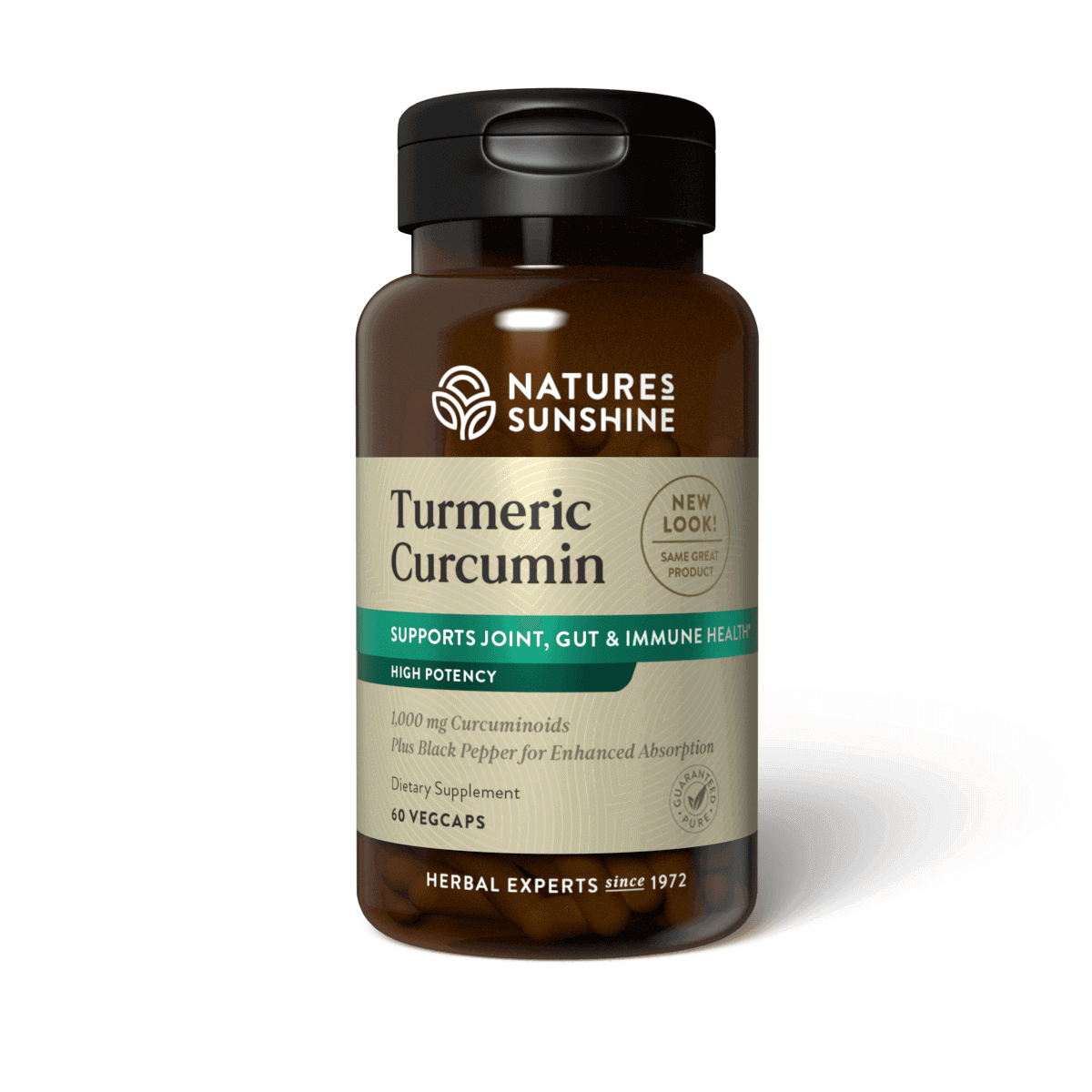
Turmeric Curcumin with Black pepper brings together two time-honored botanicals in a formula designed to promote a healthy inflammatory response, support joint comfort, and bolster antioxidant defense. Nature's Sunshine Turmeric Curcumin (Formerly CurcuminBP) pairs a potent Turmeric extract delivering 1,000 mg of curcuminoids with Black pepper extract — a combination that research suggests may dramatically improve Curcumin absorption.
Curcuminoids are the primary active compounds obtained from the rhizome of Turmeric (Curcuma longa L.), the vibrant yellow-orange spice that has been safely used for centuries in Indian Ayurvedic medicine and Traditional Chinese Medicine. Curcumin, the dominant curcuminoid, has been extensively investigated for its capacity to modulate multiple signaling pathways involved in inflammation, oxidative stress, and cellular health.
One serving of this formula is equivalent to 32,000 mg of whole root Turmeric. Unlike many Turmeric products that deliver high levels of plain Turmeric root but low levels of the concentrated extract, Nature's Sunshine delivers both Turmeric root and higher levels of antioxidant-rich Turmeric extract — giving you the full-spectrum benefit along with a clinically studied concentration of curcuminoids.
If you have questions about whether Turmeric Curcumin with Black pepper is right for your wellness goals, our naturopath is available for a free consultation to help you decide.
Why Curcumin Needs Black pepper — and What the Research Shows
The single most significant challenge with Curcumin is its poor oral bioavailability. Due to low water solubility, poor intestinal permeability, instability at alkaline pH, and rapid metabolism, only a tiny fraction of standard Curcumin reaches the bloodstream. One animal study found that oral absorption was approximately 1%.
This is where Black pepper extract earns its place in the formula. Piperine, the primary alkaloid in Black pepper, inhibits certain enzymes — including UDP-glucuronosyltransferase (UGT) and CYP3A4 — that would otherwise rapidly break down and eliminate Curcumin. Research suggests that in humans, co-administering Curcumin with piperine increased Curcumin bioavailability by 2,000% within 45 minutes, with no adverse effects observed at the dosages studied.
A pharmacokinetic crossover trial in 30 healthy adults compared five commercial Curcumin formulations, including a standard extract combined with a pepper extract standardized to 95% piperine. The results confirmed that piperine-containing formulations delivered meaningfully higher curcuminoid levels compared to standard extracts alone.
Beyond its bioavailability-enhancing role, Black pepper extract may also contribute its own antioxidant and anti-inflammatory properties. Research suggests piperine inhibits COX-2 gene expression and enzyme activity, and it has traditionally been used in Ayurveda as a digestive stimulant and component of the classical herbal preparation trikatu.
Key Ingredients
- ✓ Free shipping over $75
- ✓ 90-day easy returns
- ✓ Ships within hours
Who May Benefit from Turmeric Curcumin with Black pepper
This formula is designed for adults looking for natural support in several key areas of health:
- Joint comfort and flexibility: Research suggests Turmeric curcuminoids may support joint health across multiple types of arthritis. Multiple systematic reviews confirm statistically significant improvements in pain, stiffness, and physical function in knee osteoarthritis, and a 2022 meta-analysis of 29 RCTs confirmed benefits across five arthritis types. A 2025 network meta-analysis ranked Curcumin among the supplements with significant functional benefits for joint mobility.
- Healthy inflammatory response: Curcumin targets key inflammatory pathways — NF-κB, JAK/STAT, and MAPK — and research suggests it may downregulate cytokines such as TNF-α, IL-6, and IL-1β. Studies have documented reductions in CRP and other inflammatory biomarkers in populations with metabolic syndrome and other inflammatory conditions.
- Antioxidant protection: Both Curcumin and piperine demonstrate antioxidant activity. Clinical trials show Curcumin raises total antioxidant capacity and endogenous enzymes like SOD and catalase, while reducing markers of oxidative damage.
- Skin, brain, and gut health: Research suggests Curcumin may promote a healthy microbiome balance and support gut health. Preliminary clinical data suggest possible cognitive benefits, and Curcumin has been traditionally applied topically for wound healing and skin health.
- Immune system function: Curcumin's immunomodulatory properties have been documented across multiple studies, supporting overall immune system balance.
This product is non-GMO and comes in VegCaps, making it suitable for those who prefer plant-based capsule options. It requires no membership and no autoship — just straightforward wellness support.
Directions for Use
Take 2 VegCaps daily.
Each serving of 2 capsules delivers 1,100 mg of tumeric extract with 1,000 mg of curcuminoids and Black pepper extract for enhanced absorption. The bottle contains 60 caps (a 30-day supply at the recommended serving size).
Important safety considerations: Research notes that Turmeric and Curcumin formulations containing piperine may interact with certain medications. Piperine's inhibition of CYP3A4 and P-glycoprotein has been shown to elevate plasma concentrations of co-administered drugs. If you take prescription medications — particularly anticoagulants, antiplatelet agents, or drugs metabolized by CYP3A4 or CYP2C9 — it's wise to consult with a healthcare professional before starting this supplement. Our naturopath is happy to discuss any questions in a free consultation.
Available evidence indicates that Turmeric-piperine formulations with enhanced bioavailability carry a rare risk of liver injury. People with existing or previous liver conditions should exercise additional caution. Gastrointestinal effects such as nausea or stomach upset have occasionally been reported, though they are generally mild and resolve with dose reduction or discontinuation.
Written by Greg Howlett
Frequently asked questions
Why does Turmeric Curcumin with Black pepper work better than Turmeric alone?
Curcumin has inherently poor oral bioavailability due to low water solubility, rapid metabolism, and fast systemic elimination. Piperine, the active alkaloid in Black pepper, inhibits the enzymes (UGT, CYP3A4) and transporters (P-glycoprotein) that break down and eliminate Curcumin. In one human study, co-administering piperine with Curcumin increased Curcumin bioavailability by 2,000% within 45 minutes, with no adverse effects observed. This is why Black pepper extract is included — to help your body actually absorb and use the curcuminoids.
What does 'equivalent to 32,000 mg of whole root Turmeric' mean?
Whole Turmeric root powder naturally contains only about 2–5% curcuminoids by weight. Nature's Sunshine uses a concentrated Turmeric extract standardized to deliver 1,000 mg of curcuminoids per serving — far more than you could get from Turmeric powder alone. This concentration is what makes one serving equivalent to 32,000 mg of whole root Turmeric in terms of curcuminoid content.
What does the research say about Turmeric Curcumin for joint health?
Joint health — particularly knee osteoarthritis — is the most extensively researched indication for Curcumin. A 2022 systematic review and meta-analysis of 29 RCTs involving 2,396 participants across five arthritis types confirmed benefits for pain and function. A 2025 network meta-analysis found that all Turmeric preparations significantly reduced WOMAC pain scores compared to placebo, and a separate meta-analysis found Curcumin's treatment efficacy comparable to NSAIDs based on 16 RCTs. The evidence quality is consistently rated as low to very low due to heterogeneity in formulations and study designs, but the overall direction of the evidence is consistently positive.
Is Turmeric Curcumin with Black pepper safe to take with medications?
Turmeric and Curcumin are FDA-recognized as GRAS (generally regarded as safe), and Black pepper is also GRAS-listed. However, piperine inhibits CYP3A4, CYP2C9, and P-glycoprotein — enzymes and transporters involved in drug metabolism. This means it may alter plasma levels of co-administered medications, including anticoagulants like warfarin, carbamazepine, and certain other drugs. If you take prescription medications, consult a healthcare professional before starting. Our naturopath is available for a free consultation to discuss your specific situation.
Are there any side effects of Turmeric Curcumin with Black pepper?
In clinical trials, Curcumin has been well tolerated, with gastrointestinal effects — including nausea, diarrhea, and stomach upset — as the most commonly reported side effects, particularly at higher doses. Curcumin is reported to be safe at doses up to 6 g/day orally for 4–7 weeks in clinical trial settings. There is a rare risk of liver injury, which may be higher with bioavailability-enhanced formulations. People with existing or previous liver conditions should exercise caution. Mild adverse effects that have been reported generally resolved with dose reduction or discontinuation.
Does this product contain GMOs or require a subscription?
No to both. Nature's Sunshine Turmeric Curcumin is non-GMO. And like everything we carry at Caring Sunshine, no membership or autoship is required — just order what you need, when you need it.
Talk to Dr. Shannyn Fowl
Not sure if this is right for you? Book a free, no-pressure consultation for personalized guidance on your health goals.
Book your free consult →About Caring Sunshine
A family-run reseller of premium supplements — free shipping, a 90-day guarantee, and real people who know the products.
Learn more about us →