
Turmeric Curcumin Anti Inflammatory Evidence
Explore the Turmeric Curcumin anti inflammatory evidence from clinical trials and meta-analyses. Learn how Curcumin supports joints, gut health, and more.
Turmeric Curcumin Anti Inflammatory Evidence: What You Need to Know
Turmeric has been used for nearly 6,000 years in Ayurvedic and traditional Asian medicine, primarily for its anti-inflammatory and analgesic properties. Today, a substantial body of modern research has put those traditional uses to the test — and the Turmeric Curcumin anti inflammatory evidence is both promising and nuanced.
Curcumin, the principal bioactive polyphenol in Turmeric, has been extensively investigated for its capacity to modulate multiple signaling pathways involved in inflammatory responses. Studies show it acts by inhibiting the NF-κB signaling pathway and reducing the production of inflammatory cytokines such as TNF-α and IL-1β. It also suppresses COX-2 and LOX enzymes responsible for producing prostaglandins and leukotrienes — key inflammatory mediators.
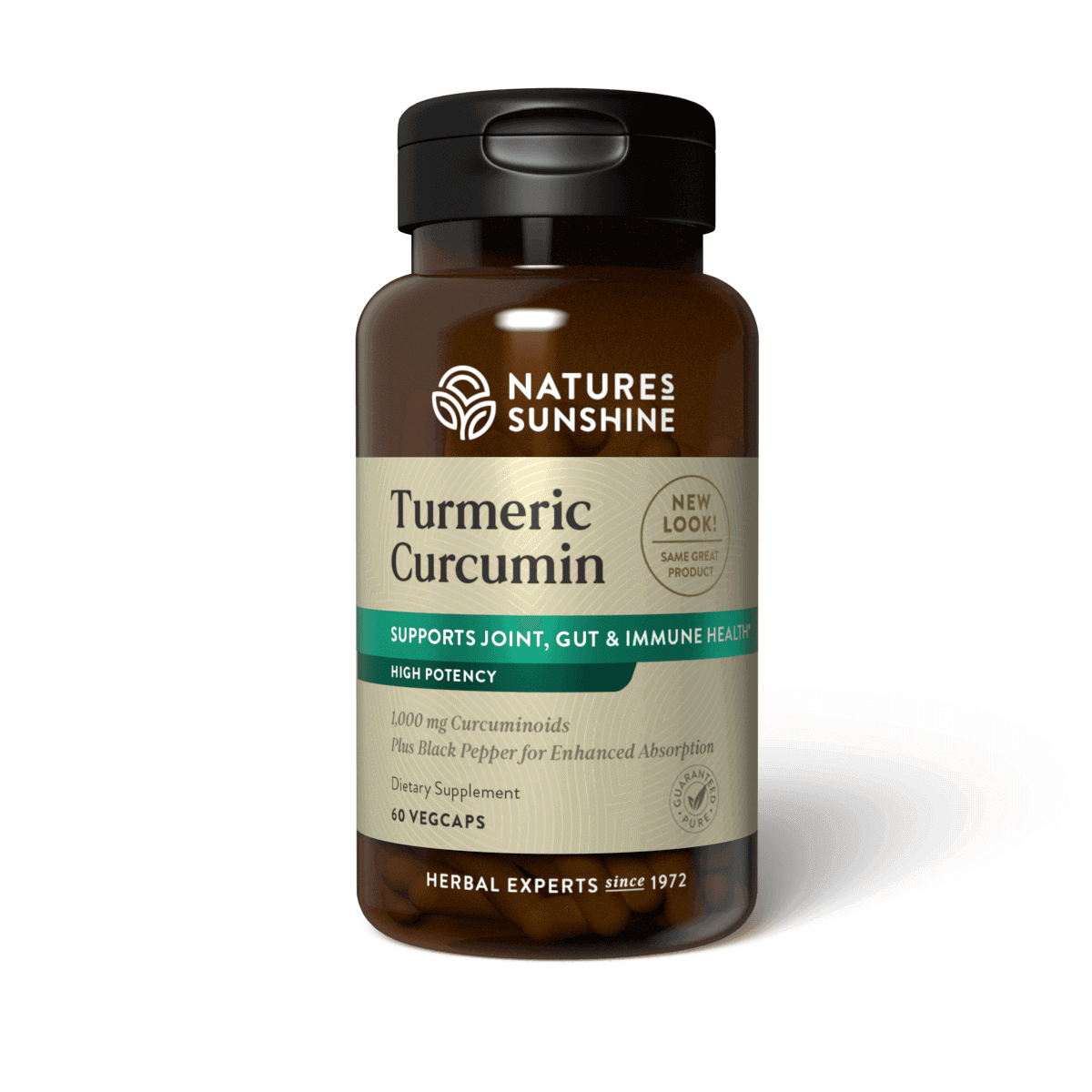
Nature's Sunshine Turmeric Curcumin delivers 1,100 mg of tumeric extract and 1,000 mg of curcuminoids per serving, enhanced with Black pepper extract to support absorption. One serving is equivalent to 32,000 mg of whole root Turmeric, and the formula is clinically studied for superior absorption and effectiveness.
If you're curious about how this formula might fit your wellness goals, our naturopath is available for a free consultation to help you sort through the research and find the right approach.
The Mechanisms Behind Curcumin's Anti-Inflammatory Activity
The Turmeric Curcumin anti inflammatory evidence centers on Curcumin's ability to target multiple inflammatory pathways simultaneously. Research shows Curcumin exerts its core effects mainly by inhibiting activation of the nuclear factor-κB (NF-κB) signaling pathway, regulating the MAPK/ERK phosphorylation cascade, and modulating the JAK/STAT pathway.
Beyond these primary mechanisms, Curcumin also activates the Nrf2-Keap1/ARE signaling pathway, which upregulates the body's own antioxidant defense enzymes — including superoxide dismutase (SOD), catalase, and glutathione. Multiple human RCTs and meta-analyses have shown Curcumin measurably raises total antioxidant capacity while lowering the lipid-peroxidation marker malondialdehyde (MDA).
One important caveat noted throughout the research literature: Curcumin has inherently poor oral bioavailability due to low water solubility, poor intestinal permeability, and rapid metabolism. This is why the inclusion of Black pepper extract — containing the alkaloid piperine — is significant. In one landmark human study, co-administration of Curcumin with piperine increased Curcumin bioavailability by 2,000%. This formula incorporates Black pepper extract specifically to help address this challenge.
It's also worth noting that while Curcumin affects several cellular functions in laboratory settings, these events often occur at concentrations that cannot easily be achieved in the body through oral dosing. This gap between preclinical findings and clinical outcomes is a recurring theme in Turmeric research and is important to keep in mind when evaluating the evidence.
What the Clinical Trials and Meta-Analyses Say
Joint Health and Osteoarthritis
Osteoarthritis — particularly knee OA — is the most extensively researched indication for Turmeric and Curcumin in human clinical trials. A 2025 systematic review and network meta-analysis of 17 studies found all Turmeric preparations significantly reduced WOMAC pain compared to placebo. The bioavailability-enhanced preparation demonstrated a 30% reduction in WOMAC pain, reaching the minimum clinically important difference threshold.
A 2022 systematic review and meta-analysis examined 29 RCTs involving 2,396 participants across five types of arthritis, including osteoarthritis, rheumatoid arthritis, and ankylosing spondylitis. Another meta-analysis verified that Curcumin/Turmeric extract had treatment efficacy similar to NSAIDs based on findings from 16 RCTs and 1,810 adults. However, evidence quality is consistently rated low to very low due to small sample sizes, high risk of bias, and methodological heterogeneity.
Chronic Inflammation and Metabolic Markers
A 2025 systematic review and meta-analysis found Curcumin supplementation significantly reduced C-reactive protein (CRP), TNF-α, and IL-6 — key inflammatory biomarkers — in individuals with metabolic syndrome and type 2 diabetes. It also improved fasting blood sugar, HbA1c, triglycerides, LDL cholesterol, and HDL cholesterol. A 2024 review in Nutrients identified 54 meta-analyses of Curcumin RCTs and found CRP reductions in seven of ten meta-analyses and IL-6 reductions in five of eight.
Inflammatory Bowel Disease
A 2025 meta-analysis of 13 placebo-controlled RCTs showed Curcumin's significant efficacy in achieving clinical remission and response in ulcerative colitis patients as an adjunctive therapy. Evidence for Crohn's disease is more limited, and heterogeneity in formulations and doses limits firm conclusions.
Cognitive Function and Mood
Preclinical evidence for Curcumin's neuroprotective effects is extensive, encompassing anti-amyloid, anti-tau, BDNF-restoring, and neuroinflammation-suppressing mechanisms. In one clinical study, 1,500 mg/day of BCM-95 for 12 months stabilized cognitive function in older adults compared to placebo. Research also suggests Curcumin may modestly improve depressive symptom scores, though results are considered preliminary with variable effect sizes.
A Balanced View
While the Turmeric Curcumin anti inflammatory evidence is promising across multiple health areas, interpreting it requires awareness of predominantly low-to-very-low GRADE certainty ratings, frequent methodological limitations in primary studies, and the heterogeneity of formulations studied under the umbrella term "Curcumin." The field's central challenge — that concentrations shown to be biologically active in laboratory settings may not be fully achievable in human circulation — remains incompletely resolved, even with enhanced-delivery formulations.
Key Ingredients
- ✓ Free shipping over $75
- ✓ 90-day easy returns
- ✓ Ships within hours
Who May Benefit from Turmeric Curcumin for Inflammatory Support
Based on the Turmeric Curcumin anti inflammatory evidence, this formula may be a good fit for several groups of people:
- Adults with joint stiffness or occasional discomfort — Multiple systematic reviews support Curcumin for knee osteoarthritis pain and function, with some evidence of comparable efficacy to NSAIDs.
- Those seeking to support a healthy inflammatory response — Meta-analyses show Curcumin may help reduce key inflammatory biomarkers like CRP, IL-6, and TNF-α, particularly in individuals with metabolic concerns.
- People interested in antioxidant support — Clinical trials show Curcumin may raise total antioxidant capacity and endogenous antioxidant enzymes while reducing oxidative stress markers.
- Anyone looking for natural joint, skin, brain, and gut support — The formula is designed to promote a healthy inflammatory response that, in turn, supports these interconnected body systems.
This product is non-GMO and comes in VegCaps, making it suitable for many dietary preferences. If you're unsure whether Turmeric Curcumin is right for your situation — especially if you take medications — our naturopath offers free consultations and can help you think through the research in the context of your own health.
How to Take Turmeric Curcumin
Take 2 VegCaps daily.
Each bottle contains 60 caps (a 30-day supply at the recommended serving size of 2 VegCaps). The formula is enhanced with Black pepper extract to support Curcumin absorption — research shows piperine from Black pepper may increase Curcumin bioavailability by up to 2,000%.
Important safety notes from the research: Curcumin is reported to be safe at up to 6 grams per day for 4–7 weeks in clinical trials. However, gastrointestinal disturbances such as nausea, diarrhea, and stomach upset are the most commonly reported side effects, particularly at higher doses. There is also a rare risk of liver injury associated with Turmeric supplements, which may be higher with enhanced-absorption formulations. People with existing liver concerns should exercise caution. Piperine can inhibit certain drug-metabolizing enzymes (CYP3A4, CYP2C9, P-glycoprotein), which may affect how your body processes certain medications including warfarin, carbamazepine, and others. If you take medications, speak with a healthcare professional before starting this supplement.
Written by Greg Howlett
Frequently asked questions
What is the Turmeric Curcumin anti inflammatory evidence based on?
The evidence comes from multiple systematic reviews, meta-analyses, and randomized controlled trials (RCTs) in humans. Curcumin has been shown to inhibit the NF-κB signaling pathway and reduce inflammatory cytokines like TNF-α, IL-1β, and IL-6. A 2025 meta-analysis of 21 studies in knee OA found significantly lower CRP and TNF-α levels in Curcumin groups versus placebo. A 2024 review in Nutrients identified 54 meta-analyses of Curcumin RCTs spanning inflammation, antioxidant status, glucose control, and more. However, evidence quality is generally rated low to very low, and larger, long-term trials are still needed.
How does Black pepper extract improve Curcumin absorption?
Piperine, the active alkaloid in Black pepper, inhibits enzymes (CYP3A4, UGT) and transporters (P-glycoprotein) that normally break down and eliminate Curcumin rapidly. In a landmark human pharmacokinetic study, co-administration of piperine with Curcumin increased Curcumin bioavailability by 2,000%. This is significant because Curcumin's poor oral bioavailability is widely cited as the primary barrier to translating its promising laboratory findings into clinical benefits.
Can Turmeric Curcumin help with joint pain and osteoarthritis?
Research suggests it may. A 2025 network meta-analysis of 17 studies found all Turmeric preparations significantly reduced WOMAC pain in knee osteoarthritis compared to placebo. A separate meta-analysis verified Curcumin had treatment efficacy similar to NSAIDs across 16 RCTs involving 1,810 adults. A 2022 review of 29 RCTs covering five types of arthritis — including osteoarthritis, rheumatoid arthritis, and ankylosing spondylitis — also confirmed benefits. That said, the certainty of evidence remains low, reflecting small sample sizes and methodological variability across studies.
Is Turmeric Curcumin safe to take daily?
Curcumin is FDA-approved as GRAS (generally recognized as safe) as a food ingredient. Clinical trials report it is safe at up to 6 grams per day for 4–7 weeks. Mild adverse effects — mainly gastrointestinal disturbances — have been uncommon and typically resolve with dose reduction. However, there is a rare risk of liver injury, potentially higher with bioavailability-enhanced formulations. People with existing liver conditions or those taking medications (especially blood thinners or drugs metabolized by CYP3A4) should consult a healthcare professional before use.
How much Curcumin does this product provide per serving?
Each two-VegCap serving provides 1,100 mg of tumeric extract and 1,000 mg of curcuminoids — the primary bioactive compounds in Turmeric. According to Nature's Sunshine, one serving is equivalent to 32,000 mg of whole root Turmeric, delivering both Turmeric root and higher levels of the antioxidant-rich Turmeric extract compared to many formulations that prioritize Turmeric root over extract.
Does Curcumin help with inflammation beyond joint health?
Research suggests Curcumin's anti-inflammatory activity extends to several body systems. Meta-analyses have shown significant reductions in inflammatory biomarkers (CRP, IL-6, TNF-α) in individuals with metabolic syndrome and type 2 diabetes. A 2025 meta-analysis of 13 RCTs found Curcumin effective as adjunctive therapy for achieving clinical remission in ulcerative colitis. Preliminary evidence also suggests possible benefits for cognitive aging and mood, though clinical data in those areas remain early-stage. Curcumin has also been extensively studied in preclinical cancer models, but human clinical evidence for cancer applications is very limited.
Talk to Dr. Shannyn Fowl
Not sure if this is right for you? Book a free, no-pressure consultation for personalized guidance on your health goals.
Book your free consult →About Caring Sunshine
A family-run reseller of premium supplements — free shipping, a 90-day guarantee, and real people who know the products.
Learn more about us →