
Turmeric Curcumin Anti-Inflammatory Evidence
Explore the Turmeric Curcumin anti-inflammatory evidence from clinical trials and meta-analyses. Learn how curcuminoids support joints, gut, and immune health.
Turmeric Curcumin Anti-Inflammatory Evidence: What Science Tells Us
Turmeric — the golden-yellow spice derived from the rhizome of Curcuma longa L. — has been used for nearly 6,000 years in Ayurvedic, Traditional Chinese, and Southeast Asian medicine for inflammatory conditions, digestive health, and wound healing. Today, the Turmeric Curcumin anti-inflammatory evidence extends well beyond traditional use, with hundreds of human clinical trials and dozens of meta-analyses examining Curcumin's effects on inflammatory pathways throughout the body.
At the molecular level, Curcumin — the principal polyphenolic curcuminoid responsible for Turmeric's vibrant color — has been extensively investigated for its capacity to modulate multiple signaling pathways. Research shows it inhibits activation of the nuclear factor-κB (NF-κB) signaling pathway, regulates the mitogen-activated protein kinase (MAPK/ERK) cascade, and modulates the JAK/STAT pathway. These pathways play pivotal roles in regulating inflammatory responses, cellular proliferation, and apoptotic processes.
Curcumin also suppresses the activity of COX-2 and LOX enzymes responsible for producing inflammatory mediators including prostaglandins and leukotrienes. Additionally, it reduces production of inflammatory cytokines such as tumor necrosis factor-α (TNF-α) and interleukin-1β (IL-1β), while scavenging reactive oxygen species (ROS) to mitigate oxidative stress.
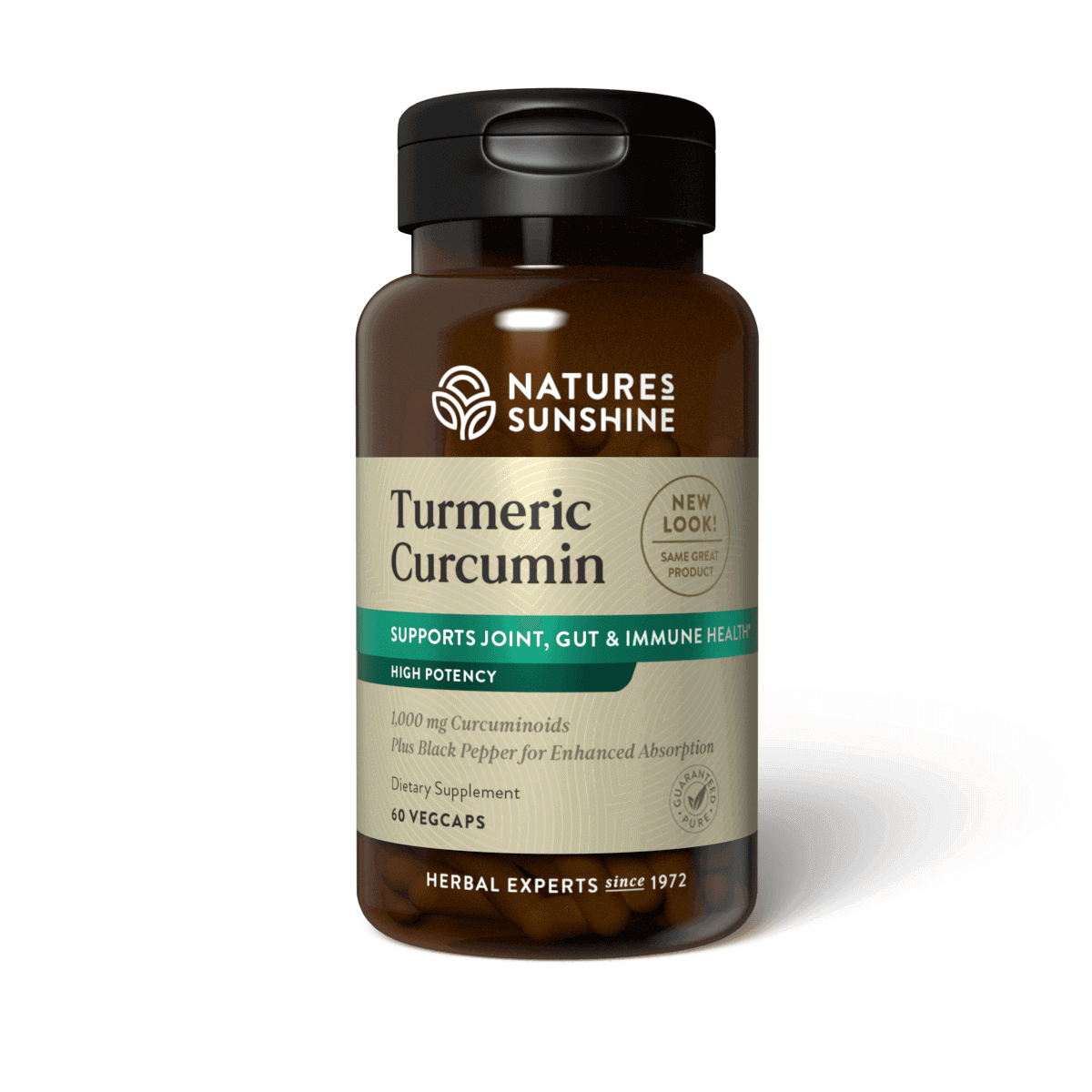
Nature's Sunshine Turmeric Curcumin delivers 1000 mg of curcuminoids per serving — equivalent to 32,000 mg of whole root Turmeric — with the addition of Black pepper extract to support improved absorption.
What Human Clinical Trials Reveal About Curcumin and Inflammation
Joint Health and Osteoarthritis
Knee osteoarthritis is the most extensively researched indication for Turmeric Curcumin anti-inflammatory evidence in human trials. A 2025 systematic review and network meta-analysis including 17 studies found that all Turmeric preparations significantly reduced WOMAC pain scores compared to placebo. The bioavailability-enhanced preparation demonstrated a 30% reduction in WOMAC pain, reaching the minimum clinically important difference threshold.
A 2022 systematic review and meta-analysis in Frontiers in Immunology examined 29 RCTs involving 2,396 participants across five types of arthritis — osteoarthritis, rheumatoid arthritis, ankylosing spondylitis, juvenile idiopathic arthritis, and gout/hyperuricemia. Curcumin and Curcuma longa extract were administered in doses ranging from 120 mg to 1,500 mg for 4–36 weeks. A separate meta-analysis verified that Curcumin/Turmeric extract had treatment efficacy similar to NSAIDs based on findings from 16 RCTs and 1,810 adults.
However, evidence quality is consistently rated as low to very low due to small sample sizes, high risk of bias in primary studies, methodological heterogeneity across formulations and doses, and frequent industry involvement.
Inflammatory Biomarkers and Metabolic Health
A 2024 review of meta-analyses published in Nutrients identified 54 meta-analyses of Curcumin RCTs spanning inflammation, antioxidant status, glucose control, lipids, and more. A reduction in C-reactive protein (CRP) levels was observed in seven of ten meta-analyses, and in five of eight meta-analyses, Curcumin intake significantly lowered interleukin-6 (IL-6) levels.
A 2025 systematic review and meta-analysis of RCTs evaluating Curcuma longa in metabolic syndrome found Curcumin supplementation significantly reduced fasting blood sugar, HbA1c, triglycerides, and LDL cholesterol while elevating HDL cholesterol and total antioxidant capacity. It also attenuated systemic inflammation, lowering CRP, TNF-α, and IL-6. Heterogeneity was moderate-to-high, and evidence quality ranges from low to moderate.
Inflammatory Bowel Disease
A 2025 meta-analysis of 13 placebo-controlled RCTs showed Curcumin's significant efficacy in achieving clinical remission and response in ulcerative colitis patients. Evidence for Crohn's disease is more limited, and heterogeneity in formulations and doses limits firm conclusions.
Cognitive and Neurological Health
Research suggests Curcumin may restore brain-derived neurotrophic factor (BDNF) levels while mitigating neuroinflammation, oxidative stress, and β-amyloid aggregation. In one study, taking 1,500 mg/day of BCM-95 for 12 months stabilized cognitive function in older adults compared to placebo recipients who showed reduced cognitive function. However, the totality of clinical evidence remains early-stage, with most trials small and of short duration.
An Important Caveat
The field's central challenge is that Curcumin concentrations shown to exert biological effects in laboratory settings may not be fully achievable in human systemic circulation after oral dosing, even with enhanced-delivery formulations. Interpreting the substantial body of positive meta-analytic evidence requires awareness of predominantly low-to-very-low certainty ratings and frequent methodological limitations in primary studies.
Key Ingredients
- ✓ Free shipping over $75
- ✓ 90-day easy returns
- ✓ Ships within hours
Who May Benefit from Turmeric Curcumin for Inflammation
Based on the clinical research, Nature's Sunshine Turmeric Curcumin may be particularly relevant for individuals seeking natural support in several areas:
- Joint comfort and mobility: Research suggests Turmeric Curcumin may support healthy joint function, with extensive RCT evidence in knee osteoarthritis, rheumatoid arthritis, and other musculoskeletal conditions.
- Healthy inflammatory response: Studies suggest Curcumin may help modulate key inflammatory markers like CRP, IL-6, and TNF-α, supporting a balanced inflammatory response throughout the body.
- Antioxidant defense: Clinical trials show Curcumin may help raise total antioxidant capacity while reducing oxidative stress markers.
- Gut health: Preliminary evidence from RCTs suggests Curcumin may support gastrointestinal comfort and healthy gut function.
- Cognitive well-being: Early-stage research suggests Curcumin may support brain health through its anti-inflammatory and antioxidant properties, including promoting healthy BDNF levels.
This product is non-GMO and delivers both Turmeric root and higher levels of antioxidant-rich Turmeric extract. If you're unsure whether a Turmeric Curcumin supplement is right for your situation, our naturopath offers free consultations and can help you think through your options.
Directions for Use
Take 2 VegCaps daily.
Each serving delivers 1100 mg of tumeric extract with 1000 mg of curcuminoids, enhanced with Black pepper extract to promote better absorption. The inclusion of piperine from Black pepper is one of the most well-documented strategies for improving Curcumin bioavailability — research has shown it may increase absorption by up to 2,000%.
This product comes in a bottle of 60 caps, providing a full month's supply at the recommended serving.
Written by Greg Howlett
Frequently asked questions
What is the Turmeric Curcumin anti-inflammatory evidence from clinical trials?
Multiple meta-analyses and systematic reviews of human randomized controlled trials support a statistically significant benefit of Turmeric Curcumin for reducing inflammatory biomarkers and supporting joint health. A 2024 review identified 54 meta-analyses of Curcumin RCTs, with reductions in CRP observed in seven of ten meta-analyses and significant IL-6 reductions in five of eight. A 2022 meta-analysis of 29 RCTs across five arthritis types found Curcumin efficacy similar to NSAIDs. However, evidence quality is consistently rated low to very low due to small sample sizes, methodological heterogeneity, and the bioavailability challenge.
How does Black pepper extract improve Curcumin absorption?
Piperine, the active alkaloid in Black pepper, inhibits UDP-glucuronosyltransferase (UGT), CYP3A4, and P-glycoprotein — enzymes and transporters responsible for Curcumin's rapid metabolism and elimination. In one human study, co-administering Curcumin with piperine increased Curcumin bioavailability by 2,000% at 45 minutes post-administration. This is why Nature's Sunshine includes Black pepper extract in the formula.
Is Turmeric Curcumin safe to take daily?
Several human clinical trials have not shown toxic effects, and Curcumin is reported to be safe at doses up to 6 g/day orally for 4–7 weeks. The FDA has approved Curcumin as generally regarded as safe (GRAS). The most commonly reported side effects in clinical trials are mild gastrointestinal disturbances such as nausea, diarrhea, or stomach upset, particularly at higher doses. However, there is a rare risk of liver injury from Turmeric in medicinal dosage forms, and piperine may interact with certain medications by affecting drug metabolism. If you take prescription medications, we recommend discussing supplementation with our naturopath or your healthcare provider.
What does 1000 mg of curcuminoids mean compared to whole Turmeric?
Standard Turmeric powder contains only about 2–5% curcuminoids by weight, meaning you would need a very large amount of whole Turmeric root to obtain the curcuminoid levels found in concentrated extracts. Nature's Sunshine states that one serving of their Turmeric Curcumin is equivalent to 32,000 mg of whole root Turmeric, delivering 1000 mg of curcuminoids through a standardized extract process.
Can Turmeric Curcumin support gut health?
Research suggests Curcumin may support gastrointestinal health. A 2025 meta-analysis of 13 placebo-controlled RCTs showed Curcumin's significant efficacy in achieving clinical remission and response in ulcerative colitis patients when used as an adjunctive therapy. Evidence for Crohn's disease is more limited. The product highlights also note it may promote healthy microbiome balance.
Why does bioavailability matter for Turmeric Curcumin supplements?
Curcumin has inherently poor oral bioavailability due to low water solubility, poor intestinal permeability, instability at alkaline pH, and rapid metabolism. One study showed oral Curcumin absorption was only about 1% in rats without enhancement. This means that without strategies to improve absorption — such as co-administration with piperine from Black pepper — much of the Curcumin consumed may not reach effective levels in the bloodstream. Nature's Sunshine addresses this by including Black pepper extract and delivering higher levels of Turmeric extract in their formula.
Talk to Dr. Shannyn Fowl
Not sure if this is right for you? Book a free, no-pressure consultation for personalized guidance on your health goals.
Book your free consult →About Caring Sunshine
A family-run reseller of premium supplements — free shipping, a 90-day guarantee, and real people who know the products.
Learn more about us →