Free shipping on orders over $75 | First Order? Save 20%.
(888) 510-7196

Seasonal Allergy Treatments | Natural Herbal Support

Explore seasonal allergy treatments with Nature's Sunshine's herbal formula featuring Mullein, Horseradish, Fenugreek, Fennel & Boneset for respiratory comfort.

Understanding the Challenge

What Seasonal Allergy Treatments Are and Why They Matter

When seasons change, airborne particles flood the environment. As these particles enter the respiratory system through the nose and mouth, the body activates its natural cleansing mechanisms, putting the immune system on active duty. For many people, this heightened response leads to uncomfortable respiratory symptoms that can persist for weeks or even months.

Seasonal allergy treatments aim to support the body's ability to manage these inhaled irritants β€” soothing irritated tissues, helping clear congestion, and nourishing the respiratory system so it can stand up to the challenge. Among natural approaches, herbal formulas have a long history of use for these very purposes.

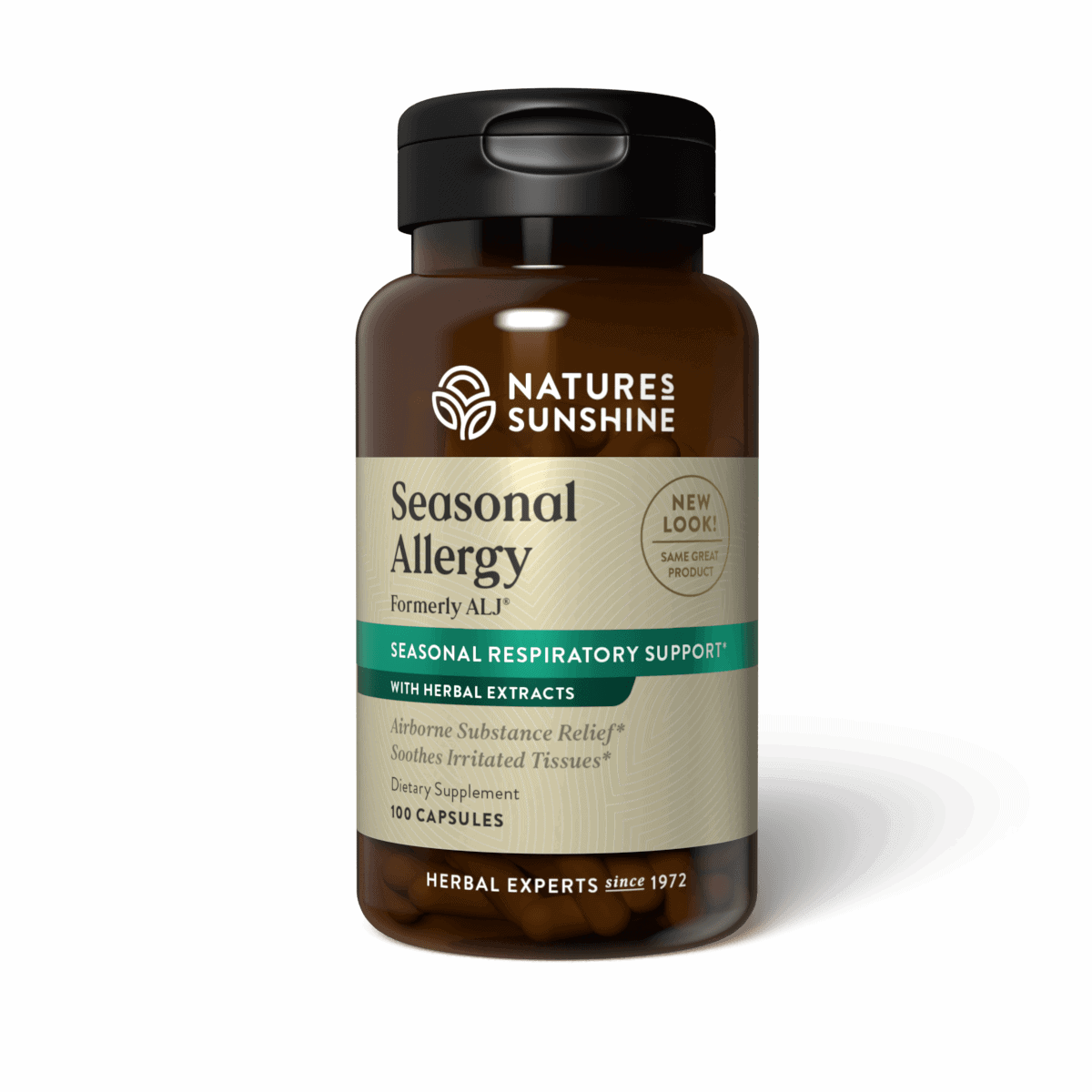
Nature's Sunshine Seasonal Allergy (Formerly ALJ) is an herbal supplement designed to assist the body in cleansing potentially harmful airborne particles from the respiratory system while providing immune system support. The blend of herbs in this formula work together to support the body as seasons change, soothing respiratory tissue and assisting the respiratory system in its natural cleansing processes.

How It Works

How This Herbal Formula Supports Seasonal Respiratory Comfort

The Seasonal Allergy formula takes a multi-herb approach to respiratory wellness. Rather than relying on a single ingredient, it combines five traditional herbs β€” each contributing a distinct set of properties β€” to address multiple aspects of seasonal respiratory challenges.

Two of the formula's key herbs, Fenugreek seeds and Mullein leaves extract, contain mucilage β€” a naturally occurring substance that coats and soothes irritated tissue. This demulcent action helps calm inflamed respiratory membranes when airborne particles trigger the body's response.

The remaining herbs assist in nourishing the lungs and supporting the respiratory system's natural cleansing processes. Together, the formula's ingredients offer expectorant, mucolytic, and soothing properties rooted in centuries of traditional herbal use across multiple cultures and healing systems.

What's inside

Key Ingredients

Boneset aerial parts β€” 1,760 mg
Boneset (Eupatorium perfoliatum) is a North American perennial with a rich history among Indigenous peoples of the eastern woodlands, who used it extensively for fevers and respiratory conditions. Cherokee, Delaware, Menominee, Seminole, Nanticoke, and Mohegan tribes all documented its use as a fever remedy. It is traditionally classified as a diaphoretic, expectorant, and anti-inflammatory herb for the respiratory mucosa. Historically, Boneset has been used across multiple respiratory conditions including colds, bronchitis, and nasopharyngeal catarrh β€” its classification as an expectorant dates to Lockwood's 1847 medical writings and continues in modern herbalist monographs. Its traditional expectorant action is believed to help loosen and clear mucus from the respiratory tract, while its bitter sesquiterpene lactones and diaphoretic properties are proposed to relieve bronchial congestion and inflammation. Boneset has also been traditionally employed for upper respiratory tract conditions including allergic rhinitis. In vitro studies have demonstrated anti-inflammatory activity through significant down-regulation of pro-inflammatory cytokines including IL-1Ξ±, IL-1Ξ², and several chemokines, providing laboratory-level support for its traditional respiratory uses, though no clinical trials on respiratory outcomes exist.
Fennel seeds β€” 1,760 mg
Fennel (Foeniculum vulgare) is one of the world's most important medicinal plants, cultivated since at least 2,000 BC and documented in the writings of Hippocrates, Dioscorides, Ayurvedic texts, and Traditional Chinese Medicine. Its volatile oil β€” dominated by trans-anethole β€” gives it antispasmodic, carminative, and soothing properties. For respiratory health, Fennel has documented traditional use across Iranian traditional medicine, Ayurveda, and European monographs (EMA, Commission E) as a bronchodilatory and expectorant herb. Research suggests that Fennel seeds may enhance ciliary motility of the respiratory apparatus, and Fennel essential oil inhalation has been shown to stimulate tracheal smooth muscle contraction, promoting expectoration of mucus and foreign particles. Commission E and ESCOP recognize Fennel for catarrh of the upper respiratory tract. Its volatile oil also has antispasmodic properties attributed to interaction with L-type calcium channels, and its flavonoids β€” including quercetin and kaempferol β€” contribute anti-inflammatory and antioxidant activity.
Fenugreek seeds β€” 1,760 mg
Fenugreek (Trigonella foenum-graecum) has been used medicinally for approximately 6,000 years across Ayurvedic, Unani, and Traditional Chinese Medicine systems. Its seeds are rich in mucilage β€” a soothing, gel-forming fiber that constitutes a significant portion of its makeup. In the context of seasonal respiratory support, Fenugreek is traditionally valued as a soothing expectorant for loosening phlegm and calming inflamed airways. Its high mucilage content creates a coating effect on irritated respiratory membranes and is traditionally believed to stimulate mucus secretion to thin viscous respiratory secretions. Naturopathic pharmacopeias classify Fenugreek as a soothing expectorant for productive coughs. In Ayurvedic medicine, the seeds are valued for their carminative, demulcent, and expectorant properties. Medieval Indian herbal physicians and Unani practitioners credited Fenugreek with soothing respiratory congestion.
Horseradish root β€” 1,760 mg
Horseradish (Armoracia rusticana) is a member of the Brassicaceae family with documented culinary and medicinal use dating back to 1500 BC in Egypt. Its primary active compounds β€” allyl isothiocyanate (AITC) and phenethyl isothiocyanate (PEITC) β€” are released when the root is crushed, and these volatile isothiocyanates are what give Horseradish its potent, sinus-clearing pungency. Horseradish has been approved by the German Commission E for treatment of respiratory tract infections including bronchitis and sinusitis. AITC acts as a TRPA1 agonist that stimulates mucociliary secretion, helping thin and expel mucus from nasal and sinus passages. Research on a standardized combination of Horseradish and nasturtium (Angocin) has shown clinical promise: a prospective cohort study of 1,649 adults found symptom reduction comparable to standard antibiotics for sinusitis and bronchitis, with fewer side effects, and a randomized, double-blind, placebo-controlled phase IV trial (n=384) confirmed healing benefit for bronchitis. Horseradish has a long herbal tradition for seasonal respiratory complaints as well β€” a sandwich of freshly grated root is a recorded folk remedy for hay fever. Isothiocyanates are excreted via the lungs, providing direct antimicrobial and anti-inflammatory activity at the pulmonary epithelium.
Mullein leaves extract β€” 1,760 mg
Mullein (Verbascum thapsus) has been used for pulmonary conditions since Dioscorides first recommended it nearly 2,000 years ago. Native American tribes recognized its value for respiratory support, and European herbalists brewed infusions from its leaves to address coughs, bronchitis, and throat irritations. Mullein's effectiveness for seasonal allergy treatments stems from its dual respiratory action: its saponins act as natural expectorants that reduce surface tension within the airways and facilitate mucus loosening, while its mucilage physically coats and soothes inflamed mucous membranes β€” providing a protective, demulcent layer. Mullein has been traditionally used for hay fever and allergic respiratory complaints, attributed to its anti-inflammatory constituents. Herbalists historically employed it to reduce congestion and mucous membrane irritation triggered by allergens. A 2021 scientific review published in PMC confirmed that anti-inflammatory phytochemicals in Mullein, particularly quercetin, correlate with its traditional respiratory uses. Mullein also contains verbascoside, which has demonstrated anti-inflammatory effects in laboratory studies, and research published in the Journal of Ethnopharmacology showed antibacterial activity against respiratory pathogens including Klebsiella pneumoniae and Staphylococcus aureus. While these findings are primarily preclinical, they lend scientific support to Mullein's centuries-long reputation as a respiratory herb.
Seasonal Allergy (Formerly ALJ)
β˜…β˜…β˜…β˜…β˜… 4.7 (186 reviews)
  • βœ“ Free shipping over $75
  • βœ“ 90-day easy returns
  • βœ“ Ships within hours
Seasonal Allergy (Formerly ALJ)
$23.80
Who Benefits

Who May Benefit from This Formula

The Seasonal Allergy formula is designed for adults who experience respiratory discomfort during seasonal changes β€” those times of year when the body's respiratory system faces increased challenges from environmental airborne particles.

It may be particularly helpful for individuals looking for herbal support to soothe respiratory tissue, assist their body's natural mucus-clearing processes, and nourish lung health during demanding seasons. The formula draws on herbs with long traditions of respiratory use across Native American, European, Ayurvedic, and Chinese medical systems.

If you're unsure whether this formula is right for your needs, our naturopath is available for a free consultation to help you find the best approach for your individual situation.

Suggested Use

How to Take Seasonal Allergy (Formerly ALJ)

Take 2–4 vegicaps with a meal three times daily. Each bottle contains 100 vegicaps. This product is also available as VegiTabs and in liquid form for those who prefer alternative formats.

As with any supplement, consistency matters. If you have questions about how this formula fits into your overall wellness routine, our naturopath offers free consultations and can provide personalized guidance.

About the author

Written by Greg Howlett

GH

Greg Howlett

Founder

Greg has spent over a decade helping customers choose the right natural-health products. He personally vets every formula we carry and writes these guides to cut through the marketing noise with practical, experience-based advice.

FAQ

Frequently asked questions

What herbs are in the Seasonal Allergy (Formerly ALJ) formula?

The formula contains five herbs: Boneset aerial parts, Fennel seeds, Fenugreek seeds, Horseradish root, and Mullein leaves extract β€” each at 1,760 mg per serving. These herbs have been selected for their traditional roles in supporting respiratory comfort and the body's natural cleansing processes during seasonal changes.

How does this formula support the respiratory system during seasonal changes?

The blend works in several complementary ways. Fenugreek and Mullein contain mucilage, which soothes irritated respiratory tissue. Horseradish root contains allyl isothiocyanate, which traditionally helps stimulate mucociliary secretion and clear nasal and sinus passages. Fennel supports ciliary motility and expectoration, while Boneset is a traditional expectorant used for centuries by Native American tribes for respiratory conditions.

Is there scientific research behind any of these ingredients?

Yes, though the level of evidence varies by ingredient. Research on a Horseradish-nasturtium combination product has been evaluated in clinical studies including a randomized placebo-controlled trial (n=384) for bronchitis and a large cohort study (n=1,649) for sinusitis and bronchitis. Fennel is recognized by the German Commission E and ESCOP for upper respiratory catarrh. Mullein and Boneset have in vitro studies showing anti-inflammatory activity, though large-scale human clinical trials specific to seasonal allergies are lacking for these herbs individually.

What forms does this product come in?

The Seasonal Allergy formula is available as vegicaps (100 per bottle), VegiTabs, and in liquid form, giving you flexibility to choose the format that works best for your preferences and lifestyle.

Can I get personalized advice on seasonal allergy treatments?

Absolutely. We offer free naturopathic consultations where our naturopath can discuss your individual needs and help determine whether the Seasonal Allergy formula β€” or another approach β€” is the best fit for your respiratory wellness goals.

What does the mucilage in Fenugreek and Mullein actually do?

Mucilage is a naturally occurring, gel-forming substance found in certain plants. When consumed, it creates a soothing, protective coating over irritated mucous membranes in the respiratory tract. This demulcent action helps calm inflamed tissue β€” which is especially useful when airborne particles trigger the body's immune response during seasonal changes. Mullein's saponins also work alongside its mucilage to help loosen and expel excess mucus.

Talk to an expert

Talk to Dr. Shannyn Fowl

Not sure if this is right for you? Book a free, no-pressure consultation for personalized guidance on your health goals.

Book your free consult β†’
Who we are

About Caring Sunshine

A family-run reseller of premium supplements β€” free shipping, a 90-day guarantee, and real people who know the products.

Learn more about us β†’