
Paw Paw Fruit: Acetogenins & Cellular Support Guide
Discover Paw Paw fruit and its unique acetogenins. Learn how this North American botanical supports mitochondrial health, cellular energy, and immune function.
What Is Paw Paw Fruit?
Paw Paw (Asimina triloba) is a small tree native to eastern North America, belonging to the Annonaceae (custard apple) family. Sometimes called the "Indiana banana" or "Kentucky banana," Paw Paw grows as an understory tree in hardwood forests near streams and rivers across 26 states — from Florida to Texas, north to New York, and west to Nebraska. It should not be confused with graviola (Brazilian pawpaw) or papaya, which are entirely different species.
What makes Paw Paw truly remarkable are its acetogenins — a group of over 50 unique bioactive compounds derived from long-chain fatty acids. These acetogenins affect the production of ATP (adenosine triphosphate) in the mitochondria, the powerhouse of the cell. ATP is the cell's major source of energy, and acetogenins selectively modulate its production in specific cells, which may help modulate the blood supply to those cells.
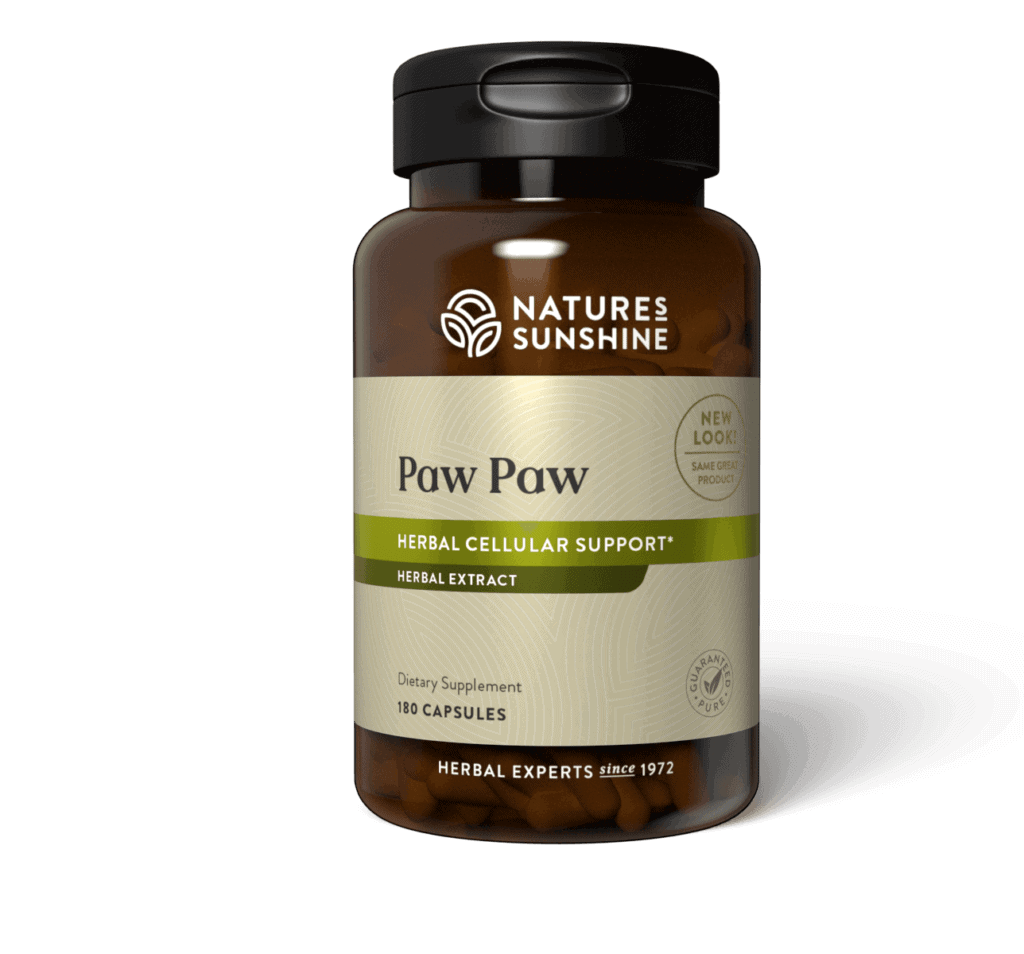
Nature's Sunshine uses an extract of the twigs of the North American Paw Paw tree, which contain the most concentrated amount of acetogenins. The small twigs (0–0.5 cm diameter) yield the most potent extract. These twigs are harvested when they are most biologically active, and the extract is standardized biologically using an invertebrate bioassay. This is a renewable resource since the tree is not harmed during the harvest.
Paw Paw Cell-Reg is the only standardized acetogenin product available to regulate specific cells. If you have questions about whether Paw Paw fruit extract is right for your wellness goals, our naturopath is available for a free consultation to help guide your decision.
The Science Behind Paw Paw Acetogenins
At the molecular level, acetogenins are potent inhibitors of mitochondrial electron transport chain (ETC) complex I. By inhibiting mitochondrial respiration, they modulate the production of ATP in specific cells. This modulation affects the viability of those cells and may help regulate the blood supply nourishing them.
Extracts of Paw Paw are among the most potent of the 3,500 species of higher plants screened for bioactive compounds at Purdue University. Activity-directed fractionation of Paw Paw extracts led to the isolation and molecular characterization of over 50 unique annonaceous acetogenins, with key compounds including annonacin, annonacin A, asimicin, squamocin, and others.
A clinical study with over 100 participants showed that the Paw Paw extract, containing a mixture of acetogenins, supports the body's normal cells during times of cellular stress. Research also suggests that acetogenins may support and enhance the effectiveness of conventional medical regimens.
In laboratory studies, Paw Paw crude extract and purified acetogenins inhibited hypoxia-inducible factor-1 (HIF-1)-mediated hypoxic signaling pathways in tumor cells, blocking the hypoxic induction of nuclear HIF-1α protein. This inhibition was associated with the suppression of mitochondrial respiration at complex I. The extract and purified acetogenins also blocked the angiogenesis-stimulating activity of hypoxic cells in vitro, suggesting a novel mechanism related to blood vessel regulation.
Beyond its acetogenins, the Paw Paw tree also contains phenolic compounds, flavonoids (including epigallocatechin, epicatechin, and p-coumaric acid), carotenoids, phytosterols, and alkaloids — contributing to antioxidant and other biological activities observed in laboratory settings.
A Rich Tradition of Use in North America
Paw Paw fruit has nurtured mankind for centuries. Pawpaw seeds and remnants have been found at archaeological sites of the earliest Native Americans in large, concentrated amounts, suggesting seasonal feasts. The Cherokee, Shawnee, Iroquois, Miami, and other nations utilized the pawpaw in their traditional diets and valued its medicinal properties.
Native American healers traditionally used pawpaw fruit as a nutrient-rich food source and applied poultices made from the bark and leaves to treat wounds, ulcers, and skin ailments. The seeds and leaves were sometimes prepared as teas or topical treatments to address parasitic infections and promote overall wellbeing. The Cherokee used pawpaw leaves and bark in preparations to soothe skin irritations and promote healing.
Jamestown colonists wrote about Paw Paw in the 1600s, and European settlers quickly adopted it for both its fruit and medicinal properties. Early American herbalists historically used infusions of the bark and leaves for fevers, infections, and worms. In Appalachian folk medicine, Paw Paw bark was occasionally used for intestinal parasites and as a digestive bitter. During the Civil War, soldiers and African American slaves collected the fruit in the wild to supplement their meager diets.
Interest in Paw Paw's therapeutic potential surged in the 1990s and 2000s when researchers began isolating and testing acetogenins, leading to the development of commercial Paw Paw extract supplements marketed for immune support and cellular health.
Key Ingredients
- ✓ Free shipping over $75
- ✓ 90-day easy returns
- ✓ Ships within hours
Who Is Paw Paw Extract For?
Paw Paw Cell-Reg may be of interest to individuals looking for natural support for mitochondrial health, cellular energy regulation, and immune system function. Because acetogenins selectively modulate ATP production in specific cells, this product is designed for people navigating periods of cellular stress who want to support their body's normal cellular processes.
The product may also appeal to those who want a standardized acetogenin supplement — ensuring a guaranteed, consistent amount of these bioactive compounds in every serving. Standardization is important because acetogenin levels can vary significantly even among different groves of Paw Paw trees.
This product is kosher and non-GMO. If you're unsure whether Paw Paw extract fits your individual health picture — especially if you're already following a conventional medical regimen — we encourage you to take advantage of our free naturopathic consultation. Our naturopath can help you understand how Paw Paw may complement your current wellness plan.
Important safety notes: Information regarding safety and efficacy in pregnancy and lactation is lacking. Paw Paw fruit and its acetogenins (particularly annonacin) have been shown to be toxic to cortical neurons in vitro, and overconsumption of related Annonaceae fruits has been linked to atypical Parkinsonism in some populations. The crude extract of stem bark may also cause contact dermatitis. Do not exceed the recommended serving size.
How to Take Paw Paw
Take 2 capsules with food three times daily. Do not exceed recommended serving size.
Each bottle contains 180 capsules. Because this is a potent botanical extract with standardized acetogenins, following the recommended serving is important. If you have any questions about how to incorporate Paw Paw into your routine, our naturopath is happy to help — consultations are always free.
Written by Greg Howlett
Frequently asked questions
What are acetogenins and how do they work in Paw Paw?
Annonaceous acetogenins are derivatives of long-chain fatty acids found in the Paw Paw tree. They are potent inhibitors of mitochondrial electron transport chain complex I, which means they modulate the production of ATP — the cell's major energy source. This selective modulation affects the viability of specific cells and may help regulate the blood supply to them. Over 50 unique acetogenins have been isolated from Paw Paw extracts at Purdue University, making it among the most potent of the 3,500 species of higher plants screened there.
Is Paw Paw the same as papaya or graviola?
No. Paw Paw (Asimina triloba) is a distinct species native to North America belonging to the Annonaceae (custard apple) family. It should not be confused with papaya (which is sometimes called pawpaw in other regions) or with graviola (Annona muricata), also known as Brazilian pawpaw. While Paw Paw and graviola both contain acetogenins, they are different species with different acetogenin profiles and concentrations.
Why does standardization matter for Paw Paw extract?
Acetogenin levels vary even by location of Asimina triloba trees, with some groves producing higher levels than others. Standardization ensures that a guaranteed, consistent amount of acetogenins is actually in the product. Nature's Sunshine standardizes its Paw Paw twig extract biologically using an invertebrate bioassay and harvests the twigs when they are most biologically active, ensuring potency and consistency from batch to batch.
Are there safety concerns with Paw Paw extract?
There are a few things to be aware of. Paw Paw acetogenins, particularly annonacin, have been shown to be toxic to cortical neurons in vitro (lab studies), and overconsumption of related Annonaceae fruits has been associated with atypical Parkinsonism in some populations, though case studies specific to Asimina triloba are lacking. The crude extract of stem bark may cause contact dermatitis. Information regarding safety in pregnancy and lactation is lacking. Always follow the recommended serving size and consult a healthcare professional before use.
What does the research say about Paw Paw and cellular health?
A clinical study with over 100 participants showed that Paw Paw extract supports the body's normal cells during times of cellular stress. In laboratory (in vitro) studies, Paw Paw crude extract and purified acetogenins inhibited HIF-1-mediated hypoxic signaling pathways in tumor cells and blocked angiogenesis-stimulating activity. However, published clinical trials in humans are limited, and in vitro findings cannot be directly extrapolated to clinical outcomes. Research in this area is ongoing and preliminary.
Can I take Paw Paw alongside conventional treatments?
According to the available research, acetogenins may support and enhance the effectiveness of conventional medical regimens. However, no drug interactions have been formally characterized in human studies, and the theoretical potential for interactions with mitochondria-affecting medications exists. We strongly recommend discussing Paw Paw supplementation with your healthcare provider. You're also welcome to reach out to our naturopath for a free consultation to discuss how Paw Paw may fit within your individual plan.
Talk to Dr. Shannyn Fowl
Not sure if this is right for you? Book a free, no-pressure consultation for personalized guidance on your health goals.
Book your free consult →About Caring Sunshine
A family-run reseller of premium supplements — free shipping, a 90-day guarantee, and real people who know the products.
Learn more about us →