
Okinawa Turmeric Curcumin | Joint & Inflammation Support
Learn how okinawa Turmeric Curcumin supports joints, healthy inflammation, and antioxidant defense with 1,000 mg curcuminoids and Black pepper for absorption.
What Is Okinawa Turmeric Curcumin and Why Does It Matter?
Turmeric has been used for nearly 6,000 years in Ayurvedic medicine, traditional Chinese medicine, and Southeast Asian healing traditions — traditionally employed for digestive, respiratory, circulatory, and inflammatory conditions. Today, a growing body of modern research has begun to explore those time-honored applications through clinical trials and systematic reviews.
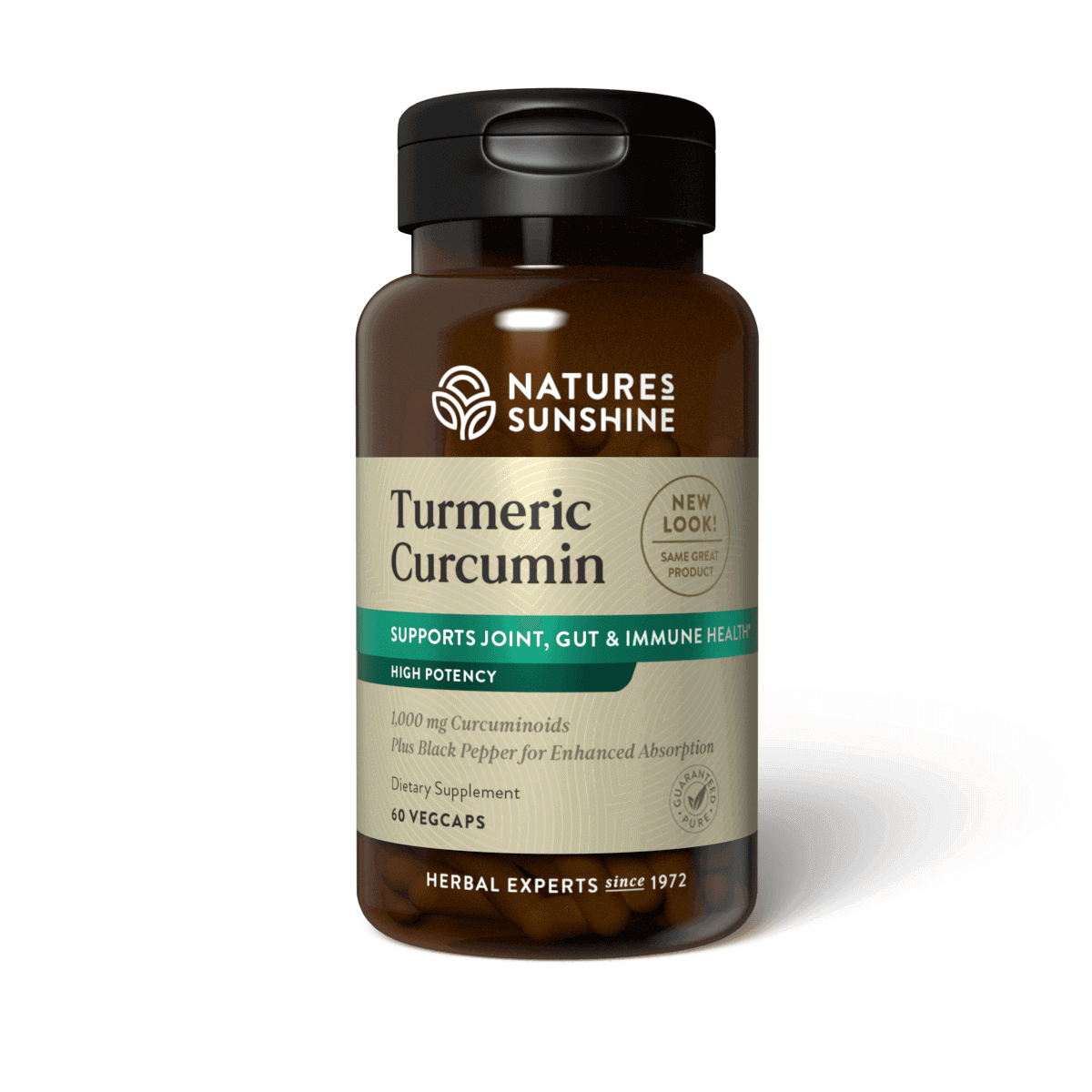
Nature's Sunshine Turmeric Curcumin (Formerly CurcuminBP) brings this ancient botanical into a modern, concentrated form. One serving delivers 1,100 mg of tumeric extract with 1,000 mg of curcuminoids — the primary active compounds obtained from the rhizome of Curcuma longa. According to Nature's Sunshine, each serving is equivalent to 32,000 mg of whole root Turmeric.
What sets this okinawa Turmeric Curcumin formula apart is the inclusion of Black pepper extract. Research has shown that piperine, the active alkaloid in Black pepper, may increase Curcumin bioavailability by up to 2,000% in humans — addressing one of the most significant challenges in Curcumin supplementation: its naturally poor oral absorption.
This formula is non-GMO and comes in 60 VegCaps, designed to promote a healthy inflammatory response while supporting joint, skin, brain, and gut health as well as immune system function.
Key Ingredients
- ✓ Free shipping over $75
- ✓ 90-day easy returns
- ✓ Ships within hours
How Okinawa Turmeric Curcumin Supports Your Body
The core benefit of okinawa Turmeric Curcumin centers on promoting a healthy inflammatory response. Curcumin works through multiple mechanisms: it inhibits the activation of the NF-κB signaling pathway, suppresses COX-2 and LOX enzymes that produce inflammatory mediators like prostaglandins and leukotrienes, and reduces the production of pro-inflammatory cytokines including TNF-α and IL-1β.
These pathways are directly relevant to joint comfort. Research suggests Curcumin mitigates oxidative stress by scavenging reactive oxygen species (ROS), thereby helping to protect cartilage from degradation. Multiple meta-analyses have found Curcumin's effects on knee osteoarthritis pain and physical function to be statistically significant compared to placebo.
Curcumin also activates the Nrf2/ARE pathway, which upregulates the body's own antioxidant defense enzymes — including superoxide dismutase, catalase, and glutathione peroxidase. This dual anti-inflammatory and antioxidant activity is what makes Turmeric Curcumin relevant to such a wide range of body systems, from joints and gut health to brain function and immune support.
The addition of Black pepper extract addresses Curcumin's well-documented bioavailability challenge. Curcumin is poorly absorbed on its own due to low water solubility, poor intestinal permeability, and rapid metabolism. Piperine from Black pepper inhibits the enzymes that would otherwise tag Curcumin for rapid elimination, helping more of the active curcuminoids reach systemic circulation.
Who Is Okinawa Turmeric Curcumin For?
This formula is designed for adults looking to support a healthy inflammatory response and promote overall joint comfort. Research suggests Curcumin may be particularly relevant for individuals experiencing occasional joint stiffness or those seeking to maintain flexibility and mobility as they age.
Because studies suggest Curcumin supports multiple body systems — including joints, skin, brain, gut, and immune function — it may appeal to anyone interested in broad-spectrum antioxidant defense and inflammatory balance. Meta-analyses have found Curcumin supplementation associated with improvements in inflammatory biomarkers like CRP and IL-6, which are relevant to general wellness.
If you're currently taking medications — especially anticoagulants, blood-thinning agents, or drugs metabolized by CYP3A4 enzymes — it's worth noting that both Curcumin and piperine may interact with certain medications. Our naturopath is available for a free consultation to help you determine whether this product is a good fit for your individual needs.
This product is non-GMO and comes in VegCaps, making it suitable for those following a plant-based lifestyle.
How to Take Okinawa Turmeric Curcumin
Take 2 VegCaps daily.
Each bottle contains 60 capsules, providing a 30-day supply at the recommended serving size of 2 VegCaps.
Written by Greg Howlett
Frequently asked questions
What makes this Turmeric Curcumin formula different from standard Turmeric powder?
Standard Turmeric powder contains only about 2–5% curcuminoids by weight. This formula delivers 1,100 mg of tumeric extract with 1,000 mg of curcuminoids per serving — a concentrated, standardized dose equivalent to 32,000 mg of whole root Turmeric according to the manufacturer. It also includes Black pepper extract to address Curcumin's naturally poor bioavailability, with research showing piperine can increase Curcumin absorption by up to 2,000% in humans.
Why is Black pepper extract included in this okinawa Turmeric Curcumin formula?
Curcumin is notoriously difficult for the body to absorb due to low water solubility, poor intestinal permeability, and rapid metabolism. Piperine, the active alkaloid in Black pepper, inhibits CYP3A4 and UGT enzymes that would otherwise tag Curcumin for rapid elimination. In a human pharmacokinetic study, co-administering piperine with Curcumin increased blood concentrations of Curcumin by 2,000%. Black pepper extract may also have its own antioxidant properties and has been traditionally used in Ayurvedic medicine for digestive support.
What does research say about Turmeric Curcumin for joint health?
Joint health — particularly knee osteoarthritis — is the most extensively researched indication for Curcumin in human clinical trials. A 2025 network meta-analysis of 17 studies found all Turmeric preparations significantly reduced knee OA pain compared to placebo. A 2022 systematic review of 29 RCTs across five arthritis types found consistent improvements in pain and function. Some analyses suggest effects comparable to NSAIDs. However, evidence quality is consistently rated as low to very low due to small sample sizes and methodological limitations.
Is okinawa Turmeric Curcumin safe to take with medications?
Curcumin and piperine may interact with certain medications. Piperine inhibits CYP3A4 and P-glycoprotein, which can increase plasma concentrations of drugs such as carbamazepine and warfarin. Curcumin may also affect cytochrome P450 enzymes. If you take anticoagulants, blood-thinning agents, or any prescription medications, consult a healthcare professional before starting this supplement. Our naturopath is available for a free consultation to discuss potential interactions.
Does this formula support anything beyond joint health?
Yes. The formula is designed to support joint, skin, brain, and gut health as well as immune system function and may promote healthy microbiome balance. Research suggests Curcumin's anti-inflammatory and antioxidant mechanisms are relevant across multiple body systems. Meta-analyses have documented effects on inflammatory biomarkers like CRP, IL-6, and TNF-α, and preliminary clinical data suggest possible benefits for cognitive function, metabolic health, and digestive wellness — though evidence strength varies by area.
Are there any side effects associated with Turmeric Curcumin supplements?
Curcumin is generally well-tolerated. Several human trials report no toxic effects, and Curcumin is considered safe at doses up to 6 grams per day for 4–7 weeks based on clinical trial data. The most commonly reported side effects are mild gastrointestinal disturbances including nausea, diarrhea, and stomach upset, particularly at higher doses. There is a rare risk of liver injury from Curcumin products, which may be higher with bioavailability-enhanced formulations. If you have existing liver conditions, speak with a healthcare professional before use.
Talk to Dr. Shannyn Fowl
Not sure if this is right for you? Book a free, no-pressure consultation for personalized guidance on your health goals.
Book your free consult →About Caring Sunshine
A family-run reseller of premium supplements — free shipping, a 90-day guarantee, and real people who know the products.
Learn more about us →