Free shipping on orders over $75 | First Order? Save 20%.
(888) 510-7196

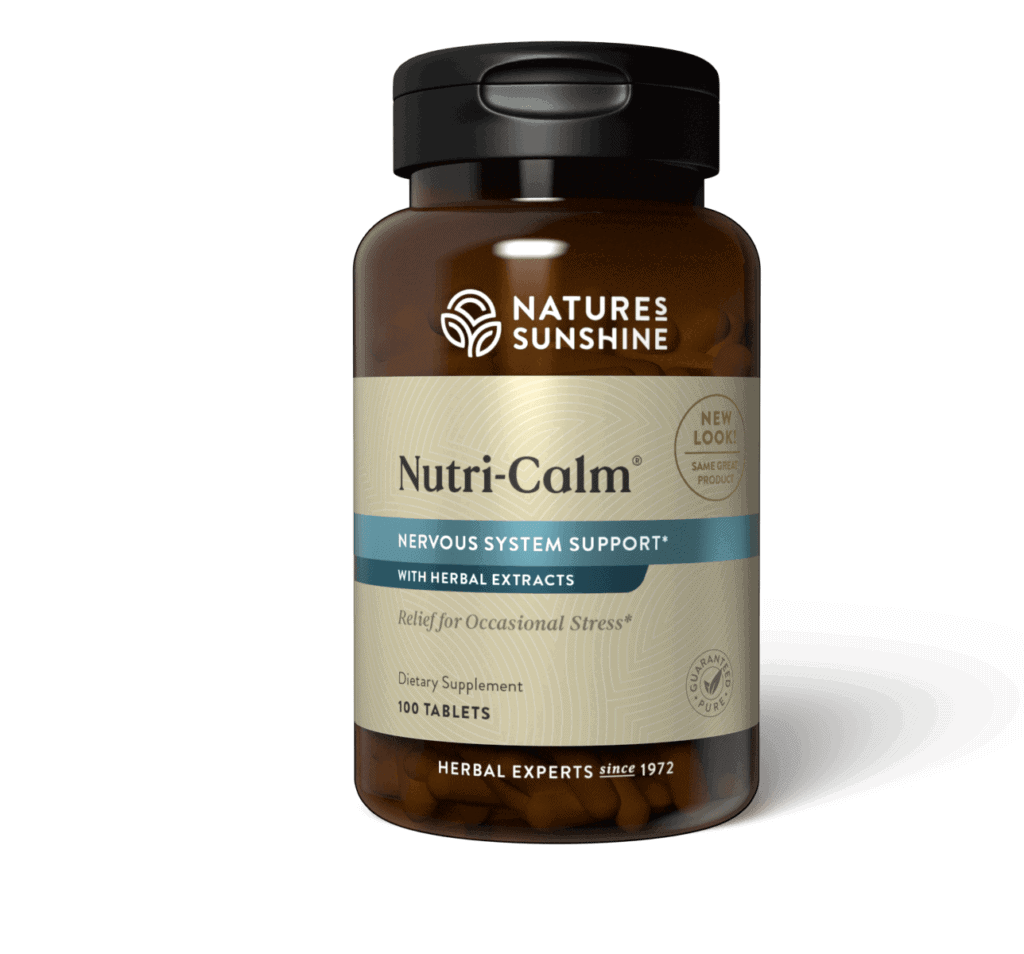
Nutri-Calm Nature’s Sunshine | B-Vitamin Stress Support

Discover Nutri-Calm by Nature's Sunshine—a B-vitamin-rich formula with calming botanicals that supports nervous system health, restful sleep, and stress resilience.

What It Is

Nutri-Calm Nature's Sunshine: Comprehensive Nervous System Nourishment

Nutri-Calm by Nature's Sunshine is a carefully formulated tablet that combines essential B vitamins, Vitamin C, and a blend of calming botanicals to support the nervous system during times of heightened demand. The formula recognizes a simple biological reality: B vitamins are often depleted when the body undergoes stress, and replenishing them is fundamental to maintaining energy, mood stability, and restful sleep.

Beyond its B-vitamin core, Nutri-Calm includes ingredients with antioxidant properties to support the body's detoxifying processes, alongside time-honored herbs such as Valerian root, Passionflower, Hops flower, and schisandra fruit. Together, these nutrients and botanicals work to calm nerves, encourage restful sleep, support the immune system, and help relax the body—making Nutri-Calm a go-to choice for anyone looking for broad-spectrum nervous system support.

Each bottle contains 100 tablets. The product is vegan, kosher, halal, and non-GMO.

What's inside

Key ingredients

Vitamin C (ascorbic acid) — 400 mg
Vitamin C is a water-soluble antioxidant and cofactor for many enzymes involved in collagen synthesis, iron absorption, and immune defense. The adrenal glands contain 20–150 times more Vitamin C than most body tissues, and research indicates it is a required cofactor for cortisol and catecholamine synthesis. Acute stress has been shown to deplete adrenal Vitamin C within hours. A human randomized controlled trial found 500 mg/day significantly reduced cortisol, blood pressure, and subjective stress in participants exposed to psychological stressors. Vitamin C also supports neuronal maturation and antioxidant protection in the brain, where it is found in high concentrations.
thiamin (B1, thiamine mononitrate) — 20 mg
Vitamin B1 is an essential neurotropic vitamin required as a cofactor in glucose metabolism, indirectly supporting the synthesis of neurotransmitters, myelin, and nucleic acids. Deficiency causes severe neurological disorders including Wernicke's encephalopathy and peripheral neuropathy. Research shows B1 is critical for proper functioning of the central and peripheral nervous system. A triple-blind RCT in women found 300 mg/day of thiamine for four weeks reduced anxiety and somatic symptoms, while systematic reviews of B vitamins for anxiety show modest positive signals, particularly when baseline deficiency is present. A 2025 study demonstrated that B1/B6/B12 combinations enhance neural cell maturation and connectivity.
riboflavin (B2) — 20 mg
Riboflavin is an essential component of the coenzymes FMN and FAD, which play major roles in energy production and cellular metabolism. It is essential for neuronal energy metabolism via FAD-dependent mitochondrial electron transport. Deficiency causes neuromuscular symptoms including peripheral neuropathy. A 2025 systematic review identifies riboflavin as a multifaceted therapeutic agent in neurology. FAD-dependent enzymes are indispensable for maintaining neuronal membrane potential, and riboflavin supports the conversion of other B vitamins—including B6 and folate—into their active coenzyme forms.
niacin — 40 mg
Vitamin B3 is essential for the synthesis of NAD+ and NADP+, coenzymes that participate in over 400 enzymatic reactions. NAD+ is critical for neuronal energy metabolism, DNA repair, and neuron survival. Severe deficiency causes pellagra, characterized by the neurological triad of dementia, dermatitis, and diarrhea. Animal studies from the 1970s–80s established that niacinamide binds to benzodiazepine receptors with mild anxiolytic-like effects, and case series have suggested reduced anxiety in some individuals taking high-dose niacinamide, though large-scale RCTs are absent. Recent reviews also identify niacin as a promising therapeutic target in neurodegenerative conditions, operating through NAD+ replenishment and Hcar2 receptor-mediated neuroprotection.
Vitamin B6 (pyridoxine hydrochloride) — 20 mg
Pyridoxal-5'-phosphate (PLP), the active form of B6, is a cofactor for over 100 enzymatic reactions including the synthesis of serotonin, dopamine, GABA, and norepinephrine—key neurotransmitters that regulate mood and the stress response. A double-blind RCT found high-dose B6 reduced self-reported anxiety in young adults, with the proposed mechanism being enhanced GABAergic inhibitory neurotransmission. B6 also supports adrenal medulla function; chronic stress depletes B6 faster than normal, impairing stress-hormone balance. Another clinical trial of 478 young adults found B6 significantly reduced self-reported stress and anxiety. Deficiency causes peripheral neuropathy and seizures.
folate — 208 mcg
Folate (vitamin B9) is essential for one-carbon metabolism supporting neurotransmitter synthesis, DNA methylation, and homocysteine clearance in the nervous system. Deficiency is associated with elevated homocysteine (which is neurotoxic), depression, cognitive decline, and neural tube defects. A 2025 systematic review found folate supplementation consistently improved neuropathy biomarkers and nerve conduction parameters in clinical trials, and clinical evidence supports supplementation for depression and cognitive function in the context of deficiency.
Vitamin B12 (cyanocobalamin) — 34 mcg
Vitamin B12 is essential for myelin synthesis, neuronal maintenance, and DNA synthesis. Deficiency is one of the most common reversible causes of peripheral neuropathy and also causes subacute combined degeneration of the spinal cord and cognitive changes. The adrenal glands rely on B12 for hormone production and stress-response regulation. Observational data associate low B12 with anxiety presentations, linked to disrupted one-carbon metabolism and impaired neurotransmitter synthesis. Supplementation is well-established to reverse neurological symptoms of B12 deficiency.
biotin — 100 mcg
Biotin (vitamin B7) is a cofactor for five carboxylases that catalyze critical steps in the metabolism of fatty acids, glucose, and amino acids. It also plays key roles in gene regulation and cell signaling. Biotin activates enzymes involved in cellular energy production and myelin synthesis. Deficiency can cause neurological manifestations including seizures, hypotonia, and ataxia, underscoring its importance for nervous system integrity.
pantothenic acid — 80 mg
Vitamin B5 is the direct precursor to Coenzyme A (CoA), which is essential for adrenal steroid hormone synthesis—including cortisol—and for acetylcholine production, the primary neurotransmitter of the cholinergic nervous system. Animal studies show B5 deficiency causes adrenal atrophy, and stress increases B5 demand. Chronic stress depletes B5, impairing the cortisol-production pathway. Post-mortem studies show markedly depleted cerebral pantothenate in Alzheimer's, Huntington's, and Parkinson's disease dementia. B5 is traditionally used in nutritional medicine as the 'anti-stress vitamin' to support adrenal function.
Choline — 13 mg
Choline is an essential nutrient that serves as the direct precursor to acetylcholine, the primary neurotransmitter for memory, muscle control, and cognition. It also contributes to the structural phospholipids of neuronal membranes. Inadequate Choline is associated with cognitive dysfunction, and the NIH recognizes adequate Choline as necessary for normal brain development and cognitive function.
schisandra fruit (schisandra chinensis) — 141 mg
Schisandra fruit extract (listed here from Magnolia officinalis-related evidence) contains honokiol and magnolol, neolignans that research shows act as positive allosteric modulators at GABA-A receptors. A double-blind RCT found a Magnolia-based blend reduced salivary cortisol by 18% and improved multiple mood-state scores versus placebo. A separate pilot RCT in premenopausal women showed significant reductions in state anxiety scores compared to placebo. Preclinical studies demonstrate that these compounds cross the blood-brain barrier readily and exert neuroprotection against neuroinflammation and ischemic injury.
Inositol — 141 mg
Inositol is a carbocyclic polyol integral to the phosphatidylinositol second messenger system, which mediates serotonin, norepinephrine, and other neurotransmitter receptor signaling. Clinical RCTs have shown that Inositol significantly reduces the frequency and severity of panic attacks—one trial found attacks dropped from 10 per week to 3 per week compared to a decrease from 10 to 6 in the placebo group. A Cochrane-catalogued RCT confirmed efficacy equivalent to fluvoxamine for panic disorder. CSF Inositol levels are reduced in depression, anxiety, and OCD.
para-aminobenzoic acid (PABA) — 141 mg
PABA is a naturally occurring compound that is part of the folic acid molecule. While once considered a B vitamin, it is now classified as a nonessential nutrient. In the body, PABA plays a role in the synthesis of folic acid by bacteria. It is found naturally in liver, brewer's yeast, whole grains, and mushrooms, and has been included in B-complex formulations for decades.
Bee pollen — 141 mg
Bee pollen is a natural cocktail of floral nectar, flower pollen, enzymes, and salivary secretions produced by honeybees. Over 200 substances have been identified in pollen grains, including proteins, all essential amino acids, vitamins (particularly B-complex and Vitamin C), minerals, flavonoids, and phenolic acids. Studies emphasize Bee pollen's antioxidant properties, which contribute to cellular protection by reducing oxidative stress. It has been used for centuries in various traditional medicine systems.
Lemon bioflavonoid extract — 141 mg
Lemon bioflavonoids—including hesperidin, eriocitrin, and diosmin—are phenolic compounds with documented antioxidant and anti-inflammatory properties. Hesperidin's antioxidant activity operates through direct free radical scavenging and enhancement of cellular antioxidant defenses via the ERK/Nrf2 signaling pathway. Citrus essential oils have broadly shown anxiolytic properties in clinical trials; one multi-centered, assessor-blinded RCT in 100 patients found Lemon inhalation significantly reduced anxiety scores compared to placebo.
Hops flower extract (humulus lupulus) — 141 mg
Hops strobiles have been used in European herbal medicine since the 9th century as a calming sedative. The German Commission E approved Hops for mood disturbances such as restlessness and anxiety, as well as sleep disturbances. Active compounds interact with GABA-A and melatonin receptors. A randomized, double-blind, placebo-controlled crossover pilot study found a Hops dry extract significantly reduced self-reported stress scores versus placebo. Multiple RCTs of the valerian-Hops combination show significant improvements in sleep latency and quality. ESCOP also recognizes Hops for nervous mood disturbances and sleep disorders.
Passionflower aerial parts extract (passiflora incarnata) — 141 mg
Passionflower has been used by indigenous North Americans and in European herbalism for anxiety and insomnia since at least the pre-Columbian era. A landmark pilot RCT found Passionflower comparable in efficacy to oxazepam (a benzodiazepine) for generalized anxiety disorder, with fewer adverse effects on job performance. Multiple systematic reviews confirm anxiolytic efficacy; its flavonoids—including chrysin and vitexin—are partial GABA-A receptor agonists. ESCOP endorses Passionflower for nervous restlessness and mild sleep disturbances.
Valerian root extract (valeriana officinalis) — 141 mg
Valerian root has been used in European traditional medicine since antiquity for anxiety, insomnia, and nervous tension. The German Commission E approves it for nervous unrest and sleep disorders. Valerenic acid—its primary active compound—has been shown to modulate GABA-A receptors with nanomolar affinity, providing anxiolytic activity confirmed in point-mutation animal models. Multiple RCTs and a systematic review support sleep quality improvements at 300–600 mg/day, and a 2021 phytotherapy review rated valerian one of three plants with the most clinical evidence for anxiety-related insomnia.
dicalcium phosphate
Dicalcium phosphate provides Calcium, the most abundant mineral in the human body. More than 99% of Calcium is stored in bone, but small amounts play essential roles in neurotransmission, muscle contraction, and cell signaling. Calcium ions are a universal second messenger in nerve cells, contributing to synaptic activity and stabilizing membrane potential.
Nutri-Calm
Nutri-Calm
★★★★★ 5.0 (4 reviews)
  • ✓ Free shipping over $75
  • ✓ 90-day easy returns
  • ✓ Ships within hours
Nutri-Calm
Nutri-Calm
$43.95
Who Benefits

Who may benefit from Nutri-Calm

Nutri-Calm by Nature's Sunshine is designed for adults who want comprehensive nervous system support—especially during periods of everyday stress. It may be a good fit if you:

  • Experience occasional stress or nervous tension that leaves you feeling depleted or on edge
  • Have difficulty winding down at the end of the day and want to encourage more restful sleep
  • Want to replenish B vitamins that may be depleted during busy, demanding seasons of life
  • Prefer a single formula that combines calming botanicals with foundational nutritional support rather than taking many separate supplements
  • Follow a vegan, kosher, or halal diet and need a product that aligns with those guidelines

If you're unsure whether Nutri-Calm is right for your individual needs, our naturopath is available for a free consultation—no purchase required. We're happy to help you sort through the options.

How to Take

Directions for use

Take one tablet with a meal three times daily.

Taking Nutri-Calm with food helps support absorption and may reduce any chance of stomach sensitivity. Because the formula includes water-soluble B vitamins, the body uses what it needs and naturally eliminates the rest, so consistent daily use is key for sustained support.

The Calming Botanicals

Traditional herbs working alongside modern nutrition

What makes Nutri-Calm stand out from a standard B-complex is its botanical blend. Valerian root, Passionflower, Hops flower, and schisandra fruit have long histories of use in herbal traditions for calming the mind and easing nervous tension. Modern research has explored how these herbs interact with GABA-A receptors—the same receptor system targeted by many conventional relaxation aids.

Passionflower, for example, has been studied in a pilot RCT and found comparable in efficacy to oxazepam for generalized anxiety disorder, with fewer cognitive side effects. Valerian root's active compound, valerenic acid, binds GABA-A receptors with nanomolar affinity. And Hops flower extract has been approved by the German Commission E for restlessness and sleep disturbances.

These botanicals are complemented by Inositol, a naturally occurring compound integral to the phosphatidylinositol second messenger system that mediates serotonin signaling. Clinical trials have shown Inositol may significantly reduce the frequency of panic attacks compared to placebo. Lemon bioflavonoids and Bee pollen round out the formula with antioxidant support, helping protect cells from oxidative stress.

About the author

Written by Greg Howlett

GH

Greg Howlett

Founder

Greg has spent over a decade helping customers choose the right natural-health products. He personally vets every formula we carry and writes these guides to cut through the marketing noise with practical, experience-based advice.

FAQ

Frequently asked questions

What does Nutri-Calm by Nature's Sunshine do?

Nutri-Calm combines B vitamins, Vitamin C, and calming botanicals to support the nervous system. The formula helps calm nerves, encourages restful sleep, supports immune health, and boosts energy by replenishing B vitamins that may be depleted during times of stress. It also includes antioxidant-rich ingredients to support the body's detoxifying processes.

Is Nutri-Calm suitable for vegans?

Yes. Nutri-Calm is vegan, kosher, halal, and non-GMO, so it fits a wide range of dietary preferences and requirements.

How should I take Nutri-Calm?

Take one tablet with a meal three times daily. Taking it with food supports absorption and consistent intake helps maintain the water-soluble B vitamins your body needs throughout the day.

Can I take Nutri-Calm if I'm already taking a B-complex?

Nutri-Calm contains a comprehensive B-vitamin profile along with additional calming herbs and nutrients, so it could overlap with a standalone B-complex. If you're unsure about combining supplements, our naturopath offers free consultations and can help you determine the best approach for your situation.

How long does it take to notice benefits from Nutri-Calm?

Because Nutri-Calm contains water-soluble B vitamins and calming botanicals, some people notice a difference in relaxation and energy within the first few days of consistent use. However, the full benefits of B-vitamin replenishment and herbal support may build over several weeks of daily use.

Does Nutri-Calm contain any stimulants or habit-forming ingredients?

No. Nutri-Calm does not contain caffeine or other stimulants. The calming herbs in the formula—Valerian root, Passionflower, Hops flower, and schisandra fruit—have long histories of traditional use for relaxation and are not considered habit-forming.

Talk to an expert

Talk to Dr. Shannyn Fowl

Not sure if this is right for you? Book a free, no-pressure consultation for personalized guidance on your health goals.

Book your free consult
Who we are

About Caring Sunshine

A family-run reseller of premium supplements — free shipping, a 90-day guarantee, and real people who know the products.

Learn more about us