
Nature’s Sunshine Seasonal Allergy (ALJ) Guide
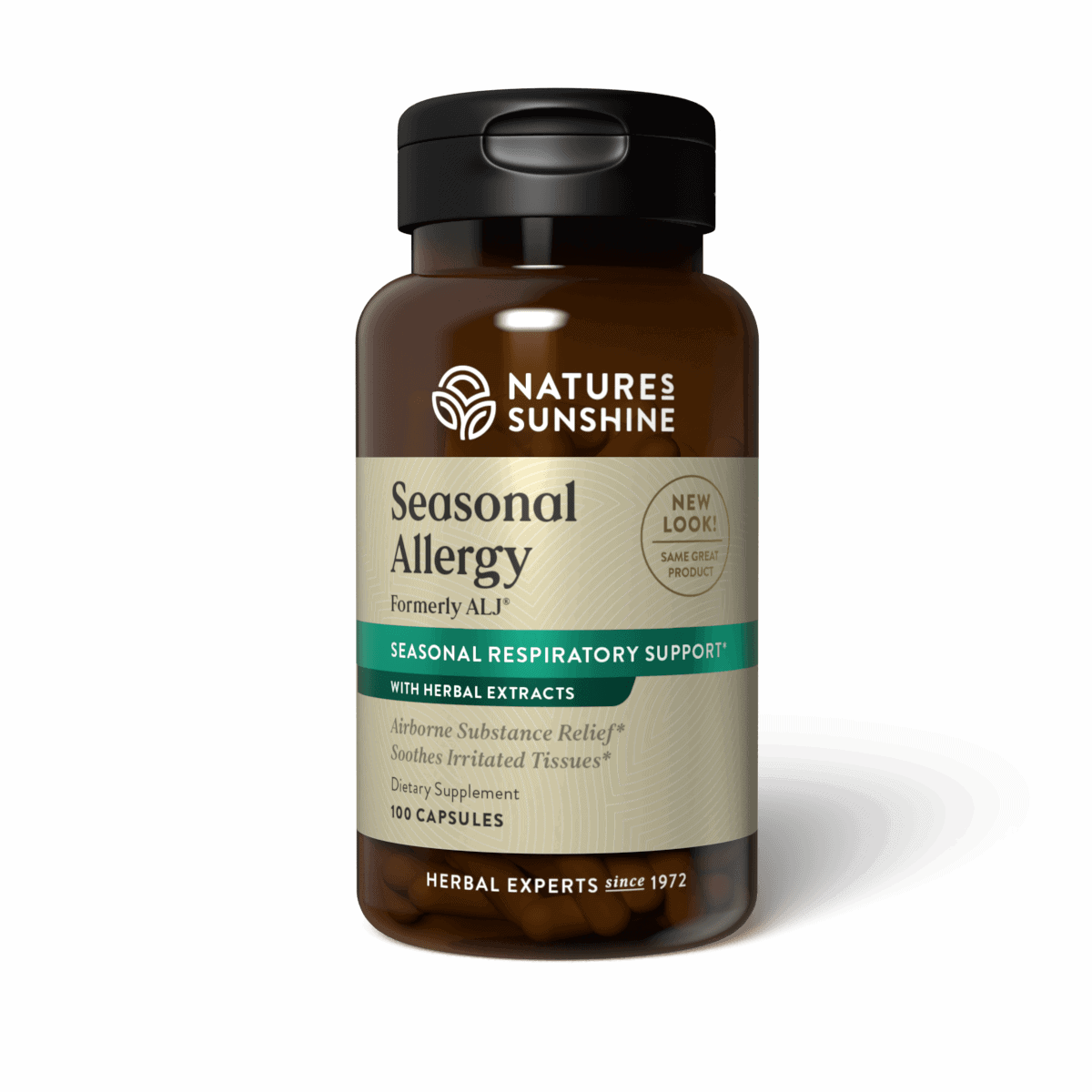
Explore Nature's Sunshine Seasonal Allergy (Formerly ALJ) — an herbal blend of Boneset, Fennel, Fenugreek, Horseradish & Mullein for respiratory support.
Nature's Sunshine Seasonal Allergy: Herbal Support When Seasons Change
Nature's Sunshine Seasonal Allergy (Formerly ALJ) is an herbal supplement designed to help balance the natural elimination functions of the respiratory system. Airborne particles are everywhere — and when those particles enter through the nose or mouth, the body activates its cleansing mechanisms, putting the immune system on active duty.
This thoughtfully crafted blend of five herbs works together to assist the body as seasons change. The formula includes Fenugreek and Mullein, both herbs that contain mucilage — a natural substance that soothes tissue. The other herbs in the blend assist in nourishing the lungs and cleansing the respiratory system.
Nature's Sunshine Seasonal Allergy comes in a convenient 100-count Vegicap format and is also available as VegiTabs and in liquid form. If you're unsure which format is right for you, our naturopath is available for a free consultation to help guide your choice.
Supporting Your Respiratory System Naturally
The Nature's Sunshine Seasonal Allergy formula takes a multi-herb approach to respiratory wellness. Rather than relying on a single botanical, it combines five herbs that have been traditionally used for centuries across multiple cultures to support the lungs, sinuses, and airways.
Each ingredient brings a distinct set of traditional properties to the blend — from soothing irritated respiratory tissue to promoting the body's natural ability to manage mucus and clear airborne particles. Herbs rich in mucilage, like Fenugreek and Mullein, help coat and comfort irritated mucous membranes, while Horseradish and Boneset have long histories as warming, stimulating herbs for respiratory drainage.
Together, these herbs support three key functions:
- Soothing respiratory tissue during seasonal changes
- Assisting the respiratory system in its natural cleansing processes
- Supporting the body as it adapts to environmental challenges
Key Ingredients
- ✓ Free shipping over $75
- ✓ 90-day easy returns
- ✓ Ships within hours
Who Is Nature's Sunshine Seasonal Allergy For?
This formula was designed for adults looking for herbal support as the seasons change. If you find yourself reaching for tissues when airborne particles are at their peak, or if your respiratory system feels challenged by environmental shifts, Nature's Sunshine Seasonal Allergy may be a helpful addition to your wellness routine.
It's particularly well-suited for those who prefer traditional herbal approaches to respiratory comfort — people who appreciate time-tested botanicals like Mullein, Horseradish, and Boneset that have been used across cultures for centuries.
Because every person's needs are different, we encourage you to take advantage of our free naturopathic consultations if you have questions about whether this formula is a good fit for your individual situation.
How to Take Seasonal Allergy
Take 2–4 vegicaps with a meal three times daily.
Each serving of 2–4 vegicaps delivers a meaningful amount of all five herbs. Consistency is important when working with herbal formulas — taking them regularly with meals helps support steady absorption.
If you're unsure about the right serving for your needs, our naturopath is happy to discuss your situation during a free consultation.
Written by Greg Howlett
Frequently asked questions
What is Nature's Sunshine Seasonal Allergy (ALJ)?
Nature's Sunshine Seasonal Allergy, formerly known as ALJ, is an herbal supplement that helps balance the natural elimination functions of the respiratory system. It contains a blend of Boneset aerial parts, Fennel seeds, Fenugreek seeds, Horseradish root, and Mullein leaves extract — herbs that work together to soothe respiratory tissue, assist in cleansing airborne particles, and support the body during seasonal changes. It comes in a 100-count Vegicap format and is also available as VegiTabs and in liquid form.
How do the herbs in Seasonal Allergy support respiratory health?
The formula combines herbs with complementary traditional properties. Fenugreek and Mullein both contain mucilage, a natural substance that soothes irritated respiratory tissue. Horseradish root contains allyl isothiocyanate, which has traditionally been used to stimulate nasal and sinus drainage. Boneset is historically classified as a mild expectorant that helps loosen mucus. Fennel seeds are recognized by Commission E and ESCOP for their role in supporting the upper respiratory tract. Together, they support the respiratory system's natural cleansing processes.
Is there scientific evidence behind the ingredients?
The ingredients have varying levels of evidence. Much of the support comes from extensive traditional use spanning centuries and multiple cultures. On the research side, Fennel seeds have been shown to enhance ciliary motility of the respiratory apparatus, and a 2021 scientific review confirmed that Mullein's anti-inflammatory phytochemicals correlate with its traditional respiratory uses. In vitro studies have confirmed anti-inflammatory activity in Boneset. Clinical studies of a combination product containing Horseradish have shown promising results for acute bronchitis and sinusitis. However, large-scale human clinical trials for most of these herbs individually in allergy-specific contexts remain limited.
Can I take Seasonal Allergy alongside other supplements?
While Nature's Sunshine Seasonal Allergy is an herbal formula with a long history of traditional use, it's always wise to discuss any new supplement with a healthcare professional — especially if you take medications or other supplements. Our naturopath is available for a free consultation to help you think through your overall wellness routine.
Why was ALJ renamed to Seasonal Allergy?
Nature's Sunshine updated the product name from ALJ to Seasonal Allergy to make it easier for customers to understand what the formula is designed to support. The formula itself — the same blend of Boneset, Fennel, Fenugreek, Horseradish, and Mullein — remains the same trusted product that has been helping people navigate seasonal changes.
How many vegicaps are in one bottle, and how long does it last?
Each bottle contains 100 vegicaps. The recommended serving is 2–4 vegicaps with a meal three times daily. At the lower end of the serving range (2 vegicaps, three times daily), a bottle provides approximately a 16-day supply. At 4 vegicaps three times daily, a bottle lasts about 8 days. The right serving depends on your individual needs — our naturopath can help you determine what makes sense for you.
Talk to Dr. Shannyn Fowl
Not sure if this is right for you? Book a free, no-pressure consultation for personalized guidance on your health goals.
Book your free consult →About Caring Sunshine
A family-run reseller of premium supplements — free shipping, a 90-day guarantee, and real people who know the products.
Learn more about us →