
Nature’s Sunshine SAM-e 30 Tablets | Mood & Liver
Explore Nature's Sunshine SAM-e 30 tablets: 400 mg SAMe per serving to support emotional health, liver detox, joint comfort, and methylation. In-depth guide.
Nature's Sunshine SAM-e 30 Tablets: A Multi-System Support Formula
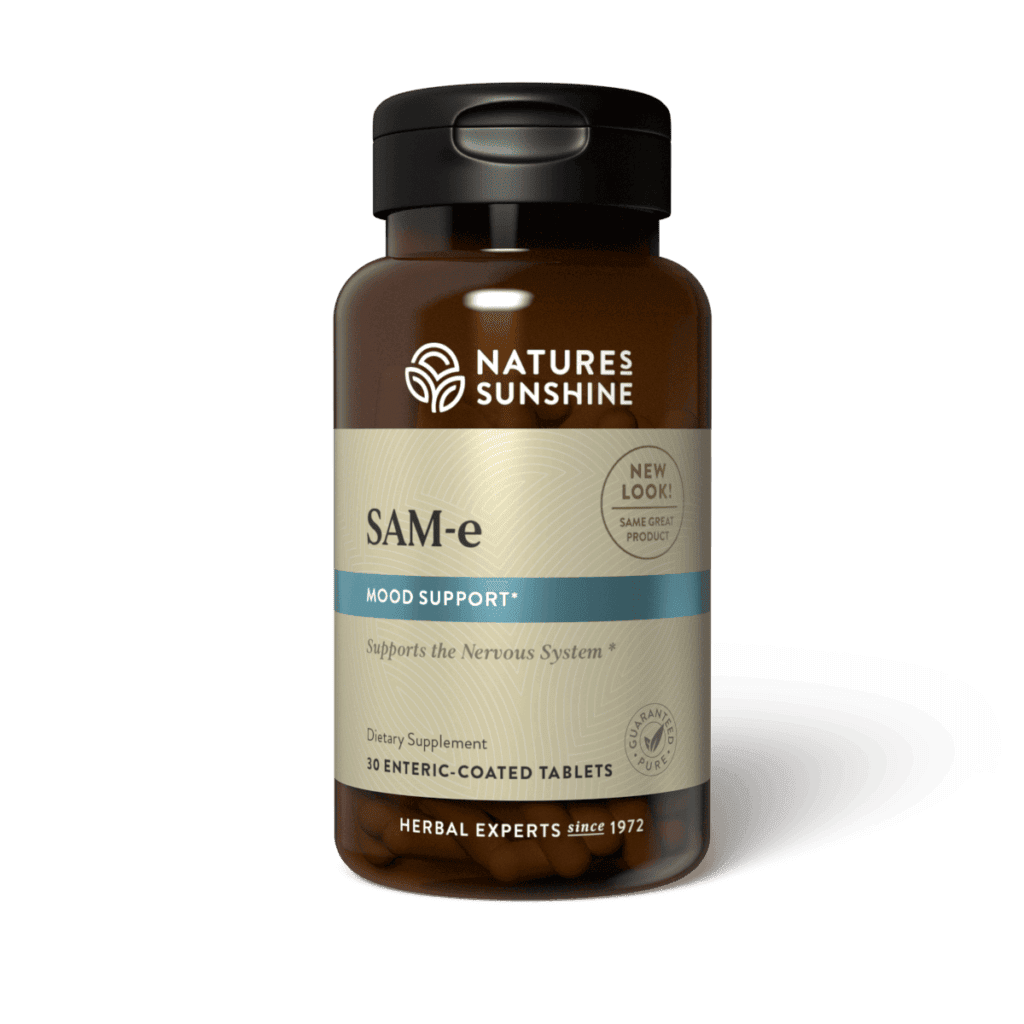
Nature's Sunshine SAM-e 30 tablets deliver S-Adenosyl-L-methionine — a molecule present in every living cell of your body — in a convenient oral tablet. SAMe plays a central role in cellular biochemistry as a precursor to three major metabolic pathways: transmethylation, transsulfuration, and aminopropylation. It is produced naturally in the body, mainly by the liver, and functions as the body's principal methyl group donor.
First described by biochemist Giulio Cantoni in 1952 at the National Institute of Mental Health, SAMe has been studied extensively for decades. It has been prescribed as a medication in Italy, Spain, Germany, and Russia since the 1980s and has been available as a dietary supplement in the United States since 1999. Unlike most botanical supplements, SAMe has no ancient traditional use — its entire history is rooted in modern biochemical research.
This Nature's Sunshine formula supports emotional health, promotes liver nourishment, and may help maintain a healthy structural system. If you'd like personalized guidance on whether SAMe fits your wellness goals, our naturopath is available for a free consultation.
The Science Behind SAMe: Methylation, Mood, and More
Three Essential Biochemical Pathways
SAMe is an essential factor in three major biochemical pathways. In transmethylation, SAMe donates its methyl group to over 200 known or putative methyltransferases, influencing DNA, RNA, proteins, lipids, and small molecules throughout the body. The liver is where up to 85% of all methylation reactions take place.
Through the transsulfuration pathway, SAMe generates sulfur-containing compounds important for conjugation reactions and — critically — for the synthesis of glutathione (GSH), the body's master antioxidant. This pathway requires adequate levels of folate, vitamin B12, and vitamin B6 to function properly.
In the aminopropylation pathway, SAMe participates in polyamine synthesis, which is involved in cell growth, gene regulation, and neurological function. Research suggests that brain polyamine concentrations decrease in models of depression and may be restored by therapeutic doses of SAMe.
Mood and Neurotransmitter Support
Research suggests SAMe may support mood through several mechanisms. It serves as a cofactor for rate-limiting steps in serotonin, dopamine, and norepinephrine biosynthesis. Studies have also documented that low central nervous system SAMe levels are associated with depression, and that a particular genetic polymorphism linked to SAMe recycling is overrepresented in patients with late-onset major depression.
Liver Nourishment
The liver is where the bulk of SAMe is generated, metabolizing up to half of the daily intake of methionine. SAMe is central to hepatic methionine metabolism, glutathione synthesis, and phospholipid production. Research has documented that SAMe levels are reduced in chronic liver disease, providing a strong mechanistic rationale for supplementation.
Joint and Structural Support
SAMe has been studied for osteoarthritis since the 1980s based on its ability to support cartilage metabolism. In vitro research has examined SAMe's potential to support proteoglycan and fibronectin synthesis in synovial cells and chondrocytes — the building blocks of healthy cartilage.
Key Ingredients
- ✓ Free shipping over $75
- ✓ 90-day easy returns
- ✓ Ships within hours
Who May Benefit from Nature's Sunshine SAM-e 30 Tablets
This formula is designed for adults looking for nutritional support in several key areas. Based on the research, you may want to consider Nature's Sunshine SAM-e 30 tablets if you are interested in:
- Emotional health and mood balance — Research suggests SAMe supports neurotransmitter synthesis (serotonin, dopamine, norepinephrine) and may promote emotional resilience. A 2024 meta-analysis found SAMe significantly superior to placebo for depressive symptoms.
- Liver nourishment — SAMe is a key glutathione precursor and methyl donor whose hepatic levels are known to be depleted in chronic liver conditions. Studies suggest it may support healthy liver function biomarkers.
- Joint comfort and structural support — SAMe has been studied since the 1980s for its potential to support cartilage metabolism. A double-blind crossover trial showed no statistically significant difference between SAMe and a COX-2 inhibitor on most health measures in knee osteoarthritis.
- Methylation support — As the body's universal methyl donor, SAMe fuels hundreds of methylation reactions. Deficiencies in methionine, folate, or vitamin B12 can lower SAMe levels, making supplementation relevant for those concerned about methylation status.
- Seasonal mood support — SAMe is specifically listed among supplements studied for seasonal mood due to its role in neurotransmitter optimization.
Because SAMe interacts with several medications and is not appropriate for everyone (particularly individuals with bipolar disorder), we recommend speaking with a healthcare provider before starting. Our naturopath is always happy to discuss your individual situation in a free consultation.
How to Take Nature's Sunshine SAM-e 30 Tablets
Take 2 tablets daily.
Each serving of 2 tablets provides 400 mg of s-adenosylmethionine. The bottle contains 30 tablets.
Important Safety Considerations
Side effects of SAMe are uncommon, and when they do occur they are usually minor, such as nausea or digestive upsets. However, there are several important cautions to be aware of:
- Bipolar disorder: Individuals with bipolar disorder should not take SAMe without consulting a physician first, as the supplement might increase anxiety and mania.
- Serotonergic medications: SAMe may interact with drugs and supplements that increase serotonin levels — including antidepressants, L-tryptophan, St. John's wort, dextromethorphan, and certain narcotics — potentially causing serotonin syndrome.
- Levodopa: SAMe might reduce the effectiveness of levodopa, a medication used for Parkinson's disease.
- Immunocompromised individuals: There is a theoretical concern about SAMe use by people who are immunocompromised.
SAMe is extremely unstable at temperatures above 0°C or in the presence of moisture. Store as directed to preserve potency. Enteric coating and stable salt formulation are standard measures used in this product to protect the active ingredient.
Written by Greg Howlett
Frequently asked questions
What is SAMe and how does it work in the body?
SAMe (S-adenosyl-L-methionine) is a naturally occurring molecule present in every living cell. It is the body's principal biological methyl donor, participating in over 200 methylation reactions that influence DNA, RNA, proteins, and lipids. SAMe is produced mainly by the liver from the amino acid methionine and ATP. It is essential for three major biochemical pathways: transmethylation, transsulfuration (which produces glutathione), and aminopropylation (which produces polyamines). SAMe was first described in 1952 and has been prescribed as a medication in several European countries since the 1980s.
What does research say about SAMe and mood support?
Research suggests SAMe may support healthy mood through its involvement in serotonin, dopamine, and norepinephrine synthesis. A 2024 systematic review and meta-analysis of 23 randomized controlled trials (n=2,234) found SAMe significantly superior to placebo in reducing depressive symptoms. Studies have also examined SAMe as an adjunctive agent alongside antidepressants, with one study showing SAMe combined with SSRIs was more effective than placebo combined with SSRIs. The evidence is encouraging and generally positive, though more research is needed before definitive conclusions can be drawn.
Can SAMe support liver health?
SAMe is central to hepatic methionine metabolism, glutathione synthesis, and phospholipid production. Research has documented that SAMe levels are depleted in chronic liver disease. In a placebo-controlled study of hospitalized patients with cholestatic liver disease, SAMe decreased abnormal liver test results and improved fatigue and mood. Scientific evidence supports its role in ameliorating cholestasis and reducing liver injury markers, though adequately powered randomized controlled trials with clinically meaningful endpoints are still needed. Current NCCIH-supported studies are investigating SAMe's role in nonalcoholic fatty liver disease.
Does SAMe support joint health?
SAMe has been studied for osteoarthritis since the 1980s based on its ability to support cartilage metabolism and exert anti-inflammatory effects. A double-blind crossover trial found no statistically significant difference between SAMe and a COX-2 inhibitor on most health measures in knee osteoarthritis. A long-term trial showed good clinical effectiveness over 24 months. However, the Cochrane systematic review notes that evidence quality is generally low, and more adequately sized trials are needed.
Are there any drug interactions or safety concerns with SAMe?
SAMe may interact with medications that increase serotonin levels, including antidepressants, St. John's wort, dextromethorphan, and certain narcotics, potentially increasing the risk of serotonin syndrome. It may also reduce the effectiveness of levodopa (used for Parkinson's disease). Individuals with bipolar disorder should not take SAMe without consulting a physician, as it might increase anxiety and mania. There is also a theoretical concern for immunocompromised individuals. Side effects are uncommon but may include mild nausea or digestive upsets. Always consult a healthcare provider before starting SAMe — our naturopath offers free consultations to help you assess whether it's appropriate for you.
How should I store SAMe supplements?
SAMe is extremely unstable at temperatures above 0°C or in the presence of moisture, which can cause degradation of the active ingredient or transformation of the active form into an inactive form. Nature's Sunshine SAM-e uses a stable salt formulation (disulfate p-toluensulronate) to help preserve potency. Store as directed on the product label, keeping tablets protected from heat and moisture.
Talk to Dr. Shannyn Fowl
Not sure if this is right for you? Book a free, no-pressure consultation for personalized guidance on your health goals.
Book your free consult →About Caring Sunshine
A family-run reseller of premium supplements — free shipping, a 90-day guarantee, and real people who know the products.
Learn more about us →