First order?Save 20%
(888) 510-7196

How to Support Adrenal Glands | Adrenal Support Guide

Learn how to support adrenal glands with targeted vitamins, minerals, and adaptogenic herbs. Explore the science behind adrenal health and HPA axis balance.

Understanding Adrenal Health

How to Support Adrenal Glands: Why It Matters

Your adrenal glands sit atop each kidney and produce hormones — including cortisol, DHEA, and catecholamines — that help your body respond to stress, regulate energy, and maintain blood pressure. When chronic stress places relentless demands on these small glands, the entire hypothalamic-pituitary-adrenal (HPA) axis can become taxed, potentially affecting everything from mood and sleep to cardiovascular function and skin health.

Understanding how to support adrenal glands starts with recognizing that they depend on a steady supply of specific vitamins, minerals, and botanical compounds to manufacture stress hormones efficiently. Prolonged stress depletes these nutrients faster than most diets can replace them, creating a cycle of increased demand and diminished reserves.

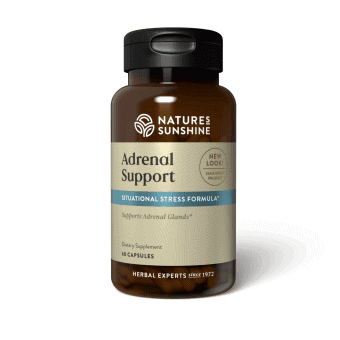
Nature's Sunshine Adrenal Support is specially formulated to nourish the adrenal glands with a combination of vitamins, minerals, enzymes, and adaptogenic herbs. The unique blend of herbs and nutrients in this formula assists the body in coping with stress by promoting healthy production of stress hormones from the adrenal gland.

The HPA Axis Connection

How the Stress Response Shapes Adrenal Demand

The HPA axis is the communication loop between the hypothalamus, pituitary gland, and adrenal cortex. Under stress, the hypothalamus releases corticotropin-releasing hormone (CRH), prompting the pituitary to secrete ACTH, which in turn signals the adrenal cortex to produce cortisol and other steroid hormones. Each step in this cascade relies on nutrient cofactors — Vitamin C, B vitamins, Zinc, and Magnesium among them.

Because stress hormones affect many bodily functions, supporting healthy adrenal output may benefit cardiovascular and skin health, energy levels, positive moods, and a healthy sex drive. The goal isn't to suppress cortisol production but to promote balanced, efficient hormone output so the body can adapt to daily stressors without becoming depleted.

If you're unsure where to start, our naturopath offers free consultations and can help you think through an approach tailored to your lifestyle.

What's inside

Key ingredients

Vitamin C — 25 mg
The adrenal glands contain 20–150 times more Vitamin C than most body tissues, making it the most concentrated nutrient in the adrenal cortex. Research identifies Vitamin C as a required cofactor for both cortisol and catecholamine synthesis. Acute stress depletes adrenal Vitamin C within hours. A human randomized controlled trial found that 500 mg per day significantly reduced cortisol, blood pressure, and subjective stress in participants exposed to psychological stressors (cited in the 2025 American Journal of Medicine HPA axis review). Supplementation is consistently recommended in integrative and functional medicine protocols for adrenal fatigue support. Vitamin C also functions as a water-soluble antioxidant, supports collagen biosynthesis, enhances iron absorption, and contributes to immune defense by supporting both innate and adaptive immune function.
thiamin — 10 mg
Thiamin (Vitamin B1) is the precursor to thiamine diphosphate (ThDP), a coenzyme indispensable for oxidative energy metabolism. ThDP is a cofactor for pyruvate dehydrogenase, alpha-ketoglutarate dehydrogenase (a limiting step in the Krebs cycle), and transketolase — enzymes that allow for the production of ATP, NADPH, and ribose-5-phosphate. Because the adrenal glands are highly metabolically active, a steady supply of thiamin helps ensure efficient energy production within adrenal tissue. Thiamin also plays a role in muscle contraction, conduction of nerve signals, and neurotransmitter synthesis, supporting the nervous system pathways that interact closely with adrenal function.
riboflavin — 5 mg
Riboflavin (Vitamin B2) is an essential component of two major coenzymes — flavin mononucleotide (FMN) and flavin adenine dinucleotide (FAD) — which play major roles in energy production, cellular function and growth, and the metabolism of fats, drugs, and steroids. FAD and FMN coenzymes participate in hepatic and endocrine metabolism, including steroid metabolism relevant to adrenal hormone processing. Riboflavin is also required for the conversion of Vitamin B6 to its active coenzyme form pyridoxal 5′-phosphate, and the conversion of tryptophan to niacin requires FAD — making riboflavin a foundational nutrient that supports the activity of other B vitamins in this formula.
Vitamin B6 — 5 mg
Vitamin B6 (pyridoxine) is a cofactor for more than 140 enzyme reactions, including the synthesis of neurotransmitters serotonin, dopamine, GABA, and norepinephrine that regulate HPA axis activity. Research shows that deficiency impairs adrenal function, and the 2025 American Journal of Medicine identifies B6 as a key micronutrient for HPA axis support alongside B5, Magnesium, Zinc, and Vitamin C. A clinical trial of 478 young adults found that high-dose Vitamin B6 significantly reduced self-reported stress and anxiety. Its role as a rate-limiting cofactor for inhibitory neurotransmitter production makes it mechanistically central to stress modulation. B6 also supports hemoglobin formation, immune function through interleukin-2 production, and homocysteine metabolism.
pantothenic acid — 45 mg
Pantothenic acid (Vitamin B5) is the direct precursor to coenzyme A (CoA), which drives the first step of adrenal steroidogenesis — the enzymatic conversion of cholesterol to pregnenolone, the rate-limiting step in producing cortisol, aldosterone, and DHEA. The adrenal cortex maintains very high concentrations of B5 to support these CoA-dependent processes. Animal studies from the 1950s showed that pantothenic acid depletion impairs adrenal stress response and causes adrenal atrophy; stress increases B5 demand. The 2025 American Journal of Medicine review cites B5 as essential for HPA axis function. In integrative medicine, pantothenic acid is sometimes called the "anti-stress vitamin" because of its foundational role in cortisol synthesis.
Magnesium — 10 mg
Magnesium is an essential mineral involved in over 300 biochemical reactions, including ATP production, cortisol regulation, and nervous system function. Research demonstrates that Magnesium directly modulates HPA axis activity: deficiency enhances HPA reactivity by raising CRH, ACTH, and cortisol, while chronic stress depletes Magnesium — creating a feedback cycle that may worsen adrenal fatigue symptoms. The 2025 American Journal of Medicine review identifies Magnesium deficiency as impairing adrenal function and recommends 300–400 mg per day for HPA axis support during stress. A systematic review of 18 studies found that supplementation reduces subjective anxiety, particularly in vulnerable populations. Magnesium also modulates NMDA glutamate receptors and enhances GABAergic availability, reducing neuronal excitability.
Zinc — 5 mg
Zinc is required for the synthesis of adrenal hormones and acts as a cortisol modulator. Animal research shows that Zinc deficiency elevates serum cortisol levels and enhances hypothalamo-pituitary-adrenocortical axis activity. The 2025 American Journal of Medicine review identifies Zinc deficiency as impairing adrenal and neuroendocrine function, and clinical evidence shows supplementation modulates ACTH and cortisol while supporting DHEA production. Zinc is also essential for pituitary hormone synthesis and release, is incorporated into roughly 10% of all human proteins, and supports more than 300 enzyme systems spanning immune function, DNA synthesis, and wound healing.
Potassium — 5 mg
Potassium is the body's primary intracellular cation, essential for maintaining membrane potential, nerve impulse transmission, and muscle contraction — all functions that interact closely with adrenal output. The sodium-Potassium pump (Na⁺/K⁺-ATPase), which depends on Potassium, generates the electrochemical gradients that enable nerve and muscle cells to function. Aldosterone, a key adrenal hormone, directly regulates Potassium homeostasis through the kidneys. Potassium also supports healthy blood pressure and cardiovascular function through natriuresis and modulation of the renin-angiotensin-aldosterone system.
schisandra fruit — 240 mg
Schisandra chinensis (Wu Wei Zi, or "five flavors fruit") is an adaptogen with a 1,700-year history in Traditional Chinese Medicine and Russian phytomedicine. Its principal bioactive lignans — Schisandrins — modulate the HPA axis by suppressing cortisol release and reducing stress-induced fatigue. In animal studies, schisandra extracts reduced hypothalamic CRH mRNA expression and c-Fos activity under compound stress conditions. Research confirms Schisandra's ability to support HPA axis function and combat mental and physical exhaustion. Multiple pharmacological reviews document the Schisandrins' anti-stress and hepatoprotective effects, and Schisandra chinensis is included in systematic reviews of adaptogens with clinical evidence for stress modulation.
Borage seed oil — 240 mg
Borage seed oil is the richest plant source of gamma-linolenic acid (GLA), an essential fatty acid at approximately 20–30% of the oil. GLA is metabolized to dihomo-gamma-linolenic acid (DGLA), a precursor to anti-inflammatory prostaglandin E1 (PGE1). In Western herbal medicine, Borage has a well-established traditional reputation as an adrenal cortex restorative, particularly after corticosteroid therapy or periods of chronic stress. Multiple herbal monographs record this use as one of Borage's most consistently cited modern herbal applications. While no clinical trials have confirmed direct adrenal function outcomes, the traditional application is widely recognized.
Licorice root — 240 mg
Licorice root (Glycyrrhiza glabra) has well-documented effects on adrenal cortisol metabolism through inhibition of the enzyme 11β-hydroxysteroid dehydrogenase type 2 (11β-HSD2), which converts active cortisol to inactive cortisone. This inhibition extends cortisol availability in tissues — a mechanism directly relevant to low-cortisol states. Research published in Steroids confirmed increases in salivary DHEA, deoxycorticosterone, and testosterone after licorice consumption. The VA Whole Health Library and integrative medicine sources identify licorice as a key adrenal-supportive herb. It appears in approximately 60% of traditional Chinese medicine prescriptions and has been used for over 4,000 years across Assyrian, Egyptian, Greek, Arab, Chinese, and Indian cultures.
Adrenal Support
Adrenal Support
★★★★★ 4.8 (37 reviews)
  • ✓ Free shipping over $75
  • ✓ 90-day easy returns
  • ✓ Ships within hours
Adrenal Support
Adrenal Support
$34.15
Who Benefits Most

Who Should Consider Adrenal Support

People navigating ongoing work demands, caregiving responsibilities, irregular sleep schedules, or emotionally taxing situations often place sustained demands on their HPA axis. Over time, the nutrient reserves needed to maintain healthy stress hormone output can become depleted.

This formula may be worth considering if you experience persistent feelings of fatigue, find it difficult to bounce back after stressful periods, or simply want a comprehensive approach to how to support adrenal glands through targeted nutrition. Because the formula includes both foundational nutrients (vitamins C, B1, B2, B6, pantothenic acid, Zinc, and Magnesium) and adaptogenic botanicals (schisandra fruit, Licorice root, and Borage seed oil), it addresses multiple aspects of the stress-response pathway in a single product.

If you have specific health concerns or take medications, we recommend speaking with our naturopath — consultations are always free — to determine whether Adrenal Support is a good fit for your individual needs.

Directions

How to Take Adrenal Support

Take 1 capsule with a meal twice daily. Each bottle contains 60 capsules, providing a 30-day supply at the suggested serving.

Taking the capsules with meals supports absorption of the fat-soluble components like Borage seed oil and may reduce any sensitivity to B vitamins on an empty stomach.

About the author

Written by Greg Howlett

GH

Greg Howlett

Founder

Greg has spent over a decade helping customers choose the right natural-health products. He personally vets every formula we carry and writes these guides to cut through the marketing noise with practical, experience-based advice.

FAQ

Frequently asked questions

What does the adrenal gland actually do?

The adrenal glands produce hormones — including cortisol, DHEA, aldosterone, and catecholamines (adrenaline and noradrenaline) — that help the body respond to stress, regulate blood pressure, manage energy levels, support cardiovascular and skin health, promote positive moods, and encourage a healthy sex drive. The HPA axis (hypothalamus–pituitary–adrenal) is the communication loop that controls adrenal hormone output.

Why are B vitamins important for adrenal health?

Several B vitamins serve as direct cofactors in adrenal hormone synthesis. Pantothenic acid (B5) is the precursor to coenzyme A, which drives the conversion of cholesterol to pregnenolone — the rate-limiting step of steroidogenesis. Vitamin B6 is essential for neurotransmitter synthesis (serotonin, dopamine, GABA) that regulates HPA axis activity. Thiamin and riboflavin support the energy metabolism that adrenal tissue depends on to function efficiently.

How does Vitamin C relate to adrenal function?

The adrenal glands contain 20–150 times more Vitamin C than most body tissues. Vitamin C is a required cofactor for cortisol and catecholamine synthesis. Research shows acute stress depletes adrenal Vitamin C within hours. A human randomized controlled trial found 500 mg per day significantly reduced cortisol, blood pressure, and subjective stress in participants exposed to psychological stressors.

What role do adaptogenic herbs play in Adrenal Support?

Schisandra fruit is classified as an adaptogen — its lignans (Schisandrins) have been studied for their ability to modulate HPA axis activity, suppress excessive cortisol release, and reduce stress-induced fatigue. Licorice root works through a different mechanism: its active compound glycyrrhizin inhibits the enzyme 11β-HSD2, extending cortisol availability in tissues. Together, these herbs address adrenal function from complementary angles.

Is this formula safe for long-term use?

The vitamins and minerals in this formula are water-soluble or provided at moderate levels. However, Licorice root contains glycyrrhizin, which at high doses or with long-term use may affect blood pressure and Potassium balance. If you plan extended use or take medications — especially blood pressure drugs, diuretics, or corticosteroids — we recommend scheduling a free consultation with our naturopath for personalized guidance.

How is this formula different from taking individual adrenal-support nutrients separately?

Adrenal Support combines vitamins, minerals, enzymes (protease), bovine adrenal gland substance, and adaptogenic herbs in a single capsule. The ingredients are selected to work together across the HPA axis: B vitamins and Vitamin C supply cofactors for hormone synthesis, Zinc and Magnesium modulate cortisol output, schisandra fruit and Licorice root provide adaptogenic and cortisol-extending botanical support, and Borage seed oil supplies gamma-linolenic acid traditionally used for adrenal cortex restoration.

Talk to an expert

Talk to Dr. Shannyn Fowl

Not sure if this is right for you? Book a free, no-pressure consultation for personalized guidance on your health goals.

Book your free consult →
Who we are

About Caring Sunshine

A family-run reseller of premium supplements — free shipping, a 90-day guarantee, and real people who know the products.

Learn more about us →