Free shipping on orders over $75 | First Order? Save 20%.
(888) 510-7196

Food Enzymes | Comprehensive Digestive Enzyme Guide

Explore how Food Enzymes by Nature's Sunshine support protein, carbohydrate, and fat digestion with Pepsin, Pancreatin, Bromelain, Papain, bile salts & more.

Digestive Support

What Are Food Enzymes and Why Do They Matter?

Every meal you eat depends on a cascade of enzymatic reactions to unlock its nutrients. Proteins must be broken into amino acids, starches into simple sugars, and fats into fatty acids before your body can absorb and use them. When any link in that chain is weak β€” whether from age, dietary habits, or a history of gallbladder issues β€” digestion can become uncomfortable and inefficient.

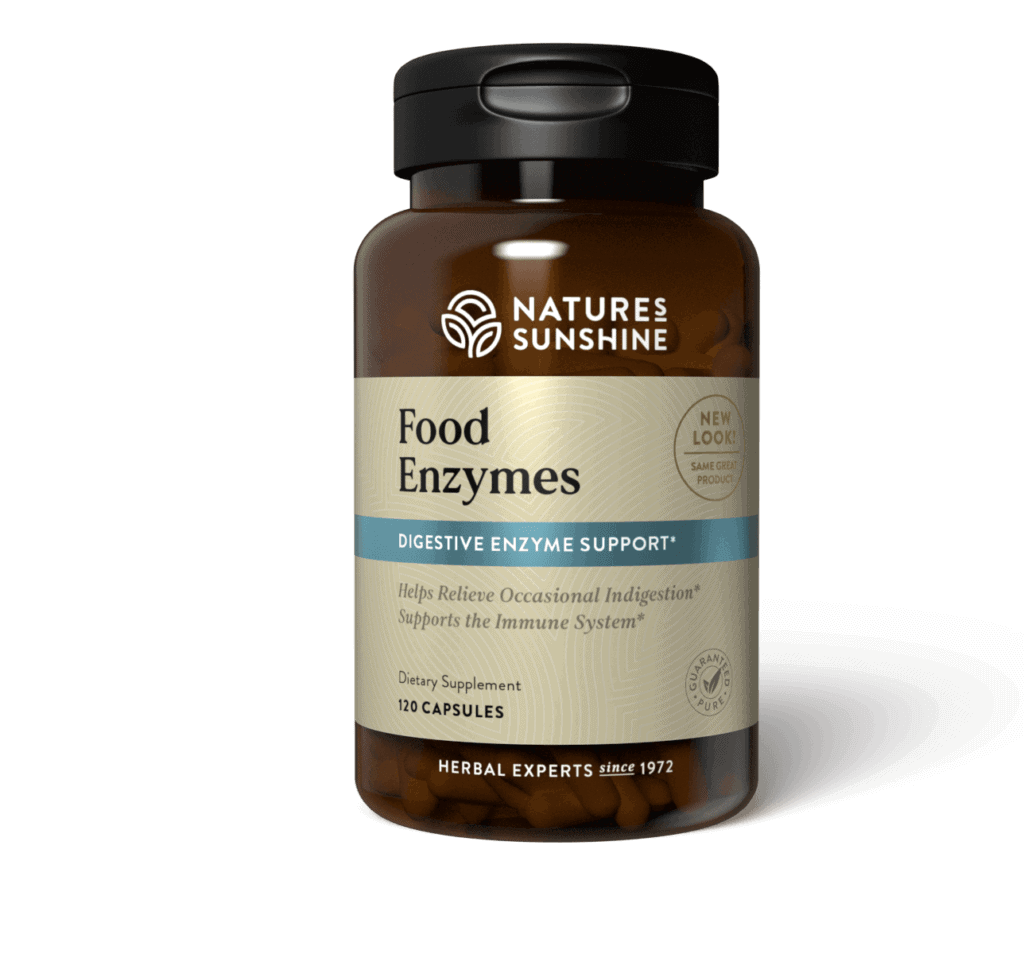
Nature's Sunshine Food Enzymes provides a carefully chosen combination of digestive enzymes β€” Pepsin, Pancreatin, alpha Amylase, Papain, Bromelain, Lipase, and bile salts β€” alongside Betaine HCl. Together, these ingredients assist in the digestion of proteins, carbohydrates, and fats, helping to alleviate occasional indigestion.

Because of the prevalence of processed foods, many modern diets lack these necessary enzymes. Supplementing with Food Enzymes at mealtime may help bridge that gap, supporting smoother digestion and more complete nutrient absorption throughout the gastrointestinal tract.

How It Works

How Food Enzymes Support the Digestive Process

Digestion is a team effort that begins in the stomach and continues through the small intestine. Food Enzymes addresses each stage of macronutrient breakdown:

  • Protein digestion β€” Pepsin, Bromelain, Papain, and the protease component of Pancreatin each target peptide bonds in dietary protein. Pepsin works in the acidic stomach environment, while Bromelain and Papain remain active across a wider pH range, continuing their work as food moves into the small intestine.
  • Carbohydrate digestion β€” Alpha Amylase catalyzes the hydrolysis of starches and glycogen into simpler sugars. It begins working in the mouth and continues in the duodenum, where pancreatic Amylase completes starch breakdown.
  • Fat digestion β€” Lipase hydrolyzes dietary triglycerides into free fatty acids and monoglycerides, while bile salts emulsify fat droplets to dramatically increase the surface area available for Lipase to act upon. Without adequate bile, fat passes through incompletely digested, and absorption of fat-soluble vitamins A, D, E, and K drops accordingly.

Betaine HCl provides supplemental hydrochloric acid, helping to establish the acidic gastric environment that activates pepsinogen into active Pepsin and supports the initial phase of protein digestion.

If you have specific questions about how Food Enzymes fit into your wellness routine, our naturopath is available for a free consultation.

What's inside

Key ingredients

Betaine HCI β€” 940 mg
Betaine hydrochloride is a form of Betaine used primarily as a source of supplemental hydrochloric acid. Betaine (trimethylglycine) is a naturally occurring compound first discovered in sugar beets in the 19th century and found in foods such as wheat bran, wheat germ, spinach, and quinoa. In the context of this formula, Betaine HCl provides acid to support the low-pH gastric environment necessary for activating pepsinogen into Pepsin. Betaine itself is a methyl donor that participates in the remethylation of homocysteine to methionine via Betaine-homocysteine S-methyltransferase (BHMT) and also functions as an organic osmolyte, helping maintain normal cell volume under stress. It is a heat-stable, water-soluble compound with a long history of commercial availability.
alpha Amylase β€” 940 mg
Alpha Amylase is a glycoside hydrolase enzyme that catalyzes the hydrolysis of starches and glycogen into simpler sugars such as maltose and glucose. It is a core digestive enzyme produced by the salivary glands and pancreas. Research supports its role in carbohydrate digestion and reducing dyspeptic symptoms. Studies suggest that Amylase is a primary active ingredient in pancreatic enzyme replacement therapy, the clinical standard of care for pancreatic exocrine insufficiency. In the small intestine, pancreatic Amylase completes the bulk of dietary starch hydrolysis in the duodenum. Animal research indicates that Amylase deficiency in exocrine pancreatic insufficiency leads to reversible villus atrophy that may be restored with supplementation, suggesting structural effects on the intestinal wall beyond simple luminal digestion.
Pepsin β€” 940 mg
Pepsin is the principal proteolytic enzyme of the vertebrate stomach and one of the first enzymes ever discovered, named by Theodor Schwann in 1836. It is an aspartic protease produced as the inactive zymogen pepsinogen by gastric chief cells, then activated by hydrochloric acid at low pH. Research confirms Pepsin as the primary gastric protease that initiates protein digestion by cleaving dietary proteins into smaller peptides, which are then delivered to the small intestine for further hydrolysis and amino acid absorption. Commercial Pepsin is extracted from the glandular layer of hog stomachs and standardized to USP activity units. Pepsin exhibits broad cleavage specificity and may digest up to 20% of ingested amide bonds, preferentially cleaving at aromatic amino acids such as phenylalanine and tyrosine.
Bromelain β€” 940 mg
Bromelain is a group of cysteine proteases extracted from the stem and fruit of the pineapple plant (Ananas comosus). Traditionally, indigenous peoples of Central and South America used pineapple preparations to ease stomachaches, reduce inflammation, and promote wound healing. Scientific research documents Bromelain's well-characterized protein-digesting activity. Studies suggest Bromelain survives gastric transit β€” approximately 40% of labeled Bromelain is absorbed from the intestine in high molecular form β€” and retains proteolytic activity in plasma. In the small intestine, Bromelain aids protein digestion and absorption, and research suggests it also has anti-inflammatory properties affecting the intestinal mucosa. Animal studies indicate it may stimulate pancreatic trypsin activity and beneficially modulate gut microbiota.
Papain β€” 940 mg
Papain is a plant-derived cysteine protease of approximately 23.4 kDa extracted from the latex of the papaya tree (Carica papaya). It has centuries of traditional use as a digestive aid in tropical medicine β€” indigenous communities in Central and South America and Polynesian cultures historically applied papaya preparations for digestive ailments and wound healing. Research shows Papain digests a broad spectrum of proteins and is active over a wide pH range (approximately 3–12), making it effective across the stomach and small intestine. Studies suggest it acts directly in the small intestine as a supplemental protease, breaking down dietary proteins into peptides and amino acids to support nutrient absorption. Clinical evidence from digestive disorder trials documents improvements in intestinal symptoms with Papain-containing preparations.
Bile salt β€” 940 mg
Bile salts are the sodium and potassium ionic forms of bile acids β€” amphiphilic steroidal molecules synthesized in the liver from cholesterol and stored in the gallbladder. Research confirms they are functionally required for fat emulsification: bile salts arrange themselves around triglyceride droplets to form micelles, dramatically increasing the surface area available for pancreatic Lipase. They also enable the absorption of fat-soluble vitamins A, D, E, and K. Studies suggest Bile salt supplementation supports fat digestion after cholecystectomy (gallbladder removal), when the body can no longer concentrate and release bile with meals. Bile salt adequacy is considered essential to gallbladder health and gallstone prevention; research indicates that cholesterol gallstone formation is intrinsically linked to bile acid pool size and composition.
Pancreatin β€” 940 mg
Pancreatin is a multi-enzyme extract from animal pancreas containing Amylase, Lipase, and protease β€” the three enzyme classes needed to digest carbohydrates, fats, and proteins, respectively. It has been used in medicine since the 19th century and is on the WHO List of Essential Medicines. Clinical evidence for its digestive efficacy is robust: a meta-analysis of seven randomized controlled trials demonstrated that pancreatic enzyme replacement therapy significantly increased fat absorption and nitrogen absorption while reducing stool fat excretion and stool weight compared to placebo. Pancreatin is the clinical standard for supporting digestion in exocrine pancreatic insufficiency, and its constituent enzymes work synergistically to promote complete macronutrient digestion in the small intestine.
Lipase β€” 940 mg
Lipase (EC 3.1.1.3) is a serine hydrolase that catalyzes the hydrolysis of dietary triglycerides into free fatty acids and glycerol. It is the only enzyme source for fat digestion in the small intestine β€” deficiency results in steatorrhea (fatty stool) and malabsorption of fat-soluble vitamins. Research confirms Lipase is a principal component of FDA-regulated pancreatic enzyme replacement therapy. Studies demonstrate that Lipase works at the oil-water interface, requiring bile salts for emulsification and colipase as a cofactor for optimal activity. Fat-soluble vitamins A, D, E, and K all depend on adequate Lipase activity for absorption. Emerging animal research also suggests exogenous lipases may increase levels of beneficial gut bacteria and short-chain fatty acids, though human data in this area is lacking.
Food Enzymes
Food Enzymes
β˜…β˜…β˜…β˜…β˜… 4.7 (54 reviews)
  • βœ“ Free shipping over $75
  • βœ“ 90-day easy returns
  • βœ“ Ships within hours
Food Enzymes
Food Enzymes
$35.95
Who Benefits

Who May Benefit from Food Enzymes?

Food Enzymes is formulated for adults who experience occasional indigestion or who want comprehensive digestive support at mealtime. Individuals who may find this formula particularly relevant include:

  • People whose diets are high in processed or cooked foods, which can be depleted of naturally occurring enzymes
  • Those who have had their gallbladder removed and may struggle with efficient fat digestion due to reduced bile release
  • Adults who occasionally feel bloated, gassy, or uncomfortably full after meals
  • Individuals interested in supporting the complete breakdown and absorption of proteins, carbohydrates, and fats

Because this formula includes bile salts alongside Lipase, it offers targeted support for fat emulsification β€” an area of concern for anyone with gallbladder-related health history. If you're unsure whether Food Enzymes are right for your situation, we encourage you to take advantage of our free naturopathic consultation.

Usage Guide

How to Take Food Enzymes

Take 2 capsules with a meal three times daily.

Each bottle contains 120 capsules. The serving size is 1–2 capsules, and each capsule delivers a blend of Betaine HCl, alpha Amylase, Pepsin, Bromelain, Papain, bile salts, Pancreatin, and Lipase to support digestion throughout the meal.

For best results, take the capsules at the beginning of or during your meal so the enzymes are present in the stomach as food arrives. Capsules should not be opened or chewed.

About the author

Written by Greg Howlett

GH

Greg Howlett

Founder

Greg has spent over a decade helping customers choose the right natural-health products. He personally vets every formula we carry and writes these guides to cut through the marketing noise with practical, experience-based advice.

FAQ

Frequently asked questions

What types of food do Food Enzymes help digest?

Food Enzymes assists in the digestion of all three macronutrient categories. Pepsin, Bromelain, Papain, and the protease component of Pancreatin target proteins. Alpha Amylase and the Amylase in Pancreatin break down starches and carbohydrates. Lipase and bile salts work together to emulsify and hydrolyze dietary fats.

Can Food Enzymes help with occasional indigestion?

Yes, the formula is highlighted for alleviating occasional indigestion. The combination of enzymes supports more complete breakdown of proteins, carbohydrates, and fats at mealtime, which may help reduce feelings of bloating, gas, and postprandial fullness.

Are Food Enzymes helpful after gallbladder removal?

The formula includes bile salts, which emulsify dietary fats β€” a function normally performed by bile stored in the gallbladder. Without a gallbladder, concentrated bile is no longer released in response to meals, so supplemental bile salts may help support fat digestion and the absorption of fat-soluble vitamins A, D, E, and K.

What is the role of Betaine HCl in this formula?

Betaine HCl provides a source of supplemental hydrochloric acid. The acidic gastric environment is essential for activating pepsinogen into its active form, Pepsin, which then initiates protein digestion in the stomach. This acidic environment also supports the early stages of overall digestive enzyme function.

How many capsules are in a bottle and how long does it last?

Each bottle contains 120 capsules. At the directed usage of 2 capsules with a meal three times daily (6 capsules per day), a bottle provides a 20-day supply.

What is the difference between Bromelain and Papain in this formula?

Both are plant-derived proteolytic enzymes that help break down dietary proteins, but they come from different botanical sources. Bromelain is a cysteine protease mixture from the stem of the pineapple plant (Ananas comosus), while Papain is a cysteine protease extracted from the latex of the papaya tree (Carica papaya). Research suggests both remain active across a wide pH range and continue working in the small intestine, supporting protein digestion beyond what gastric Pepsin alone provides.

Talk to an expert

Talk to Dr. Shannyn Fowl

Not sure if this is right for you? Book a free, no-pressure consultation for personalized guidance on your health goals.

Book your free consult β†’
Who we are

About Caring Sunshine

A family-run reseller of premium supplements β€” free shipping, a 90-day guarantee, and real people who know the products.

Learn more about us β†’