
Enzymes in Food: A Deep-Dive Guide | Caring Sunshine
Discover how enzymes in food support digestion of proteins, carbohydrates, and fats. Learn about key digestive enzymes, who benefits, and how they work.
Enzymes in Food: What They Are and Why They Matter
Every time you sit down to a meal, your body relies on a carefully orchestrated team of enzymes to break food into particles small enough to absorb into the bloodstream. Proteins must be cleaved into peptides and amino acids, starches split into simple sugars, and fats emulsified and hydrolyzed into fatty acids — all before nutrients can do you any good.
Because of the prevalence of processed foods, many modern diets lack these necessary enzymes. When the body's own enzyme output falls short — whether due to age, gallbladder removal, or other factors — digestive discomfort like occasional bloating, gas, and feelings of heaviness after eating can follow.
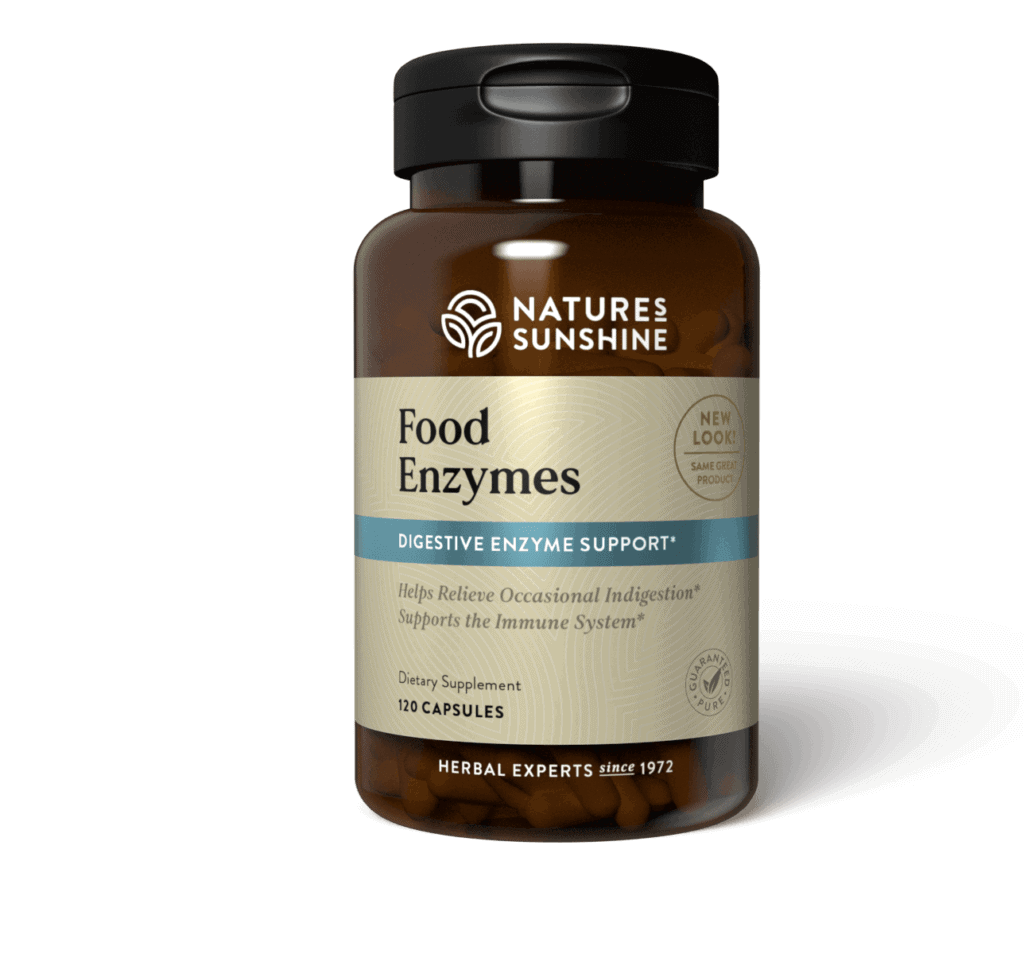
Nature's Sunshine Food Enzymes provides essential enzymes to aid in the digestion process. The formula contains Pepsin, Pancreatin, alpha Amylase, Papain, Bromelain, bile salts, Lipase, and Betaine HCl — each targeting a different type of food compound so that proteins, carbohydrates, and fats are all addressed in a single capsule.
If you've ever wondered whether a digestive enzyme formula might be a good fit for your needs, our naturopath is available for a free consultation to help you sort through the options.
How Enzymes in Food Break Down What You Eat
Digestion is not a single step — it's a relay that begins in the mouth, continues through the stomach, and finishes in the small intestine. Food Enzymes is designed to support every leg of that relay.
Protein Digestion
Pepsin, the principal protease of the stomach, initiates protein breakdown by cleaving peptide bonds between hydrophobic amino acid residues in the highly acidic gastric environment. Bromelain and Papain — cysteine proteases from pineapple stem and papaya latex, respectively — extend that proteolytic activity across a broader pH range. Pancreatin adds additional protease capacity as a multi-enzyme extract that also includes Amylase and Lipase.
Carbohydrate Digestion
Alpha Amylase catalyzes the hydrolysis of starch into smaller sugars such as maltose and maltotriose. It is the same class of enzyme your salivary glands and pancreas naturally produce, and its inclusion helps ensure that complex carbohydrates are efficiently broken down for absorption.
Fat Digestion
Lipase hydrolyzes dietary triglycerides into free fatty acids and glycerol — the forms your intestinal lining can actually absorb. Bile salts work hand-in-hand with Lipase by emulsifying fat droplets, dramatically increasing the surface area available for Lipase to act upon. Research indicates that bile salts are also functionally required for optimal activity of Bile salt-stimulated Lipase and help create the micellar environment in which pancreatic Lipase can efficiently do its work.
Stomach Acid Support
Betaine HCl provides hydrochloric acid support in the stomach, which is essential because Pepsin requires an acidic environment (approximately pH 1–3) for activation and optimal function.
Key ingredients
- ✓ Free shipping over $75
- ✓ 90-day easy returns
- ✓ Ships within hours
Who May Benefit from Enzymes in Food Supplements
Food Enzymes is formulated for adults who experience occasional indigestion or who want comprehensive digestive support with meals. You may find this formula particularly relevant if you:
- Experience occasional bloating, gas, or fullness after eating — the formula assists in the digestion of proteins, carbohydrates, and fats, which may help alleviate occasional indigestion.
- Have had your gallbladder removed — without a gallbladder concentrating and timing bile release, fat digestion can become less efficient. Bile salts and Lipase in this formula may help support fat emulsification and breakdown.
- Eat a diet high in processed foods — processed foods often lack the naturally occurring enzymes found in whole, raw foods, and supplemental enzymes may help bridge that gap.
- Are sensitive to certain foods — research suggests that enzymes like Bromelain, Amylase, and Lipase may help reduce food sensitivity symptoms related to carbohydrate and protein maldigestion, including occasional bloating and gas.
If you're unsure whether a digestive enzyme supplement is right for your situation, we offer free naturopathic consultations — our naturopath can help you evaluate your individual needs.
How to Take Food Enzymes
Take 2 capsules with a meal three times daily. Each bottle contains 120 capsules. The serving size is 1–2 capsules, allowing you to adjust based on the size of your meal.
For best results, take the capsules at the beginning of or during your meal so the enzymes are present in the stomach and small intestine as food arrives. This mirrors the body's natural pattern of enzyme secretion, which is triggered by the act of eating.
Written by Greg Howlett
Frequently asked questions
What types of food do the enzymes in Food Enzymes help digest?
Food Enzymes assists in the digestion of all three macronutrients. Pepsin, Bromelain, Papain, and the protease component of Pancreatin break down proteins. Alpha Amylase and the Amylase component of Pancreatin break down starches and carbohydrates. Lipase and bile salts work together to emulsify and hydrolyze dietary fats.
Can Food Enzymes help with occasional indigestion?
Yes. Food Enzymes is formulated to alleviate occasional indigestion by providing essential enzymes that break down food compounds — proteins, carbohydrates, and fats — to allow for easier absorption. Research on multi-enzyme formulations containing Amylase, Lipase, and protease suggests they may help reduce postprandial symptoms such as bloating, gas, and fullness.
Is this product helpful after gallbladder removal?
Food Enzymes contains bile salts, which support fat emulsification — a function normally performed by concentrated bile released from the gallbladder. Without a gallbladder, fat digestion can become less efficient. Research suggests that supplemental bile salts may help support fat digestion and fat-soluble vitamin (A, D, E, K) absorption in individuals with impaired gallbladder function. The Lipase in the formula further supports fat breakdown.
What is the difference between Pepsin, Bromelain, and Papain?
All three are proteolytic enzymes — they break down proteins — but they come from different sources and work under different conditions. Pepsin is derived from animal gastric tissue and works best in the highly acidic environment of the stomach (around pH 1–3). Bromelain comes from pineapple stem and is active between pH 3 and 7. Papain comes from papaya latex and is stable and active across an especially wide pH range (pH 3–12 under certain conditions). Together, they provide protein-digesting coverage throughout different stages of digestion.
Why does the formula include Betaine HCl?
Betaine HCl provides a source of hydrochloric acid to support the acidic stomach environment. This is important because Pepsin — the primary stomach protease in the formula — is produced as an inactive precursor (pepsinogen) and requires acidic conditions for activation. Without sufficient stomach acid, Pepsin cannot effectively initiate protein digestion.
How many capsules are in one bottle of Food Enzymes?
Each bottle contains 120 capsules (Stock Number 1836-9). With a suggested use of 2 capsules per meal, three times daily, one bottle provides approximately a 20-day supply at full dosage.
Talk to Dr. Shannyn Fowl
Not sure if this is right for you? Book a free, no-pressure consultation for personalized guidance on your health goals.
Book your free consult →About Caring Sunshine
A family-run reseller of premium supplements — free shipping, a 90-day guarantee, and real people who know the products.
Learn more about us →