
Enzymes Food – Digestive Enzyme Support | Caring Sunshine
Explore our guide to Food Enzymes—a multi-enzyme formula with Pepsin, Bromelain, Papain, bile salts & more to support healthy digestion of proteins, carbs & fats.
What Are Food Enzymes and Why Do They Matter?
Every meal you eat depends on enzymes to unlock the nutrients locked inside proteins, carbohydrates, and fats. Your body produces these enzymes naturally—in the mouth, stomach, pancreas, and small intestine—but the reality of modern processed diets means many people may not get adequate enzymatic support from food alone.
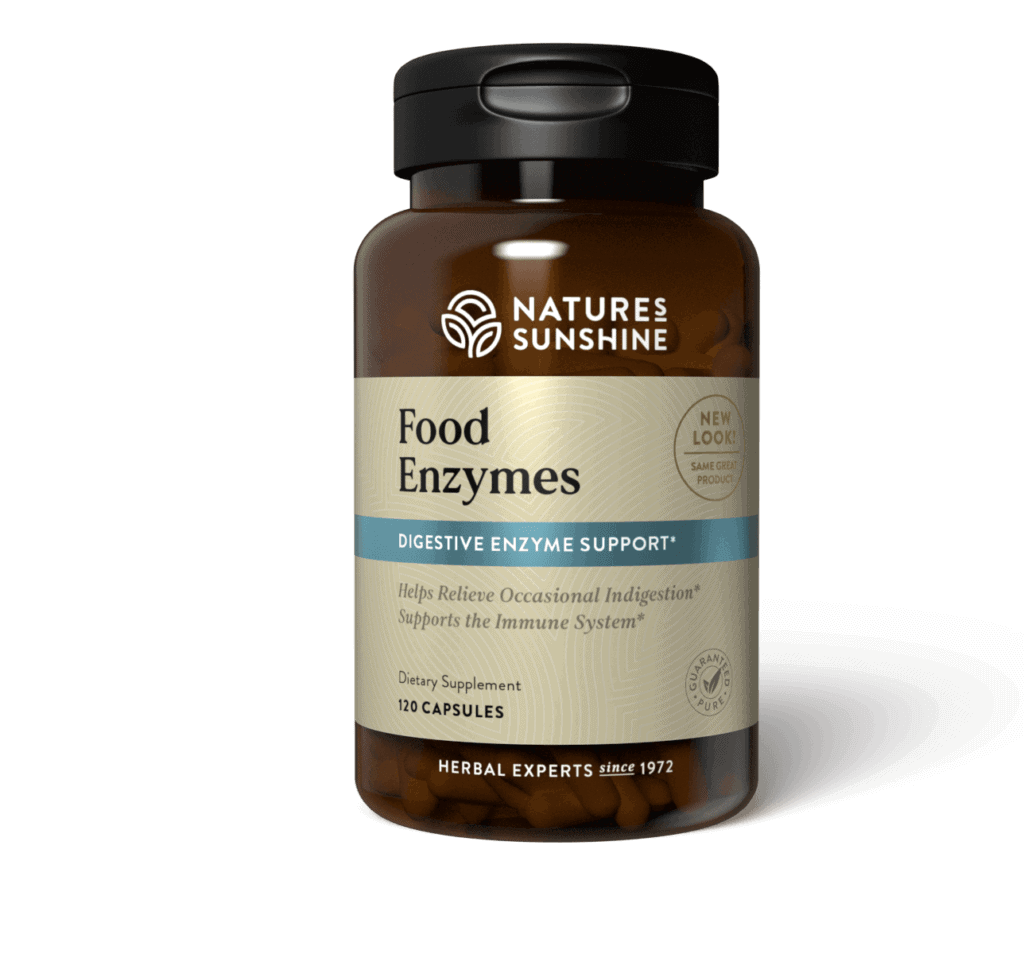
Nature's Sunshine Food Enzymes is formulated to bridge that gap. This comprehensive enzymes food supplement delivers a targeted blend of Pepsin, Pancreatin, alpha Amylase, Papain, Bromelain, bile salts, Betaine HCI, and Lipase—each playing a distinct role in the digestion of different macronutrients. The result is a formula that assists in the digestion of proteins, carbohydrates, and fats while helping to alleviate occasional indigestion.
If you've ever wondered whether an enzymes food supplement might be right for you, our naturopath is available for a free consultation to help you explore your options.
How Food Enzymes Support the Digestive Process
Digestion is a carefully choreographed sequence. It begins in the mouth with salivary Amylase breaking down starches, moves to the stomach where hydrochloric acid activates Pepsin to tackle proteins, and continues in the small intestine where pancreatic enzymes and bile salts finish the job on fats, carbohydrates, and remaining proteins.
Food Enzymes mirrors this natural process by supplying enzymes that work at each stage. Betaine HCI supports the acidic stomach environment needed for Pepsin activation. Pepsin initiates protein digestion in the stomach, while Pancreatin, Bromelain, and Papain continue breaking proteins into absorbable peptides and amino acids in the intestine.
Alpha Amylase catalyzes the hydrolysis of starches into simpler sugars. Lipase and bile salts work together to emulsify and break down dietary fats into free fatty acids and glycerol, a process that also supports absorption of fat-soluble vitamins A, D, E, and K.
By providing these essential enzymes in a single formula, Food Enzymes helps ensure that the food you eat is efficiently broken down and the nutrients are made available for absorption into the bloodstream.
Key Ingredients
- ✓ Free shipping over $75
- ✓ 90-day easy returns
- ✓ Ships within hours
Who Is Food Enzymes For?
Food Enzymes may be a good fit for several groups of people. Because of the prevalence of processed foods, many modern diets lack the enzymes naturally present in raw and fermented foods. Anyone who regularly experiences occasional indigestion, post-meal bloating, or a sense of heaviness after eating may benefit from targeted enzymatic support.
People with concerns about gallbladder health—including those who have had their gallbladder removed—may find the bile salts and Lipase in this formula especially relevant, as these ingredients support fat emulsification and digestion when the body's natural bile release is compromised.
Individuals dealing with food sensitivities related to difficulty digesting certain proteins, starches, or fats may also appreciate the broad-spectrum enzyme coverage this formula provides.
If you're unsure whether a digestive enzyme supplement is appropriate for your situation, we encourage you to take advantage of our free naturopathic consultation. Our naturopath can help you determine if Food Enzymes aligns with your individual needs.
How to Take Food Enzymes
Take 2 capsules with a meal three times daily. Each bottle contains 120 capsules, and the serving size is 1–2 capsules.
For best results, take the capsules at the beginning of or during your meal so the enzymes can work alongside your body's own digestive processes as food enters the stomach and small intestine.
Written by Greg Howlett
Frequently asked questions
What types of food do Food Enzymes help digest?
Food Enzymes is designed to assist in the digestion of all three macronutrients. Pepsin, Bromelain, Papain, and Pancreatin support the breakdown of proteins. Alpha Amylase and Pancreatin help digest carbohydrates and starches. Lipase, bile salts, and Pancreatin support the emulsification and breakdown of dietary fats.
Why does this formula include bile salts?
Bile salts act as natural emulsifiers, breaking fat into tiny droplets so that Lipase can access and hydrolyze triglycerides efficiently. They also support the absorption of fat-soluble vitamins A, D, E, and K. This is especially relevant for individuals with reduced gallbladder function or those who have had their gallbladder removed.
What role does Betaine HCI play in this enzymes food formula?
Betaine HCI provides supplemental hydrochloric acid to help support the stomach's naturally acidic environment. This acidity is necessary for converting inactive pepsinogen into active Pepsin, the primary enzyme responsible for initiating protein digestion in the stomach.
Can I take Food Enzymes if I have food sensitivities?
Food Enzymes includes enzymes like Bromelain, Papain, Amylase, and Lipase that are used in digestive enzyme blends to support the breakdown of proteins, carbohydrates, and fats in individuals who experience food sensitivity symptoms such as bloating and gas. However, we recommend speaking with a healthcare practitioner—or scheduling a free consultation with our naturopath—to determine if this formula is appropriate for your specific situation.
How many capsules are in a bottle, and how long does a bottle last?
Each bottle contains 120 capsules. At the suggested use of 2 capsules with each of three daily meals (6 capsules per day), one bottle provides a 20-day supply.
Where do the enzymes in Food Enzymes come from?
Food Enzymes contains enzymes from both animal and plant sources. Pepsin is derived from gastric tissue, Pancreatin is a multi-enzyme extract from animal pancreas, bile salts are of animal origin, while Bromelain comes from pineapple stem and Papain from papaya latex. Alpha Amylase can be sourced from microbial fermentation using organisms like Aspergillus oryzae, which is Generally Recognized as Safe (GRAS) by the FDA.
Talk to Dr. Shannyn Fowl
Not sure if this is right for you? Book a free, no-pressure consultation for personalized guidance on your health goals.
Book your free consult →About Caring Sunshine
A family-run reseller of premium supplements — free shipping, a 90-day guarantee, and real people who know the products.
Learn more about us →