
Difference Between Turmeric and Curcumin Explained
Understand the difference between Turmeric and Curcumin, how they work together for joint and inflammatory support, and why bioavailability matters.
What Is the Difference Between Turmeric and Curcumin?
If you've ever browsed supplements for joint comfort or inflammatory support, you've likely encountered both "Turmeric" and "Curcumin" on labels — sometimes in the same product. Understanding the difference between Turmeric and Curcumin is key to choosing the right supplement for your needs.
Turmeric is the whole spice — the dried, ground rhizome (underground stem) of Curcuma longa, a plant in the ginger family that has been used for nearly 6,000 years across Ayurvedic, Chinese, and Southeast Asian traditional medicine. Historically, Turmeric was used for digestive disorders, inflammatory conditions, skin infections, wound healing, and respiratory ailments. It contains a complex matrix of over 235 identified phytochemicals, including volatile oils (turmerones), proteins, sugars, and resins.
Curcumin, on the other hand, is a specific compound within Turmeric. It is the principal curcuminoid — a bright yellow polyphenol (specifically a diarylheptanoid) first isolated in 1815 and structurally characterized in 1910. Food-grade Curcumin typically consists of approximately 77% Curcumin (also called Curcumin I or diferuloylmethane), 17% demethoxycurcumin, and 3% bisdemethoxycurcumin. Raw Turmeric root contains only about 2–5% curcuminoids by weight, which is why standardized Turmeric extracts concentrate curcuminoid content — often to 95–98% — for use in supplements.
In short: Turmeric is the whole plant material; Curcumin is its most researched active ingredient. A quality supplement typically provides both the whole Turmeric root and a concentrated Turmeric extract rich in curcuminoids, so you get the full spectrum of Turmeric's traditional compounds alongside meaningful levels of the bioactive Curcumin that research has focused on.
How Turmeric and Curcumin Work Together
Because Turmeric root contains such a small percentage of curcuminoids naturally, simply adding Turmeric powder to your food — while a wonderful culinary tradition — may not deliver enough Curcumin to meaningfully support a healthy inflammatory response. This is one reason why the difference between Turmeric and Curcumin matters so much in a supplement context.
Curcumin has been extensively studied for its capacity to modulate multiple signaling pathways involved in inflammation. Research suggests it may inhibit the NF-κB signaling pathway, suppress COX-2 and LOX enzymes responsible for producing inflammatory prostaglandins and leukotrienes, and reduce production of inflammatory cytokines such as TNF-α and IL-1β. It also activates the Keap1-Nrf2/ARE transcriptional pathway, which upregulates the body's own antioxidant defense enzymes.
However, Curcumin faces a well-documented challenge: poor oral bioavailability. Its low water solubility, instability at alkaline pH, and rapid metabolism mean that very little Curcumin reaches systemic circulation after oral dosing. One animal study showed that oral absorption was only about 1% compared to intravenous administration. This bioavailability gap is widely cited as the primary factor limiting Curcumin's clinical translation.
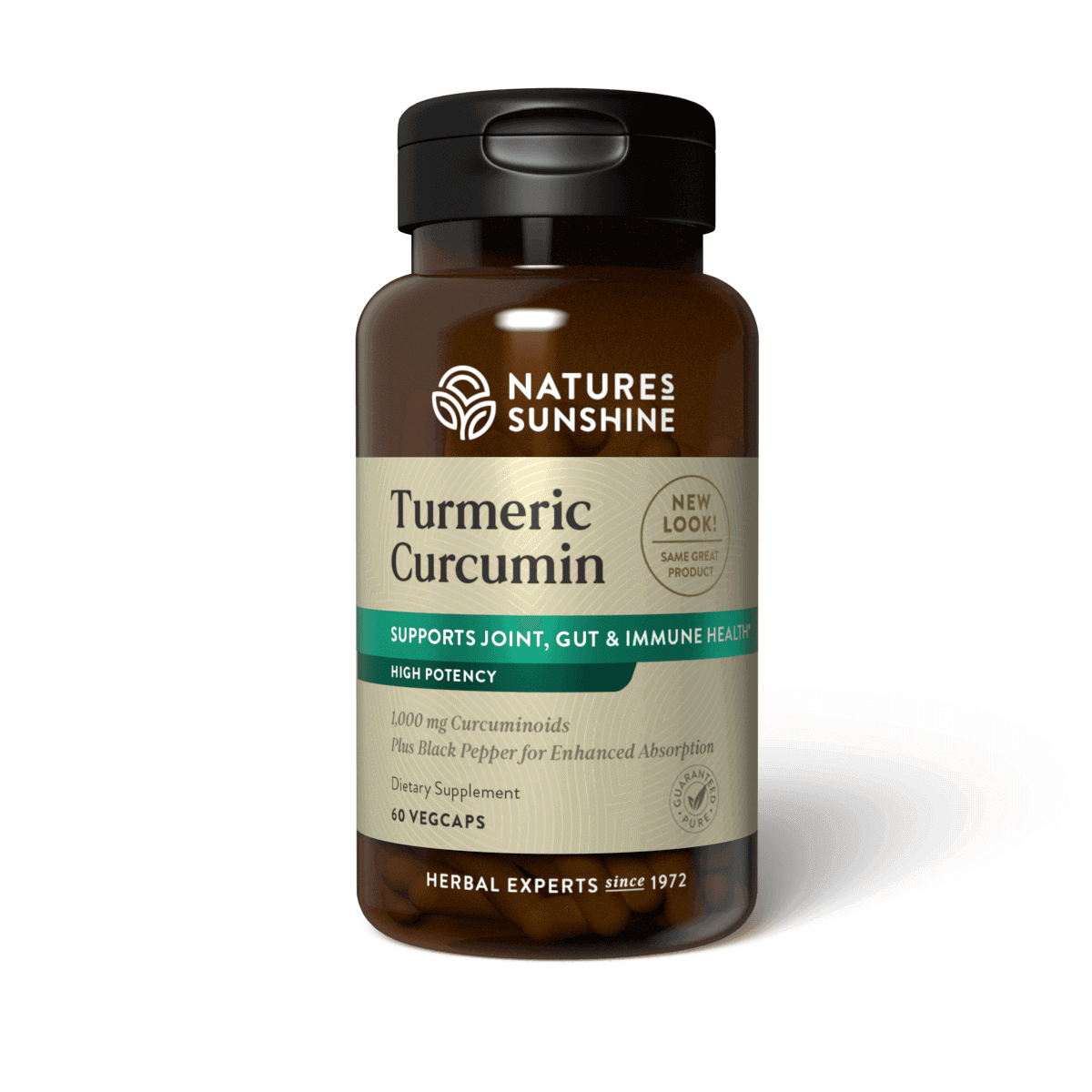
This is where a thoughtful formulation makes a real difference. Nature's Sunshine Turmeric Curcumin delivers both Turmeric root and higher levels of antioxidant-rich Turmeric extract, providing 1,100 mg of tumeric extract and 1,000 mg of curcuminoids per serving. It also includes Black pepper extract (from Piper nigrum), which contains piperine — an alkaloid shown in human studies to increase Curcumin bioavailability by approximately 2,000% by inhibiting the glucuronidation enzymes that rapidly clear Curcumin from the body.
Turmeric and Curcumin for Joints, Inflammation, and Antioxidant Defense
The area with the most extensive human clinical evidence for Turmeric and Curcumin is musculoskeletal health — particularly knee osteoarthritis. Multiple systematic reviews and meta-analyses of randomized controlled trials (RCTs) have found that Turmeric and Curcumin preparations may significantly reduce joint pain, stiffness, and improve physical function compared to placebo. A 2025 network meta-analysis of 17 studies found that all Turmeric preparations significantly reduced WOMAC pain scores. A separate 2022 meta-analysis of 29 RCTs involving 2,396 participants across five types of arthritis also confirmed these findings, and one meta-analysis of 16 RCTs found Curcumin's treatment efficacy comparable to NSAIDs. However, the certainty of this evidence is consistently rated low to very low due to small sample sizes, methodological variability, and frequent industry involvement in the studies.
For chronic inflammation more broadly, research suggests Curcumin may reduce key inflammatory biomarkers. A 2025 systematic review and meta-analysis of RCTs evaluating Curcumin in metabolic syndrome found it significantly lowered C-reactive protein (CRP), TNF-α, and IL-6. A 2024 review of 54 meta-analyses noted that CRP reductions were observed in seven of ten meta-analyses examined. Still, a 2019 systematic review of 19 RCTs found no statistically significant reduction in circulating inflammatory markers, reflecting ongoing scientific debate. Poor oral bioavailability remains the primary factor limiting consistent clinical results.
As an antioxidant, Curcumin has demonstrated activity in multiple human RCTs, measurably raising total antioxidant capacity (TAC), superoxide dismutase (SOD), catalase, and glutathione, while lowering the lipid peroxidation marker malondialdehyde (MDA). The primary mechanism is activation of the Nrf2-Keap1 signaling pathway.
Research also suggests potential benefits for brain health, gut health, and immune function. In one study, 1,500 mg/day of a Curcumin formulation for 12 months stabilized cognitive function in older adults compared to placebo. A 2025 meta-analysis of 13 RCTs found Curcumin showed significant efficacy in achieving clinical remission in ulcerative colitis patients. Multiple meta-analyses have reported improvements in glycemic and lipid markers in people with metabolic syndrome and type 2 diabetes. These areas show promise, though the totality of clinical evidence remains early-stage in many cases.
Key ingredients
- ✓ Free shipping over $75
- ✓ 90-day easy returns
- ✓ Ships within hours
Who May Benefit from a Turmeric Curcumin Supplement
Now that you understand the difference between Turmeric and Curcumin, you might be wondering whether a supplement like Nature's Sunshine Turmeric Curcumin is right for you. This formula is designed for adults who want to support:
- Joint comfort and flexibility — particularly those dealing with occasional stiffness or age-related joint concerns
- A healthy inflammatory response — research suggests Curcumin may help modulate key inflammatory pathways
- Antioxidant defense — Curcumin has been shown to raise endogenous antioxidant enzymes in clinical trials
- Overall wellness — with research exploring benefits for brain health, gut health, skin health, and immune function
This product is non-GMO, comes in VegCaps, and requires no membership or autoship to purchase. If you're unsure whether Turmeric Curcumin is appropriate for your individual health needs, our naturopath is available for a free consultation — a service we've offered since our family started this store in 1999.
One serving of this formula is equivalent to 32,000 mg of whole root Turmeric, and the product is clinically studied for superior absorption and effectiveness. The inclusion of Black pepper extract is specifically designed to address Curcumin's well-documented bioavailability challenge.
How to Take Nature's Sunshine Turmeric Curcumin
Take 2 VegCaps daily. Each bottle contains 60 caps, providing a 30-day supply at the recommended serving size of 2 capsules.
As with any dietary supplement, it's worth noting some important safety considerations from the research literature. Curcumin is reported to be safe at doses up to 6 grams per day for 4 to 7 weeks in clinical trials, and the FDA has granted Curcumin GRAS status as a food ingredient. Gastrointestinal effects — including occasional nausea, diarrhea, or stomach upset — are the most commonly reported side effects in clinical trials, particularly at higher doses.
Because piperine (from Black pepper extract) inhibits certain drug-metabolizing enzymes including CYP3A4 and P-glycoprotein, individuals taking prescription medications — particularly blood thinners, carbamazepine, or other CYP3A4 substrates — should consult a healthcare provider before use. If you have questions about potential interactions with your current medications, our naturopath is happy to help with a free consultation.
Written by Greg Howlett
Frequently asked questions
What is the main difference between Turmeric and Curcumin?
Turmeric is the whole dried rhizome (root) of the Curcuma longa plant — a complex spice containing over 235 identified phytochemicals including volatile oils, proteins, and resins. Curcumin is a specific polyphenol compound within Turmeric and is the most researched bioactive curcuminoid. Raw Turmeric contains only about 2–5% curcuminoids by weight, which is why supplements use standardized extracts to concentrate Curcumin levels. Nature's Sunshine Turmeric Curcumin provides both Turmeric root and higher levels of the concentrated Turmeric extract, with 1,000 mg of curcuminoids per serving.
Why is Black pepper included in a Turmeric Curcumin supplement?
Curcumin has notoriously poor oral bioavailability — low water solubility, instability at alkaline pH, and rapid metabolism mean very little reaches systemic circulation on its own. Piperine, the active alkaloid in Black pepper, has been shown in human studies to increase Curcumin bioavailability by approximately 2,000% by inhibiting the glucuronidation enzymes and CYP3A4 that normally clear Curcumin from the body. Black pepper extract in this formula is specifically included to address this well-documented absorption challenge.
What does research say about Curcumin and joint health?
Knee osteoarthritis is the most extensively researched indication for Curcumin in human clinical trials. Multiple systematic reviews and meta-analyses of RCTs have found that Turmeric and Curcumin preparations may significantly reduce pain, stiffness, and improve physical function compared to placebo. Some meta-analyses have found Curcumin's efficacy comparable to NSAIDs. However, the certainty of evidence is consistently rated low to very low due to small sample sizes, high risk of bias, and methodological heterogeneity across studies.
Can I get enough Curcumin from cooking with Turmeric?
While adding Turmeric to food is a wonderful culinary tradition used for thousands of years, Turmeric powder contains only about 2–5% curcuminoids by weight. One serving of Nature's Sunshine Turmeric Curcumin is equivalent to 32,000 mg of whole root Turmeric, providing 1,000 mg of curcuminoids — a concentration difficult to achieve through diet alone. The addition of Black pepper extract further enhances absorption beyond what you'd typically get from a meal.
Are there any safety concerns with Turmeric Curcumin supplements?
Curcumin is reported to be safe at doses up to 6 grams per day for 4 to 7 weeks in clinical trials, and the FDA has granted it GRAS status. The most common side effects are mild gastrointestinal issues such as nausea or diarrhea, particularly at higher doses. However, because piperine inhibits certain drug-metabolizing enzymes (CYP3A4, P-glycoprotein), individuals taking prescription medications should consult a healthcare provider before use. There is also a rare risk of liver injury reported with bioavailability-enhanced Turmeric supplements, particularly at higher doses. Our naturopath is available for a free consultation if you have questions about interactions with your current medications.
How is this product different from other Turmeric supplements?
While most Turmeric products deliver high levels of basic Turmeric root with low levels of concentrated Turmeric extract, Nature's Sunshine Turmeric Curcumin provides both Turmeric root and higher levels of the antioxidant-rich Turmeric extract, with 1,100 mg of tumeric extract and 1,000 mg of curcuminoids per serving. The formula is non-GMO, clinically studied for superior absorption and effectiveness, and enhanced with Black pepper extract to improve bioavailability. It comes in VegCaps with no autoship or membership required.
Talk to Dr. Shannyn Fowl
Not sure if this is right for you? Book a free, no-pressure consultation for personalized guidance on your health goals.
Book your free consult →About Caring Sunshine
A family-run reseller of premium supplements — free shipping, a 90-day guarantee, and real people who know the products.
Learn more about us →