
CoQ10 Ubiquinone 100mg Softgel – Heart & Energy Support
Discover how a CoQ10 ubiquinone 100mg softgel supports heart health, cellular energy, and mitochondrial function. Learn about ingredients, dosing, and FAQs.
What Is a CoQ10 Ubiquinone 100mg Softgel?
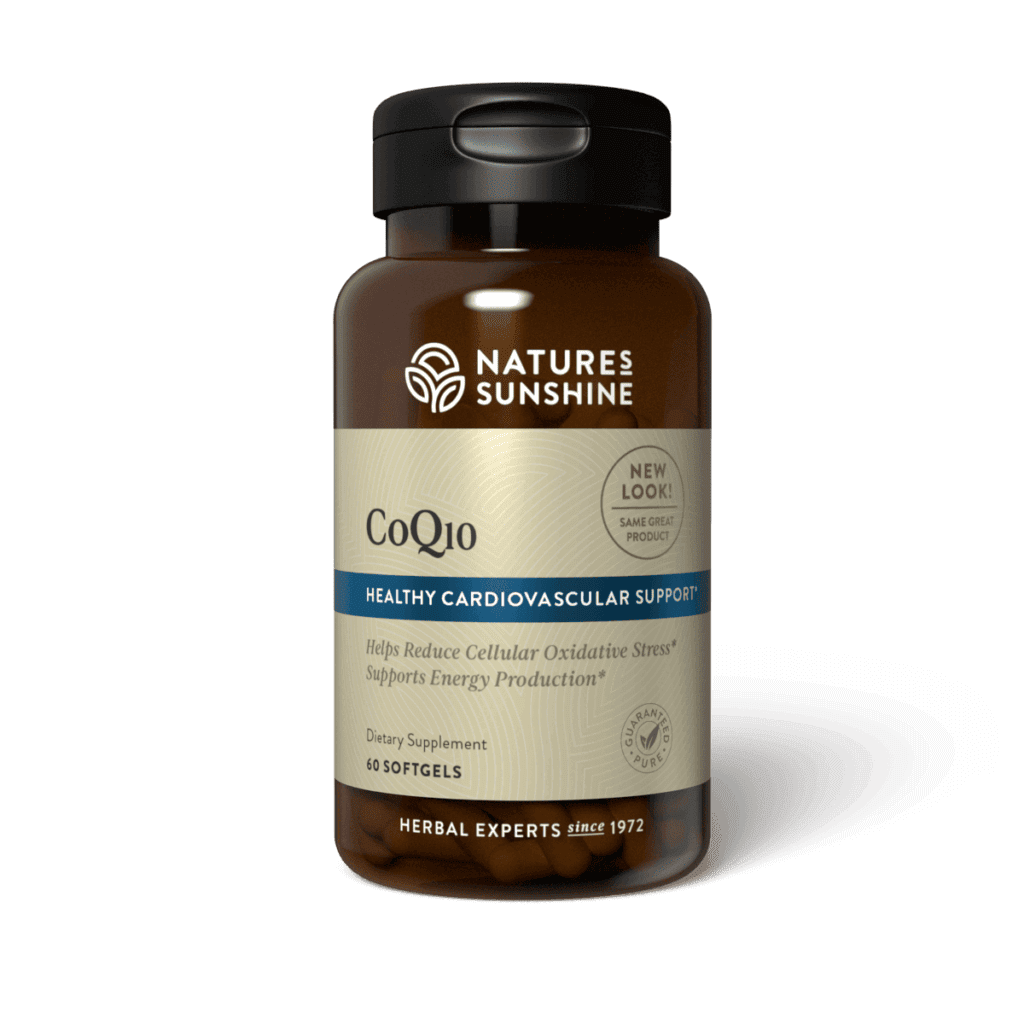
Coenzyme Q10 — commonly called CoQ10 or ubiquinone — is a fat-soluble, vitamin-like molecule naturally present in every cell membrane in your body. First isolated from beef-heart mitochondria in 1957, it earned the name ubiquinone because of its truly ubiquitous presence throughout living tissues. This CoQ10 ubiquinone 100mg softgel from Nature's Sunshine delivers a concentrated dose of this essential nutrient in a lipid-based softgel designed for improved absorption.
CoQ10 plays a dual role that makes it remarkably important. First, it serves as the only non-protein component of the mitochondrial electron transport chain, acting as the central rate-limiting factor for cellular energy (ATP) production. Second, it functions as a powerful lipid-soluble antioxidant, protecting cell membranes, proteins, lipids, and DNA from free-radical damage. In many membranes, CoQ10 concentrations are 3 to 30 times higher than tocopherol (vitamin E) content.
The body's own CoQ10 production peaks around age 25, then steadily declines — with heart tissue levels dropping more than 30% by age 40 and over 50% by age 80. Certain medications, particularly statins, further deplete CoQ10 levels. This natural decline makes supplementation increasingly relevant as we age, and a CoQ10 ubiquinone 100mg softgel offers a practical way to help bridge the gap.
Energy Production, Antioxidant Defense, and Cardiovascular Support
Cellular energy production. Every pair of electrons processed by the mitochondrial electron transport chain must interact with CoQ10 before ATP can be generated. Without adequate CoQ10, this energy-producing process slows. The highest concentrations of CoQ10 are found in organs with the greatest metabolic demands — the heart (114 μg/g tissue), kidneys (66.5 μg/g), and liver (54.9 μg/g) — underscoring how vital this molecule is to the organs that work hardest.
Antioxidant protection. CoQ10 is one of the most significant lipid antioxidants in the body. It sits within cell membranes in close proximity to unsaturated lipid chains, scavenging free radicals at their source. It also helps prevent oxidation of blood lipoproteins that transport cholesterol, providing an important layer of protection for the cardiovascular system.
Cardiovascular mechanisms. Research suggests CoQ10 may support blood vessel health by preserving nitric oxide, improving blood flow, and mitigating vascular oxidative stress. It may also help maintain blood pressure levels already within the normal range by increasing production of superoxide dismutase, an enzyme that counteracts oxidative stress in arterial walls.
CoQ10 continuously cycles between its oxidized form (ubiquinone) and its reduced form (ubiquinol). Approximately 95% of circulating CoQ10 in healthy adults is already in the ubiquinol form regardless of which form is supplemented, because the body efficiently converts between the two states as needed.
Key Ingredients
- ✓ Free shipping over $75
- ✓ 90-day easy returns
- ✓ Ships within hours
Who Should Consider a CoQ10 Ubiquinone 100mg Softgel?
Adults over 40. Because the body's CoQ10 production begins declining after age 25 — with heart tissue levels dropping over 30% by age 40 and 50% by age 80 — supplementation becomes increasingly relevant for maintaining cellular energy and antioxidant defense as we age. Research has linked age-related CoQ10 reduction to cardiovascular concerns, type 2 diabetes, and metabolic challenges.
Those focused on cardiovascular wellness. This CoQ10 ubiquinone 100mg softgel is formulated to support a healthy cardiovascular system. Research suggests CoQ10 may support healthy cardiac, kidney, liver, and pancreas function — the organs with the highest metabolic demands and greatest reliance on CoQ10.
People taking statins. Statin medications inhibit HMG-CoA reductase, the same enzyme pathway involved in the body's production of CoQ10. Studies show statins can decrease serum CoQ10 levels, which may contribute to muscle-related side effects. Some meta-analyses suggest CoQ10 supplementation may help reduce statin-associated muscle symptoms, though evidence is mixed.
Anyone seeking energy and vitality support. Because CoQ10 is the central rate-limiting factor for ATP production, individuals experiencing fatigue or low energy may benefit. A systematic review and meta-analysis of 13 RCTs found that CoQ10 supplementation significantly reduced fatigue scores compared to placebo.
If you're unsure whether a CoQ10 ubiquinone 100mg softgel is right for your needs, our naturopath is available for a free consultation to help you evaluate your personal wellness goals.
How to Take This CoQ10 Softgel
Take 1 softgel with a meal, twice daily.
Each bottle contains 60 softgels. Because CoQ10 is a fat-soluble molecule, taking it alongside a meal that contains dietary fat may support absorption. Research confirms that CoQ10 absorption is slow but is improved in the presence of fatty meals, with peak plasma concentrations typically occurring 5 to 10 hours after oral administration.
CoQ10 is widely regarded as very well tolerated. Toxicity is considered unlikely at daily intakes up to 1,200 mg, although typical supplementation dosages range from 100 to 300 mg per day. The most commonly reported side effects, when they occur at all, are mild gastrointestinal symptoms such as nausea or stomach upset.
Important note: If you are taking warfarin (an anticoagulant) or blood-pressure-lowering medications, speak with a healthcare provider before supplementing with CoQ10, as it may interact with these drugs. CoQ10 is chemically similar to vitamin K and may theoretically reduce the effect of warfarin. It may also have additive effects with antihypertensive medications due to its mild blood-pressure-lowering properties. There is insufficient clinical research to establish safety during pregnancy.
Written by Greg Howlett
Frequently asked questions
What is the difference between ubiquinone and ubiquinol?
Ubiquinone is the oxidized form of CoQ10 and ubiquinol is the reduced form. Structurally, the only difference is two hydroxyl groups on the quinone ring head — ubiquinol carries them, ubiquinone does not. The body continuously cycles between the two states: ubiquinol donates electrons during its antioxidant function and becomes ubiquinone, then accepts electrons to return to ubiquinol. Approximately 95% of circulating CoQ10 in healthy adults is already in the ubiquinol form regardless of which form is supplemented.
Why does CoQ10 decline with age?
Optimal production of CoQ10 occurs around age 25, after which it steadily declines. By age 40, heart tissue levels may drop more than 30%, and by age 80, greater than 50% decreases have been observed. This reduction can aggravate mitochondrial dysfunction and has been associated with cardiovascular disease, type 2 diabetes, and metabolic challenges. Certain medications, particularly statins, further deplete CoQ10 levels.
Should I take CoQ10 with food?
Yes. The directions for this product are to take 1 softgel with a meal, twice daily. CoQ10 is a fat-soluble molecule, and research confirms that absorption is slow but significantly improved in the presence of fatty meals. The softgel formulation with extra virgin Olive oil is already designed to support bioavailability.
Can CoQ10 interact with medications?
CoQ10 is chemically similar to vitamin K and may theoretically reduce the effectiveness of warfarin (an anticoagulant). Patients on warfarin should have their dose monitored more closely if supplementing with CoQ10. Additionally, CoQ10's mild blood-pressure-lowering effect may produce additive effects with antihypertensive drugs. Beta-blockers and certain oral hypoglycemic agents (such as glyburide) may also decrease endogenous CoQ10 levels. Always consult a healthcare professional before combining CoQ10 with prescription medications.
What foods contain CoQ10 naturally?
CoQ10 is naturally present in organ meats (heart, liver, kidney), beef, sardines, mackerel, chicken, pork, and soy oil. Plant sources include avocado, broccoli, spinach, peanuts, pistachios, and dates, though plant foods generally contain less CoQ10 than animal foods. Because CoQ10 is heat-sensitive, cooking reduces levels. Total dietary CoQ10 intake from food averages only about 5 mg per day.
Is CoQ10 safe for long-term use?
CoQ10 is very well tolerated with minimal adverse effects. Toxicity is considered unlikely at daily intakes up to 1,200 mg, although typical supplementation ranges from 100 to 300 mg per day. In one study, CoQ10 at 2,400 mg per day for 5 years was reported safe and well tolerated. The most commonly reported side effects are mild gastrointestinal symptoms such as nausea or stomach upset. There is insufficient research to establish safety during pregnancy.
Talk to Dr. Shannyn Fowl
Not sure if this is right for you? Book a free, no-pressure consultation for personalized guidance on your health goals.
Book your free consult →About Caring Sunshine
A family-run reseller of premium supplements — free shipping, a 90-day guarantee, and real people who know the products.
Learn more about us →