
CoQ10 100mg – Heart Health & Cellular Energy Support
Discover how CoQ10 100mg supports heart health, cellular energy production, and mitochondrial function. Learn about benefits, ingredients, and directions.
CoQ10 100mg: A Vital Molecule for Heart and Cellular Health
CoQ10 100mg delivers a potent dose of Coenzyme Q10 — a fat-soluble, vitamin-like substance found in virtually every cell in the body. Also known as ubiquinone, CoQ10 was first isolated from the mitochondria of beef heart in 1957, and since then, decades of research have underscored its central role in energy production, antioxidant defense, and cardiovascular function.
CoQ10 is the only non-protein component of the electron transport chain (ETC), the cellular machinery responsible for producing adenosine triphosphate (ATP) — your body's primary energy currency. Every pair of electrons processed by the ETC must interact with CoQ10, making it a central, rate-limiting factor for mitochondrial energy output. Without adequate CoQ10, cells simply cannot generate energy efficiently.
Beyond its bioenergetic role, CoQ10 is one of the most significant lipid antioxidants in the body. It helps prevent the generation of free radicals and protects proteins, lipids, and DNA from oxidative modifications. In cell membranes, it works as an antioxidant backup for vitamin E, and its concentration in many membranes is 3 to 30 times greater than tocopherol content.
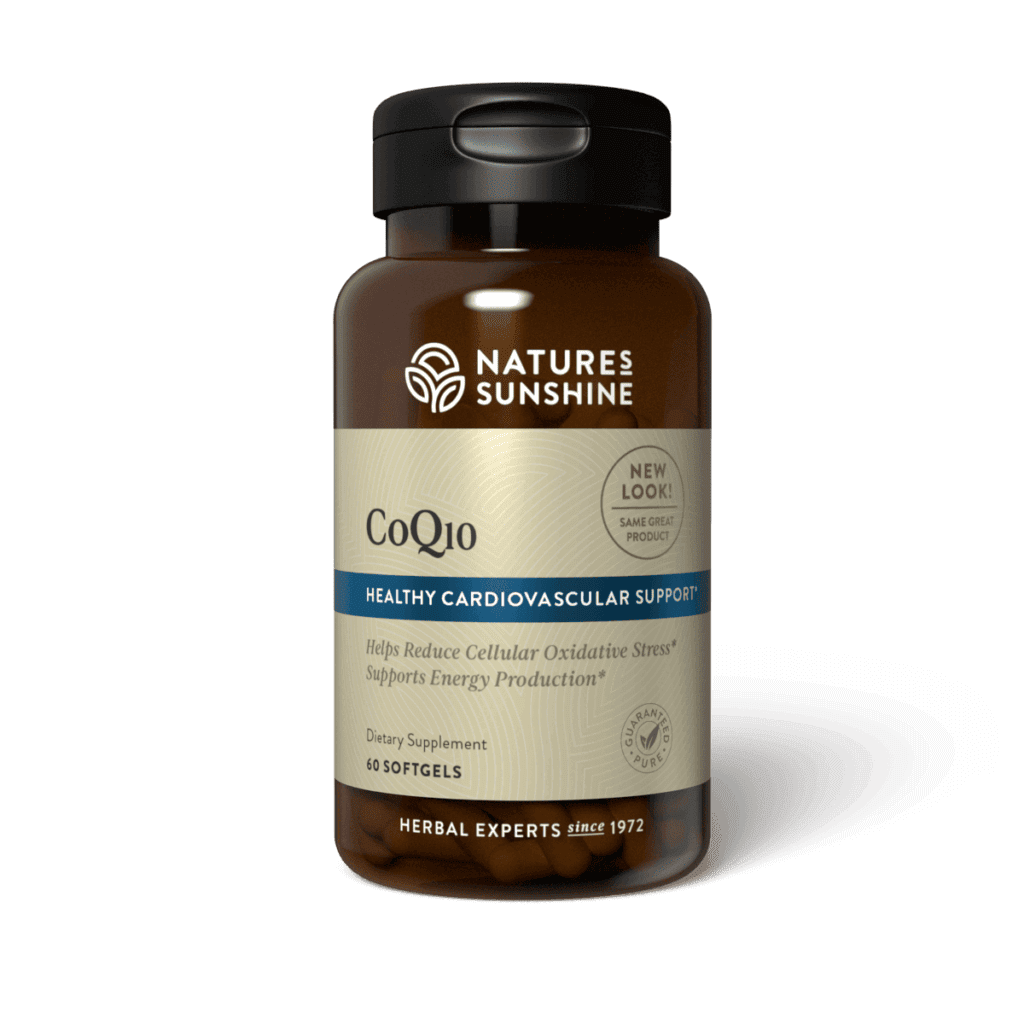
This Nature's Sunshine formula provides 100 mg of CoQ10 per softgel, formulated with extra virgin Olive oil and sunflower Lecithin to support absorption of this naturally fat-soluble nutrient.
Why CoQ10 Levels Decline — and Why Supplementation Matters
Your body produces CoQ10 on its own, with peak production occurring around age 25. After that, levels steadily decline. By age 40, heart tissue may show a decrease of more than 30%, and by age 80, that decline can reach 50% or more. The organs that need CoQ10 most — the heart, kidneys, and liver — are among the hardest hit by this natural reduction.
This age-related decline can aggravate mitochondrial dysfunction and accelerate the progression of age-associated conditions. Research has linked declining CoQ10 levels with cardiovascular disease, type 2 diabetes, and metabolic dysfunction.
CoQ10 levels may also be depleted by certain medications. Statin drugs, widely prescribed for cholesterol management, inhibit the enzyme HMG-CoA reductase — the same pathway used for CoQ10 biosynthesis. Beta-blockers and certain oral hypoglycemic agents such as glyburide and tolazamide may also reduce CoQ10 levels. For individuals taking these medications, supplementation with CoQ10 100mg may be especially relevant.
Because total dietary CoQ10 intake is only about 5 mg per day from food sources like organ meats, sardines, mackerel, and peanuts — and because CoQ10 is heat-sensitive and vulnerable to cooking — supplementation offers a practical way to maintain adequate levels, particularly as we age.
What the Research Says About CoQ10
Heart Health. CoQ10 has substantial clinical evidence supporting its role in cardiovascular function. As an essential cofactor for mitochondrial ATP production and a potent antioxidant, CoQ10 levels are measurably depleted in heart failure patients and correlate inversely with disease severity. The landmark Q-SYMBIO randomized controlled trial demonstrated significant reductions in cardiovascular mortality (9% in the CoQ10 group versus 16% in the control group) and major adverse cardiovascular events (15% versus 26%) over 106 weeks. According to the 2022 ACC/AHA/HFSA guidelines, supplementation with CoQ10 effectively reduced vascular mortality, all-cause mortality, and hospital stays for heart failure at 2 years.
Blood Pressure. Research suggests CoQ10 may help maintain blood pressure levels already within normal range. A meta-analysis of 12 clinical trials found reductions in both systolic and diastolic blood pressure. Proposed mechanisms include enhanced production of superoxide dismutase, reduced lipid peroxidation, improved blood flow, and preservation of nitric oxide.
Cellular Energy. Clinical and in vitro studies confirm CoQ10's role in improving mitochondrial respiration, transmembrane potential, and ATP output. A systematic review and meta-analysis of 13 RCTs (n=1,126) found CoQ10 supplementation significantly reduced fatigue scores versus placebo, making it especially relevant for older adults and individuals with chronic fatigue.
Statin-Associated Muscle Symptoms. The clinical evidence for CoQ10 in statin-related muscle discomfort is mixed but encouraging. A 2025 meta-analysis of seven RCTs found a significant overall reduction in statin-associated muscle symptoms. An earlier meta-analysis of 12 RCTs also reported improvements in muscle pain, weakness, cramping, and tiredness. However, some analyses did not find significant benefit, and larger trials are needed for firm conclusions.
Migraine. Several randomized controlled trials have evaluated CoQ10 for migraine prevention, reporting reductions in attack frequency, duration, and severity of nausea. The evidence is considered preliminary to moderate but "possibly effective."
Heart Rhythm. A meta-analysis of 8 RCTs found that cardiac surgery patients treated with CoQ10 were significantly less likely to develop ventricular arrhythmias. Proposed mechanisms include improved cellular energy production and membrane stabilization.
Who May Benefit from CoQ10 100mg
CoQ10 100mg may be a valuable addition for a wide range of individuals. Adults over 40, whose natural CoQ10 production is already measurably declining, may find supplementation particularly supportive for maintaining heart health, energy levels, and antioxidant defenses.
Those taking statin medications or beta-blockers may especially benefit, since these drugs are known to reduce endogenous CoQ10 levels. Research suggests that supplementing with CoQ10 may help address the muscle-related discomfort sometimes associated with statin therapy.
Individuals seeking to support overall cardiovascular function — including healthy blood pressure maintenance, arterial health, and cardiac energy metabolism — may also find this supplement helpful. CoQ10 supports a healthy cardiovascular system, enhances energy production, prevents lipids from oxidizing, and helps maintain healthy cardiac, kidney, liver, and pancreas function.
If you're unsure whether CoQ10 100mg is right for your individual health picture, our naturopath is available for a free consultation. We're always happy to help you think through which supplements make sense for your unique needs.
Key Ingredients
- ✓ Free shipping over $75
- ✓ 90-day easy returns
- ✓ Ships within hours
How to Take CoQ10 100mg
Take 1 softgel with a meal, twice daily.
CoQ10 is a fat-soluble nutrient, so taking it with a meal that contains some dietary fat may support absorption. This formula contains 60 softgels per bottle, providing a 30-day supply at the recommended serving.
Written by Greg Howlett
Frequently asked questions
What does CoQ10 100mg do in the body?
CoQ10 plays a key role in creating energy (ATP) inside the body's cells by serving as the central electron carrier in the mitochondrial electron transport chain. It also functions as a potent lipid antioxidant, helping prevent lipids from oxidizing and protecting cell membranes from free radical damage. Research supports its role in maintaining cardiovascular function, supporting healthy blood pressure levels already within normal range, and promoting the healthy function of the heart, kidneys, liver, and pancreas.
Why do CoQ10 levels decline with age?
Optimal CoQ10 production occurs around age 25, after which levels steadily decrease. By age 40, heart tissue may show a decrease of more than 30%, and by age 80, levels can decline by 50% or more. This age-related decline can impair mitochondrial function and reduce antioxidant defenses. Certain medications, particularly statins, beta-blockers, and some oral hypoglycemic agents, can further reduce CoQ10 levels.
Can I take CoQ10 100mg if I'm on a statin medication?
Statins inhibit HMG-CoA reductase, the rate-limiting enzyme in cholesterol synthesis, which is also part of the CoQ10 biosynthesis pathway. This can decrease serum CoQ10 levels. Some meta-analyses suggest CoQ10 supplementation may help reduce statin-associated muscle symptoms such as pain, weakness, and cramping, though the evidence is mixed and more research is needed. If you take warfarin, blood pressure medications, or other prescriptions, speak with a healthcare provider before starting CoQ10, as it may interact with these drugs. Our naturopath is also available for a free consultation to discuss your individual situation.
What is the difference between ubiquinone and ubiquinol?
Ubiquinone is the oxidized form of CoQ10, and ubiquinol is the reduced form. The body continuously cycles between the two states: ubiquinol donates electrons during its antioxidant function and becomes ubiquinone, then accepts electrons to return to ubiquinol. Approximately 95% of circulating CoQ10 in healthy adults is already in the ubiquinol form regardless of which form is supplemented. The bioavailability of a given CoQ10 supplement depends on the lipid carrier and formulation — this product is formulated in extra virgin Olive oil to support absorption.
Are there any side effects or safety concerns with CoQ10?
CoQ10 is widely available, very well tolerated, and has minimal adverse effects. Toxicity is unlikely up to 1,200 mg per day, though typical supplementation doses are 100 to 300 mg daily. When side effects do occur, they are generally mild gastrointestinal symptoms such as nausea or stomach upset. However, CoQ10 is chemically similar to vitamin K and may theoretically reduce the effect of warfarin; patients on warfarin should have their dose monitored more closely if supplementing. CoQ10 may also enhance the effects of blood pressure-lowering medications. There is insufficient clinical research to establish safety during pregnancy.
Why does this CoQ10 formula include Olive oil and sunflower Lecithin?
CoQ10 is a fat-soluble nutrient with a high molecular weight, so its absorption is naturally slow but improves in the presence of fats. Extra virgin Olive oil serves as the lipid carrier, supporting bioavailability while providing its own cardiovascular-supportive polyphenols and oleic acid. Sunflower Lecithin acts as a natural emulsifier, helping disperse fat-soluble CoQ10 for more efficient absorption. Sunflower Lecithin also avoids common soy allergen concerns, as it is extracted through cold pressing rather than chemical solvents.
Talk to Dr. Shannyn Fowl
Not sure if this is right for you? Book a free, no-pressure consultation for personalized guidance on your health goals.
Book your free consult →About Caring Sunshine
A family-run reseller of premium supplements — free shipping, a 90-day guarantee, and real people who know the products.
Learn more about us →