
What Is Vitamin C? Benefits, Sources & How It Works
Discover what Vitamin C is, why it matters for immune health and antioxidant defense, and how time-release supplementation supports your body throughout the day.
What Is Vitamin C?
If you've ever wondered "what is Vitamin C," you're asking about one of the most essential and most studied nutrients in human biology. Vitamin C — also known as ascorbic acid — is a water-soluble vitamin that the body cannot produce on its own due to a genetic mutation in the L-gulonolactone oxidase (GLO) gene. That means every milligram must come from food or supplementation.
Vitamin C is a potent antioxidant and a cofactor for many enzymes involved in biological functions including immune system support, collagen biosynthesis, carnitine and catecholamine metabolism, and dietary iron absorption. It exists in two main forms: ascorbic acid (AA) and dehydroascorbic acid (DHA), with the L-enantiomer (L-ascorbic acid) being the biologically active form in humans.
The best dietary sources of Vitamin C are fruits and vegetables — especially citrus fruits, red and green peppers, kiwifruit, broccoli, and strawberries. Because Vitamin C is water-soluble and heat-sensitive, up to 50 percent can be lost through cooking, so eating produce raw or lightly steamed helps maximize intake.
How Vitamin C Supports Your Body
Understanding what is Vitamin C really means understanding how deeply it is woven into your body's daily operations. As an antioxidant, Vitamin C scavenges reactive oxygen species (ROS) in aqueous environments and may regenerate other antioxidants such as vitamin E. Research suggests it helps diminish lipid peroxidation and reduce biomarkers of oxidative damage.
Vitamin C is also essential for collagen biosynthesis — the protein required for wound healing, skin integrity, and the structural framework of blood vessels, bones, and cartilage. Without adequate Vitamin C, prolyl and lysyl hydroxylase enzymes cannot properly hydroxylate collagen precursors, which is the biochemical basis of scurvy's connective tissue breakdown.
On the immune front, research shows Vitamin C contributes to both innate and adaptive immunity. It supports epithelial barrier function against pathogens, enhances phagocytosis, promotes the differentiation and proliferation of B cells and T cells, normalizes cytokine production, and decreases histamine levels. Plasma concentrations of Vitamin C decline rapidly during viral infections, underscoring its active role in immune defense.
Vitamin C also enhances iron absorption from plant-based foods by reducing ferric iron (Fe³⁺) to the more absorbable ferrous form (Fe²⁺) in the gastrointestinal tract — a clinically relevant function for anyone relying on non-heme iron sources.
If you have questions about how Vitamin C fits into your own wellness routine, our naturopath is available for a free consultation.
What Does the Science Say About Vitamin C?
The scientific literature on Vitamin C is vast. Here are some of the key areas where evidence is strongest:
Common Cold
A Cochrane review of 30 placebo-controlled trials involving over 11,000 participants found that regular Vitamin C supplementation does not reduce common cold incidence in the general population. However, it may modestly reduce cold duration — by about 8% in adults and 14% in children — and severity. The benefit appears more pronounced in people under severe physical stress, such as marathon runners and military personnel.
Immune Function
More than half a century of research has shown Vitamin C to be a crucial player in immune cell function, including antimicrobial and natural killer cell activities, lymphocyte proliferation, and chemotaxis. Mechanistic evidence is well-established; however, human clinical evidence demonstrating that supplementation above adequate intake meaningfully improves immunity in non-deficient individuals is limited.
Antioxidant Defense
Multiple human trials demonstrate that Vitamin C supplementation raises antioxidant capacity and reduces biomarkers of oxidative damage, though clinical endpoints such as disease prevention show more mixed results. The evidence base is substantial, mechanistically well-characterized, and supported by peer-reviewed systematic reviews.
Age-Related Macular Degeneration (AMD)
The AREDS and AREDS2 studies demonstrated that a supplement formula including 500 mg Vitamin C alongside vitamin E, zinc, and copper may reduce progression to advanced AMD by 25% over five years in some patients. This is one of the few nutritional supplements with demonstrated benefit in eye disease, though the effect cannot be attributed to Vitamin C alone.
About This Vitamin C Time Release Tablet
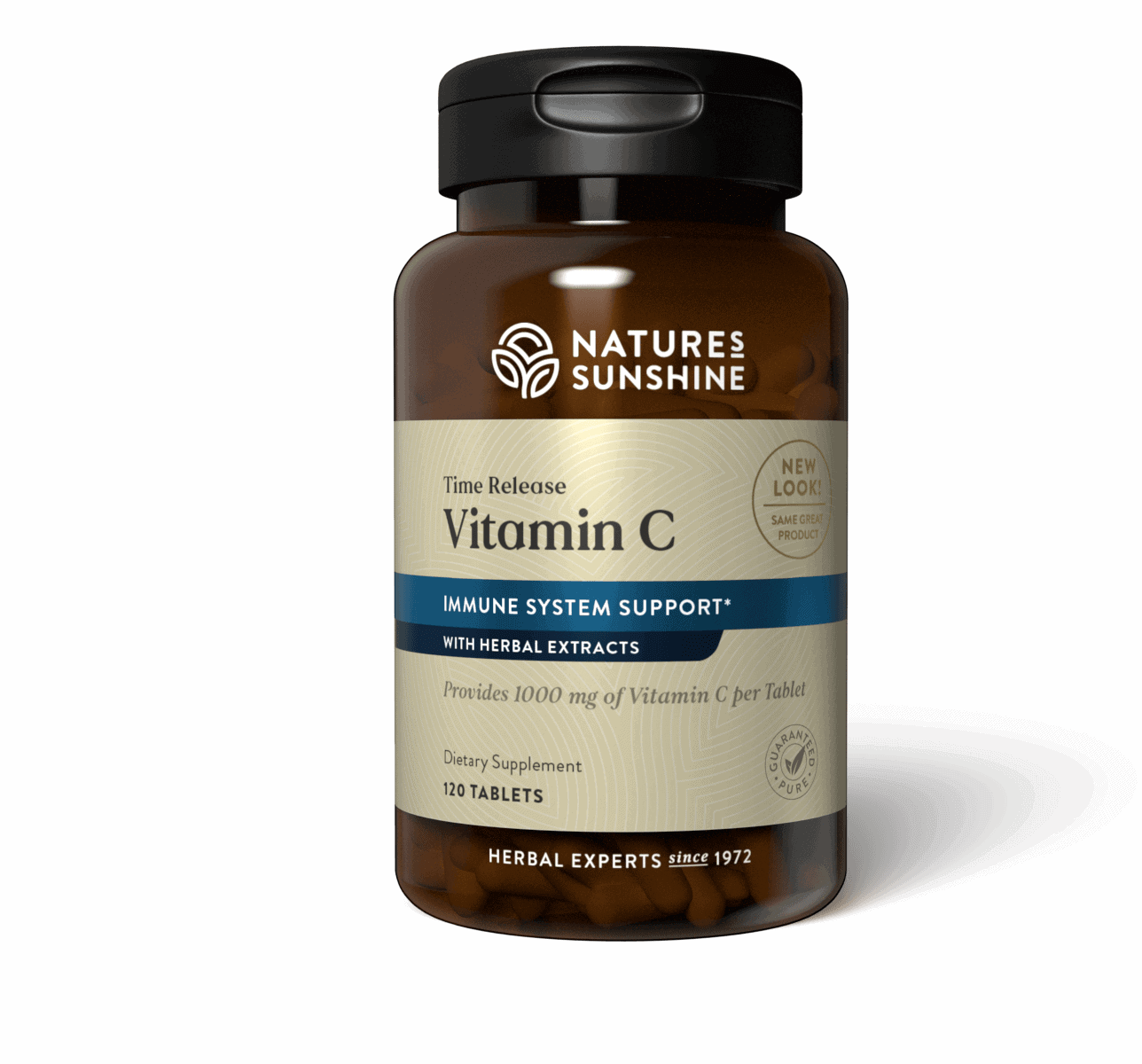
Nature's Sunshine Vitamin C Time Release is designed to deliver Vitamin C's benefits throughout the day. Each tablet includes a special coating that slows absorption until the nutrients reach the intestines — an important design feature because intestinal absorption of ascorbic acid is dose-dependent, and absorption falls to about 50 percent or less at doses above 1 g/day. By releasing the nutrient gradually, a time-release format may help the body utilize more of each serving.
This formula blends ascorbic acid with a base of Rose hips extract, acerola extract, Rutin, Lemon bioflavonoids, and Hesperidin complex — a completely natural product with no sugar, starch, artificial colorings, or flavorings. It is also vegan and non-GMO.
The product highlights include supporting the immune system, fighting free radicals, nourishing the tissues, and assisting in the production of collagen.
Who May Benefit from Vitamin C Supplementation?
Because the body cannot make or store Vitamin C, virtually everyone needs a steady daily supply. This product may be especially relevant for:
- Anyone seeking immune support — Vitamin C's role in immune cell function is one of the most well-documented in nutritional science.
- People looking for antioxidant defense — especially those concerned about environmental oxidative stress or wanting to support skin health through collagen synthesis.
- Individuals who eat limited fresh fruits and vegetables — cooking, freezing, and processing significantly reduce Vitamin C content in food.
- Those under physical stress — research suggests the benefits of regular Vitamin C supplementation on cold duration are more pronounced in people exposed to severe physical exertion.
- People who want plant-based support — this vegan, non-GMO formula is built on a base of whole-food extracts including Rose hips and acerola.
The RDA for Vitamin C is 90 mg/day for adult men and 75 mg/day for adult women, with smokers recommended to add 35 mg/day. The Tolerable Upper Intake Level (UL) is set at 2,000 mg/day for adults.
Key ingredients
- ✓ Envío gratis en pedidos superiores a $75
- ✓ Devoluciones fáciles en 90 días
- ✓ Envíos en pocas horas
How to Take This Vitamin C Supplement
Take one tablet daily with a meal.
The time-release coating is designed to slow absorption until the nutrients reach the intestines, helping your body utilize Vitamin C gradually throughout the day rather than in a single burst.
Escrito por Greg Howlett
Preguntas frecuentes
What is Vitamin C and why can't the body make it?
Vitamin C (ascorbic acid) is a water-soluble nutrient that functions as a potent antioxidant and an essential cofactor for many enzymes. The human body cannot synthesize Vitamin C due to mutations in the L-gulonolactone oxidase (GLO) gene, which is responsible for its synthesis from L-gulono-1,4-lactones. This means you must obtain Vitamin C from food or supplementation every day.
Does Vitamin C prevent the common cold?
Research suggests that for most people, regular Vitamin C supplementation does not reduce the risk of getting a cold. However, a Cochrane review of 29 trials involving over 11,000 participants found that regular supplementation may modestly reduce cold duration — by about 8% in adults and 14% in children — and somewhat reduce severity. People under severe physical stress, such as marathon runners, may see a greater preventive benefit. Taking Vitamin C after a cold has already started does not appear to be helpful.
What is a time-release Vitamin C tablet?
A time-release tablet features a special coating that slows nutrient absorption until it reaches the intestines, releasing Vitamin C gradually throughout the day. This is relevant because intestinal absorption of ascorbic acid is dose-dependent — at doses above 1 g/day, absorption can fall to about 50% or less. A time-release delivery may help the body utilize more of the Vitamin C in each serving.
How much Vitamin C do I need daily?
The Recommended Dietary Allowance (RDA) is 90 mg/day for adult men and 75 mg/day for adult women. Pregnant and lactating women are advised to increase intake to 85 mg and 120 mg per day, respectively. Smokers are recommended to consume an additional 35 mg/day regardless of sex. The Tolerable Upper Intake Level (UL) for adults is set at 2,000 mg/day to prevent gastrointestinal side effects.
Are there any safety concerns with Vitamin C supplementation?
When taken at suggested doses, Vitamin C supplements are mostly safe. At amounts greater than 2,000 mg/day, side effects including stomach upset, diarrhea, and stomach cramps may occur. There is some evidence that high-dose Vitamin C may increase kidney stone risk, particularly in people with existing risk factors. People with G6PD deficiency, hemochromatosis, or those on anticoagulant medications should consult a healthcare professional before supplementing. High doses are not recommended during pregnancy.
What makes this formula different from plain Vitamin C tablets?
This Nature's Sunshine formula blends ascorbic acid with a base of Rose hips extract, acerola extract, Rutin, Lemon bioflavonoids, and Hesperidin complex — naturally occurring plant compounds that provide complementary antioxidant and immune-supportive benefits. The time-release coating is designed to deliver these nutrients gradually, and the product is completely natural with no sugar, starch, artificial colorings, or flavorings. It is also vegan and non-GMO.
Talk to Dr. Shannyn Fowl
Not sure if this is right for you? Book a free, no-pressure consultation for personalized guidance on your health goals.
Book your free consult →About Caring Sunshine
A family-run reseller of premium supplements — free shipping, a 90-day guarantee, and real people who know the products.
Learn more about us →