
What Is Liposomal Vitamin C? A Complete Guide
Learn what is liposomal Vitamin C, how time-release Vitamin C supports immunity, antioxidant defense & collagen production, and who benefits most.
What Is Liposomal Vitamin C and Why Does Delivery Matter?
If you've been researching what is liposomal Vitamin C, you're likely interested in how your body actually absorbs and uses this essential nutrient. Vitamin C (ascorbic acid) is a water-soluble vitamin the body cannot manufacture on its own due to a mutation in the L-gulonolactone oxidase gene. That means every milligram must come from diet or supplementation.
Here's the challenge: intestinal absorption of ascorbic acid is saturable and dose-dependent. At typical dietary intakes of 30–180 mg per day, roughly 70–90 percent is absorbed. But absorption falls to about 50 percent or less with increasing doses above 1 g per day. This is why the way Vitamin C is delivered matters just as much as the amount on the label.
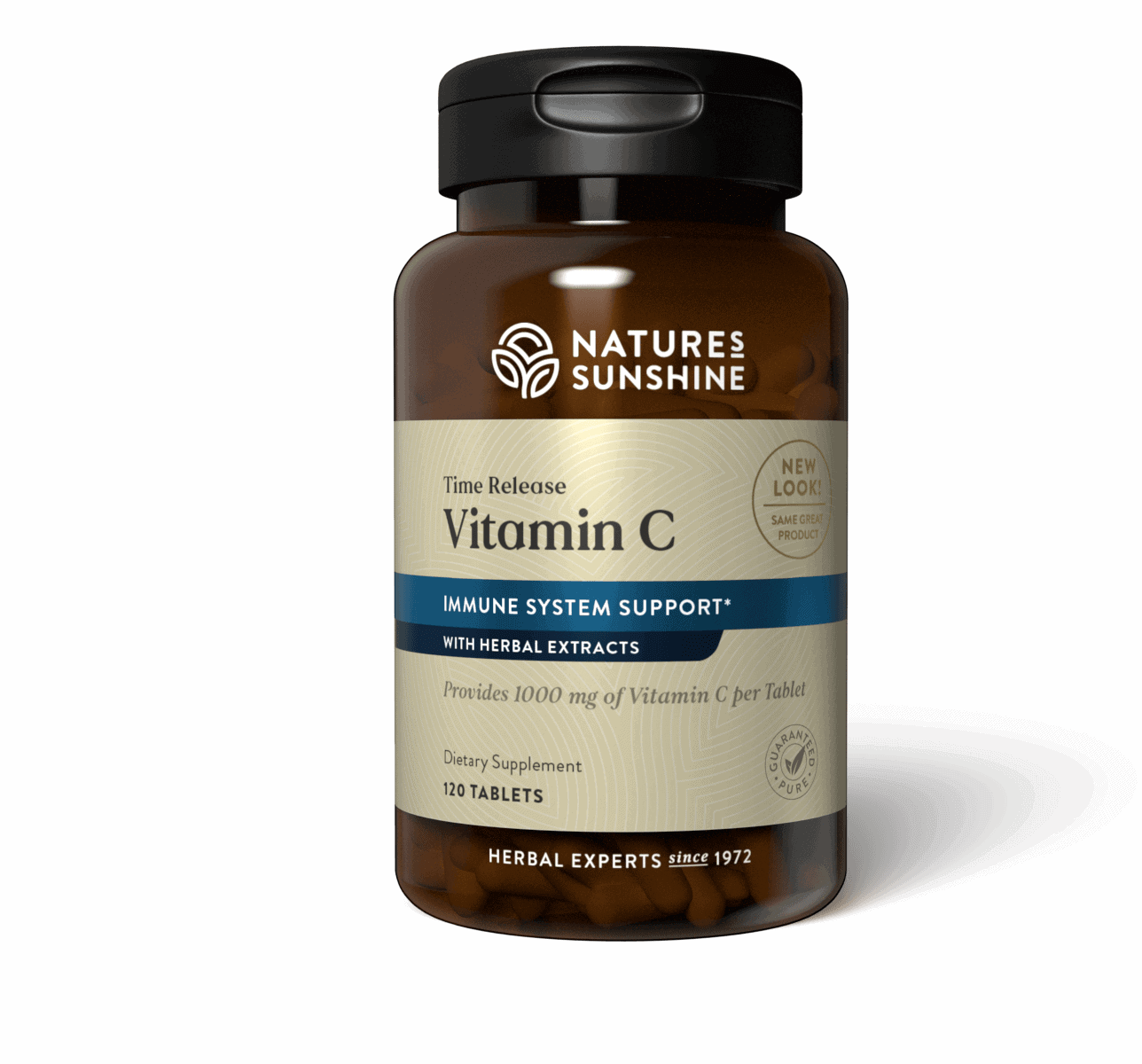
Liposomal delivery systems and time-release formulations both aim to solve this absorption bottleneck. Nature's Sunshine Vitamin C Time Release takes a different but effective approach: each tablet includes a special coating that slows the absorption of the nutrients until they reach the intestines, providing a steady supply of Vitamin C throughout the day rather than one large bolus that the body cannot fully absorb.
This formula is also completely natural — no sugar, starch, artificial colorings, or flavorings — and the Vitamin C is blended with a synergistic base of Rose hips extract, acerola extract, Rutin, Lemon bioflavonoids, and Hesperidin complex to support broader antioxidant and immune benefits.
Immune Support, Antioxidant Defense, and Collagen Production
Understanding what is liposomal Vitamin C often leads to a deeper question: what does Vitamin C actually do once it's in your bloodstream? The answer spans several body systems.
Immune System Support
Research suggests that Vitamin C plays a well-documented role in both innate and adaptive immunity. It supports epithelial barrier function against pathogens, enhances the differentiation and proliferation of B cells and T cells, promotes phagocytosis, normalizes cytokine production, and decreases histamine levels. A Cochrane review of 29 trials with over 11,000 participants found that while regular Vitamin C supplementation does not prevent colds in the general population, it modestly reduces the duration of colds by about 8% in adults and 14% in children.
Antioxidant Defense
Vitamin C functions as a potent water-soluble antioxidant, quenching reactive oxygen species (ROS) and reactive nitrogen species in aqueous environments. It can also regenerate other antioxidants such as vitamin E. Studies suggest it may help diminish lipid peroxidation as measured by urinary isoprostane excretion.
Collagen Biosynthesis
Vitamin C is essential for proper folding and deposition of collagen proteins — the most abundant proteins in the human body. Without adequate Vitamin C, the prolyl and lysyl hydroxylase enzymes that require ascorbate as a cofactor cannot properly hydroxylate collagen precursors, leading to structurally defective collagen. This is why Vitamin C is so important for nourishing tissues and supporting wound healing.
Iron Absorption
Vitamin C reduces ferric iron (Fe³⁺) to ferrous iron (Fe²⁺) in the gastrointestinal lumen — a form more readily absorbed by intestinal cells — making it valuable for anyone who relies on plant-based iron sources.
Key ingredients
- ✓ Envío gratis en pedidos superiores a $75
- ✓ Devoluciones fáciles en 90 días
- ✓ Envíos en pocas horas
Who Should Consider Time-Release Vitamin C?
Knowing what is liposomal Vitamin C naturally leads to the question: who benefits from enhanced Vitamin C delivery? Time-release formulations like this one may be especially helpful for:
- Anyone focused on immune resilience. Vitamin C accumulates in leukocytes, supports phagocytosis and chemotaxis, and is rapidly consumed during infection. A steady supply throughout the day helps maintain these processes.
- People under physical stress. Research suggests that Vitamin C supplementation is most beneficial for individuals exposed to brief periods of severe physical exercise, such as athletes or those with physically demanding jobs.
- Those concerned with antioxidant protection. Vitamin C quenches reactive oxygen species and regenerates vitamin E at membrane interfaces, supporting the body's defenses against oxidative stress.
- Adults interested in collagen and tissue health. Vitamin C is essential for proper collagen synthesis — critical for skin integrity, bone strength, cartilage health, tendon function, and wound repair.
- Plant-based eaters. Vitamin C's ability to enhance absorption of non-heme iron from plant-based foods makes it particularly relevant for those who don't consume meat.
This formula is vegan and non-GMO, making it suitable for a wide range of dietary preferences. If you're unsure whether a time-release Vitamin C is right for your individual needs, our naturopath is available for a free consultation to help you decide.
How to Take Vitamin C Time Release
Take one tablet daily with a meal.
Taking Vitamin C with food supports comfortable digestion and allows the time-release coating to work as designed — slowing absorption until the nutrients reach the intestines. Each bottle contains 120 tablets, providing a four-month supply at the recommended serving.
As a water-soluble vitamin, Vitamin C is not stored in the body in significant amounts, which is why consistent daily intake matters. The time-release delivery is specifically designed to address the absorption challenge: at higher single doses, the body absorbs a lower percentage of the Vitamin C present. By releasing nutrients gradually, this formulation supports sustained availability throughout the day.
Escrito por Greg Howlett
Preguntas frecuentes
What is liposomal Vitamin C compared to time-release Vitamin C?
Both liposomal and time-release delivery systems are designed to improve how the body absorbs Vitamin C. Liposomal Vitamin C uses lipid spheres to carry the nutrient, while time-release Vitamin C uses a special coating that slows the absorption of nutrients until they reach the intestines, providing a steady supply throughout the day. The core issue both approaches address is that absorption of ascorbic acid falls to about 50% or less with increasing doses above 1 g per day.
Does Vitamin C actually help prevent colds?
A Cochrane review of 29 placebo-controlled trials involving over 11,000 participants found that regular Vitamin C supplementation does not reduce the incidence of colds in the general population. However, it modestly reduces the duration of colds — about 8% in adults and 14% in children — and may help reduce severity. The benefits appear more pronounced for people exposed to brief periods of severe physical stress, such as marathon runners or military personnel.
Why does this formula include bioflavonoids like Rutin and Hesperidin?
The Vitamin C in this formula is blended with a base of Rose hips extract, acerola extract, Rutin, Lemon bioflavonoids, and Hesperidin complex. These bioflavonoids are polyphenolic compounds with their own antioxidant and anti-inflammatory properties. Research suggests Rutin modulates multiple arms of immunity and supports antioxidant enzyme activity, while Hesperidin has been shown in human RCTs to support antioxidant status and reduce pro-inflammatory cytokines. Together, they complement and support the activity of Vitamin C.
Can you take too much Vitamin C?
The Institute of Medicine has set a Tolerable Upper Intake Level (UL) for adults at 2,000 mg per day. Amounts above this level can lead to gastrointestinal upset, diarrhea, and in rare cases kidney stones — particularly in people with existing risk factors. Serious side effects from excess Vitamin C are very rare because the body cannot store the vitamin. People with hemochromatosis, G6PD deficiency, or kidney disease should consult their healthcare provider before supplementing.
Is this Vitamin C supplement vegan and non-GMO?
Yes. Nature's Sunshine Vitamin C Time Release is both vegan and non-GMO. The formula is completely natural with no sugar, starch, artificial colorings, or flavorings.
What role does Vitamin C play in collagen production?
Vitamin C is essential for proper folding and deposition of collagen proteins — the most abundant proteins in the human body. It acts as a cofactor for prolyl and lysyl hydroxylase enzymes. Without adequate Vitamin C, these enzymes cannot properly hydroxylate collagen precursors, resulting in structurally defective collagen. This biochemical role is why Vitamin C is important for skin integrity, wound healing, bone strength, and connective tissue health.
Talk to Dr. Shannyn Fowl
Not sure if this is right for you? Book a free, no-pressure consultation for personalized guidance on your health goals.
Book your free consult →About Caring Sunshine
A family-run reseller of premium supplements — free shipping, a 90-day guarantee, and real people who know the products.
Learn more about us →