
Vitamin C Tablets | Time Release Immune Support
Explore our in-depth guide on Vitamin C tablets with time release technology, Rose hips, and bioflavonoids for immune support, antioxidant defense, and collagen production.
Vitamin C Tablets: Sustained Support Throughout Your Day
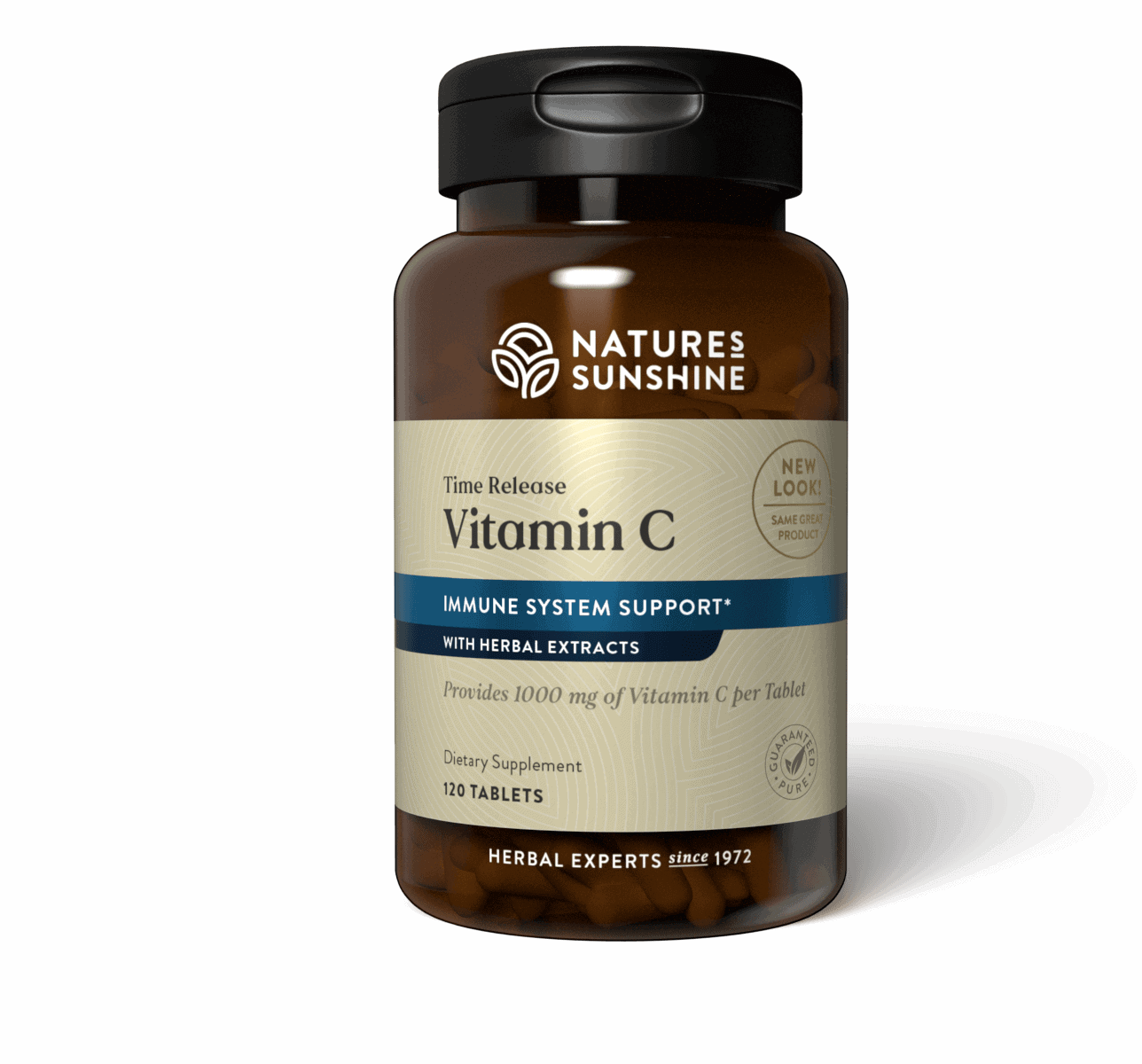
Vitamin C is one of the most essential and extensively studied nutrients in human health. Because the body cannot produce it on its own — due to a mutation in the L-gulonolactone oxidase gene — we depend entirely on diet and supplementation to meet our needs. These Vitamin C tablets from Nature's Sunshine deliver 1,000 mg of Vitamin C (ascorbic acid) in a time release format designed to provide benefits throughout the day rather than in a single burst.
Each tablet features a special coating that slows nutrient absorption until the ingredients reach the intestines. This is especially meaningful because at higher single doses (above 1 g), absorption can fall to about 50% or less. By releasing Vitamin C gradually, these tablets help your body make the most of each serving.
The formula goes beyond ascorbic acid alone. It's blended with a base of Rose hips extract, acerola fruit extract, Rutin, Lemon bioflavonoids, and Hesperidin complex — all naturally occurring compounds that complement and support Vitamin C's activity. The result is a completely natural product with no sugar, starch, artificial colorings, or flavorings, and it's both vegan and non-GMO.
If you have questions about whether Vitamin C tablets are right for your wellness goals, our naturopath is available for a free consultation — no appointment pressure, no strings attached.
How Vitamin C Supports Your Body
Vitamin C is far more than an immune nutrient — it's a foundational player across multiple body systems. As a potent water-soluble antioxidant, it fights free radicals by scavenging reactive oxygen species in aqueous cellular compartments and plasma. Research suggests it can also regenerate the antioxidant form of vitamin E, extending antioxidant protection to cell membranes.
One of Vitamin C's best-known roles is in collagen biosynthesis. It serves as an essential cofactor for prolyl and lysyl hydroxylase enzymes, which are required for the proper folding and deposition of collagen — the most abundant protein in the human body. Without adequate Vitamin C, these enzymes cannot function, which is the biochemical basis behind the connective tissue breakdown seen in scurvy.
Vitamin C also supports the immune system in both its innate and adaptive branches. Studies show it helps maintain epithelial barrier function against pathogens, enhances the differentiation and proliferation of B cells and T cells, supports phagocytosis, normalizes cytokine production, and decreases histamine levels. A large Cochrane review of over 11,000 participants found that while regular Vitamin C supplementation does not prevent colds in the general population, it modestly reduces cold duration by about 8% in adults and 14% in children.
Beyond immunity and antioxidant defense, Vitamin C enhances iron absorption from plant-based foods by reducing ferric iron to its more absorbable ferrous form — a meaningful benefit for those relying on non-heme iron sources. It's also involved in the production of adrenal steroids, catecholamines, carnitine synthesis, and amino acid metabolism.
Key Ingredients
- ✓ Envío gratis en pedidos superiores a $75
- ✓ Devoluciones fáciles en 90 días
- ✓ Envíos en pocas horas
Who Should Consider Vitamin C Tablets
These Vitamin C tablets are formulated for adults looking for everyday immune support — particularly during cold and flu season or periods of increased physical or environmental stress. Research shows that populations under heavy physical stress, such as marathon runners and military personnel, may see the greatest benefit from regular Vitamin C supplementation.
They're also a thoughtful choice for anyone seeking antioxidant defense against oxidative stress, or those wanting to support healthy collagen production for skin, connective tissue, and wound healing. Because Vitamin C enhances non-heme iron absorption, these tablets may be especially beneficial for individuals who follow plant-based diets.
The time release format makes this formula well-suited for people who prefer steady nutrient delivery rather than a single large dose. Since absorption of Vitamin C falls to about 50% or less at doses above 1 g taken all at once, the gradual release may help optimize how much your body actually uses.
This product is vegan and non-GMO, making it accessible for a wide range of dietary preferences. If you're unsure whether these Vitamin C tablets fit your specific needs, our naturopath offers free consultations to help you make an informed choice.
How to Take These Vitamin C Tablets
Take one tablet daily with a meal. That's it — simple and straightforward.
Taking your tablet with food supports absorption and is gentle on the stomach. The time release coating is designed to slow the release of nutrients until they reach the intestines, allowing for sustained delivery throughout the day.
Each bottle contains 120 tablets, providing a four-month supply at the recommended one-tablet-per-day serving.
Escrito por Greg Howlett
Preguntas frecuentes
What makes time release Vitamin C tablets different from regular Vitamin C?
These tablets feature a special coating that slows the absorption of nutrients until they reach the intestines, allowing Vitamin C to be released gradually throughout the day rather than all at once. This is significant because research shows that absorption of Vitamin C can fall to about 50% or less at single doses above 1 g. The time release format is designed to help your body make the most of each serving.
Can Vitamin C tablets help prevent the common cold?
A large Cochrane review of 29 trials involving over 11,000 participants found that regular Vitamin C supplementation does not prevent colds in the general population. However, the same body of evidence shows it modestly reduces cold duration — by about 8% in adults and 14% in children — and may reduce symptom severity. People exposed to severe physical stress, such as marathon runners, may see greater preventive benefits.
Why are Rose hips and bioflavonoids included alongside Vitamin C?
The Vitamin C in this formula is blended with a base of Rose hips extract, acerola extract, Rutin, Lemon bioflavonoids, and Hesperidin complex. Rose hips are one of the richest natural sources of Vitamin C and contain additional antioxidant compounds including polyphenols and carotenoids. The bioflavonoids — Rutin, Hesperidin, and Lemon bioflavonoid extract — are naturally occurring plant compounds with documented antioxidant and anti-inflammatory properties that complement Vitamin C's activity.
Are these Vitamin C tablets suitable for vegans?
Yes. This product is both vegan and non-GMO. It is a completely natural product with no sugar, starch, artificial colorings, or flavorings.
How much Vitamin C is too much?
The Institute of Medicine has set the Tolerable Upper Intake Level (UL) for adults at 2,000 mg per day. Amounts above this level may lead to gastrointestinal upset and diarrhea, and rarely, may increase the risk of kidney stones — particularly in individuals who already have risk factors. This product provides 1,000 mg per tablet at the recommended one-tablet-per-day serving, well within the established upper limit.
Does Vitamin C help with iron absorption?
Yes. Vitamin C improves the absorption of non-heme iron (the form found in plant-based foods) by reducing ferric iron to its more absorbable ferrous form in the gastrointestinal tract. This makes Vitamin C tablets a helpful complement for individuals who rely primarily on plant sources of iron.
Talk to Dr. Shannyn Fowl
Not sure if this is right for you? Book a free, no-pressure consultation for personalized guidance on your health goals.
Book your free consult →About Caring Sunshine
A family-run reseller of premium supplements — free shipping, a 90-day guarantee, and real people who know the products.
Learn more about us →