
Vitamin C for Kids | Immune & Antioxidant Support
Learn about Vitamin C for kids: how it supports immune health, fights free radicals, and nourishes growing tissues. Explore ingredients, benefits, and FAQs.
Vitamin C for Kids: Why It Matters
Vitamin C is a water-soluble nutrient the body cannot produce on its own, making dietary or supplemental intake essential at every stage of life — especially during childhood. As a potent antioxidant and cofactor for numerous enzymes, Vitamin C is involved in many biological functions, including normal immune system functioning, collagen biosynthesis, iron absorption from plant-based foods, and carnitine and catecholamine metabolism.
For parents exploring Vitamin C for kids, understanding how this nutrient works can help ensure children receive adequate support for growing bodies. Vitamin C contributes to immune defense by supporting various cellular functions of both the innate and adaptive immune system. It supports epithelial barrier function against pathogens and promotes the oxidant scavenging activity of the skin, thereby potentially protecting against environmental oxidative stress.
Research suggests that regular Vitamin C supplementation reduces common cold duration by 14% in children (compared to 8% in adults), according to a large review of 82 studies. That notable difference highlights how important consistent Vitamin C intake can be for younger immune systems. Vitamin C supports physical barriers, innate immunity, and adaptive immune responses — all critical components of a child's developing defenses.
A Time-Release Formula with Bioflavonoid Support
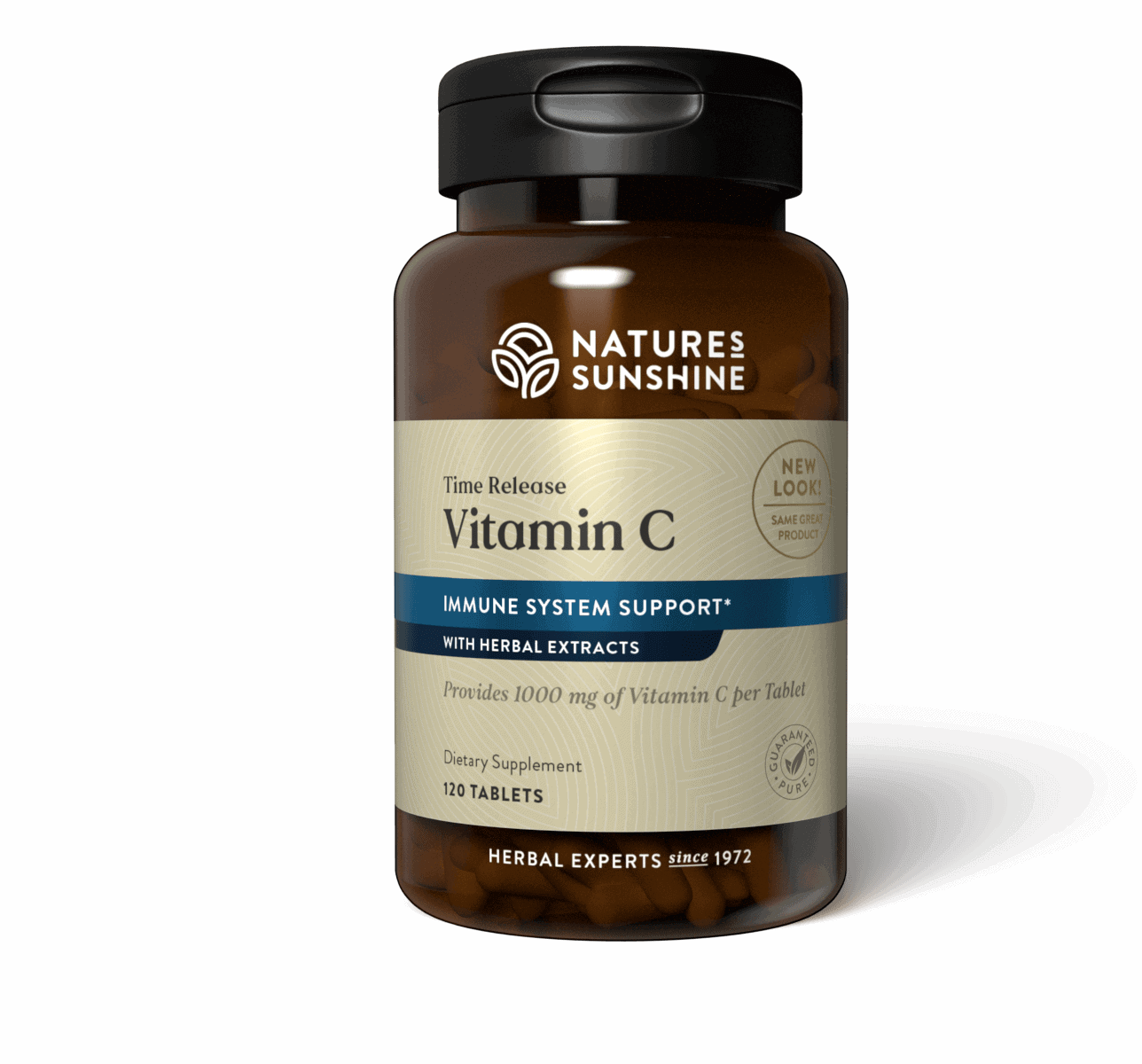
Nature's Sunshine Vitamin C Time Release is designed to deliver the powerful benefits of Vitamin C throughout the day. Each tablet includes a special coating that slows the absorption of the nutrients until they reach the intestines, supporting steady, sustained nutrient delivery rather than a single burst.
This is a completely natural product with no sugar, starch, artificial colorings, or flavorings. The Vitamin C in this formula is blended with a base of Rose hips extract, acerola extract, Rutin, Lemon bioflavonoids, and Hesperidin complex — plant-derived compounds that complement Vitamin C's activity in the body.
This product is both vegan and non-GMO, making it a straightforward choice for families seeking a clean-label supplement. It supports the immune system, fights free radicals, nourishes the tissues, and assists in the production of collagen — a protein required to help wounds heal and maintain the structure of skin, bones, and connective tissue.
Key ingredients
- ✓ Envío gratis en pedidos superiores a $75
- ✓ Devoluciones fáciles en 90 días
- ✓ Envíos en pocas horas
Who Is This Vitamin C Formula For?
While the name of this guide is Vitamin C for kids, this particular Nature's Sunshine formula is designed for daily immune and antioxidant support in a time-release tablet format. Families looking to support their children's immune health should note that the RDA for Vitamin C ranges from 15 to 115 mg for infants and children depending on age, and 75 to 120 mg for nonsmoking adults including pregnant or lactating women.
This formula may be especially relevant for anyone looking to support immune function during seasonal challenges, promote healthy collagen production, fight free radicals, and nourish tissues. Research suggests Vitamin C's benefits are particularly notable for people exposed to brief periods of severe physical exercise or high physical stress, where evidence is stronger for a reduction in cold incidence.
If you have questions about whether this product is appropriate for your child's specific needs, our naturopath is available for a free consultation to help guide your family's supplement choices.
How to Take This Formula
Take one tablet daily with a meal. The time-release coating is engineered to slow absorption until the nutrients reach the intestines, helping deliver Vitamin C steadily throughout the day rather than all at once.
Because Vitamin C is water soluble, the body does not store it long-term, making consistent daily intake important. At low gastrointestinal concentrations, active transport predominates, while simple diffusion occurs at higher concentrations — and absorption falls to approximately 50% or less with increasing doses above 1 g/day. The time-release design of this formula addresses that absorption dynamic.
Each bottle contains 120 tablets — a four-month supply at the suggested serving of one tablet per day.
Escrito por Greg Howlett
Preguntas frecuentes
How does Vitamin C support kids' immune systems specifically?
Vitamin C is essential for immune cell function and represents one of the most established nutritional supports for immune health in children. It helps maintain epithelial barriers, enhances the differentiation and proliferation of B cells and T cells, enhances phagocytosis, normalizes cytokine production, and decreases histamine levels. A large review of 82 studies found that regular Vitamin C supplementation reduces common cold duration by 14% in children, compared to 8% in adults — suggesting children may experience a more pronounced benefit from consistent intake.
What is the recommended daily allowance of Vitamin C for children?
According to established dietary guidelines, the RDA for Vitamin C ranges from 15 to 115 mg for infants and children, depending on age. The Tolerable Upper Intake Level — above which the risk for adverse effects begins to increase — varies by age group. For adults, the UL is set at 2,000 mg per day to prevent gastrointestinal discomfort. Parents should consult a healthcare provider or our naturopath to determine the right intake for their child.
What makes the time-release design different from regular Vitamin C?
Each Vitamin C Time Release tablet includes a special coating that slows the absorption of nutrients until they reach the intestines. Because 70 to 90 percent of usual dietary Vitamin C intake (30 to 180 mg/day) is absorbed but absorption falls to about 50% or less with increasing doses above 1 g/day, the time-release design helps optimize how the body uses the Vitamin C throughout the day rather than delivering it all at once.
Why are bioflavonoids included in this Vitamin C formula?
The Vitamin C in this formula is blended with a base of Rose hips extract, acerola extract, Rutin, Lemon bioflavonoids, and Hesperidin complex. These plant-derived bioflavonoids provide their own antioxidant and immune-supportive properties. For example, research suggests Rutin modulates pro-inflammatory cytokine production and supports mast cell stability, while Hesperidin has been shown in human studies to downregulate pro-inflammatory markers and enhance antioxidant enzyme activity. Together, they complement Vitamin C's role in the body.
Can Vitamin C help shorten a cold once symptoms start?
A 2013 Cochrane review of 29 trials involving over 11,000 participants found that taking a Vitamin C supplement after a cold starts does not appear to be helpful. However, regular supplementation taken before the onset of symptoms modestly reduces cold duration — by 8% in adults and 14% in children — and may reduce severity. The benefit is most pronounced in populations under heavy physical or cold stress.
Is this product vegan and free of artificial ingredients?
Yes. Nature's Sunshine Vitamin C Time Release is a completely natural product with no sugar, starch, artificial colorings, or flavorings. It is both vegan and non-GMO, making it a clean-label option for families who want a straightforward Vitamin C supplement.
Talk to Dr. Shannyn Fowl
Not sure if this is right for you? Book a free, no-pressure consultation for personalized guidance on your health goals.
Book your free consult →About Caring Sunshine
A family-run reseller of premium supplements — free shipping, a 90-day guarantee, and real people who know the products.
Learn more about us →