
Vitamin C Benefits: Immune, Antioxidant & Collagen
Explore Vitamin C benefits for immune health, antioxidant defense, and collagen production. Learn how time-release Vitamin C with bioflavonoids supports your body.
Understanding Vitamin C Benefits
Vitamin C — also known as ascorbic acid — is a water-soluble nutrient the human body cannot produce on its own. Because of mutations in the L-gulonolactone oxidase (GLO) gene, we rely entirely on diet and supplementation to meet our needs. That single fact makes Vitamin C one of the most important nutrients to get right every day.
The Vitamin C benefits that matter most center on three areas: immune system support, antioxidant defense, and collagen production. As a potent reducing agent, Vitamin C directly scavenges reactive oxygen species in aqueous cellular compartments and plasma, and it regenerates the antioxidant form of vitamin E at membrane interfaces. It also serves as an essential cofactor for collagen prolyl hydroxylases — without adequate Vitamin C, the body cannot properly hydroxylate collagen precursors, leading to structurally defective collagen.
Beyond those headline roles, Vitamin C supports carnitine synthesis, production of adrenal steroids and catecholamines, amino acid metabolism, and the absorption of non-heme iron from plant-based foods. It is present in high concentrations in the adrenal glands and brain, where it participates in neurotransmitter synthesis.
Why Time-Release Delivery and Bioflavonoids Matter
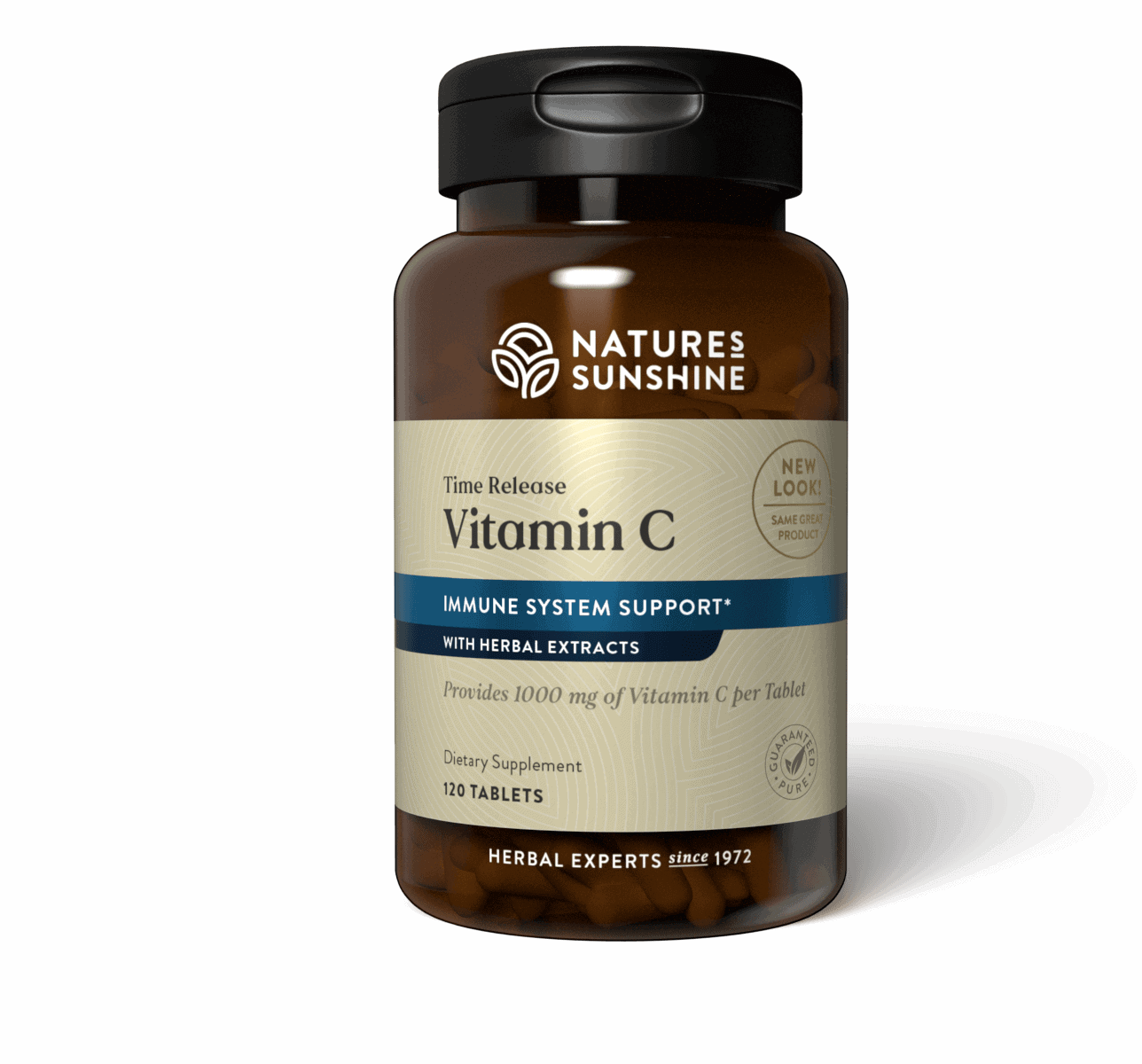
Nature's Sunshine Vitamin C Time Release is designed to deliver Vitamin C benefits throughout the day rather than in a single burst. Each tablet includes a special coating that slows the absorption of nutrients until they reach the intestines. This matters because intestinal absorption of ascorbic acid is saturable and dose-dependent — at usual dietary intakes of 30 to 180 mg/day, roughly 70 to 90 percent is absorbed, but absorption falls to about 50 percent or less with doses above 1 g/day. A time-release approach helps the body make the most of each tablet.
This formula goes further by blending ascorbic acid with a base of Rose hips extract, acerola extract, Rutin, Lemon bioflavonoids, and Hesperidin complex. These companion compounds are not filler — they are biologically active in their own right, offering antioxidant, anti-inflammatory, and immune-supportive properties that complement Vitamin C. The result is a completely natural product with no sugar, starch, artificial colorings, or flavorings, and it carries both vegan and non-GMO attributes.
If you have questions about whether a time-release formula is the right fit for your routine, our naturopath is available for a free consultation — no appointment pressure, just helpful guidance.
Key ingredients
- ✓ Envío gratis en pedidos superiores a $75
- ✓ Devoluciones fáciles en 90 días
- ✓ Envíos en pocas horas
Who Should Consider a Vitamin C Supplement
The Vitamin C benefits in this formula are broad enough for most adults, but certain groups may find time-release Vitamin C especially relevant:
- Anyone focused on immune resilience. Vitamin C accumulates in leukocytes, supports phagocytosis and chemotaxis, and is rapidly consumed during infection. Research shows plasma concentrations decline quickly during viral infections, increasing demand.
- People under physical stress. Evidence is stronger for populations under heavy physical or cold stress — such as athletes and those with physically demanding work — who may see a greater reduction in common cold incidence and duration with regular supplementation.
- Adults concerned with healthy aging. Vitamin C is essential for collagen synthesis, connective tissue integrity, and antioxidant defense — all processes that decline with age. Epidemiological data link higher intake to longer telomere length and reduced age-related disease risk.
- Those seeking antioxidant support. As a water-soluble antioxidant, Vitamin C quenches reactive oxygen species in plasma and regenerates vitamin E, supporting the body's broader antioxidant network.
- Individuals with higher nutrient demands. Smokers are recommended to increase their Vitamin C consumption by 35 mg per day, and pregnant or lactating women have increased recommended intakes (85 mg and 120 mg per day, respectively).
This formula is vegan and non-GMO, making it accessible to a wide range of dietary preferences. If you're unsure whether Vitamin C supplementation fits your individual needs, our naturopath offers free consultations to help you sort through the options.
How to Take This Vitamin C Formula
Take one tablet daily with a meal. Taking Vitamin C with food supports absorption and reduces the likelihood of gastrointestinal discomfort. The time-release coating is designed to slow nutrient release until the tablet reaches the intestines, helping maintain Vitamin C levels throughout the day rather than delivering a single spike.
Each bottle contains 120 tablets — a four-month supply at the recommended serving of one tablet per day.
Escrito por Greg Howlett
Preguntas frecuentes
Does Vitamin C prevent the common cold?
A Cochrane review of 29 trials involving over 11,000 participants found that regular Vitamin C supplementation does not reduce the incidence of colds in the general population. However, it modestly reduces cold duration — by about 8% in adults and 14% in children — and may reduce severity. People under severe physical stress, such as marathon runners or military personnel, appear to see greater preventive benefit. Taking Vitamin C after cold symptoms have already started does not appear to be helpful.
What is the recommended daily intake of Vitamin C?
The U.S. federal government's Recommended Dietary Allowance (RDA) for Vitamin C is 90 mg/day for adult males and 75 mg/day for adult females. Pregnant women are recommended 85 mg/day, and lactating women 120 mg/day. Smokers are advised to add 35 mg/day to these amounts. The Tolerable Upper Intake Level set by the Institute of Medicine is 2,000 mg/day for adults, above which gastrointestinal discomfort and other side effects become more likely.
Why are bioflavonoids included with Vitamin C?
This formula blends ascorbic acid with Rose hips extract, acerola extract, Rutin, Lemon bioflavonoids, and Hesperidin complex. These naturally occurring plant compounds offer their own antioxidant, anti-inflammatory, and immune-supportive properties. Rose hips are one of the richest natural sources of Vitamin C and contain polyphenols and carotenoids; Rutin and Hesperidin are flavonoids that research suggests may support mast cell stability, cytokine modulation, and vascular health.
What makes time-release Vitamin C different?
Intestinal absorption of ascorbic acid is dose-dependent — about 70 to 90 percent of moderate intakes is absorbed, but absorption falls to roughly 50 percent or less with single doses above 1 g. The time-release coating in this formula slows nutrient release until it reaches the intestines, which helps maintain steadier Vitamin C levels throughout the day rather than overwhelming absorption capacity at once.
Are there any safety concerns with Vitamin C supplements?
At suggested doses, Vitamin C supplements are generally considered safe. Because the body cannot store Vitamin C, serious side effects are rare. However, amounts above 2,000 mg/day may cause stomach upset, diarrhea, or cramping. At high doses, a minor metabolite called oxalate can contribute to kidney stone risk, especially in people with existing risk factors. People with G6PD deficiency, hemochromatosis, or those on certain medications (including chemotherapy agents, statins with niacin, estrogen-containing medications, and protease inhibitors) should consult a healthcare provider before supplementing.
Can I get enough Vitamin C from food alone?
Many people do. According to the National Health and Nutrition Examination Survey (NHANES), mean intakes from food are 105.2 mg/day for adult males and 83.6 mg/day for adult females, which meets the RDA for most nonsmoking adults. The best food sources include citrus fruits, red and green peppers, kiwifruit, broccoli, and strawberries. However, Vitamin C is water-soluble and sensitive to heat — up to 50 percent can be lost through cooking. Supplementation may be helpful for those whose diets are limited or who have increased demands.
Talk to Dr. Shannyn Fowl
Not sure if this is right for you? Book a free, no-pressure consultation for personalized guidance on your health goals.
Book your free consult →About Caring Sunshine
A family-run reseller of premium supplements — free shipping, a 90-day guarantee, and real people who know the products.
Learn more about us →