
Collagen Peptides: Benefits for Skin, Hair & Nails
Discover how Collagen peptides support skin elasticity, hair growth, and nail strength. Learn about this essential structural protein and how to use it daily.
Collagen Peptides: The Body's Most Abundant Structural Protein
Collagen is the single most abundant protein in the human body, comprising approximately one-third of total protein content. It forms the structural foundation of skin, hair, nails, bones, cartilage, tendons, ligaments, and all other connective tissues. The word itself comes from the Greek kolla, meaning "glue" — a fitting name for the protein that literally holds us together.
Collagen is rich in the amino acids glycine (33%), proline, and hydroxyproline (22%), which create its characteristic triple-helix structure — three chains wound tightly together to provide rigidity and resistance to stretching. Of the 28 known subtypes, Types I, II, and III make up 80–90% of the Collagen in the human body, with Type I being the most abundant in skin (approximately 80%).
The challenge is that native Collagen is a large, complex polymer with low solubility and bioavailability. To be usable by the body, it must be broken down into smaller segments called peptides through a process called hydrolysis. That's what Collagen peptides — also known as hydrolyzed Collagen — are: smaller amino acid chains (3–6 kDa) that research suggests are absorbed as di- and tripeptides, which may then enter circulation and reach target tissues like skin and cartilage where they may help support Collagen-producing cells called fibroblasts.
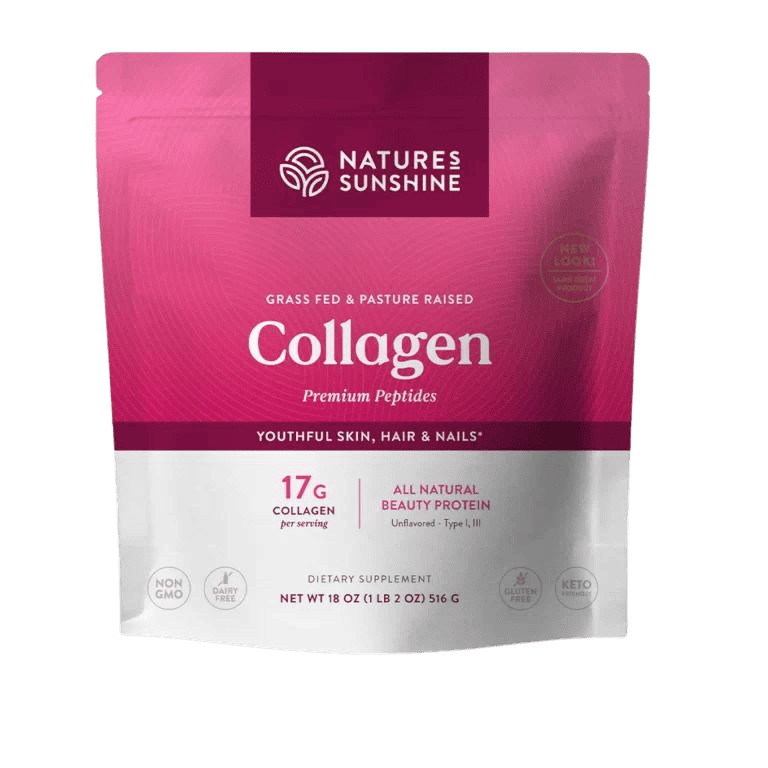
Nature's Sunshine's premium Collagen peptides offer a clean, effective source of this essential protein, certified non-GMO, gluten-free, dairy-free, Keto-friendly, and Paleo-friendly. If you have questions about whether Collagen peptides are right for your wellness routine, our naturopath is available for a free consultation.
How Collagen Peptides Support Skin, Hair, Nails & More
Skin aging is characterized by declining Collagen content, along with decreased elastin fiber and hyaluronic acid levels. This leads to a loss of skin elasticity and hydration — changes that become increasingly visible over time. Research suggests that oral Collagen peptides may help address these changes from within.
Skin Elasticity and Hydration: Multiple meta-analyses of randomized controlled trials have found that Collagen supplements were statistically effective in increasing skin hydration and elasticity. One meta-analysis of 10 RCTs with 646 participants reported significant improvements in both measures. Studies suggest that bioactive peptides such as Pro-Hyp and Gly-Pro-Hyp are recognized by fibroblasts, which may then upregulate Collagen and hyaluronic acid synthesis. Literature data have shown that hydrolyzed Collagen supplementation promotes decreased wrinkle formation, increased skin elasticity, increased hydration, and increased Collagen content and density.
Hair and Nail Support: Collagen peptides provide amino acid substrates — notably proline, glycine, and hydroxyproline — that support keratin synthesis and dermal matrix integrity around hair follicles. A systematic review found Collagen peptides may improve the clinical appearance, strength, and brittleness of hair. For nails, a 2017 trial published in the Journal of Cosmetic Dermatology found that bioactive Collagen peptides increased nail growth rate by 12% and reduced the frequency of broken nails by 42% in women with brittle nail syndrome over 24 weeks.
Joint and Bone Support: Research suggests Collagen peptide supplementation, particularly in conjunction with exercise, may be beneficial for joint comfort. A systematic review and meta-analysis provides evidence of significant pain reduction in knee osteoarthritis patients who received Collagen peptides compared to placebo. Preliminary studies in postmenopausal women also suggest Collagen may support bone density, though larger independent replications are needed.
Gut Health: Collagen lines the gastrointestinal tract and is a component of gut epithelial tissue, though clinical evidence specifically for gut health benefits remains at a preliminary stage.
It's worth noting that while the evidence for skin hydration and elasticity is moderate to moderately strong, and joint health evidence is moderate, the clinical evidence for hair, nails, and gut health is still emerging. The science is promising, but researchers note that further studies are needed to establish optimal dosing regimens across all indications.
From Ancient Bone Broth to Modern Collagen Peptides
The dietary tradition of consuming Collagen-rich foods predates modern science by millennia. Across virtually every culture, slow-simmered bone broths and gelatinous preparations of connective tissue were considered nourishing staples — not side dishes, but survival technology.
In Traditional Chinese Medicine, Collagen-rich foods were used to support skin elasticity, healthy aging, and joint strength. Almost ten centuries ago, the Benedictine scholar Hildegard von Bingen studied extracts from animal tissue and recognized their use for joint complaints. Native American tribes consumed boiled animal hides and bone marrow for strength and vitality, while traditional African medicine used gelatin-rich animal parts to promote digestive wellness.
From French pot-au-feu to Vietnamese pho, from Mexican caldo de res to Chinese chicken-foot broth — diverse cuisines independently developed Collagen-rich preparations. What twentieth-century molecular biology revealed is simply what the bone broth tradition had been supplying all along: a distinctive protein family with a unique amino acid profile, derived from connective tissue, in a form the body's own tissues can use as structural substrate.
Modern Collagen peptides represent the contemporary contribution to this continuous tradition — the same essential protein, in a convenient powder format that dissolves in a beverage rather than requiring hours of simmering.
Key Ingredients
- ✓ Envío gratis en todos los pedidos
- ✓ 90-day easy returns
- ✓ Ships within hours
Who Are Collagen Peptides For?
Collagen peptides may be a good fit for anyone looking to support their skin, hair, and nails from within. Because Collagen production naturally declines with age, many people notice changes in skin elasticity, hydration, hair thickness, and nail strength over time — areas where research suggests Collagen peptides may help.
Those with active lifestyles may also find value in Collagen's support for bones and joints. A systematic review found that 5–15 g/day of Collagen peptides, when taken at least one hour prior to exercise for over three months, may aid in reducing functional joint pain and supporting muscle recovery in athletes.
This formula is particularly well-suited for people following specific dietary patterns. It's certified non-GMO, gluten-free, dairy-free, Keto-friendly, and Paleo-friendly — making it accessible to a wide range of dietary preferences.
Because Collagen is an incomplete protein (it lacks the essential amino acid tryptophan), it should complement — not replace — a balanced diet with complete protein sources. If you're wondering whether Collagen peptides make sense for your individual goals, our naturopath offers free consultations and can help you think through the right approach.
How to Take Collagen Peptides
Collagen is odorless, tasteless and mixes easily into any hot or cold beverage, smoothie or food. It is easily integrated into any daily wellness program. Stir 1 scoop into any beverage (coffee, tea, water, fruit juice, etc.), or add it to your favorite recipes. Use daily for best results.
Research suggests that the beneficial effects of Collagen peptide supplementation may take effect after three months or longer of consistent use, so daily use is key to getting the most from your routine. It's also worth noting that vitamin C is a required cofactor in the hydroxylation of lysine and proline residues during Collagen synthesis — an established biochemical mechanism — so maintaining adequate vitamin C intake through diet or supplementation may complement your Collagen regimen.
Written by Greg Howlett
Frequently asked questions
What are Collagen peptides and how are they different from Collagen?
Native Collagen is a large, complex polymer with low solubility and bioavailability. Collagen peptides (also called hydrolyzed Collagen) are Collagen that has been broken down into smaller amino acid chains through enzymatic hydrolysis, resulting in low-molecular-weight peptides (3–6 kDa) that dissolve easily and are more readily absorbed. Studies show that when Collagen hydrolysate is taken orally, it is absorbed as di- and tripeptides typically rich in hydroxyproline, which are believed to enter circulation and reach target tissues like skin and cartilage.
What does the research say about Collagen peptides for skin?
The evidence for skin benefits is moderate to moderately strong. A meta-analysis of 10 RCTs with 646 participants found Collagen supplements were statistically effective in increasing skin hydration and elasticity. Literature data show that hydrolyzed Collagen supplementation promotes decreased wrinkle formation, increased skin elasticity, increased hydration, and increased Collagen content and density. However, researchers note that many trials have been industry-funded, study durations are often short (4–12 weeks), and further studies are needed to determine optimal dosing.
Are Collagen peptides safe to take long-term?
Collagen supplementation is generally considered safe. Prolonged use is deemed safe, with systematic reviews reporting no adverse effects even at higher doses of up to 60 g/day or in different supplement forms. The FDA classifies hydrolyzed Collagen as Generally Recognized as Safe (GRAS). Those with allergies to specific animal sources (such as seafood or bovine) should check the source of their Collagen, as allergic reactions are possible. If you have questions about whether Collagen is appropriate for you, our naturopath offers free consultations.
Is Collagen a complete protein?
No. Collagen is an incomplete protein because it lacks the essential amino acid tryptophan. While it provides a distinctive amino acid profile rich in glycine, proline, and hydroxyproline that supports structural tissues, it should not be used as a sole protein source. For muscle protein synthesis specifically, research notes that other protein sources such as whey may be more beneficial.
How long does it take to see results from Collagen peptides?
Results vary by area of use. For skin, several RCTs have demonstrated improvements in elasticity, hydration, and wrinkle depth within 8–12 weeks. For exercise-related joint comfort, a systematic review found that beneficial effects appear to take effect after three months or longer of consistent use. Daily use is recommended for best results.
Can I add Collagen peptides to hot beverages?
Yes. This formula is odorless and tasteless and mixes easily into any hot or cold beverage, smoothie, or food. You can stir one scoop into coffee, tea, water, fruit juice, or add it to your favorite recipes — making it simple to incorporate into your daily routine.
Talk to Dr. Shannyn Fowl
Not sure if this is right for you? Book a free, no-pressure consultation for personalized guidance on your health goals.
Book your free consult →About Caring Sunshine
A family-run reseller of premium supplements — free shipping, a 90-day guarantee, and real people who know the products.
Learn more about us →