
Can You Overdose on Vitamin C? Safety, Limits & Facts
Can you overdose on Vitamin C? Learn about tolerable upper limits, side effects of high doses, and how to supplement safely with this essential nutrient.
Can You Overdose on Vitamin C?
Vitamin C (ascorbic acid) is a water-soluble nutrient the body cannot produce on its own, which means we rely entirely on food and supplements to meet our needs. Because the body cannot store excess Vitamin C the way it stores fat-soluble vitamins, many people assume they can take as much as they like without consequence. The reality is more nuanced.
While a true life-threatening "overdose" on Vitamin C is extremely rare, consistently taking amounts above the established Tolerable Upper Intake Level (UL) can lead to uncomfortable and potentially harmful side effects. Understanding where that line is — and what happens when you cross it — is the key to supplementing safely.
How Much Vitamin C Is Too Much?
The Recommended Dietary Allowance (RDA) for Vitamin C is 90 mg/day for adult men and 75 mg/day for adult women, with slightly higher amounts for pregnant women (85 mg), lactating women (120 mg), and smokers (an additional 35 mg regardless of sex). These amounts are set to maintain near-maximal neutrophil concentration with minimal urinary excretion.
To prevent gastrointestinal discomfort, the Institute of Medicine has set a Tolerable Upper Intake Level (UL) of 2,000 mg per day for adults — more than twenty times the RDA. Amounts greater than 2,000 mg/day are not recommended. It is important to note that at usual dietary intakes of 30–180 mg/day, roughly 70–90 percent of Vitamin C is absorbed, but absorption falls to about 50 percent or less with increasing doses above 1 g/day. The body simply cannot keep up with very high doses.
What Happens Above the Upper Limit?
High doses of Vitamin C have been reported to cause numerous problems, but the only consistently shown side effects are gastrointestinal upset and diarrhea. Additional documented effects of excessive intake include:
- Stomach cramps, bloating, nausea, and vomiting
- Kidney stone risk: Oxalate is a metabolite of Vitamin C. At high concentrations, it can deposit in the kidneys, leading to oxalate nephropathy. Elevated urinary oxalate excretion has been reported after oral Vitamin C intakes of 2 g/day, raising concerns about increased risk of renal stones, particularly in people who already have multiple risk factors.
Serious side effects from too much Vitamin C are very rare because the body cannot store the vitamin. However, specific populations face greater risk at high doses — including people with G6PD deficiency (where high-dose Vitamin C may cause hemolysis), those with hemochromatosis (because Vitamin C increases iron absorption), and pregnant women (large doses may lead to a shortage of Vitamin C in the baby after delivery).
Supplementing Wisely: Time-Release Vitamin C
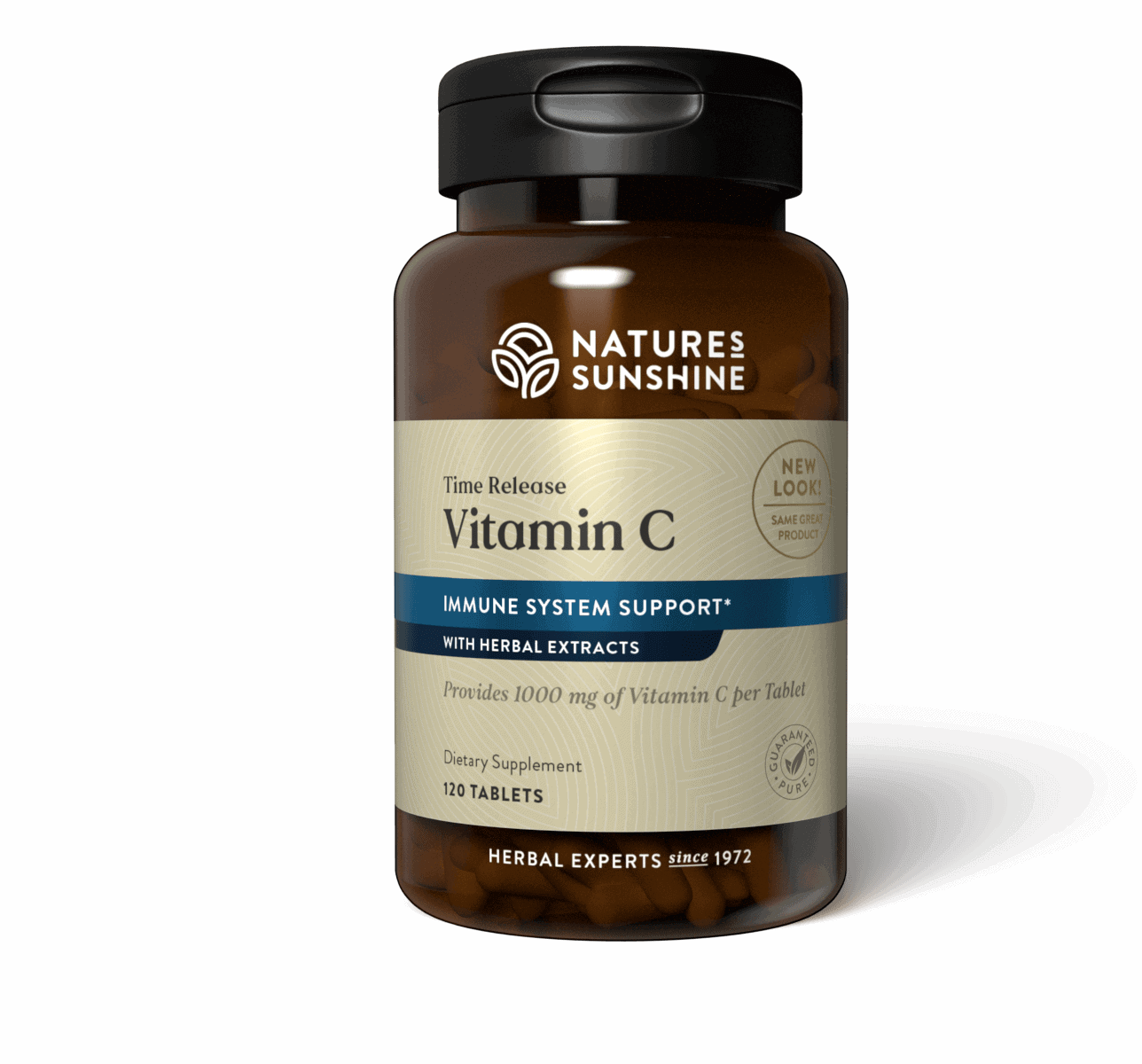
For most adults, a well-formulated Vitamin C supplement taken at the recommended serving is a safe and effective way to support daily needs. Nature's Sunshine Vitamin C Time Release is designed with a special coating that slows the absorption of nutrients until they reach the intestines, helping deliver Vitamin C throughout the day rather than in one large bolus. The directions are straightforward: take one tablet daily with a meal.
This formula is blended with a base of Rose hips extract, acerola extract, Rutin, Lemon bioflavonoids, and Hesperidin complex — a combination of naturally occurring compounds that complement Vitamin C's role in the body. It is a completely natural product with no sugar, starch, artificial colorings, or flavorings, and it carries both vegan and non-GMO attributes.
If you have questions about how Vitamin C fits into your individual health picture — especially if you have a pre-existing condition or take medications — our naturopath is available for a free consultation. That personalized guidance can be especially valuable for people wondering whether their current intake is appropriate.
What Vitamin C Does for Your Body
Understanding the question "can you overdose on Vitamin C" is easier once you appreciate how central this nutrient is. Research supports Vitamin C's involvement across multiple body systems:
- Immune defense: Vitamin C contributes to immune defense by supporting various cellular functions of both the innate and adaptive immune system, including epithelial barrier function, phagocytosis, and the oxidant-scavenging activity of the skin. Studies suggest regular supplementation modestly reduces common cold duration — by about 8% in adults and 14% in children — though it does not appear to prevent colds in the general population.
- Antioxidant protection: As a water-soluble antioxidant, Vitamin C directly scavenges reactive oxygen species and is capable of regenerating other antioxidants such as vitamin E.
- Collagen synthesis: The body needs Vitamin C to make collagen, a protein required to help wounds heal. Without adequate Vitamin C, collagen precursors cannot be properly hydroxylated, leading to structurally defective collagen.
- Iron absorption: Vitamin C improves the absorption of non-heme iron from plant-based foods by reducing ferric iron to ferrous iron in the gastrointestinal lumen.
These benefits are achieved at adequate intake levels. Taking amounts far above what the body can absorb and use does not proportionally increase these benefits and may introduce the side effects discussed above.
Interactions to Be Aware Of
Beyond the question of whether you can overdose on Vitamin C, it is important to know that high-dose supplementation may interact with certain medications:
- Chemotherapy: There is concern that use of Vitamin C and other antioxidants during chemotherapy might reduce the effectiveness of these treatments.
- Statins and niacin: Taking Vitamin C with statins and niacin could keep these medicines from working as well as expected in people managing high cholesterol.
- Estrogen-containing medications: Taking Vitamin C with birth control pills or hormone replacement therapy might raise estrogen levels.
- Protease inhibitors: Vitamin C might reduce the effectiveness of these antiviral medicines.
- Iron supplements: For people with hemochromatosis, the enhanced iron absorption caused by Vitamin C can be harmful.
Anyone taking prescription medications should consult a healthcare professional before adding high-dose Vitamin C to their routine. Our naturopath can help you think through potential interactions during a free consultation.
Key ingredients
- ✓ Envío gratis en pedidos superiores a $75
- ✓ Devoluciones fáciles en 90 días
- ✓ Envíos en pocas horas
Escrito por Greg Howlett
Preguntas frecuentes
Can you overdose on Vitamin C from supplements?
A true life-threatening overdose on Vitamin C is extremely rare because the body cannot store it — excess amounts are excreted. However, consistently taking more than 2,000 mg per day (the Tolerable Upper Intake Level set by the Institute of Medicine) is not recommended, as it can lead to gastrointestinal upset, diarrhea, stomach cramps, and an increased risk of kidney stones, particularly in individuals already predisposed to them.
What are the side effects of taking too much Vitamin C?
The only consistently shown side effects of high-dose Vitamin C are gastrointestinal — including stomach upset, vomiting, loose stools, cramps, and bloating. At intakes above 2 g/day, elevated urinary oxalate excretion has been reported, raising concerns about kidney stone risk. People with G6PD deficiency may experience hemolysis at high doses, and those with hemochromatosis should avoid high-dose Vitamin C because it increases iron absorption.
How much Vitamin C should I take daily?
The RDA is 90 mg for adult men and 75 mg for adult women, with higher amounts for pregnant women (85 mg), lactating women (120 mg), and smokers (an additional 35 mg). Nature's Sunshine Vitamin C Time Release provides 1,000 mg per tablet with time-release delivery; the directions are to take one tablet daily with a meal. If you are unsure what amount is right for you, our naturopath offers free consultations to help you decide.
Is Vitamin C safe to take every day?
Yes, when taken at suggested doses, Vitamin C supplements are considered safe for daily use. Vitamin C is water-soluble, and amounts the body does not need are excreted through urine. The key is to stay within a reasonable intake range — the Institute of Medicine recommends not exceeding 2,000 mg per day for adults to avoid gastrointestinal side effects.
Does Vitamin C interact with any medications?
Yes. High-dose Vitamin C may interact with chemotherapy drugs (potentially reducing their effectiveness), statins and niacin (possibly making them less effective), estrogen-containing medications like birth control pills (potentially raising estrogen levels), protease inhibitors, and iron supplements (particularly problematic for people with hemochromatosis). Always consult a healthcare professional before combining high-dose Vitamin C with prescription medications.
Why does this supplement contain 1,000 mg if the RDA is only 75–90 mg?
Clinical studies have used a wide range of Vitamin C doses. For example, the Cochrane review on the common cold analyzed trials using at least 200 mg/day, and the AREDS formulation for eye health used 500 mg. The 1,000 mg dose in this product is within the range studied in research and well below the 2,000 mg upper limit. Its time-release formulation is designed to slow absorption throughout the day rather than delivering the full amount at once, and at doses above 1 g/day, absorption naturally decreases to about 50% or less.
Talk to Dr. Shannyn Fowl
Not sure if this is right for you? Book a free, no-pressure consultation for personalized guidance on your health goals.
Book your free consult →About Caring Sunshine
A family-run reseller of premium supplements — free shipping, a 90-day guarantee, and real people who know the products.
Learn more about us →