
Turmeric Curcumin con BioPerine: articulaciones
Descubre cómo Turmeric Curcumin con bioperine apoya las articulaciones, la inflamación saludable y la defensa antioxidante. Conoce más.
Turmeric Curcumin con BioPerine: una combinación potente para la salud inflamatoria
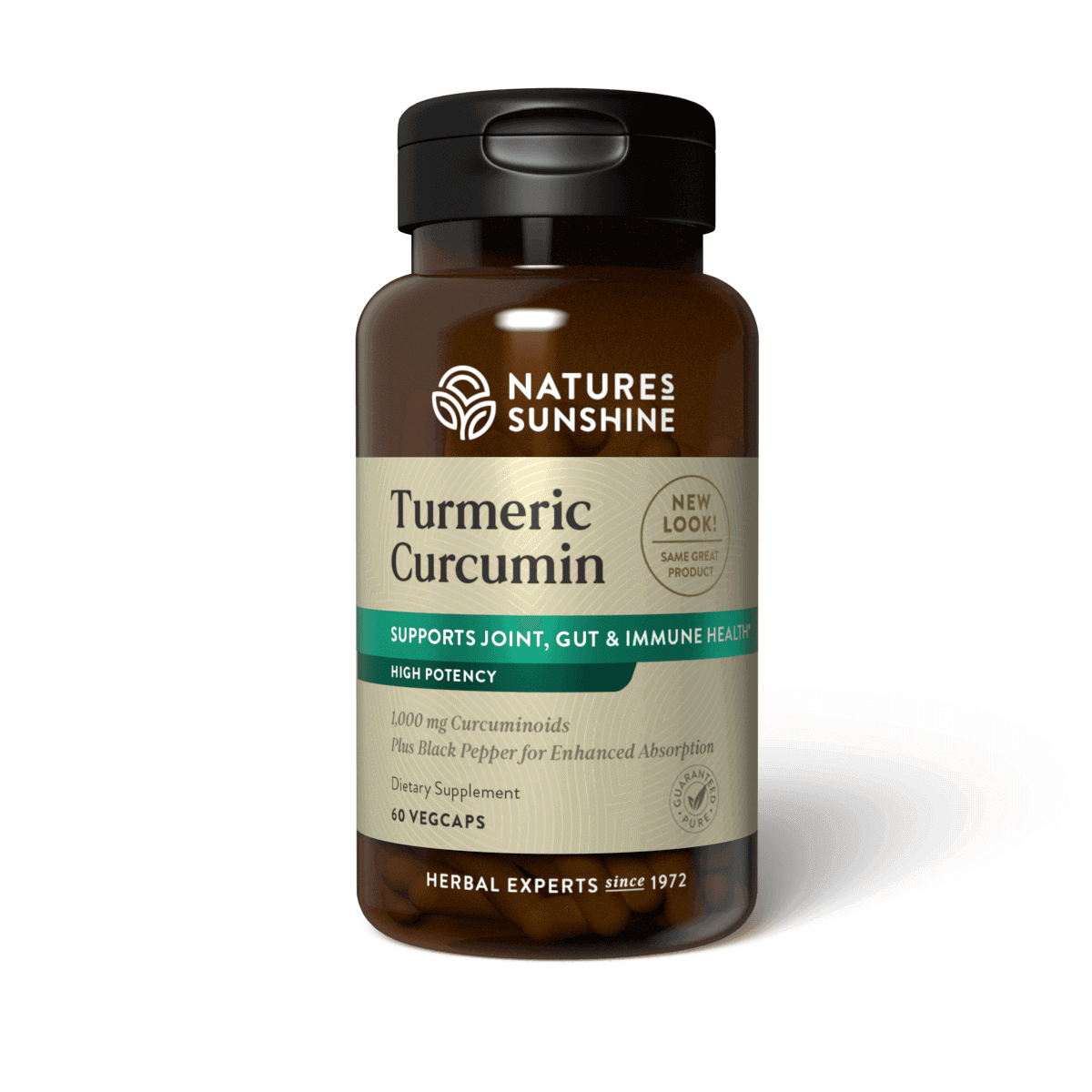
Turmeric Curcumin con bioperine reúne dos ingredientes botánicos de eficacia comprobada —extracto de cúrcuma y extracto de pimienta negra— en una fórmula diseñada para favorecer una respuesta inflamatoria saludable, a la vez que apoya la salud de las articulaciones, la piel, el cerebro y el intestino. Turmeric Curcumin (antes CurcuminBP) de Nature's Sunshine aporta 1,100 mg de extracto de cúrcuma junto con 1,000 mg de curcuminoides por porción, potenciado con extracto de pimienta negra para mejorar la absorción.
Los curcuminoides son los principales compuestos activos que se obtienen de los rizomas de la cúrcuma (Curcuma longa L.), la especia amarilla del curry que se ha usado de forma segura durante siglos en la medicina ayurvédica de la India. Como antioxidante potente, la curcumina apoya una respuesta inflamatoria saludable y puede ayudar a apoyar la función del sistema inmunitario. Una porción de esta fórmula equivale a 32,000 mg de cúrcuma en raíz entera.
Si bien la mayoría de los productos de cúrcuma aportan niveles altos de raíz de cúrcuma con niveles bajos del extracto concentrado, Nature's Sunshine aporta tanto raíz de cúrcuma como niveles más altos de extracto de cúrcuma rico en antioxidantes. La fórmula ha sido estudiada clínicamente y está diseñada para una absorción y una eficacia superiores, y cuenta con la certificación de no transgénicos.
El reto de la biodisponibilidad: cómo ayuda la pimienta negra
Uno de los retos más importantes de la curcumina es su biodisponibilidad oral naturalmente baja. Numerosos factores —entre ellos la baja solubilidad en agua, la permeabilidad intestinal deficiente, la inestabilidad a pH alcalino y el metabolismo rápido— contribuyen a la absorción limitada de la curcumina. La investigación ha mostrado que, cuando se toma sola, los niveles séricos de curcumina fueron indetectables o muy bajos después de una dosis oral estándar.
Aquí es donde el extracto de pimienta negra desempeña un papel fundamental. La piperina, el alcaloide principal de la pimienta negra (Piper nigrum), es una de las estrategias más estudiadas para mejorar la absorción de la curcumina. En un estudio en humanos citado con frecuencia, la biodisponibilidad de la curcumina aumentó en un 2,000% a los 45 minutos después de la administración conjunta con piperina. El mecanismo implica la capacidad de la piperina para inhibir las enzimas UDP-glucuronosiltransferasa (UGT) y la P-glicoproteína, que normalmente marcan la curcumina para su excreción rápida antes de que el cuerpo pueda utilizarla.
Al incluir extracto de pimienta negra en la fórmula, este producto Turmeric Curcumin con bioperine aborda una de las limitaciones más conocidas de la curcumina. El extracto de pimienta negra también puede ofrecer sus propias propiedades antioxidantes y puede ayudar con algunas molestias digestivas ocasionales.
Ingredientes clave
- ✓ Envío gratis en pedidos superiores a $75
- ✓ Devoluciones fáciles en 90 días
- ✓ Envíos en pocas horas
Quién puede beneficiarse de Turmeric Curcumin con BioPerine
Esta fórmula puede ser una buena opción para adultos que buscan apoyo natural para una respuesta inflamatoria saludable. La investigación sugiere que la curcumina está particularmente bien estudiada en personas que enfrentan rigidez articular ocasional, molestias o movilidad reducida, en especial en relación con la salud de la rodilla y el bienestar musculoesquelético general.
También puede interesar a quienes buscan apoyo para la defensa antioxidante, ya que los estudios sugieren que la curcumina apoya los sistemas antioxidantes endógenos del cuerpo. Además, la investigación señala posibles beneficios para la salud intestinal, la función del sistema inmunitario y el equilibrio saludable del microbioma.
Si actualmente tomas medicamentos —en especial anticoagulantes, antitrombóticos o fármacos metabolizados por las enzimas CYP3A4—, vale la pena tener en cuenta que tanto la curcumina como la piperina pueden interactuar con ciertos medicamentos. Nuestro naturópata te ofrece una consulta gratuita para ayudarte a determinar si esta fórmula se ajusta a tu situación de salud particular. Las personas con afecciones hepáticas actuales o previas también deben tener precaución, ya que se han descrito casos raros de daño hepático con fórmulas de curcumina con biodisponibilidad mejorada.
Modo de uso
Toma 2 VegCaps al día. Cada porción (2 cápsulas) aporta 1,100 mg de extracto de cúrcuma con 1,000 mg de curcuminoides y extracto de pimienta negra para una absorción mejorada. El frasco contiene 60 cápsulas y ofrece un suministro para 30 días según la porción recomendada.
Escrito por Greg Howlett
Preguntas frecuentes
¿Por qué se incluye extracto de pimienta negra en un suplemento de Turmeric Curcumin?
La curcumina tiene una biodisponibilidad oral naturalmente baja debido a su baja solubilidad en agua, su metabolismo rápido y su eliminación sistémica rápida. La piperina, el alcaloide activo de la pimienta negra, inhibe las enzimas (UGT, CYP3A4) y los transportadores (P-glicoproteína) que degradan y eliminan rápidamente la curcumina. En un estudio en humanos, la administración conjunta de piperina con curcumina aumentó la biodisponibilidad en aproximadamente un 2,000%. El extracto de pimienta negra también puede ofrecer sus propias propiedades antioxidantes y puede ayudar con molestias digestivas ocasionales.
¿Qué apoya Turmeric Curcumin con bioperine?
Esta fórmula está diseñada para favorecer una respuesta inflamatoria saludable y apoyar la salud de las articulaciones, la piel, el cerebro y el intestino, así como la función del sistema inmunitario. La investigación sugiere que la curcumina inhibe vías inflamatorias clave, entre ellas el NF-κB, la COX-2 y la LOX, y múltiples metaanálisis respaldan sus beneficios para el dolor y la función articular en la osteoartritis. También apoya la defensa antioxidante al activar la vía Nrf2/ARE, que aumenta la expresión de las enzimas protectoras propias del cuerpo. La fórmula también puede favorecer un equilibrio saludable del microbioma.
¿Es seguro tomar Turmeric Curcumin?
La curcumina ha mostrado una buena tolerabilidad en múltiples ensayos clínicos, y la FDA la reconoce como generalmente segura (GRAS). Varios ensayos no muestran toxicidad significativa en dosis estándar. Los efectos secundarios descritos con mayor frecuencia son alteraciones gastrointestinales leves, como náuseas o diarrea, que suelen resolverse al reducir la dosis. Sin embargo, se han descrito casos raros de daño hepático asociados con fórmulas de curcumina con biodisponibilidad mejorada, y el riesgo puede ser mayor para las personas con afecciones hepáticas existentes. Es importante consultar a un profesional de la salud antes de comenzar cualquier suplemento nuevo, en especial si tomas medicamentos.
¿Puede Turmeric Curcumin interactuar con medicamentos?
Sí. La curcumina puede afectar ciertas enzimas del citocromo P450 implicadas en el metabolismo de los medicamentos, y se sabe que la piperina inhibe la CYP3A4, la CYP2C9 y la P-glicoproteína. Los estudios clínicos han mostrado que la piperina puede aumentar las concentraciones plasmáticas de medicamentos como la carbamazepina y la warfarina. Las personas que toman anticoagulantes, antiagregantes plaquetarios u otros medicamentos con receta deben consultar a su profesional de la salud antes de usarlo. Nuestro naturópata te ofrece una consulta gratuita para hablar de posibles interacciones.
¿A cuánta cúrcuma en raíz entera equivale una porción?
Una porción (2 VegCaps) de Turmeric Curcumin de Nature's Sunshine equivale a 32,000 mg de cúrcuma en raíz entera, y aporta 1,100 mg de extracto de cúrcuma con 1,000 mg de curcuminoides. Este enfoque concentrado ofrece niveles más altos de extracto de cúrcuma rico en antioxidantes en comparación con las fórmulas que dependen principalmente del polvo de raíz entera.
¿Qué dice la investigación sobre Turmeric Curcumin para la salud articular?
La salud articular —en particular la osteoartritis de rodilla— es la indicación más estudiada para la curcumina en ensayos clínicos en humanos. Una revisión sistemática de 2022 de 29 ECA, con 2,396 participantes con cinco tipos de artritis, confirmó la eficacia de la curcumina para el dolor y la función. Un metaanálisis independiente observó que la curcumina tenía una eficacia de tratamiento similar a la de los AINE, con base en 16 ECA y 1,810 adultos. Un metaanálisis en red de 2025 ubicó a la curcumina entre los suplementos con beneficios funcionales significativos para la OA de rodilla. Sin embargo, la calidad de la evidencia en los distintos estudios se califica de manera constante como baja a muy baja, debido a los tamaños de muestra pequeños y la variabilidad metodológica.
Talk to Dr. Shannyn Fowl
Not sure if this is right for you? Book a free, no-pressure consultation for personalized guidance on your health goals.
Book your free consult →About Caring Sunshine
A family-run reseller of premium supplements — free shipping, a 90-day guarantee, and real people who know the products.
Learn more about us →