
Guía de cúrcuma (curcumina) | Beneficios y evidencia
Conoce la cúrcuma (curcumina): beneficios para articulaciones e inflamación, ingredientes clave, modo de uso y preguntas frecuentes.
¿Qué es la cúrcuma (curcumina) y por qué es importante?
La cúrcuma (curcumina) ha sido un pilar de la medicina ayurvédica y de la medicina tradicional asiática durante casi 6,000 años, apreciada por su vibrante color dorado y sus múltiples aplicaciones. Derivada del rizoma seco de Curcuma longa, una planta tropical de la familia del jengibre, la cúrcuma debe su actividad biológica principal a un grupo de compuestos polifenólicos llamados curcuminoides, entre los cuales la curcumina (diferuloilmetano) es el componente dominante y más investigado.
La curcumina se ha estudiado extensamente por su capacidad de promover una respuesta inflamatoria saludable mediante la modulación de vías de señalización clave, como las cascadas de NF-κB, MAPK y JAK/STAT. Las investigaciones sugieren que también puede apoyar la defensa antioxidante al activar la vía Nrf2-Keap1, que aumenta la expresión de las enzimas protectoras propias del cuerpo, como la superóxido dismutasa (SOD), la catalasa y el glutatión.
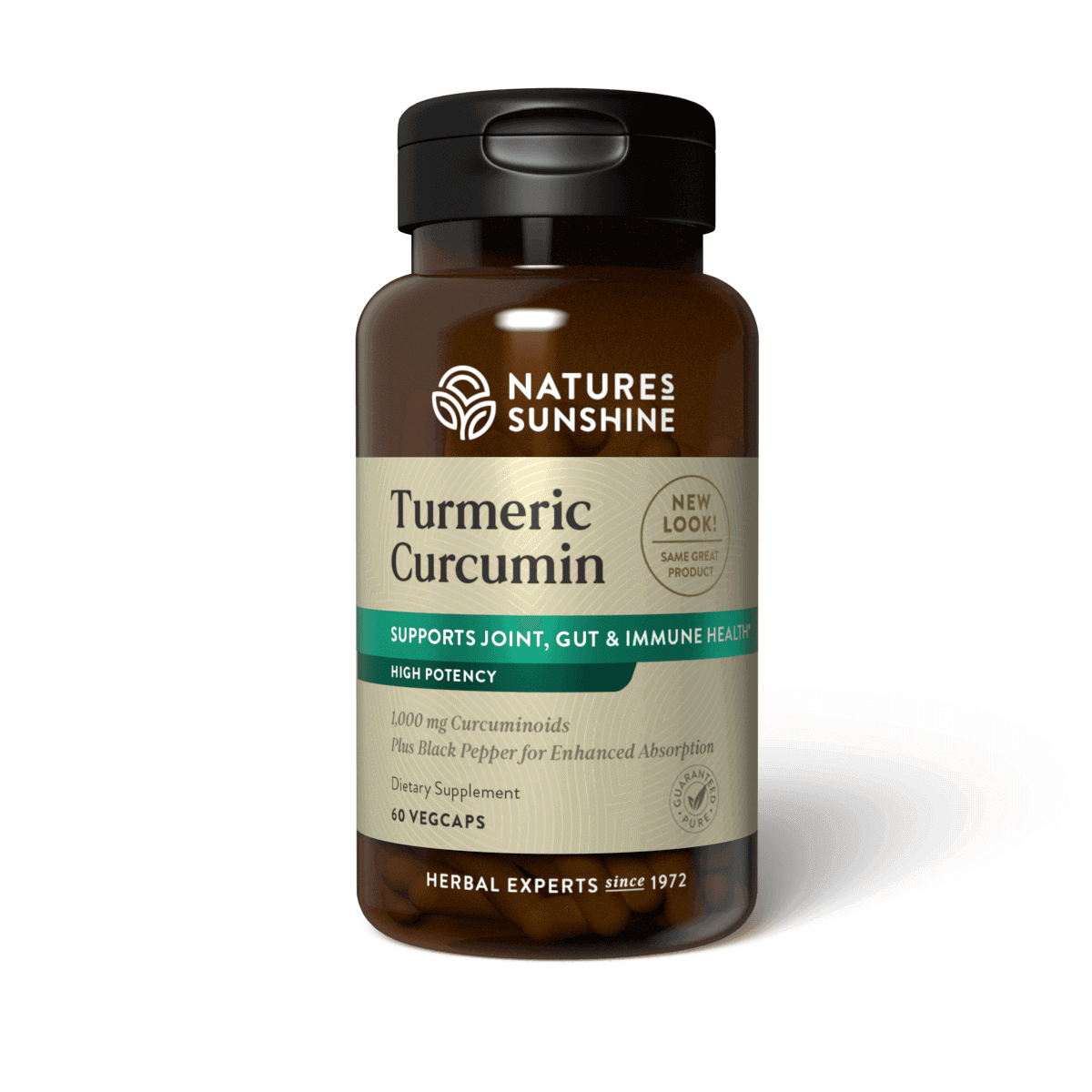
Turmeric Curcumin de Nature's Sunshine aprovecha el poder del extracto de cúrcuma para ofrecer tanto raíz de cúrcuma como niveles más altos de extracto de cúrcuma rico en antioxidantes: una porción equivale a 32,000 mg de cúrcuma en raíz entera. La fórmula también incluye extracto de pimienta negra, que según los estudios podría aumentar la absorción de curcumina hasta en un 2,000%. Este producto ha sido estudiado clínicamente y se ha comprobado que ofrece una absorción y una eficacia superiores.
Si tienes dudas sobre si la cúrcuma (curcumina) es adecuada para tu rutina de bienestar, nuestro naturópata te ofrece una consulta gratuita para ayudarte a decidir.
Cómo la cúrcuma (curcumina) apoya tu cuerpo
La acción antiinflamatoria de la curcumina se centra en inhibir la vía de señalización de NF-κB y reducir la producción de citocinas inflamatorias como el TNF-α, la IL-1β y la IL-6. También inhibe la actividad de las enzimas COX-2 y LOX, responsables de producir prostaglandinas y leucotrienos: mediadores inflamatorios implicados en las molestias articulares y la inflamación sistémica.
En cuanto a la acción antioxidante, la curcumina neutraliza las especies reactivas de oxígeno (ERO) y activa la vía transcripcional Keap1-Nrf2/ARE, que aumenta la expresión de enzimas citoprotectoras endógenas. Múltiples ensayos controlados aleatorizados (ECA) en humanos y metaanálisis han mostrado que la suplementación con curcumina aumenta de forma medible la capacidad antioxidante total y los niveles de SOD, mientras reduce el malondialdehído (MDA), un marcador de la peroxidación lipídica.
Las investigaciones también sugieren que la curcumina podría apoyar mecanismos neuroprotectores al restaurar los niveles del factor neurotrófico derivado del cerebro (BDNF), regular la neurotransmisión monoaminérgica y mitigar la neuroinflamación y el estrés oxidativo en el cerebro.
El reto de la biodisponibilidad
Una de las limitaciones más importantes para la eficacia de la curcumina es su baja biodisponibilidad oral natural, debida a su baja solubilidad en agua, su metabolismo rápido y su rápida eliminación sistémica. Por eso Nature's Sunshine mejoró esta fórmula con extracto de pimienta negra que contiene piperina: un alcaloide que inhibe las enzimas de glucuronidación (UGT) y la glucoproteína P, lo que permite que más curcumina permanezca en circulación. Un estudio histórico en humanos demostró que la coadministración de piperina con curcumina aumentó la biodisponibilidad en un 2,000% a los 45 minutos tras la dosis.
Ingredientes clave
- ✓ Envío gratis en pedidos superiores a $75
- ✓ Devoluciones fáciles en 90 días
- ✓ Envíos en pocas horas
¿Para quién es la cúrcuma (curcumina)?
Turmeric Curcumin de Nature's Sunshine puede ser una buena opción para adultos que buscan apoyo natural en varias áreas clave:
- Comodidad y flexibilidad articular: Las investigaciones sugieren que la cúrcuma (curcumina) puede apoyar la salud articular, la comodidad y la función física, y múltiples metaanálisis confirman beneficios para el dolor y la rigidez en la artrosis.
- Respuesta inflamatoria saludable: Quienes buscan promover una respuesta inflamatoria equilibrada pueden beneficiarse, ya que los estudios sugieren que la curcumina modula vías inflamatorias clave y podría ayudar a reducir los marcadores inflamatorios sistémicos.
- Defensa antioxidante: La capacidad de la curcumina para activar los sistemas antioxidantes endógenos del cuerpo —al aumentar la SOD, la catalasa y el glutatión— la hace relevante para quienes buscan apoyar la protección celular frente al estrés oxidativo.
- Bienestar intestinal e inmunitario: Las investigaciones sugieren que la curcumina puede apoyar la salud intestinal y la función del sistema inmunitario, con estudios en colitis ulcerosa que muestran su potencial como terapia complementaria.
- Salud cerebral: Las investigaciones preliminares sugieren que la curcumina puede apoyar la función cognitiva y niveles saludables de BDNF, aunque la evidencia clínica en esta área aún está en etapas iniciales.
Este producto no contiene OGM y viene en VegCaps, lo que lo convierte en una opción adecuada para quienes buscan un formato de cápsula a base de plantas. Si tienes dudas sobre si la cúrcuma (curcumina) es adecuada para tus necesidades individuales, nuestro naturópata ofrece consultas gratuitas para ayudarte a decidir.
Cómo tomar Turmeric Curcumin
Toma 2 VegCaps al día.
Cada frasco contiene 60 cápsulas, lo que proporciona un suministro completo para 30 días con la porción recomendada de 2 cápsulas al día.
Nota de seguridad importante: Si bien la cúrcuma y la curcumina se han usado de forma segura durante siglos y la FDA las reconoce como GRAS, cabe destacar que existe un riesgo poco frecuente de daño hepático por la cúrcuma o la curcumina en formas de dosificación medicinal, y este riesgo puede ser mayor en productos con absorción mejorada. Las personas con afecciones hepáticas actuales o previas deben tener precaución. Además, la curcumina puede afectar ciertas enzimas del CYP450, y la piperina del extracto de pimienta negra puede aumentar la biodisponibilidad de los medicamentos coadministrados: los anticoagulantes como la warfarina y los medicamentos metabolizados por el CYP3A4. Si tomas medicamentos con receta, consulta a un profesional de la salud antes de comenzar a tomar este suplemento. Nuestro naturópata siempre te ofrece una consulta gratuita para hablar de cualquier duda.
Escrito por Greg Howlett
Preguntas frecuentes
¿Qué hace que este suplemento de cúrcuma (curcumina) sea diferente del polvo de cúrcuma simple?
Turmeric Curcumin de Nature's Sunshine ofrece tanto raíz de cúrcuma como niveles más altos de extracto concentrado de cúrcuma, con 1,000 mg de curcuminoides por porción: el equivalente a 32,000 mg de cúrcuma en raíz entera. El polvo de cúrcuma estándar contiene solo alrededor de un 2–5% de curcuminoides en peso, por lo que se necesitarían cantidades muy grandes para igualar esta fórmula. La adición de extracto de pimienta negra mejora aún más la absorción, ya que los estudios muestran que la piperina puede aumentar la biodisponibilidad de la curcumina hasta en un 2,000%.
¿Por qué se incluye la pimienta negra en un suplemento de cúrcuma (curcumina)?
La mayor limitación de la curcumina es su baja biodisponibilidad oral natural: debida a su baja solubilidad en agua, su metabolismo rápido y su rápida eliminación del cuerpo. Un estudio observó que la absorción oral de curcumina era de solo alrededor de un 1% sin potenciadores. El extracto de pimienta negra contiene piperina, que inhibe las enzimas de glucuronidación y los transportadores de la glucoproteína P que normalmente degradan y eliminan la curcumina. En un estudio farmacocinético en humanos, la piperina aumentó los niveles sanguíneos de curcumina en un 2,000% a los 45 minutos tras la coadministración.
¿Qué dice la investigación sobre la cúrcuma (curcumina) para la salud articular?
La salud articular —en particular la artrosis de rodilla— es el área más investigada en relación con la cúrcuma y la curcumina. Un metaanálisis en red de 2025 con 17 estudios observó que todas las preparaciones de cúrcuma redujeron significativamente las puntuaciones de dolor WOMAC en comparación con el placebo, y una revisión sistemática de 2022 con 29 ECA en cinco tipos de artritis confirmó su eficacia. Un metaanálisis independiente observó que la eficacia de la curcumina era comparable a la de los antiinflamatorios no esteroideos (AINE), según 16 ECA. Sin embargo, la calidad de la evidencia se califica sistemáticamente como baja a muy baja, debido al tamaño reducido de las muestras, la heterogeneidad metodológica y la frecuente participación de la industria en los estudios.
¿Es seguro tomar la cúrcuma (curcumina) todos los días?
La cúrcuma y la curcumina se han usado durante siglos en la medicina tradicional, y la FDA reconoce a la curcumina como generalmente segura (GRAS). Varios ensayos clínicos no han mostrado efectos tóxicos, y se ha descrito que la curcumina es segura en dosis de hasta 6 gramos al día durante 4–7 semanas en el contexto de ensayos clínicos. Los efectos secundarios más frecuentes son alteraciones gastrointestinales leves, como náuseas o malestar estomacal. Sin embargo, existe un riesgo poco frecuente de daño hepático, que puede ser mayor con fórmulas de absorción mejorada o dosis más altas. Las personas con afecciones hepáticas existentes o que toman medicamentos con receta deben consultar a un profesional de la salud.
¿Puede la cúrcuma (curcumina) interactuar con medicamentos?
Sí, existen posibles interacciones que debes tener en cuenta. La curcumina puede afectar ciertas enzimas del citocromo P450 implicadas en el metabolismo de los fármacos. Además, la piperina (del extracto de pimienta negra presente en esta fórmula) inhibe el CYP3A4, el CYP2C9 y la glucoproteína P, lo que puede aumentar las concentraciones plasmáticas de medicamentos coadministrados como la warfarina, la carbamazepina y otros fármacos. Si tomas anticoagulantes, antiagregantes plaquetarios o cualquier medicamento con receta, consulta a tu profesional de la salud antes de usar este producto. Nuestro naturópata también te ofrece una consulta gratuita para hablar sobre posibles interacciones.
¿La cúrcuma (curcumina) apoya otras áreas además de la salud articular?
Las investigaciones sugieren que la curcumina puede apoyar varias áreas adicionales. Los metaanálisis indican que podría promover la defensa antioxidante, apoyar marcadores inflamatorios saludables y ayudar a mantener la salud metabólica: incluidos efectos beneficiosos sobre la glucosa en sangre en ayunas, los triglicéridos y el colesterol LDL en personas con síndrome metabólico. La evidencia también sugiere posibles beneficios para la salud intestinal, ya que los ECA muestran que la curcumina podría ayudar a apoyar la remisión clínica en la colitis ulcerosa. Los datos clínicos preliminares sugieren posibles beneficios para la función cognitiva y el estado de ánimo, aunque la evidencia en estas áreas aún está en etapas iniciales, y la mayoría de los ensayos son pequeños y de corta duración.
Talk to Dr. Shannyn Fowl
Not sure if this is right for you? Book a free, no-pressure consultation for personalized guidance on your health goals.
Book your free consult →About Caring Sunshine
A family-run reseller of premium supplements — free shipping, a 90-day guarantee, and real people who know the products.
Learn more about us →