
Evidencia del NCCIH sobre Turmeric Curcumin en la artrosis
Descubre qué dice el NCCIH sobre Turmeric Curcumin para la artrosis: dolor, función, seguridad y biodisponibilidad.
Evidencia del NCCIH sobre Turmeric Curcumin en la artrosis: qué muestra la investigación
La artrosis —particularmente la artrosis de rodilla— es la indicación más investigada para la cúrcuma y la curcumina en ensayos clínicos en humanos. El National Center for Complementary and Integrative Health (NCCIH) de los NIH reconoce la cúrcuma como una planta ampliamente estudiada, aunque señala que aún quedan dudas sobre su actividad biológica en humanos. Esta página examina la evidencia del NCCIH sobre Turmeric Curcumin en la artrosis, junto con los hallazgos de revisiones sistemáticas, metaanálisis y ensayos controlados aleatorizados.
La cúrcuma (Curcuma longa L.) es una planta herbácea perenne y rizomatosa de la familia del jengibre que se ha usado en la medicina ayurvédica durante casi 6,000 años. Sus principales compuestos bioactivos —los curcuminoides, entre los que predomina la curcumina— han sido objeto de cientos de estudios clínicos. La FDA ha clasificado la curcumina como generalmente reconocida como segura (GRAS), y se ha usado de forma segura durante siglos en la medicina tradicional de la India.
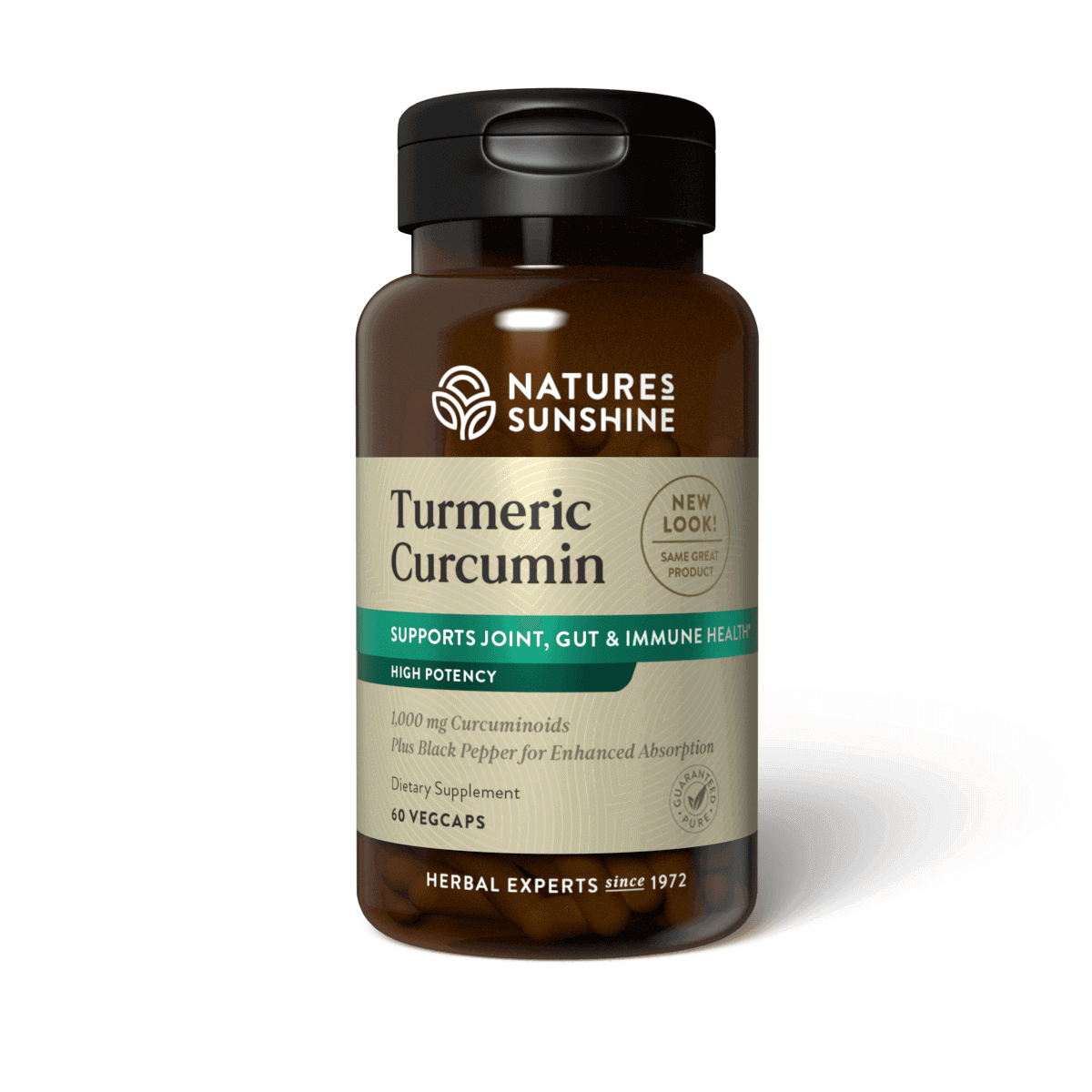
El producto Turmeric Curcumin de Nature's Sunshine aporta 1,100 mg de extracto de cúrcuma y 1,000 mg de curcuminoides por porción, potenciado con extracto de pimienta negra para apoyar la absorción. Se indica que una porción equivale a 32,000 mg de cúrcuma de raíz entera, y la fórmula ha sido estudiada clínicamente por su absorción y eficacia superiores.
Qué dicen las revisiones sistemáticas y los metaanálisis sobre la curcumina y la artrosis
Múltiples metaanálisis y revisiones sistemáticas respaldan un beneficio estadísticamente significativo de la cúrcuma y la curcumina para el dolor y la función en la artrosis de rodilla. Sin embargo, la calidad de la evidencia se califica de forma constante como baja a muy baja debido al tamaño pequeño de las muestras, el alto riesgo de sesgo en los estudios primarios, las diferencias metodológicas entre formulaciones y dosis, y la frecuente participación de la industria.
Principales hallazgos de la investigación
Una revisión sistemática y un metaanálisis en red de 2025 incluyeron 17 estudios y observaron que todas las preparaciones de cúrcuma redujeron de forma significativa las puntuaciones de dolor WOMAC en comparación con placebo. Las preparaciones de curcuminoides con biodisponibilidad mejorada mostraron una reducción del 30% en el dolor WOMAC, alcanzando el umbral de diferencia mínima clínicamente importante. Cuando se combinaron con un comparador activo, produjeron una reducción del 70% en el dolor medido por la escala VAS en comparación con el comparador activo solo. Sin embargo, la certeza de la evidencia sigue siendo baja.
Una revisión crítica de 2025 sobre revisiones sistemáticas y metaanálisis acerca de la curcumina para la artrosis de rodilla identificó siete revisiones sistemáticas que cumplían sus criterios de inclusión. Los curcuminoides mostraron posibles ventajas de eficacia y seguridad, pero estas revisiones se calificaron con una calidad metodológica extremadamente baja, y se observó un alto riesgo de sesgo en cuatro de ellas. De 48 resultados evaluados, 37 se calificaron como evidencia de calidad extremadamente baja.
Una revisión sistemática y un metaanálisis de 2022 publicados en Frontiers in Immunology examinaron 29 ensayos controlados aleatorizados (ECA) con 2,396 participantes en cinco tipos de artritis, entre ellos la artrosis, la artritis reumatoide y la espondilitis anquilosante. La curcumina y el extracto de Curcuma longa se administraron en dosis de entre 120 mg y 1,500 mg durante 4 a 36 semanas. La revisión observó un alto riesgo de sesgo y posibles conflictos de interés relacionados con la industria.
Un metaanálisis independiente confirmó que la curcumina y el extracto de cúrcuma tenían una eficacia terapéutica similar a la de los medicamentos antiinflamatorios no esteroideos (AINE), con base en los hallazgos de 16 ECA y 1,810 adultos. Además, una revisión sistemática de 2025 con 21 estudios y 1,705 pacientes observó que los niveles de proteína C reactiva (PCR) y de TNF-alfa fueron significativamente más bajos en los grupos con curcumina en comparación con placebo en pacientes con artrosis de rodilla.
Cómo la curcumina puede apoyar la salud articular
La investigación sugiere que la curcumina ejerce efectos antiinflamatorios principalmente al inhibir la vía de señalización de NF-κB y reducir la producción de citocinas inflamatorias como el TNF-α y la IL-1β. También suprime las enzimas COX-2 y LOX, responsables de producir mediadores inflamatorios como las prostaglandinas y los leucotrienos. Además, la curcumina podría mitigar el estrés oxidativo al neutralizar las especies reactivas de oxígeno (ERO), lo que, según sugieren los estudios, podría ayudar a proteger el cartílago de la degradación.
Es importante señalar que las concentraciones que muestran efectos biológicos en entornos de laboratorio podrían no ser alcanzables en la circulación sistémica humana tras la administración oral: un desafío central reconocido en la evidencia del NCCIH sobre Turmeric Curcumin en la artrosis.
El reto de la biodisponibilidad y cómo lo aborda esta fórmula
La limitación más importante para la aplicación clínica de la curcumina es su baja biodisponibilidad oral. Numerosos factores contribuyen a esta limitación, entre ellos la baja solubilidad en agua, la escasa permeabilidad intestinal, la inestabilidad a pH alcalino y el metabolismo rápido. Un estudio observó que la absorción oral de curcumina fue de solo alrededor de un 1% en comparación con la administración intravenosa en ratas.
La estrategia más estudiada para mejorar la absorción es la coadministración con piperina, el alcaloide activo de la pimienta negra. En un estudio de referencia, la biodisponibilidad de la curcumina aumentó en un 2,000% a los 45 minutos de coadministrar curcumina por vía oral con piperina en humanos. Por eso Turmeric Curcumin de Nature's Sunshine incluye extracto de pimienta negra en su fórmula.
Sin embargo, la investigación farmacocinética independiente plantea advertencias importantes. Un estudio farmacocinético cruzado de 2025 que comparó cinco formulaciones comerciales observó que los niveles plasmáticos de curcumina no conjugada se mantuvieron mínimos incluso con fórmulas mejoradas, y en un caso la adición de piperina no aportó ningún beneficio adicional. Los sistemas de administración mejorada siguen siendo un área activa de investigación.
Si tienes dudas sobre la absorción de la curcumina o sobre cómo esta fórmula podría encajar en tu rutina de bienestar, nuestro naturópata te ofrece una consulta gratuita y puede ayudarte a evaluar tus opciones.
Quién puede beneficiarse de Turmeric Curcumin para el apoyo articular
Con base en la evidencia disponible del NCCIH sobre Turmeric Curcumin en la artrosis, este suplemento puede ser una buena opción para adultos que buscan apoyar una respuesta inflamatoria saludable y favorecer la comodidad articular. La investigación está más desarrollada para la artrosis de rodilla, donde múltiples revisiones sistemáticas sugieren que la curcumina podría apoyar el alivio del dolor y la función física.
Más allá de la salud articular, la investigación sugiere que la curcumina también podría apoyar la salud de la piel, el cerebro y el intestino, así como la función del sistema inmunitario. Los estudios han examinado sus efectos en la enfermedad inflamatoria intestinal, el síndrome metabólico, el envejecimiento cognitivo y los marcadores cardiovasculares; aunque la evidencia en estas áreas varía y en general se considera preliminar.
Turmeric Curcumin de Nature's Sunshine es una fórmula sin OGM. Es importante señalar que la evidencia disponible muestra un riesgo poco frecuente de daño hepático al tomar cúrcuma o curcumina en formas de dosificación medicinal, riesgo que puede ser mayor en productos con absorción mejorada. Las personas con problemas hepáticos actuales o previos deben tener precaución, y cualquier persona que tome medicamentos —especialmente anticoagulantes o fármacos metabolizados por las enzimas CYP3A4— debe consultar a un profesional de la salud antes de usarlo. La piperina presente en el extracto de pimienta negra puede aumentar las concentraciones plasmáticas de los medicamentos administrados conjuntamente.
Cómo tomar Turmeric Curcumin
Toma 2 VegCaps al día.
Cada porción de 2 cápsulas aporta 1,100 mg de extracto de cúrcuma con 1,000 mg de curcuminoides, además de extracto de pimienta negra para apoyar la biodisponibilidad. El frasco contiene 60 cápsulas, lo que proporciona un suministro para 30 días según la porción recomendada.
Ingredientes clave
- ✓ Envío gratis en pedidos superiores a $75
- ✓ Devoluciones fáciles en 90 días
- ✓ Envíos en pocas horas
Escrito por Greg Howlett
Preguntas frecuentes
¿Qué dice el NCCIH sobre la cúrcuma y la curcumina para la artrosis?
El National Center for Complementary and Integrative Health (NCCIH) de los NIH reconoce la cúrcuma como una planta ampliamente estudiada. Múltiples metaanálisis y revisiones sistemáticas respaldan un beneficio estadísticamente significativo de la cúrcuma y la curcumina para el dolor y la función en la artrosis de rodilla, con alguna evidencia de eficacia comparable a la de los AINE. Sin embargo, la literatura del NCCIH señala que la calidad de la evidencia se califica de forma constante como baja a muy baja debido al tamaño pequeño de las muestras, el alto riesgo de sesgo, la heterogeneidad entre formulaciones y dosis, y la frecuente participación de la industria. La posición del NCCIH refleja que, aunque la mayoría de la evidencia actual sugiere beneficios clínicos, aún quedan dudas sobre la actividad biológica en humanos.
¿Cómo funciona la curcumina para la inflamación articular?
La investigación sugiere que la curcumina ejerce efectos antiinflamatorios principalmente al inhibir la vía de señalización de NF-κB, lo que reduce la producción de citocinas inflamatorias como el TNF-α y la IL-1β. También suprime las enzimas COX-2 y LOX, responsables de producir prostaglandinas y leucotrienos. Además, la curcumina podría neutralizar las especies reactivas de oxígeno (ERO) y mitigar el estrés oxidativo, lo que, según sugieren los estudios, podría ayudar a proteger el cartílago de la degradación. Estos mecanismos están bien caracterizados en entornos de laboratorio, aunque un reto clave es que las concentraciones que muestran efectos biológicos in vitro podrían no ser completamente alcanzables en la circulación humana tras la administración oral.
¿Por qué se incluye la pimienta negra con Turmeric Curcumin?
La curcumina tiene una biodisponibilidad oral intrínsecamente baja debido a su baja solubilidad en agua, su escasa permeabilidad intestinal y su metabolismo rápido. El extracto de pimienta negra contiene piperina, que inhibe las enzimas (en particular la UGT, la CYP3A4 y la glicoproteína P) responsables de la rápida degradación y eliminación de la curcumina. En un estudio farmacocinético en humanos, la coadministración de piperina con curcumina aumentó la biodisponibilidad en un 2,000%. Sin embargo, es importante señalar que la inhibición enzimática de la piperina también puede afectar el metabolismo de los medicamentos administrados conjuntamente, por lo que las personas que toman medicamentos con receta deben consultar a un profesional de la salud.
¿Es seguro Turmeric Curcumin y conlleva algún riesgo?
La curcumina está clasificada como GRAS por la FDA, y se ha descrito que es segura en dosis orales de hasta 6 g/día durante 4 a 7 semanas en ensayos clínicos. Los efectos secundarios más comúnmente descritos son trastornos gastrointestinales como náuseas, diarrea y malestar estomacal, en particular con dosis más altas. La evidencia disponible muestra un riesgo poco frecuente de daño hepático al tomar cúrcuma o curcumina en formas de dosificación medicinal, y este riesgo puede ser mayor con fórmulas de biodisponibilidad mejorada y dosis más altas. Las personas con problemas hepáticos existentes podrían ser más susceptibles. Además, las fórmulas que contienen piperina pueden afectar el metabolismo de los medicamentos administrados conjuntamente, incluidos anticoagulantes como la warfarina y sustratos de CYP3A4 como la carbamazepina.
¿Cuánta curcumina aporta este producto por porción?
Cada porción de 2 VegCaps aporta 1,100 mg de extracto de cúrcuma que contiene 1,000 mg de curcuminoides, además de extracto de pimienta negra para apoyar la biodisponibilidad. El fabricante indica que una porción equivale a 32,000 mg de cúrcuma de raíz entera. El frasco contiene 60 cápsulas para un suministro de 30 días según la porción recomendada.
¿Turmeric Curcumin apoya algo más allá de las articulaciones?
La investigación ha examinado la curcumina en múltiples áreas de la salud más allá de la artrosis. Los estudios sugieren que podría apoyar una respuesta inflamatoria saludable en todo el organismo, y los metaanálisis muestran efectos sobre biomarcadores inflamatorios como la PCR, la IL-6 y el TNF-α. La investigación también ha explorado el posible papel de la curcumina en la salud metabólica (glucemia en ayunas, perfiles lipídicos), la función cognitiva, la salud digestiva (en particular la colitis ulcerosa) y la defensa antioxidante. Sin embargo, la solidez de la evidencia varía de forma significativa según el área: la artrosis y los marcadores metabólicos cuentan con la evidencia clínica más desarrollada, mientras que áreas como la función cognitiva y el cáncer siguen en una etapa temprana, con ensayos pequeños y de corta duración.
Talk to Dr. Shannyn Fowl
Not sure if this is right for you? Book a free, no-pressure consultation for personalized guidance on your health goals.
Book your free consult →About Caring Sunshine
A family-run reseller of premium supplements — free shipping, a 90-day guarantee, and real people who know the products.
Learn more about us →