
Magnesium Complex de Nature Made: magnesio con D3 y zinc
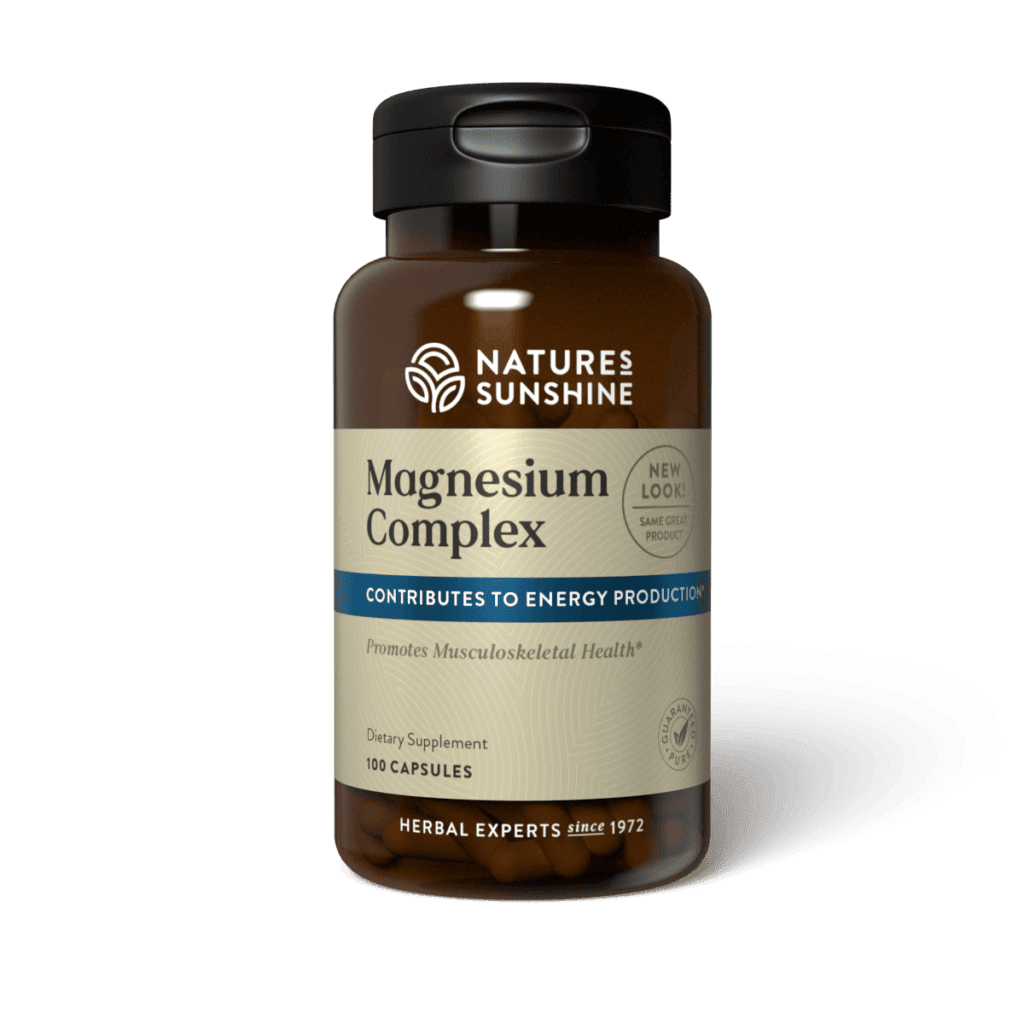
Magnesium Complex de Nature's Sunshine: citrato y malato de magnesio para el corazón, los nervios y los músculos. 184 mg por porción.
Magnesium Complex de Nature Made con D3 y zinc: qué es y por qué es importante
Si buscas un Magnesium Complex de Nature Made con D3 y zinc, seguramente ya reconoces lo esencial que es el magnesio para el bienestar diario. Magnesium Complex de Nature's Sunshine es un suplemento de magnesio enfocado que aporta 184 mg de magnesio por porción de 2 cápsulas en dos formas orgánicas altamente solubles —citrato de magnesio y malato de magnesio— elegidas específicamente para una eficacia y absorción óptimas.
El magnesio es el cuarto catión más abundante en el cuerpo humano y actúa como cofactor en más de 300 sistemas enzimáticos que regulan desde la producción de energía y la contracción muscular hasta la señalización nerviosa y el ritmo cardiovascular. A pesar de su importancia, se estima que entre un 56 y un 68% de los estadounidenses no obtienen suficiente magnesio en su dieta diaria para cumplir con la ingesta diaria recomendada (IDR). Esa carencia generalizada es una de las razones por las que tantas personas recurren a un complejo de magnesio de calidad.
Esta fórmula está diseñada para apoyar el sistema cardiovascular, ayudar a las funciones cerebrales, renales y cardíacas, y aportar el magnesio que tus músculos y nervios necesitan para funcionar correctamente. El frasco de 100 cápsulas facilita mantener una rutina diaria constante.
Por qué citrato y malato: dos formas de magnesio altamente solubles
No todos los suplementos de magnesio son iguales. Los suplementos de magnesio se clasifican, en términos generales, en compuestos orgánicos e inorgánicos. Las formas orgánicas —como citrato, malato, glicinato y lactato— consisten en magnesio quelado a moléculas orgánicas, y por lo general son más solubles y presentan una mayor biodisponibilidad que las formas inorgánicas como el óxido de magnesio.
Magnesium Complex combina citrato de magnesio y malato de magnesio, ambas formas orgánicas. La investigación muestra que el citrato de magnesio presenta una alta solubilidad incluso en agua (55%) y es considerablemente más soluble que el óxido de magnesio en todos los estados de secreción ácida. Esto es importante porque una mayor solubilidad se traduce en una absorción más eficiente en tu tracto digestivo.
Al combinar dos formas orgánicas complementarias, esta fórmula se describe como altamente soluble: una cualidad importante para quienes quieren aprovechar al máximo cada cápsula. Si tienes dudas sobre qué forma de magnesio es la más adecuada para tus necesidades individuales, nuestro naturópata te ofrece una consulta gratuita.
Ingredientes clave
- ✓ Envío gratis en pedidos superiores a $75
- ✓ Devoluciones fáciles en 90 días
- ✓ Envíos en pocas horas
¿Para quién es Magnesium Complex?
Esta fórmula es adecuada para una amplia variedad de adultos, pero ciertos grupos pueden encontrarla especialmente relevante. Los adultos mayores son más susceptibles a la deficiencia de magnesio debido a una menor absorción a partir de los alimentos, un mayor uso de medicamentos (los diuréticos pueden agotar el magnesio) y posibles restricciones alimentarias. Los hombres mayores de 70 años y las adolescentes se encuentran entre los grupos con mayor probabilidad de tener una ingesta baja.
Las personas que toman inhibidores de la bomba de protones (IBP), diuréticos de asa o tiazídicos, o ciertos antibióticos durante periodos prolongados deben saber que estos medicamentos pueden afectar los niveles de magnesio. Las personas con diabetes tipo 2, trastornos gastrointestinales o dependencia del alcohol también tienen un riesgo elevado de presentar niveles insuficientes de magnesio.
A las personas activas les puede interesar saber que el ejercicio puede aumentar los requerimientos de magnesio entre un 10 y un 20%, y la investigación sugiere que la suplementación con magnesio puede ayudar a reducir el dolor muscular y favorecer la recuperación. Cualquier persona que busque apoyo cardiovascular, del sistema nervioso o musculoesquelético —o que simplemente sospeche que su dieta no alcanza la IDR diaria de 310 a 420 mg— puede considerar un Magnesium Complex bien absorbido como este.
Si no tienes claro si el magnesio en suplemento es adecuado para ti, o si tienes dudas sobre cómo podría interactuar con tus medicamentos actuales, nuestro naturópata ofrece consultas gratuitas y con gusto te ayuda a resolver tus dudas.
Cómo tomar Magnesium Complex
Toma 2 cápsulas dos veces al día con una comida.
Cada porción de 2 cápsulas aporta 184 mg de magnesio. La IDR de magnesio es de 400 a 420 mg/día para hombres adultos y de 310 a 320 mg/día para mujeres adultas, por lo que tomar dos porciones al día —junto con el magnesio que obtienes de alimentos como las verduras de hoja verde, los frutos secos, las semillas y los cereales integrales— puede ayudarte a cubrir tus necesidades diarias.
Notas importantes sobre el horario: Si tomas bisfosfonatos (como alendronato), sepáralos del magnesio por al menos 2 horas. Si tomas antibióticos de tetraciclina o quinolona, toma el antibiótico al menos 2 horas antes o de 4 a 6 horas después del magnesio para evitar interferencias en la absorción. El magnesio también puede reducir la absorción de gabapentina en alrededor de un 20%.
Consideraciones de seguridad e interacciones con medicamentos
Los suplementos de magnesio suelen tolerarse bien. Los efectos secundarios más comunes están relacionados con el estómago —náuseas, cólicos o heces blandas— y tienden a presentarse con dosis más altas, siendo más frecuentes con formas inorgánicas como el óxido de magnesio. Debido a que esta fórmula utiliza formas orgánicas de citrato y malato, la comodidad gastrointestinal puede ser mejor.
El nivel superior de ingesta tolerable establecido por la Food and Nutrition Board es de 350 mg de magnesio provenientes solo de suplementos (esto no incluye el magnesio de los alimentos). La hipermagnesemia por ingesta de suplementos es poco frecuente en personas con función renal normal, ya que los riñones excretan eficientemente el exceso de magnesio. El riesgo aumenta considerablemente en personas con función renal deficiente.
Varios medicamentos pueden interactuar con los niveles de magnesio. Los diuréticos de asa y tiazídicos agotan el magnesio al aumentar su excreción urinaria, mientras que los diuréticos ahorradores de potasio reducen la pérdida de magnesio. Los IBP con receta, tomados durante periodos prolongados (por lo general más de un año), pueden causar hipomagnesemia. Habla siempre con tu profesional de la salud antes de tomar nuevos suplementos, especialmente si tomas medicamentos con receta.
Escrito por Greg Howlett
Preguntas frecuentes
¿Qué formas de magnesio contiene este Magnesium Complex?
Esta fórmula contiene dos formas orgánicas: citrato de magnesio y malato de magnesio. Ambas son altamente solubles. La investigación muestra que el citrato de magnesio tiene una solubilidad del 55% en agua y es considerablemente más soluble que las formas inorgánicas como el óxido de magnesio. Las formas orgánicas de magnesio suelen absorberse mejor en el cuerpo.
¿Cuánto magnesio aporta cada porción?
Dos cápsulas (una porción) aportan 184 mg de magnesio. El uso sugerido es de dos porciones al día (2 cápsulas dos veces al día con una comida), para un total de 368 mg de magnesio en suplemento al día. La IDR de magnesio es de 400 a 420 mg/día para hombres adultos y de 310 a 320 mg/día para mujeres adultas, y esta cantidad incluye el magnesio de todas las fuentes, incluidos los alimentos.
¿Este producto contiene vitamina D3 o zinc?
Este Magnesium Complex de Nature's Sunshine se enfoca específicamente en el magnesio en formas de citrato y malato. La etiqueta de ingredientes incluye citrato de magnesio y malato de magnesio. Si buscas una fórmula que también incluya vitamina D3 o zinc, nuestro naturópata puede ayudarte a encontrar un producto complementario durante una consulta gratuita.
¿Los suplementos de magnesio pueden interactuar con medicamentos?
Sí. El magnesio puede disminuir la absorción de los bisfosfonatos, los antibióticos de tetraciclina y los antibióticos de quinolona: estos medicamentos deben separarse del magnesio por al menos 2 horas (de 4 a 6 horas en el caso de las tetraciclinas y las quinolonas). Los diuréticos de asa y tiazídicos pueden agotar el magnesio, mientras que el uso prolongado de IBP puede causar niveles bajos de magnesio. El magnesio también puede reducir la absorción de gabapentina en alrededor de un 20%. Consulta siempre con tu profesional de la salud antes de combinar suplementos con medicamentos con receta.
¿Quién tiene más riesgo de deficiencia de magnesio?
Se estima que entre un 56 y un 68% de los estadounidenses no cumplen con la IDR de magnesio. Entre los grupos con mayor riesgo se encuentran los adultos mayores (debido a una menor absorción y un mayor uso de medicamentos), las personas con diabetes tipo 2, las personas con trastornos gastrointestinales, quienes tienen dependencia del alcohol, los hombres mayores de 70 años y las adolescentes. Los primeros síntomas de la deficiencia incluyen fatiga, debilidad, pérdida de apetito y calambres musculares.
¿La investigación respalda el uso de magnesio para la salud del corazón y los calambres musculares?
La investigación sugiere que niveles más altos de magnesio se asocian de manera inversa con el riesgo de enfermedad coronaria, accidente cerebrovascular y enfermedad cardiovascular total en múltiples metaanálisis de gran tamaño. En cuanto a los calambres musculares, el magnesio es el suplemento mineral más estudiado; la deficiencia altera la relajación muscular, ya que los músculos se contraen con normalidad pero les cuesta liberarse por completo cuando los niveles son bajos. Si bien la evidencia es más sólida en personas con deficiencia de magnesio, mantener una ingesta adecuada de magnesio apoya tanto la función cardiovascular como la musculoesquelética.
Talk to Dr. Shannyn Fowl
Not sure if this is right for you? Book a free, no-pressure consultation for personalized guidance on your health goals.
Book your free consult →About Caring Sunshine
A family-run reseller of premium supplements — free shipping, a 90-day guarantee, and real people who know the products.
Learn more about us →