
Magnesium Complex Spectrum 5 | Citrato y malato
Descubre Magnesium Complex Spectrum 5: citrato y malato para la salud cardiovascular, el sistema nervioso y los calambres musculares.
Magnesium Complex Spectrum 5: qué es y por qué es importante
El magnesio es el cuarto catión más abundante en el cuerpo humano y un cofactor fundamental en más de 300 reacciones enzimáticas que regulan el metabolismo energético, la función neuromuscular, la salud cardiovascular, la integridad ósea y el bienestar psicológico. A pesar de su importancia, se estima que entre un 56 y un 68% de los estadounidenses no obtienen suficiente magnesio en su alimentación diaria para cumplir con la ingesta diaria recomendada: un problema de deficiencia que contribuye a una amplia gama de problemas de salud.
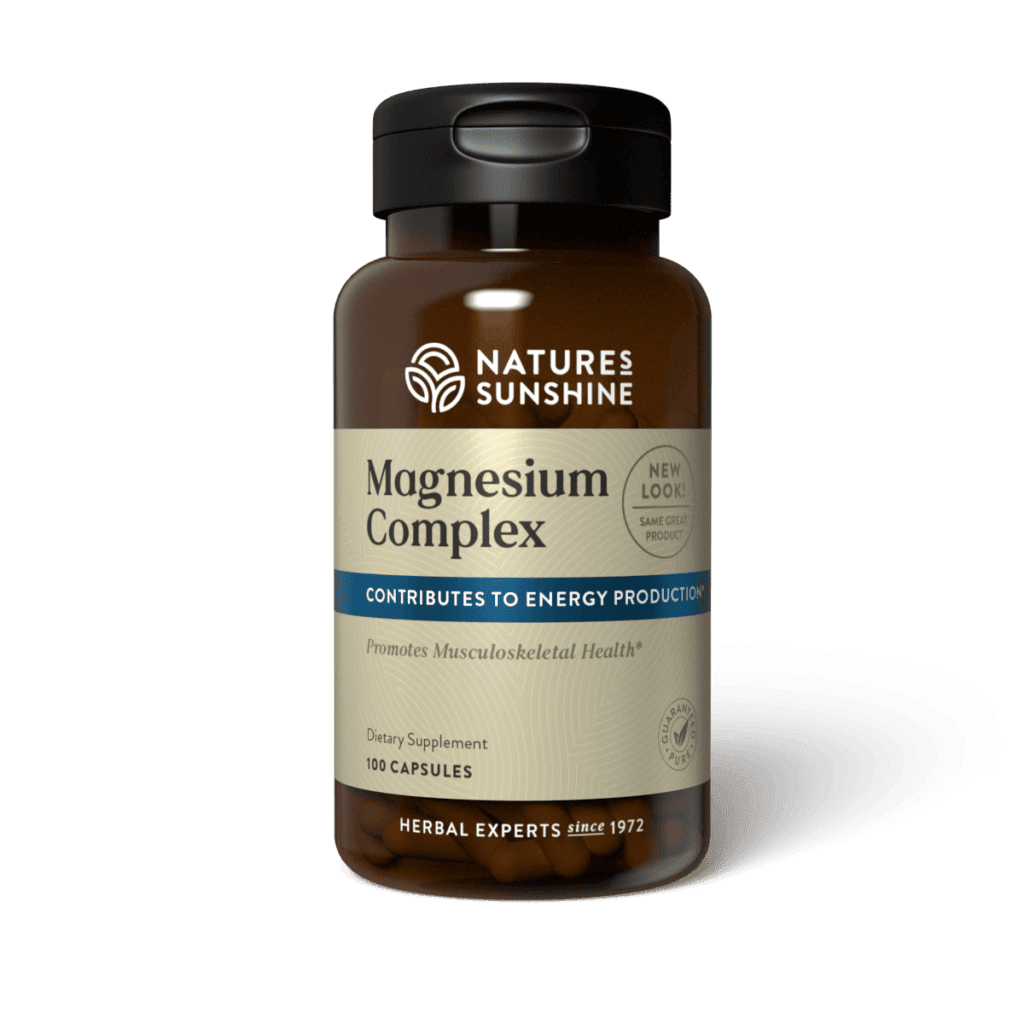
El Magnesium Complex de Nature's Sunshine aporta este mineral esencial en dos formas orgánicas altamente solubles —citrato de magnesio y malato de magnesio—, y proporciona 184 mg de magnesio por porción de dos cápsulas. Este enfoque Magnesium Complex spectrum 5 se centra en la eficacia óptima mediante la elección de formas de sales orgánicas que, por lo general, son más solubles y presentan mayor biodisponibilidad que alternativas inorgánicas como el óxido de magnesio.
El citrato de magnesio, por ejemplo, presentó una alta solubilidad incluso en agua (un 55%) y fue considerablemente más soluble que el óxido de magnesio en todos los estados de secreción ácida. Las formas orgánicas como el citrato y el malato involucran magnesio quelado a ácidos orgánicos, que generalmente el cuerpo absorbe mejor. Esta fórmula está diseñada para apoyar el sistema cardiovascular y las funciones cerebrales, cardíacas y renales.
Dos formas biodisponibles que actúan juntas
No todos los suplementos de magnesio son iguales. La forma de magnesio que tomas afecta directamente la cantidad que tu cuerpo realmente absorbe. Esta fórmula Magnesium Complex spectrum 5 combina citrato de magnesio con malato de magnesio —ambos clasificados como sales orgánicas de magnesio— para lograr un enfoque complementario en la absorción y el aprovechamiento.
El magnesio es indispensable para la generación de energía celular. El ion Mg²⁺ desempeña un papel fundamental en la síntesis de ATP catalizada por las ATP sintasas, lo que lo hace esencial para la producción de energía en prácticamente todos los tejidos. También actúa como cofactor de la enzima Na,K-ATPasa, lo que apoya el transporte de iones y el equilibrio electrolítico celular.
A nivel cardiovascular, el magnesio regula los canales iónicos cardíacos, la conducción miocárdica y la contracción. Apoya el tono vascular y la función endotelial, y la investigación sugiere que podría desempeñar un papel en la prevención de la calcificación vascular y en la dilatación mediada por flujo. Un ensayo controlado aleatorizado (ECA) de 24 semanas observó que la suplementación con citrato de magnesio redujo significativamente la rigidez arterial medida mediante la velocidad de onda de pulso.
En el sistema nervioso, el magnesio actúa como un antagonista natural de los receptores NMDA, lo que modula la transmisión sináptica y la excitabilidad neuronal. Este mecanismo es relevante para su función en el apoyo a la señalización nerviosa normal, la transmisión neuromuscular y la estabilidad neurológica general. El magnesio también es cofactor en la síntesis de dopamina a través de la tirosina hidroxilasa y apoya el equilibrio entre los neurotransmisores inhibitorios y excitatorios.
En el sistema musculoesquelético, el magnesio es cofactor en la síntesis de ATP, la síntesis de proteínas musculares y la homeostasis electrolítica. Regula la contracción muscular mediante el transporte intracelular de calcio, y la deficiencia se asocia con una relajación muscular deficiente: los músculos pueden contraerse con normalidad, pero les cuesta liberarse por completo cuando los niveles son bajos.
Ingredientes clave
- ✓ Envío gratis en pedidos superiores a $75
- ✓ Devoluciones fáciles en 90 días
- ✓ Envíos en pocas horas
Quién podría beneficiarse de una fórmula Magnesium Complex Spectrum 5
Esta fórmula Magnesium Complex spectrum 5 puede ser particularmente relevante para varios grupos. Los adultos mayores son más propensos a la deficiencia de magnesio debido a una menor absorción a partir de los alimentos, un mayor uso de medicamentos (algunos diuréticos pueden agotar el magnesio) y posibles restricciones alimentarias. Los hombres mayores de 70 años y las adolescentes se encuentran entre los grupos con mayor probabilidad de tener una ingesta baja de magnesio.
Las personas que toman ciertos medicamentos a largo plazo —incluidos los diuréticos de asa y las tiazidas, o los inhibidores de la bomba de protones (IBP) con receta usados durante más de un año— pueden experimentar una disminución del magnesio y podrían beneficiarse de la suplementación. Las personas con diabetes tipo 2, trastornos gastrointestinales o dependencia del alcohol también tienen un riesgo mayor de ingesta insuficiente de magnesio.
Las personas activas también pueden encontrar útil esta fórmula. La investigación sugiere que el ejercicio podría aumentar los requerimientos de magnesio entre un 10 y un 20%, y la deficiencia se asocia con una reparación muscular deficiente, un aumento de los calambres y marcadores elevados de estrés oxidativo tras el ejercicio. Una revisión sistemática de 2024 observó que la suplementación con magnesio redujo el dolor muscular y ejerció un efecto protector frente al daño muscular en personas físicamente activas.
Cualquier persona preocupada por la salud cardíaca, la función normal del sistema nervioso o los calambres musculares ocasionales puede explorar si su ingesta de magnesio es adecuada. Si tienes dudas sobre si esta fórmula es adecuada para tus necesidades individuales, nuestro naturópata te ofrece una consulta gratuita para ayudarte a tomar una decisión informada.
Cómo tomar Magnesium Complex
Toma 2 cápsulas dos veces al día con una comida. Cada frasco contiene 100 cápsulas. Tomar el magnesio con alimentos apoya su absorción y puede ayudar a minimizar la sensibilidad digestiva ocasional que algunas personas experimentan con los suplementos minerales.
Es importante tener en cuenta que el magnesio puede interactuar con ciertos medicamentos. Los suplementos ricos en magnesio deben tomarse con al menos 2 horas de diferencia de los bisfosfonatos orales usados para la osteoporosis. Si tomas antibióticos como tetraciclina o quinolonas, el antibiótico debe tomarse al menos 2 horas antes o entre 4 y 6 horas después del magnesio. El magnesio también podría reducir la absorción de la gabapentina en alrededor de un 20%.
Si tomas algún medicamento —especialmente diuréticos, inhibidores de la bomba de protones o antibióticos— te recomendamos hablar sobre la suplementación con magnesio con tu profesional de la salud. Nuestro naturópata también puede comentar las posibles interacciones contigo durante una consulta gratuita.
Escrito por Greg Howlett
Preguntas frecuentes
¿Qué formas de magnesio contiene esta fórmula Magnesium Complex spectrum 5?
Esta fórmula contiene dos formas orgánicas: citrato de magnesio y malato de magnesio. Las sales orgánicas de magnesio generalmente son más solubles y tienen mayor biodisponibilidad que las formas inorgánicas como el óxido de magnesio. El citrato de magnesio, por ejemplo, presentó una solubilidad de un 55% en agua, considerablemente mayor que la del óxido de magnesio.
¿Cuánto magnesio aporta cada porción?
Dos cápsulas aportan 184 mg de magnesio. El uso recomendado es 2 cápsulas dos veces al día con una comida, lo que proporcionaría 368 mg de magnesio al día repartidos en dos porciones.
¿Cómo apoya el magnesio la salud cardíaca y el sistema nervioso?
La investigación sugiere que el magnesio desempeña un papel bien documentado en la salud cardiovascular. Grandes metaanálisis y estudios prospectivos asocian de manera consistente niveles más altos de magnesio con menores riesgos de cardiopatía coronaria, accidente cerebrovascular y arritmia. En el sistema nervioso, el magnesio actúa como un antagonista natural de los receptores NMDA, lo que modula la excitabilidad neuronal y la señalización nerviosa. También actúa como cofactor en la síntesis de dopamina y apoya el equilibrio entre los neurotransmisores inhibitorios y excitatorios.
¿Puede el magnesio ayudar con los calambres musculares?
El magnesio es el suplemento mineral más estudiado para los calambres musculares esqueléticos. La deficiencia de magnesio deteriora la relajación muscular: los músculos pueden contraerse con normalidad, pero les cuesta liberarse por completo cuando los niveles son bajos. Las revisiones Cochrane observaron que la evidencia sobre la reducción de los calambres en adultos mayores con calambres idiopáticos es mixta, pero mantener niveles adecuados de magnesio apoya la contracción y relajación muscular normal mediante el transporte intracelular de calcio.
¿Hay efectos secundarios o interacciones con medicamentos que debas conocer?
Los suplementos de magnesio a veces pueden causar efectos digestivos como heces blandas, náuseas o calambres, aunque los efectos secundarios son más comunes con las formas inorgánicas y en dosis más altas. Las interacciones medicamentosas importantes incluyen bisfosfonatos, antibióticos como tetraciclina y quinolonas, ciertos diuréticos, inhibidores de la bomba de protones y gabapentina. Si tomas algún medicamento, consulta con tu profesional de la salud antes de comenzar a tomar suplementos de magnesio.
¿Qué tan común es la deficiencia de magnesio?
Bastante común. Se estima que entre un 56 y un 68% de los estadounidenses no obtienen suficiente magnesio a diario para cumplir con la ingesta diaria recomendada (IDR). La IDR para hombres adultos es de 400 a 420 mg/día y de 310 a 320 mg/día para mujeres adultas. Los primeros signos de deficiencia incluyen fatiga, debilidad, pérdida de apetito y calambres musculares, y la deficiencia puede empeorar con el tiempo si no se aborda.
Talk to Dr. Shannyn Fowl
Not sure if this is right for you? Book a free, no-pressure consultation for personalized guidance on your health goals.
Book your free consult →About Caring Sunshine
A family-run reseller of premium supplements — free shipping, a 90-day guarantee, and real people who know the products.
Learn more about us →