
Magnesium Complex cerca de mí | Apoyo de Mg de doble forma
¿Buscas un Magnesium Complex cerca de ti? El citrato y malato de magnesio en doble forma apoyan el corazón, el sistema nervioso y los músculos.
Magnesium Complex cerca de mí: qué es y por qué es importante
Si has estado buscando un Magnesium Complex cerca de mí, no eres la única persona que lo hace. El magnesio es el cuarto catión más abundante en el cuerpo humano y un cofactor fundamental en más de 300 sistemas enzimáticos que regulan el metabolismo energético, la función neuromuscular, la salud cardiovascular, la integridad ósea y más. Sin embargo, la evidencia emergente confirma que casi dos tercios de las personas en el mundo occidental no alcanzan la ingesta diaria recomendada de este mineral esencial.
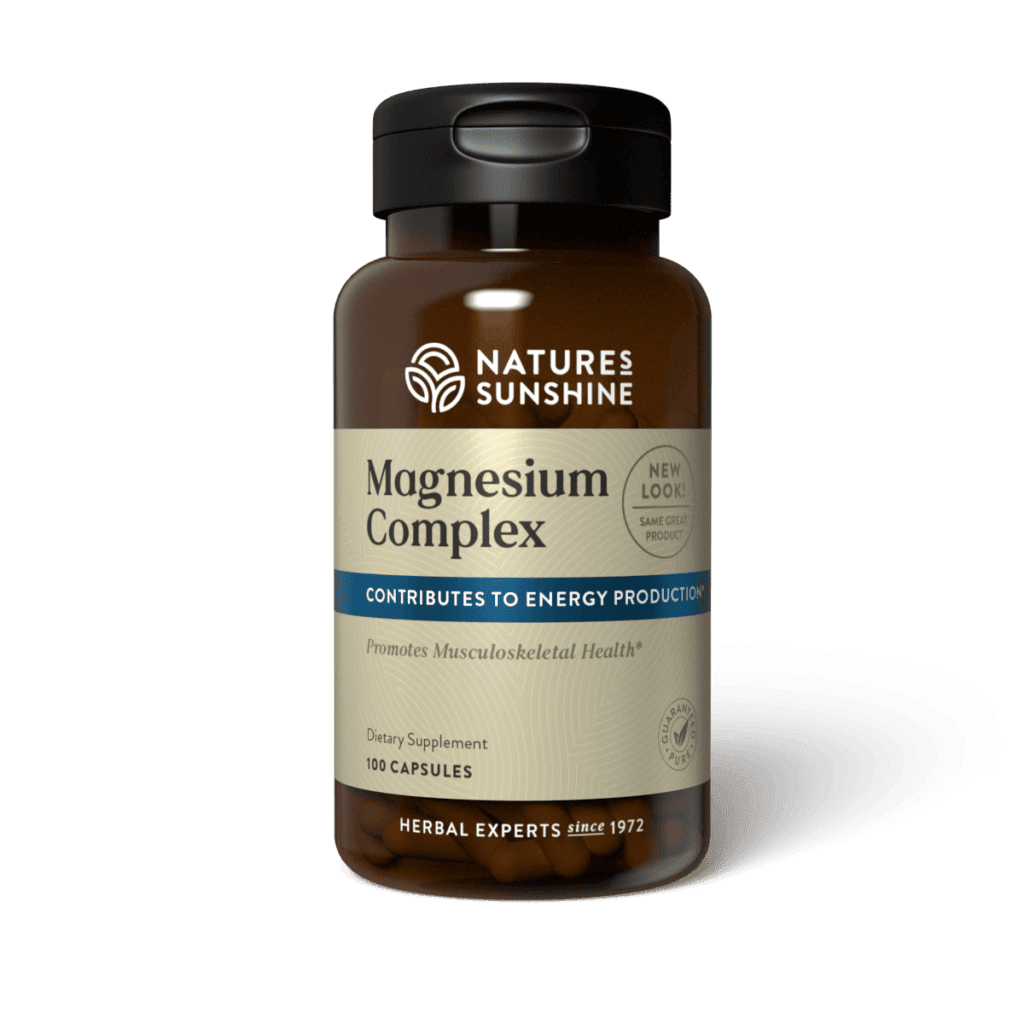
Magnesium Complex de Nature's Sunshine cubre esa brecha con dos formas orgánicas de magnesio altamente solubles —citrato de magnesio y malato de magnesio— combinadas en una sola cápsula. Las formas orgánicas de magnesio generalmente son más solubles y tienen mayor biodisponibilidad que las sales inorgánicas, como el óxido de magnesio. El citrato de magnesio en particular presentó una alta solubilidad incluso en agua (55%) y fue considerablemente más soluble que el óxido de magnesio en todos los estados de secreción ácida.
Dos cápsulas aportan 184 mg de magnesio y están diseñadas para apoyar las funciones del sistema cardiovascular, el cerebro, el corazón y los riñones. Si tienes dudas sobre si Magnesium Complex es adecuado para tus necesidades, nuestro naturópata te ofrece una consulta gratuita para ayudarte a pensarlo.
Por qué dos formas de magnesio funcionan mejor juntas
No todos los suplementos de magnesio son iguales. La forma en que se administra el magnesio afecta la capacidad de tu cuerpo para absorberlo y utilizarlo. Magnesium Complex combina citrato de magnesio y malato de magnesio, dos formas orgánicas que están queladas a ácidos orgánicos. Este enfoque de doble forma ayuda a garantizar una eficacia óptima y una alta solubilidad.
Una vez absorbido, el ion Mg²⁺ actúa en múltiples sistemas. Es necesario para la síntesis de ATP —la moneda energética fundamental de cada célula— y actúa como cofactor esencial para la hidrólisis enzimática del ATP en la Na,K-ATPasa, que regula el transporte de iones a través de las membranas celulares. En el sistema nervioso, el magnesio modula la excitabilidad neuronal mediante el antagonismo de los canales de calcio dependientes de voltaje y el bloqueo de los receptores NMDA, lo que ayuda a regular la señalización nerviosa y la transmisión neuromuscular.
En el sistema cardiovascular, el magnesio regula los canales iónicos cardíacos, el tono vascular y la función endotelial. La investigación sugiere que también participa en la prevención de la calcificación vascular y que podría mejorar la dilatación mediada por flujo. Un metaanálisis de 2022 de 17 ensayos controlados aleatorizados (ECA) mostró que la suplementación con magnesio disminuyó significativamente los niveles séricos de proteína C reactiva (PCR) y aumentó los niveles de óxido nítrico (NO), dos marcadores relevantes para la salud cardiovascular e inflamatoria.
Ingredientes clave
- ✓ Envío gratis en pedidos superiores a $75
- ✓ Devoluciones fáciles en 90 días
- ✓ Envíos en pocas horas
Quién puede beneficiarse de un Magnesium Complex
Dado que el magnesio participa en tantos procesos fundamentales, una amplia variedad de personas puede beneficiarse de la suplementación. Según la investigación, los siguientes grupos tienen más probabilidades de presentar una ingesta insuficiente de magnesio y podrían encontrar especialmente relevante un Magnesium Complex:
- Adultos mayores: a medida que envejecemos, la absorción y la retención de magnesio pueden disminuir, y el uso de medicamentos (como los diuréticos) puede agotar aún más las reservas. Los hombres mayores de 70 años y las adolescentes se encuentran entre los grupos con mayor probabilidad de tener una ingesta baja.
- Personas preocupadas por la salud del corazón: la investigación sugiere que una ingesta adecuada de magnesio apoya la función cardiovascular, incluida una presión arterial saludable que ya se encuentra dentro del rango normal, la flexibilidad arterial y un ritmo cardíaco normal.
- Quienes experimentan calambres o tensión muscular ocasionales: la deficiencia de magnesio afecta la relajación muscular. Una revisión sistemática de 2024 mostró que la suplementación con magnesio redujo el dolor muscular y ejerció un efecto protector sobre el daño muscular en personas físicamente activas.
- Personas con inquietudes relacionadas con el sistema nervioso: el magnesio modula la excitabilidad neuronal y la transmisión neuromuscular. La investigación sugiere que desempeña un papel en apoyar la comodidad nerviosa y una actividad equilibrada de los neurotransmisores.
- Personas que toman medicamentos que agotan el magnesio: los diuréticos de asa y tiazídicos, los inhibidores de la bomba de protones (IBP) y ciertos antibióticos pueden reducir los niveles de magnesio. Si tomas alguno de estos medicamentos, hablar con un profesional de la salud o con nuestro naturópata sobre la suplementación con magnesio es un primer paso prudente.
Se estima que entre un 56% y un 68% de los estadounidenses no obtienen suficiente magnesio al día para cumplir con la ingesta diaria recomendada, lo que convierte a la suplementación en una opción práctica para muchas personas.
Cómo tomar Magnesium Complex
Toma 2 cápsulas dos veces al día con una comida. Cada frasco contiene 100 cápsulas.
La ingesta diaria recomendada (IDR) de magnesio es de 400–420 mg/día para hombres adultos y de 310–320 mg/día para mujeres adultas. Dos cápsulas de este Magnesium Complex aportan 184 mg de magnesio. Tomar el producto según las indicaciones (2 cápsulas dos veces al día) aporta 368 mg de magnesio adicional, lo cual se encuentra dentro del rango general de suplementación estudiado en la investigación clínica.
Los efectos secundarios más comunes de los suplementos de magnesio son problemas estomacales, como heces más blandas, náuseas o calambres, que tienden a presentarse con mayor frecuencia en dosis más altas y son más comunes con las formas inorgánicas. Debido a que esta fórmula utiliza formas orgánicas de citrato y malato, la tolerancia digestiva suele ser mejor.
Interacciones importantes que debes tener en cuenta: el magnesio puede formar complejos insolubles con antibióticos de tetraciclina y quinolonas: el antibiótico debe tomarse al menos 2 horas antes o 4–6 horas después del magnesio. Los suplementos ricos en magnesio también deben separarse de los bisfosfonatos orales por al menos 2 horas. El magnesio podría reducir la absorción de gabapentina en un 20%. Si tomas algún medicamento, te recomendamos consultar a tu profesional de la salud o comunicarte con nuestro naturópata para una consulta gratuita antes de comenzar la suplementación.
Escrito por Greg Howlett
Preguntas frecuentes
¿Qué formas de magnesio contiene este Magnesium Complex?
Este Magnesium Complex contiene dos formas orgánicas: citrato de magnesio y malato de magnesio. Las formas orgánicas de magnesio generalmente son más solubles y tienen mayor biodisponibilidad que las formas inorgánicas, como el óxido de magnesio. Se ha demostrado que el citrato de magnesio, en particular, presenta una alta solubilidad incluso en agua (55%) y es considerablemente más soluble que el óxido de magnesio en todos los estados de secreción ácida.
¿Cuánto magnesio aporta cada porción?
Dos cápsulas aportan 184 mg de magnesio. El uso sugerido es 2 cápsulas dos veces al día con una comida, lo que aporta 368 mg de magnesio adicional al día. El frasco contiene 100 cápsulas.
¿Qué sistemas del cuerpo apoya el magnesio?
El magnesio es un cofactor en más de 300 sistemas enzimáticos. La investigación sugiere que apoya el sistema cardiovascular (presión arterial saludable, ritmo cardíaco y flexibilidad arterial), el sistema nervioso (excitabilidad neuronal, señalización nerviosa y equilibrio de neurotransmisores) y el sistema musculoesquelético (contracción, relajación y recuperación muscular). Esta fórmula está diseñada específicamente para apoyar el cerebro, el corazón y los riñones.
¿Quién tiene mayor riesgo de presentar deficiencia de magnesio?
Ciertos grupos tienen más probabilidades de presentar una ingesta insuficiente de magnesio, entre ellos los adultos mayores (debido a una menor absorción), las personas con trastornos gastrointestinales, quienes tienen diabetes tipo 2, las personas con dependencia del alcohol y quienes toman medicamentos a largo plazo, como diuréticos o inhibidores de la bomba de protones. Se estima que entre un 56% y un 68% de los estadounidenses no obtienen suficiente magnesio al día para cumplir con la IDR.
¿El magnesio puede interactuar con medicamentos?
Sí. El magnesio puede interactuar con varios tipos de medicamentos. Puede disminuir la absorción de los bisfosfonatos y de antibióticos como las tetraciclinas y las quinolonas: estos deben separarse del magnesio por al menos 2 horas (4–6 horas en el caso de los antibióticos, después del magnesio). Los diuréticos de asa y tiazídicos pueden agotar el magnesio al aumentar su excreción urinaria. Los inhibidores de la bomba de protones tomados durante periodos prolongados pueden causar niveles bajos de magnesio. El magnesio también podría reducir la absorción de gabapentina en alrededor de un 20%. Consulta siempre a tu profesional de la salud antes de combinar el magnesio con medicamentos con receta.
¿Hay efectos secundarios al tomar un suplemento de magnesio?
Los efectos secundarios más comunes son estomacales, incluidas las heces más blandas, las náuseas y los calambres. Estos tienden a presentarse con dosis más altas y son más comunes con las formas inorgánicas de magnesio, como el óxido de magnesio. Este Magnesium Complex utiliza formas orgánicas de citrato y malato, que generalmente se toleran mejor. La hipermagnesemia por ingesta suplementaria es poco frecuente en personas con función renal normal, porque los riñones excretan eficientemente el exceso de magnesio.
Talk to Dr. Shannyn Fowl
Not sure if this is right for you? Book a free, no-pressure consultation for personalized guidance on your health goals.
Book your free consult →About Caring Sunshine
A family-run reseller of premium supplements — free shipping, a 90-day guarantee, and real people who know the products.
Learn more about us →