
Magnesium Complex de Nature Made: magnesio en doble forma
Magnesium Complex de Nature Made combina citrato y malato de magnesio para apoyar el corazón, el cerebro, los músculos y el sistema nervioso.
Magnesium Complex de Nature Made: qué es y por qué es importante
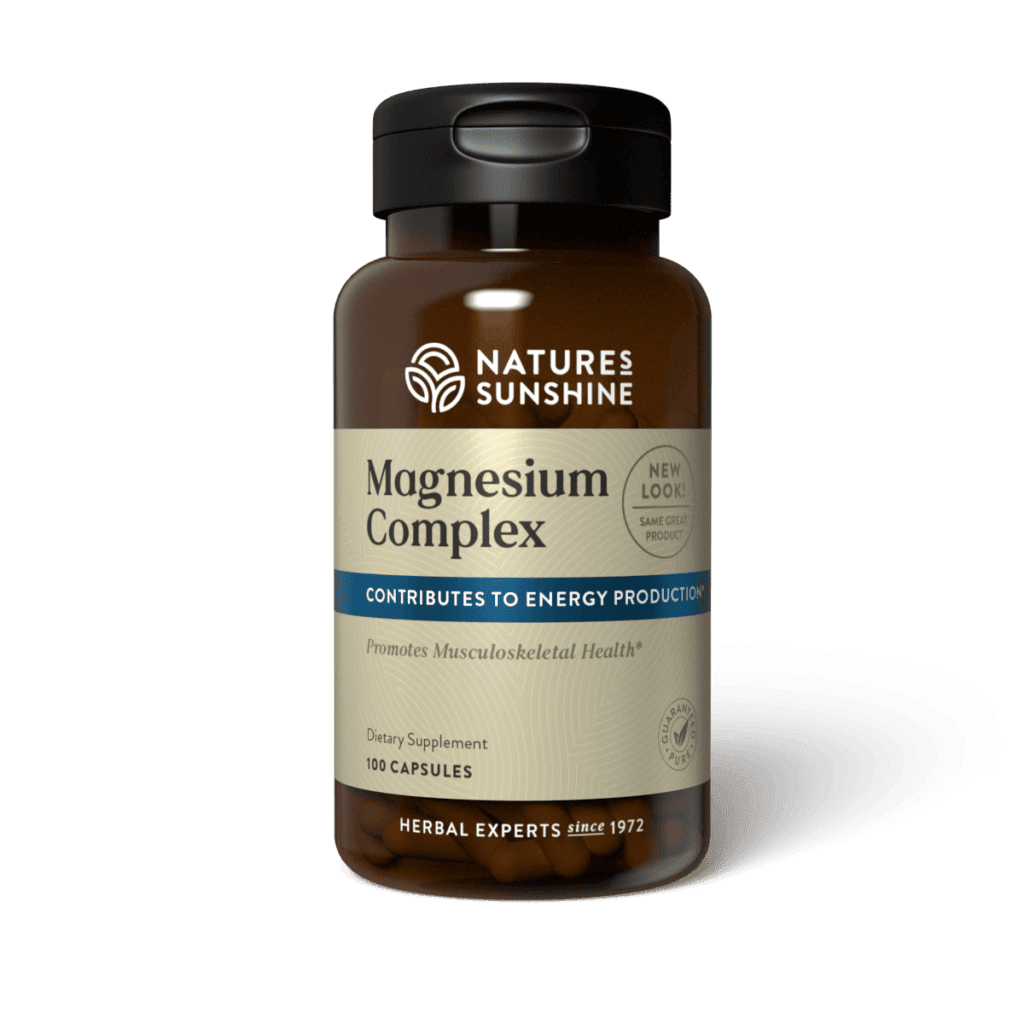
Magnesium Complex es un suplemento de magnesio en doble forma de Nature's Sunshine que combina dos formas orgánicas con alta biodisponibilidad —citrato de magnesio y malato de magnesio— en una sola cápsula. Con 184 mg de magnesio por porción de dos cápsulas, esta fórmula está diseñada para apoyar el sistema cardiovascular, la función cerebral, la salud renal y los músculos.
El magnesio es el cuarto catión más abundante en el cuerpo humano y un cofactor fundamental en más de 300 reacciones enzimáticas. Regula el metabolismo energético, la función neuromuscular, la salud cardiovascular, la integridad ósea, la defensa inmunitaria y el bienestar psicológico. A pesar de su importancia, se estima que entre un 56 y un 68% de los estadounidenses no obtienen suficiente magnesio al día para cubrir la ingesta diaria recomendada.
La elección de las formas citrato y malato es importante. Las sales orgánicas de magnesio —como el citrato y el malato— suelen ser más solubles y tener mayor biodisponibilidad que las formas inorgánicas, como el óxido de magnesio. La investigación confirma que el citrato de magnesio presenta una alta solubilidad incluso en agua (55%) y es considerablemente más soluble que el óxido de magnesio en todos los estados de secreción ácida. Esta alta solubilidad es la razón por la que la etiqueta de Magnesium Complex destaca que la fórmula es "altamente soluble", lo que favorece una absorción eficiente.
Si tienes dudas sobre si Magnesium Complex es adecuado para tu rutina de bienestar, nuestro naturópata te ofrece una consulta gratuita para ayudarte a evaluar tus necesidades individuales.
Dos formas de magnesio que trabajan en conjunto
Magnesium Complex aporta sus 184 mg de magnesio elemental a través de dos formas orgánicas complementarias: citrato de magnesio y malato de magnesio. Ambas pertenecen a la categoría de las sales orgánicas de magnesio, lo que significa que el ion de magnesio está unido mediante quelación a moléculas de ácido orgánico. Estas formas orgánicas suelen ser más solubles y absorberse mejor que sus equivalentes inorgánicos.
Apoyo cardiovascular
La investigación sugiere que niveles más altos de magnesio, tanto en la dieta como en circulación, se asocian de forma inversa con el riesgo de cardiopatía coronaria, accidente cerebrovascular y enfermedad cardiovascular total. El magnesio regula los canales iónicos cardíacos, la conducción miocárdica y la contracción. Como cofactor bien establecido en la electrofisiología cardíaca, modula los intercambios de canales iónicos y los potenciales de acción. La hipomagnesemia está fuertemente vinculada a las arritmias ventriculares y supraventriculares. Múltiples metaanálisis y ensayos controlados aleatorizados (ECA) conforman la base de evidencia sobre el papel del magnesio en la salud cardiovascular.
Los estudios también sugieren que la suplementación con magnesio puede reducir de forma significativa la rigidez arterial. Un ECA de 24 semanas con 350 mg/día de citrato de magnesio redujo la velocidad de onda de pulso de 9.1 a 8.3 m/s frente a placebo. El magnesio también participa en la función endotelial, contribuye a la prevención de la calcificación vascular y puede mejorar la dilatación mediada por flujo.
Apoyo al sistema nervioso
El magnesio es fundamental para la función del sistema nervioso, ya que actúa como antagonista fisiológico de los receptores NMDA y regulador de la excitabilidad neuronal, la transmisión neuromuscular y la señalización nerviosa. Clínicamente, la deficiencia se asocia con hiperexcitabilidad neuromuscular, temblores y convulsiones. El magnesio también desempeña un papel fundamental en la excitabilidad nerviosa al regular los canales de calcio y potasio, y la investigación sugiere que la suplementación puede favorecer la modulación de la excitabilidad nerviosa.
Función muscular
El magnesio es un cofactor esencial para la síntesis y utilización de ATP, la contracción muscular y la homeostasis de los electrolitos. La deficiencia se asocia con calambres musculares, debilidad y un rendimiento deportivo deficiente. La deficiencia de magnesio altera la relajación muscular, ya que los músculos pueden contraerse de forma normal pero tienen dificultad para liberarse por completo cuando los niveles son bajos. Una revisión sistemática de 2024 de cuatro ECA observó que la suplementación con magnesio redujo el dolor muscular, mejoró el rendimiento y la recuperación, y ejerció un efecto protector frente al daño muscular en personas físicamente activas.
Ingredientes clave
- ✓ Envío gratis en pedidos superiores a $75
- ✓ Devoluciones fáciles en 90 días
- ✓ Envíos en pocas horas
Quién puede beneficiarse de Magnesium Complex
Debido a que el magnesio desempeña un papel tan amplio en el cuerpo, muchos adultos pueden beneficiarse de la suplementación, sobre todo porque la dieta de la mayoría de las personas en Estados Unidos aporta menos de las cantidades recomendadas de este mineral. La IDR para los hombres adultos es de 400 a 420 mg/día, mientras que para las mujeres adultas es de 310 a 320 mg/día.
Ciertos grupos tienen un mayor riesgo de tener niveles inadecuados de magnesio. Entre ellos se incluyen los adultos mayores (debido a una menor absorción a partir de los alimentos y a un mayor uso de medicamentos), las personas con trastornos gastrointestinales, quienes tienen diabetes tipo 2, las personas con dependencia del alcohol y quienes toman ciertos medicamentos a largo plazo, como diuréticos o inhibidores de la bomba de protones. Los hombres mayores de 70 años y las adolescentes son los más propensos a tener una ingesta baja.
Los primeros signos y síntomas de la deficiencia de magnesio incluyen pérdida de apetito, náuseas, fatiga y debilidad. A medida que la deficiencia se agrava, pueden presentarse adormecimiento, hormigueo, contracciones musculares y calambres, cambios de personalidad y ritmos cardíacos anormales.
Magnesium Complex puede ser especialmente útil para los adultos que buscan apoyar la función cardiovascular, mantener una relajación muscular y una señalización nerviosa normales, o simplemente ayudar a cubrir la diferencia entre lo que comen y lo que su cuerpo necesita. Si tienes dudas sobre si la suplementación con magnesio es adecuada para ti —sobre todo si tomas medicamentos—, nuestro naturópata te ofrece una consulta gratuita para ayudarte a resolver tus dudas.
Cómo tomar Magnesium Complex
Toma 2 cápsulas dos veces al día con una comida.
Cada frasco contiene 100 cápsulas. Dos cápsulas aportan 184 mg de magnesio procedentes tanto del citrato de magnesio como del malato de magnesio.
Notas importantes de seguridad: Los suplementos de magnesio pueden causar náuseas, calambres y diarrea, en particular a dosis más altas. Los efectos secundarios son más frecuentes con las formas inorgánicas, como el óxido de magnesio; las formas orgánicas de citrato y malato presentes en este producto suelen tolerarse mejor.
Varios medicamentos pueden interactuar con los suplementos de magnesio. El magnesio puede disminuir la absorción de los bisfosfonatos (sepáralos por al menos 2 horas), de los antibióticos tetraciclina y quinolonas (toma el antibiótico al menos 2 horas antes o de 4 a 6 horas después del magnesio) y de la gabapentina (puede reducir su absorción en un 20%). Los diuréticos de asa y las tiazidas pueden agotar el magnesio al aumentar su excreción urinaria, mientras que el uso prolongado de inhibidores de la bomba de protones (IBP) puede causar hipomagnesemia. Si tomas algún medicamento, consulta a tu profesional de la salud antes de comenzar a suplementarte con magnesio.
Escrito por Greg Howlett
Preguntas frecuentes
¿Qué dos formas de magnesio contiene este Magnesium Complex?
Esta fórmula contiene citrato de magnesio y malato de magnesio. Ambas son formas orgánicas de magnesio que generalmente son más solubles y tienen mayor biodisponibilidad que las formas inorgánicas, como el óxido de magnesio. La investigación muestra que el citrato de magnesio tiene una solubilidad del 55% en agua, lo que lo hace considerablemente más absorbible que el óxido de magnesio.
¿Cuánto magnesio aporta Magnesium Complex por porción?
Dos cápsulas aportan 184 mg de magnesio. El uso sugerido es tomar 2 cápsulas dos veces al día con una comida. Como referencia, la ingesta diaria recomendada para los hombres adultos es de 400 a 420 mg/día y para las mujeres adultas es de 310 a 320 mg/día.
¿Qué sistemas del cuerpo apoya este Magnesium Complex?
Según la formulación del producto, Magnesium Complex apoya el sistema cardiovascular y contribuye a las funciones cerebrales, renales y cardíacas. La investigación también sugiere que el magnesio desempeña funciones importantes en la contracción y relajación muscular, la señalización del sistema nervioso (como antagonista natural de los receptores NMDA) y el mantenimiento de un ritmo cardíaco normal.
¿Puedo tomar Magnesium Complex si estoy tomando medicamentos con receta?
Varios medicamentos pueden interactuar con el magnesio. La absorción de los bisfosfonatos, de los antibióticos tetraciclina y quinolonas, y de la gabapentina puede verse afectada por el magnesio. Los diuréticos de asa y las tiazidas pueden agotar el magnesio, mientras que el uso prolongado de inhibidores de la bomba de protones puede causar niveles bajos de magnesio. Consulta siempre a tu profesional de la salud antes de combinar el magnesio con medicamentos con receta. Nuestro naturópata también te ofrece una consulta gratuita para hablar de las consideraciones entre los suplementos y los medicamentos.
¿Por qué se prefieren las formas orgánicas de magnesio, como el citrato y el malato, sobre el óxido de magnesio?
Las formas orgánicas de magnesio, como el citrato y el malato, están unidas mediante quelación a moléculas de ácido orgánico, lo que generalmente las hace más solubles y de mejor absorción. La investigación confirma que el citrato de magnesio tiene una solubilidad del 55% en agua, mientras que el óxido de magnesio es prácticamente insoluble en agua y solo alcanza un 43% de solubilidad incluso en condiciones máximas de secreción ácida. Por eso la fórmula de Magnesium Complex se describe como "altamente soluble".
¿Quién tiene mayor riesgo de deficiencia de magnesio?
Ciertos grupos tienen más probabilidades de presentar niveles inadecuados de magnesio, entre ellos los adultos mayores (debido a una menor absorción y a un mayor uso de medicamentos), las personas con trastornos gastrointestinales, quienes tienen diabetes tipo 2, las personas con dependencia del alcohol y quienes toman diuréticos o inhibidores de la bomba de protones a largo plazo. Se estima que entre un 56 y un 68% de los estadounidenses no obtienen suficiente magnesio al día para cubrir la ingesta diaria recomendada.
Talk to Dr. Shannyn Fowl
Not sure if this is right for you? Book a free, no-pressure consultation for personalized guidance on your health goals.
Book your free consult →About Caring Sunshine
A family-run reseller of premium supplements — free shipping, a 90-day guarantee, and real people who know the products.
Learn more about us →