
Magnesium Complex para mujeres | Corazón, cerebro y riñón
Descubre cómo Magnesium Complex, con citrato y malato de magnesio, apoya la salud del corazón, el cerebro y los riñones en mujeres.
Magnesium Complex para mujeres: qué es y por qué es importante
El magnesio es el cuarto catión más abundante en el cuerpo humano y un cofactor fundamental en más de 300 sistemas enzimáticos. Regula desde la producción de energía y la función neuromuscular hasta la salud cardiovascular, la integridad ósea y el bienestar psicológico. Sin embargo, la evidencia emergente confirma que casi dos tercios de la población occidental no alcanza la ingesta diaria recomendada (IDR) de magnesio: una carencia generalizada que puede contribuir a una serie de problemas de salud.
En el caso de las mujeres, la IDR es de 310–320 mg/día, y aumenta a 350–360 mg durante el embarazo y a 310–320 mg durante el periodo de lactancia. Las adolescentes y los adultos mayores se encuentran entre los grupos con mayor probabilidad de tener una ingesta baja. A medida que envejecemos, la absorción y retención de magnesio pueden disminuir, lo que hace que una suplementación bien pensada sea aún más relevante.
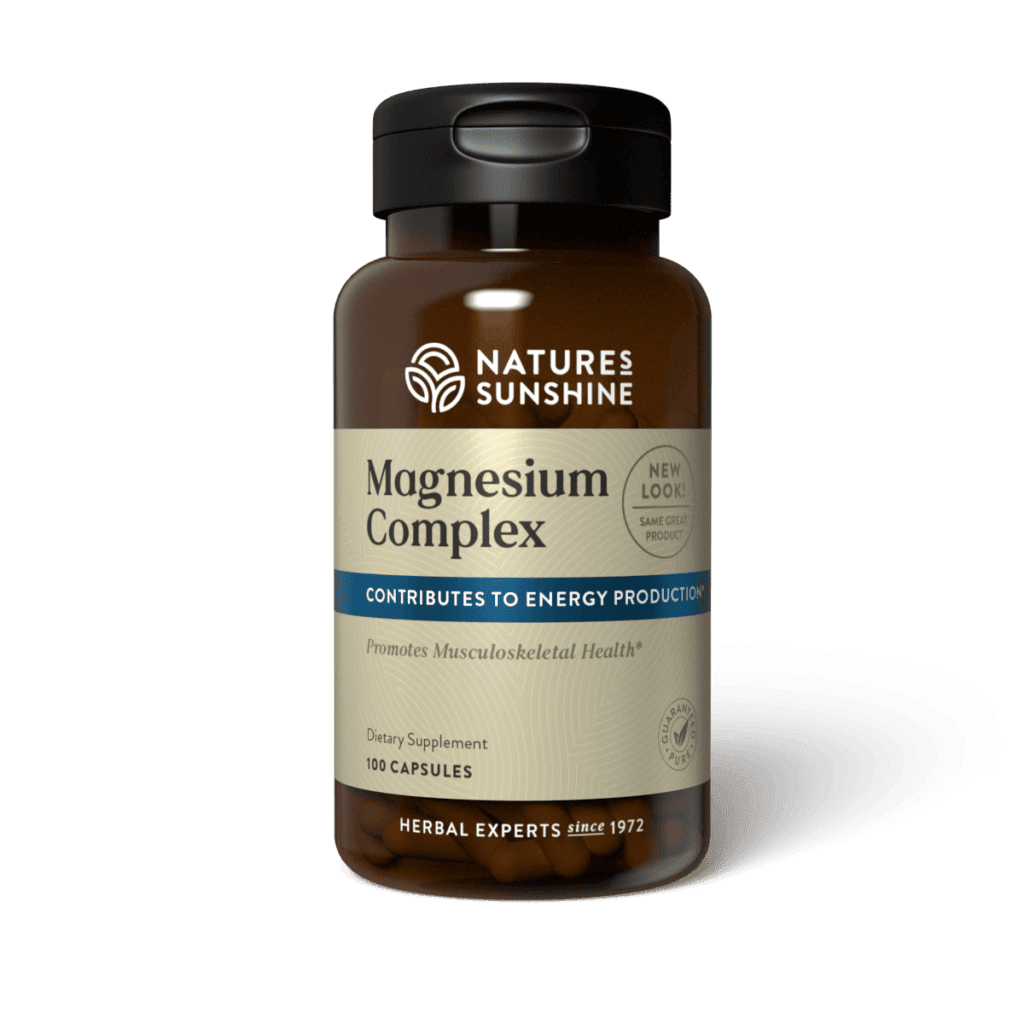
Magnesium Complex de Nature's Sunshine está formulado para abordar esta necesidad combinando dos formas orgánicas de magnesio altamente biodisponibles —citrato de magnesio y malato de magnesio— en una sola fórmula. Dos cápsulas proporcionan 184 mg de magnesio para ayudar a apoyar las funciones cerebrales, cardíacas y renales. Ambas formas son sales orgánicas de magnesio, lo que significa que generalmente son más solubles y se absorben más fácilmente que las formas inorgánicas, como el óxido de magnesio.
Si tienes dudas sobre si un Magnesium Complex para mujeres se ajusta a tus objetivos de salud, nuestro naturópata te ofrece una consulta gratuita para ayudarte a resolverlas.
Dos formas biodisponibles que actúan juntas
No todos los suplementos de magnesio son iguales. La forma del magnesio determina qué tan bien tu cuerpo puede absorberlo y utilizarlo. Este Magnesium Complex combina dos formas orgánicas —citrato y malato— conocidas por su alta solubilidad y absorción eficiente.
¿Por qué citrato?
El citrato de magnesio es una de las formas más biodisponibles que existen. La investigación muestra que tiene una alta solubilidad incluso en agua (55%) y que es considerablemente más soluble que el óxido de magnesio en todos los estados de secreción ácida. Por eso tu cuerpo puede absorberlo de manera eficiente sin importar la variabilidad digestiva.
¿Por qué malato?
El malato de magnesio es otra forma orgánica que, por lo general, es más soluble y tiene una mayor biodisponibilidad que las sales inorgánicas. Al combinar citrato y malato, la fórmula ofrece dos vías complementarias para la absorción de magnesio, lo que favorece una eficacia óptima.
Como ambas formas son muy solubles, esta fórmula suele ser más suave para el estómago en comparación con las formas inorgánicas como el óxido de magnesio, que se asocian con mayor frecuencia a efectos secundarios gastrointestinales.
Ingredientes clave
- ✓ Envío gratis en pedidos superiores a $75
- ✓ Devoluciones fáciles en 90 días
- ✓ Envíos en pocas horas
Quién debería considerar un Magnesium Complex para mujeres
Este Magnesium Complex para mujeres puede ser una adición acertada para una amplia variedad de adultos, pero ciertos grupos destacan como los que, según la investigación, tienen mayor probabilidad de beneficiarse:
- Mujeres preocupadas por la salud del corazón. La investigación sugiere que niveles más altos de magnesio se asocian de forma inversa con los riesgos de enfermedad coronaria, accidente cerebrovascular y enfermedad cardiovascular total. El sistema cardiovascular depende del magnesio para la excitación cardíaca, el tono vascular y la función endotelial.
- Mujeres enfocadas en la salud renal. Los riñones son el principal sitio de regulación del magnesio en el cuerpo, y una ingesta adecuada de magnesio se asocia con un menor riesgo de formación de cálculos renales. La investigación muestra que el magnesio inhibe la cristalización de oxalato de calcio en la orina.
- Mujeres con preocupaciones relacionadas con el sistema nervioso. El magnesio actúa como un antagonista natural de los receptores NMDA, modulando la excitabilidad neuronal. La carencia se vincula con problemas neurológicos que van desde la migraña hasta cambios en el estado de ánimo.
- Mujeres mayores. A medida que envejecemos, la absorción y retención de magnesio pueden disminuir. Los adultos mayores son más susceptibles a la carencia debido a una menor absorción a partir de los alimentos, un mayor uso de medicamentos y posibles restricciones dietéticas.
- Mujeres que toman ciertos medicamentos. Los diuréticos de asa y tiazídicos, los inhibidores de la bomba de protones y otros medicamentos comunes pueden agotar el magnesio al aumentar su excreción urinaria o reducir su absorción.
- Mujeres con calambres musculares o fatiga. La carencia de magnesio puede provocar síntomas como calambres musculares, fatiga y debilidad.
La evidencia de nivel I respalda el uso del magnesio en la prevención y el apoyo de muchos problemas de salud comunes, incluidos el síndrome premenstrual y la preeclampsia: preocupaciones especialmente relevantes para las mujeres. Si tienes dudas sobre si esta fórmula se ajusta a tus necesidades particulares, nuestro naturópata puede ayudarte durante una consulta gratuita.
Cómo tomar Magnesium Complex
Toma 2 cápsulas dos veces al día con una comida.
Cada frasco contiene 100 cápsulas. Tomar las cápsulas con alimentos favorece la absorción y puede ayudar a minimizar cualquier posible sensibilidad estomacal.
Consideraciones importantes de seguridad
Los suplementos de magnesio pueden causar ocasionalmente náuseas, calambres o diarrea, aunque los efectos secundarios son más frecuentes con dosis más altas y con formas inorgánicas. Como esta fórmula utiliza formas orgánicas muy solubles (citrato y malato), generalmente se tolera mejor.
Si tomas bisfosfonatos para la salud ósea, separa tus dosis por al menos 2 horas. Si tomas antibióticos del tipo tetraciclina o quinolona, toma el antibiótico al menos 2 horas antes o de 4 a 6 horas después del magnesio. El magnesio también puede reducir la absorción de la gabapentina en un 20%. Las mujeres que toman diuréticos de asa o tiazídicos deben tener en cuenta que estos medicamentos pueden agotar el magnesio, lo que hace que la suplementación sea aún más relevante: de todos modos, siempre consúltalo con tu profesional de la salud.
La hipermagnesemia por ingesta de suplementos es poco frecuente en personas con función renal normal, ya que los riñones excretan eficientemente el exceso de magnesio. Sin embargo, el riesgo aumenta considerablemente en personas con función renal deficiente. Como siempre, consulta a tu profesional de la salud antes de comenzar cualquier suplemento nuevo, especialmente durante el embarazo o la lactancia.
Por qué tantas mujeres no alcanzan los niveles adecuados de magnesio
Se estima que entre un 56% y un 68% de los estadounidenses no obtienen suficiente magnesio en su dieta a diario para cumplir con la IDR. Las dietas de la mayoría de las personas en Estados Unidos aportan menos de las cantidades recomendadas de magnesio, y las adolescentes se encuentran entre los grupos con mayor probabilidad de tener una ingesta baja.
Los primeros signos de la carencia de magnesio incluyen pérdida de apetito, náuseas, fatiga y debilidad. A medida que la carencia avanza, pueden presentarse adormecimiento, hormigueo, contracciones y calambres musculares, cambios de personalidad y ritmos cardíacos anormales. La carencia grave puede incluso alterar la homeostasis mineral y provocar niveles bajos de calcio o potasio en suero.
El magnesio está presente de forma natural en verduras de hoja verde, legumbres, frutos secos, semillas, granos enteros, pescado y productos lácteos. Sin embargo, muchas mujeres simplemente no obtienen suficiente solo con la alimentación, especialmente durante el embarazo, cuando la IDR aumenta a 350–360 mg al día. Un Magnesium Complex para mujeres bien elegido puede ayudar a cubrir esta brecha nutricional común con formas que el cuerpo puede absorber fácilmente.
Escrito por Greg Howlett
Preguntas frecuentes
¿Cuáles son las dos formas de magnesio en este complejo?
Magnesium Complex contiene citrato de magnesio y malato de magnesio. Ambas son sales orgánicas de magnesio que, por lo general, son más solubles y tienen una mayor biodisponibilidad que las formas inorgánicas, como el óxido de magnesio. En particular, se ha demostrado que el citrato de magnesio tiene una alta solubilidad incluso en agua (55%) y que es considerablemente más soluble que el óxido de magnesio en todos los estados de secreción ácida.
¿Cuánto magnesio aporta una porción?
Dos cápsulas de Magnesium Complex contienen 184 mg de magnesio. El uso sugerido es tomar 2 cápsulas dos veces al día con una comida, lo que equivaldría a dos porciones al día.
¿Cómo apoya el magnesio la salud del corazón en las mujeres?
La investigación sugiere que niveles más altos de magnesio en la dieta y en circulación se asocian de forma inversa con los riesgos de enfermedad coronaria, accidente cerebrovascular y enfermedad cardiovascular total. El magnesio regula la excitación cardíaca, el tono vascular y la función endotelial. Múltiples ECA y metaanálisis indican reducciones modestas pero significativas de la presión arterial, en particular en personas con carencia de magnesio o hipertensión. El magnesio también participa en la prevención de la calcificación vascular y puede ayudar a reducir la rigidez arterial.
¿Puede el magnesio ayudar a prevenir los cálculos renales?
La investigación sugiere que el magnesio es un inhibidor bien establecido de la cristalización de oxalato de calcio en la orina. Un ECA doble ciego de referencia observó que se formaron nuevos cálculos renales en solo un 12.9% de los sujetos tratados frente a un 63.6% con placebo. La suplementación con magnesio también puede reducir la excreción urinaria de oxalato y aumentar el citrato urinario, ambos factores protectores clave contra la formación de cálculos. Los riñones también son el principal sitio de excreción de magnesio y el principal regulador de la homeostasis del magnesio en todo el cuerpo.
¿Interactúa el magnesio con otros medicamentos?
Sí, el magnesio puede interactuar con varios tipos de medicamentos. Puede disminuir la absorción de los bisfosfonatos, por lo que deben separarse por al menos 2 horas. Puede formar complejos insolubles con los antibióticos del tipo tetraciclina y quinolona: el antibiótico debe tomarse al menos 2 horas antes o de 4 a 6 horas después del magnesio. Los diuréticos de asa y tiazídicos pueden agotar el magnesio al aumentar su excreción urinaria. Los inhibidores de la bomba de protones tomados durante periodos prolongados pueden causar niveles bajos de magnesio. El magnesio también puede reducir la absorción de la gabapentina en alrededor de un 20%. Consulta siempre con tu profesional de la salud si tomas algún medicamento.
¿Cuánto magnesio necesitan las mujeres al día?
La IDR para mujeres adultas es de 310–320 mg/día. Durante el embarazo, los requerimientos aumentan a alrededor de 350–360 mg al día, y durante el periodo de lactancia, la IDR es de 310–320 mg. El nivel máximo de ingesta tolerable para el magnesio proveniente de suplementos es de 350 mg: esto se aplica solo al magnesio proveniente de suplementos y medicamentos, y no incluye el magnesio proveniente de los alimentos y bebidas.
Talk to Dr. Shannyn Fowl
Not sure if this is right for you? Book a free, no-pressure consultation for personalized guidance on your health goals.
Book your free consult →About Caring Sunshine
A family-run reseller of premium supplements — free shipping, a 90-day guarantee, and real people who know the products.
Learn more about us →